Are LED Mirrors Energy Efficient? A Practical Guide
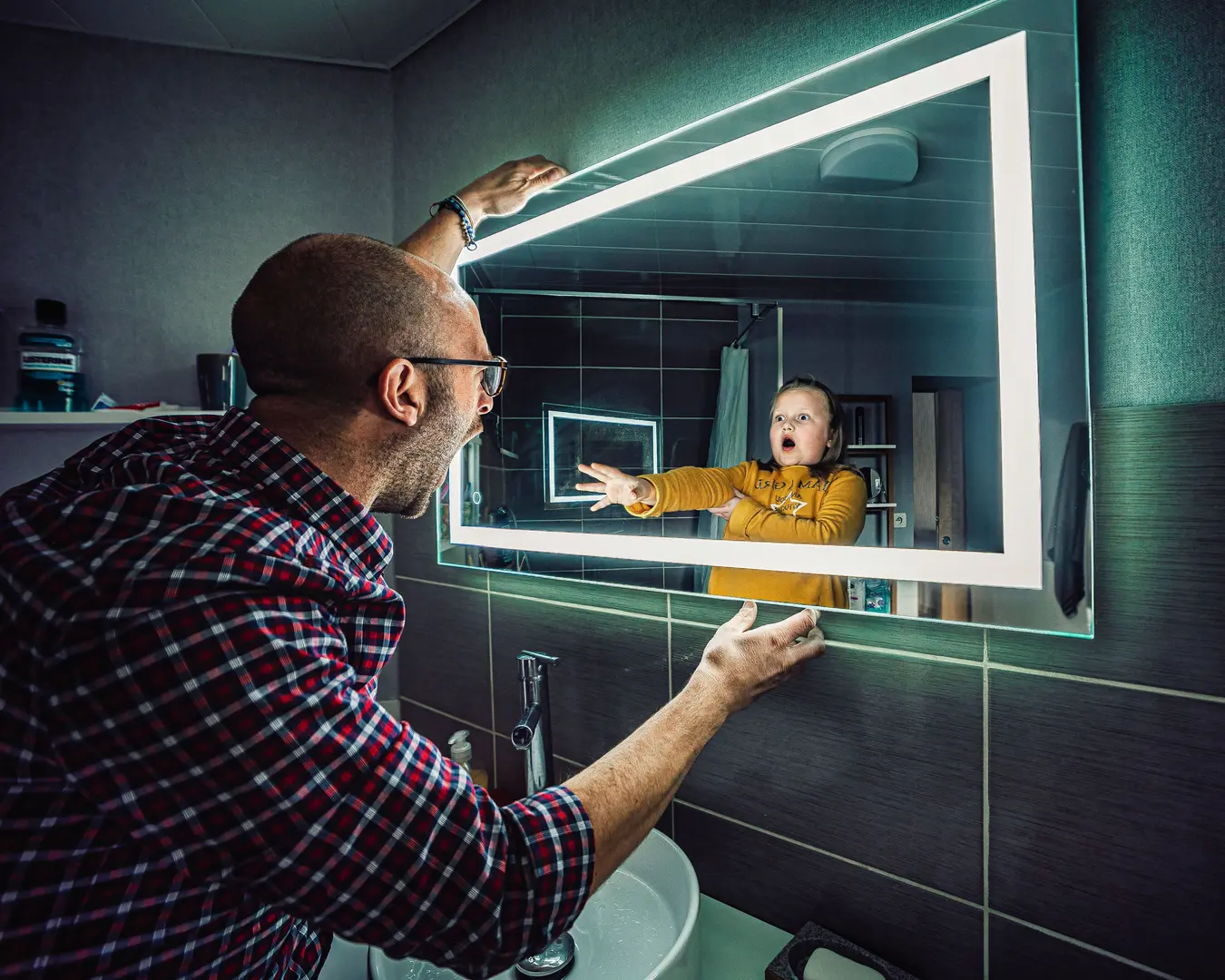
The short answer to “are LED mirrors energy efficient?” is yes. Most LED mirrors use relatively little electricity while providing bright, even illumination for grooming and other bathroom tasks. Typical models operate at only 15–30 watts, and their monthly running cost is usually below £1 with normal use.
However, efficiency is not just about wattage. A useful assessment should also consider lighting performance, expected lifespan, durability and how often components need replacing. LED mirrors generally perform well in all these areas, although product quality and initial price can vary.
What Sets LED Mirrors Apart?
An LED mirror combines a reflective surface with integrated LED light strips. Instead of installing a standard mirror and relying entirely on separate wall or ceiling lights, you get illumination built into the mirror itself.
This integrated design can provide more even lighting across the face. That is particularly useful for close-up activities such as shaving, applying make-up, styling hair or completing a skincare routine. Because the light is positioned around or behind the mirror, it can reduce the uneven illumination that sometimes occurs when a single room light is located overhead.
LED technology also consumes less energy than traditional incandescent lighting. Incandescent bulbs waste a relatively large share of their energy rather than turning it into useful light. LEDs require much less power to deliver practical illumination, which is why an LED mirror can operate at a low wattage without being ineffective.
The main efficiency benefits include:
- Low power consumption: Many LED mirrors use between 15 and 30 watts.
- Even illumination: Integrated strips distribute light around the mirror rather than concentrating it in one place.
- Long service life: LED lighting can have an expected lifespan of around 50,000 hours.
- Less frequent maintenance: A long lifespan reduces how often the lighting components need attention or replacement.
- Reduced material waste: Fewer replacements can mean less discarded lighting equipment over the mirror’s usable life.
These benefits make LED mirrors different from a standard mirror paired with incandescent bulbs. The difference is not simply decorative: the lighting system can offer a better balance between energy use, performance and maintenance.
Durability and Lifespan of LED Mirrors
LED lighting is known for longevity, with an expected service life of around 50,000 hours. That figure helps explain why LED mirrors can provide good long-term value despite costing more initially than an unlit mirror.
A long operating life matters for efficiency in two ways. First, it reduces the need to purchase and install replacement lighting. Second, it limits the waste associated with regularly discarding failed bulbs. Over time, this can make the mirror more resource-efficient as well as energy-efficient.
The quoted lifespan should be viewed as an indication of the LED lighting’s potential operating life, not a guarantee that every mirror will perform identically. The durability of the complete product also depends on its overall quality. A well-made mirror with dependable integrated lighting is more likely to deliver the long-term benefits associated with LEDs, while a low-cost model with weaker components may not offer the same value.
When comparing mirrors, it is therefore sensible to look beyond the appearance of the lighting. Consider the quality of the complete unit and whether it seems suitable for long-term bathroom use. The lowest purchase price may not represent the best deal if the product needs early replacement.
The long lifespan of LEDs also keeps maintenance relatively simple. Unlike a bathroom arrangement that uses short-lived bulbs, an LED mirror is designed to provide lighting for an extended period without frequent intervention. For a feature used every morning and evening, that convenience is part of its overall value.
How Much Power Does an LED Mirror Consume?
A typical LED mirror operates between 15 and 30 watts. Actual use depends on the individual model and how long the lights remain switched on, but this is a low power range for a practical source of bathroom illumination.
To put that figure into context, one hour of operation uses approximately:
| Mirror power | Electricity used in one hour | Electricity used over 30 days at one hour per day |
|---|---|---|
| 15 watts | 0.015 kWh | 0.45 kWh |
| 30 watts | 0.030 kWh | 0.90 kWh |
This illustrates why the daily electricity use is minimal. Bathroom mirrors are also commonly illuminated only while someone is getting ready, rather than being left on continuously. Under normal patterns of use, the monthly running cost is usually below £1.
Your exact cost will depend on three factors:
- The wattage of the mirror
- The amount of time the LEDs are switched on
- Your electricity tariff
You can estimate consumption by multiplying the wattage by the number of hours used and converting the result to kilowatt-hours. For example, a 30-watt mirror used for one hour consumes 0.03 kWh. Multiply that by the cost of one kWh on your tariff to estimate the electricity charge.
The low wattage also means that small differences in daily use are unlikely to create a large household expense. Switching the light off when it is not required is still good practice, but an LED mirror is not normally a major source of electricity consumption.
It is also important to compare like with like. An LED mirror provides both a mirror and task lighting. Its energy use should therefore be considered alongside the lighting it replaces or supplements, not against an unlit mirror that provides no illumination at all.
Why LED Mirrors Can Be a Greener Choice
LED mirrors can be a greener option because they use energy more effectively than mirrors illuminated by incandescent bulbs. More of the electricity supports useful lighting, while less is wasted. This allows the mirror to provide clear illumination without drawing a large amount of power.
Lower consumption also reduces demand on the electricity grid. The effect of one mirror may be small, but efficient fixtures collectively help limit unnecessary power use. For households trying to reduce routine electricity consumption, replacing inefficient lighting with LED technology is a practical step.
Longevity strengthens the environmental case. With an expected LED lifespan of around 50,000 hours, the lighting should not require the same frequent replacement associated with shorter-lived alternatives. Fewer replacements mean fewer discarded bulbs or lighting components and less ongoing maintenance.
The main environmental advantages are therefore connected:
- Low wattage reduces electricity consumption.
- Less wasted energy improves overall efficiency.
- Lower consumption reduces demand on the grid.
- A long service life limits replacement-related waste.
- Reduced maintenance can lower the need for additional materials over time.
An LED mirror should not be considered impact-free. It is still a manufactured electrical product. However, when bathroom lighting is needed, its low energy use and long operating life can make it a more efficient choice than using incandescent illumination around a standard mirror.
What Are the Drawbacks of LED Mirrors?
The main disadvantage is the initial price. An LED mirror generally costs more than a basic standard mirror because it includes an integrated lighting system. Buyers must pay for both the reflective surface and the electrical components at the time of purchase.
Quality can also vary, particularly among cheaper models. A low purchase price may be attractive, but it does not necessarily deliver the durability needed to achieve the expected long-term value of LED technology. If the complete unit lacks quality, the benefits of a potentially long LED lifespan become less meaningful.
LED mirrors can also generate some heat while they are in use. Although LEDs waste less energy than incandescent lighting, they are not completely free from heat generation. For typical grooming sessions, this does not cancel out their energy-saving benefits, but it is a practical characteristic worth recognising.
Other considerations are largely connected to the integrated design. Because the lighting forms part of the mirror, the purchase decision involves more than choosing a reflective surface. You need to be satisfied with the lighting performance and the overall build quality, not simply the mirror’s size or appearance.
The trade-offs can be summarised as follows:
| Benefits | Potential drawbacks |
|---|---|
| Low electricity consumption | Higher initial cost |
| Even, integrated illumination | Quality varies between models |
| Long expected LED lifespan | Some heat may be produced during use |
| Less frequent maintenance | Value depends on the durability of the complete unit |
These drawbacks do not mean LED mirrors are inefficient. They show why the cheapest model is not automatically the most economical choice. Upfront price, running cost, lighting quality and expected durability should all be considered together.
Are LED Mirrors Worth the Investment?
For many households, an LED light mirror is worth considering because its benefits extend beyond low energy use. It can provide practical task lighting, improve visibility during grooming and avoid the need to rely exclusively on less evenly positioned room lights.
The financial case is based on long-term use rather than rapid savings. A monthly electricity cost usually below £1 is unlikely to offset a high purchase price immediately. Instead, the value comes from combining low running costs with useful illumination, long LED life and reduced maintenance.
An LED mirror is more likely to be worth the investment if:
- You regularly need clear, even light for grooming.
- You are already renovating the bathroom or replacing a mirror.
- Low routine electricity consumption is a priority.
- You want integrated lighting rather than a separate mirror and light arrangement.
- You intend to keep the mirror long enough to benefit from its durability.
A standard mirror may remain the more economical choice if no additional task lighting is needed. The comparison should therefore be based on function. Paying more for an LED model makes most sense when the integrated light will be used and appreciated.
Are LED bathroom mirrors any good? In practical terms, they can be—especially when regular grooming requires dependable illumination. Their low power demand makes them inexpensive to operate, while the built-in lighting provides a clear everyday benefit. The key is selecting a product whose quality supports long-term use rather than judging value by purchase price alone.
When Is an LED Mirror a Practical Choice?
An LED mirror is particularly practical during a bathroom renovation. If the room already needs a new mirror and improved lighting, combining both functions in one fitting can be a convenient option. It provides dedicated illumination at the point where detailed grooming tasks usually take place.
It is also useful where general bathroom lighting does not illuminate the face evenly. Integrated LED strips can create more consistent light around the mirror, making everyday routines such as shaving, applying make-up and skincare easier.
The minimal electricity consumption makes regular use practical. At a typical operating range of 15–30 watts, switching on the mirror for normal grooming sessions adds little to daily energy use. With monthly running costs usually below £1, users can benefit from task lighting without introducing a significant new household electricity expense.
An LED mirror is most suitable when you want:
- Better visibility for detailed grooming
- Even light positioned around the mirror
- Low-energy bathroom task lighting
- A long-lasting alternative to incandescent illumination
- Reduced maintenance and fewer lighting replacements
Ultimately, LED mirrors are energy efficient because they balance low wattage with useful performance and a long expected service life. They cost more upfront than standard mirrors and quality varies, but a durable model can provide effective bathroom lighting with minimal ongoing electricity use.