Are Toilet Seats All the Same Size?

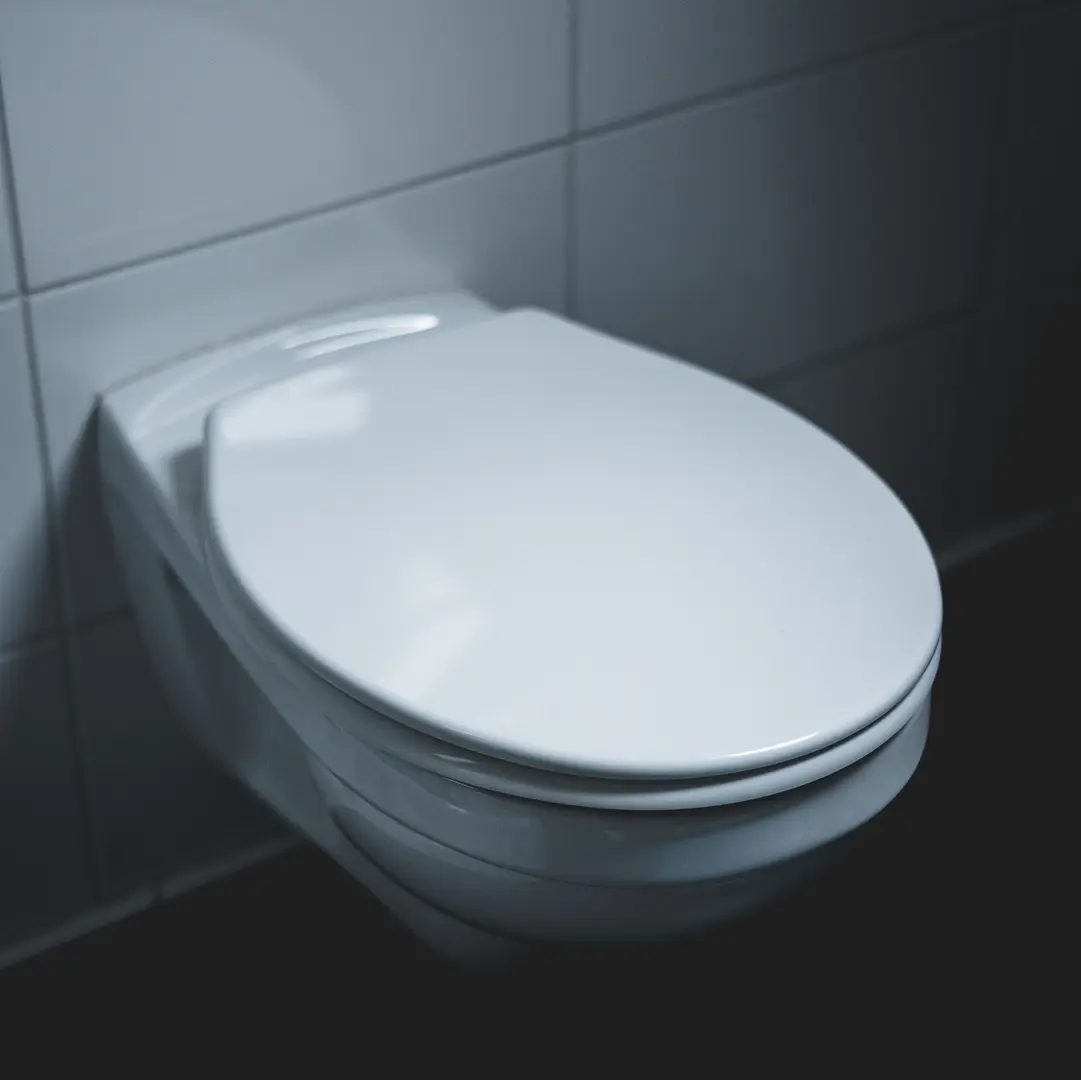
Toilet seats may look interchangeable, but they vary in shape, dimensions, and fixing-hole spacing. So, are toilet seats standard size? Not entirely. Some models share common proportions, but you should not assume that any replacement seat will fit your toilet pan.
Choosing the right seat starts with identifying its shape and taking accurate measurements. This helps prevent overhang, poor alignment, unstable fittings, and the inconvenience of returning an unsuitable replacement.
Which Toilet Seat Styles Are Available?
Toilet seats are available in several styles designed to match different toilet pan profiles. The main options include:
- D-shaped toilet seats
- Square toilet seats
- Round toilet seats
- Family toilet seats with a smaller removable insert
Identifying your existing style is important because a seat should follow the outline of the toilet pan. Even if the hinges can be attached, a seat with the wrong profile may extend beyond the front or sides of the bowl. Alternatively, it may be too short or leave parts of the rim exposed.
Do not rely only on the name shown in an online listing. Compare the listed shape and dimensions with your toilet. Manufacturers may use broad style descriptions, while individual pans can still differ in length, width, and fixing positions.
D-shaped and round seats deserve particularly careful attention because they can look similar at first glance. Both have curved fronts, but their rear profiles are different. A D-shaped seat usually has a noticeably straight back, whereas a traditional round model has a more continuously curved outline.
If the old seat fitted correctly, use it as an initial visual reference. However, the toilet pan itself should be the basis for your measurements, especially if the current seat is damaged, loose, misaligned, or already appears to be the wrong size.
Recognizing a D-Shaped Toilet Seat
A D-shaped toilet seat has a straight rear edge and a rounded front. When viewed from above, the overall outline resembles a capital letter D.
The back of the seat runs relatively straight across the pan near the hinge area. From there, the sides extend forward before curving around to form a half-oval front. This combination gives D-shaped toilets a distinct profile, even though the curved front can initially make them look like round toilets.
To determine whether you have a D-shaped model:
- Look directly down at the toilet pan.
- Check whether the rear edge is straight rather than curved.
- Follow the sides toward the front.
- Confirm that the front forms a broad, rounded curve.
Pay close attention to the corners where the straight rear section meets the sides. That transition is one of the easiest ways to distinguish a D-shaped pan from a fully rounded one.
Shape identification is only the first step. Two D-shaped seats are not necessarily identical in size. Before buying a replacement, compare the pan length, widest width, and distance between the fixing holes with the specifications of the new seat.
Identifying a Square Toilet Seat
Square toilet seats have an easily recognizable geometric profile. They are commonly associated with contemporary, minimalist bathroom designs and tend to have straighter sides and more defined corners than D-shaped or round alternatives.
The word “square” describes the general appearance rather than guaranteeing that every side has exactly the same dimensions. The front corners may also have some rounding rather than sharp angles. Nevertheless, the seat should still have a clearly squared-off look when viewed from above.
A square seat is usually simple to identify because:
- The front edge appears flatter than the front of a round seat.
- The sides follow relatively straight lines.
- The corners create a defined, angular outline.
- The overall design looks more geometric than oval.
Avoid fitting a curved seat to a square pan merely because the hinge spacing seems suitable. The mismatch is likely to be visible around the front and sides. Likewise, a square replacement seat should still be measured rather than selected by appearance alone. Differences in overall width, front-to-back length, and fixing positions can affect the fit.
If you are uncertain, photograph the toilet from directly above after removing the existing seat. A top-down view makes it easier to compare the pan outline with product images and diagrams.
Round Toilet Seats: A Traditional Choice
Round toilet seats are a traditional, long-established design. They are commonly found on older toilets, although their presence does not necessarily indicate the age of a bathroom.
A round seat has a smoothly curved front and an overall softer outline. Unlike a D-shaped seat, it does not have the same strongly defined combination of a straight back and half-oval front. Its shape appears more continuously rounded.
When identifying a round toilet seat, examine the complete pan rather than focusing only on the front curve. From some angles, a D-shaped pan can appear round. Viewing the toilet from above makes the rear edge and side profile easier to assess.
If you are replacing a seat on an older toilet, accurate measurements are especially important. The original model may no longer be available, and the pan may not correspond closely to current replacement designs. A new seat described as “round” could still differ from your toilet in length, width, or fixing-hole spacing.
The best replacement is therefore not simply any round seat. It is a model that combines the correct rounded profile with dimensions and hinge fittings that suit the existing pan.
What Features Does a Family Toilet Seat Have?
A family toilet seat includes a smaller, removable seat designed for children. The smaller insert sits within or alongside the main adult seat, allowing the toilet to be used by different members of the household without requiring a separate training seat each time.
This design can be particularly helpful during toilet training. The reduced opening gives a child a more appropriately sized seating area, while adults can use the main seat as usual. When the smaller seat is no longer needed, it can be removed where the design allows.
Family toilet seats are available in different styles, so choosing one involves more than deciding whether you want the child-sized insert. The main seat must still match the toilet pan. Depending on the model available, family-seat designs may suit round, D-shaped, square, or other pan profiles.
Before purchasing one, check:
- The shape of the main seat
- Its overall front-to-back measurement
- Its width at the broadest point
- The spacing and adjustment range of the fixings
- How the smaller seat is removed or positioned
- Whether both the adult and child seats align with the pan
The smaller insert does not compensate for an incorrectly sized main seat. Measure the toilet in the same way you would for any standard replacement, then confirm that the family model meets those requirements.
How to Take Accurate Toilet Seat Measurements
Remove the existing toilet seat before measuring whenever possible. This gives you a clear view of the pan and fixing holes, preventing the old seat or hinges from obstructing your tape measure.
It also ensures that you measure the toilet itself rather than copying the dimensions of a seat that may not fit correctly. If the existing seat overhangs, sits off-center, or leaves too much of the rim visible, using it as a template could repeat the same problem.
Take three key measurements:
| Measurement | Where to measure | Why it matters |
|---|---|---|
| Front-to-back length | From the fixing-hole area to the front edge of the pan | Helps determine whether the seat will end in line with the front of the toilet |
| Maximum width | Across the widest point of the toilet pan | Helps prevent excessive overhang or an undersized fit |
| Fixing-hole spacing | From one seat-fixing hole to the other | Determines whether the hinges can be positioned correctly |
Follow these steps for a reliable result:
Remove the current seat. Detach the seat and hinges as necessary so that the pan and fixing points are accessible.
Identify the fixing holes. These are the points at the rear of the pan where the seat is attached. Use consistent points on each hole when measuring.
Measure toward the front edge. Measure from the fixing-hole position to the furthest point at the front of the toilet pan. Keep the tape centered rather than running it diagonally.
Measure the widest part of the pan. Place the tape across the broadest point from one side to the other. Check that it is straight.
Measure between the fixing holes. Record the gap between the two mounting positions. Compare it with the new seat’s hinge arrangement or stated adjustment range.
Check each measurement again. Repeating the process can reveal a misplaced tape or a reading taken from the wrong point.
Confirm the shape. Measurements alone do not establish whether the pan is round, D-shaped, or square. Combine the dimensions with a direct visual comparison.
When shopping, compare your figures with the replacement seat’s specifications. Do not depend on a description such as “universal” without checking what range of pan dimensions and fixing positions the seat is intended to accommodate.
Take additional care with outdated or non-standard fittings. An older toilet may have unusual fixing positions, and an existing seat may have been adapted or installed with hardware that is no longer commonly available. If the measured fixing gap does not match the replacement, do not assume that tightening or forcing the hinges into position will solve the issue.
A small difference in appearance can also matter. Check where the new seat will sit in relation to the front and sides of the pan. The goal is a stable, properly aligned fit that follows the toilet’s outline as closely as possible.
Navigating Non-Standard Plumbing Fixtures
Seat dimensions and toilet plumbing connections are separate issues, but both can arise during bathroom repairs. A seat attaches to fixing holes in the pan, while a toilet connector or valve is part of the water-supply system. Measuring one will not tell you the required size of the other.
Older or non-standard plumbing equipment can make it difficult to connect modern parts. A connector may appear close to the correct size but still fail to fit the existing valve properly. Reusing an outdated connector simply because it was already installed can lead to an incompatible connection and may contribute to leaks or flooding.
To identify the correct connector, inspect the existing valve and connector rather than estimating from appearance. If the current plumbing uses a non-standard or obsolete fitting, finding a direct modern replacement may be difficult.
Where appropriate, one practical solution is to replace the outdated valve or connector with a standard-size valve that is compatible with readily available modern parts. This can make future maintenance and replacement work more straightforward.
However, changing a valve is different from replacing a toilet seat. It may require:
- Shutting off the water supply
- Disconnecting existing plumbing
- Making a permanent alteration
- Checking the completed connection carefully before normal use
Do not force mismatched plumbing components together or rely on a connection that does not seat correctly. If altering the valve or supply connection is beyond the scope of a straightforward repair, use a suitably qualified plumbing professional.
Ultimately, toilet seats are not all the same size. Correct selection depends on matching the pan’s shape, length, width, and fixing-hole spacing. Careful identification and measurement are more reliable than assuming a seat is standard based on its general appearance alone.