Can You Use a Bath Mat on Underfloor Heating?
Yes, you can usually use a bath mat on underfloor heating, provided the mat is suitable for heated floors and does not create a heavily insulated, moisture-trapping layer. A thin, washable cotton mat with little or no rubbery backing is often the simplest choice.
The important caveat is that the heating-system maker and the floor-covering maker may set their own limits. Check those instructions before using a mat, especially over electric radiant heating, vinyl flooring, wood-look flooring, or a newly installed floor. A mat that seems harmless can still reduce heat flow, hold dampness against the finish, or react with the floor if its backing is not compatible.
Why the bath mat matters on a heated floor
Underfloor heating works by sending warmth upward through the finished floor and into the room. Every layer placed on top adds some insulation. A small bath mat will not necessarily cause a problem, but a very thick mat, dense foam pad, or solid rubber backing can slow the transfer of heat in that spot.
In a bathroom, the mat also gets wet. If it stays damp on the floor for long periods, moisture can become a bigger everyday concern than heat. Dampness under a mat may leave a mark, encourage odors in the mat, or be harder on certain floor finishes and grout than a mat that is lifted and dried regularly.
This does not mean every bath mat must be removed. It means the mat should be treated as a removable bathroom textile, not as permanent floor coverage.
The best types of bath mat for underfloor heating
For most heated bathroom floors, look for a mat that is low-profile, washable, and clearly identified by its maker as compatible with heated floors if that information is available.
Thin cotton mats
Cotton is a practical option because it is absorbent, washable, and generally less insulating than a deep foam mat. A flat-woven or low-pile cotton bath mat lets more warmth pass through than a thick, densely cushioned rug.
Cotton does not automatically make every mat suitable. Check the underside as well as the pile. A cotton top with a thick latex, rubber, or foam layer underneath may behave very differently from a reversible cotton mat.
Low-pile synthetic mats without heavy backing
A low-pile polyester, nylon, or similar synthetic mat may also work if it is made for use over heated floors. The key is the overall construction: moderate thickness, no dense insulating core, and a backing that the manufacturer says is appropriate for the floor and heating system.
Synthetic fibers can be easy to wash and quick to dry, but do not assume that “quick-drying” means heat-safe. Inspect the care label and product details for backing information.
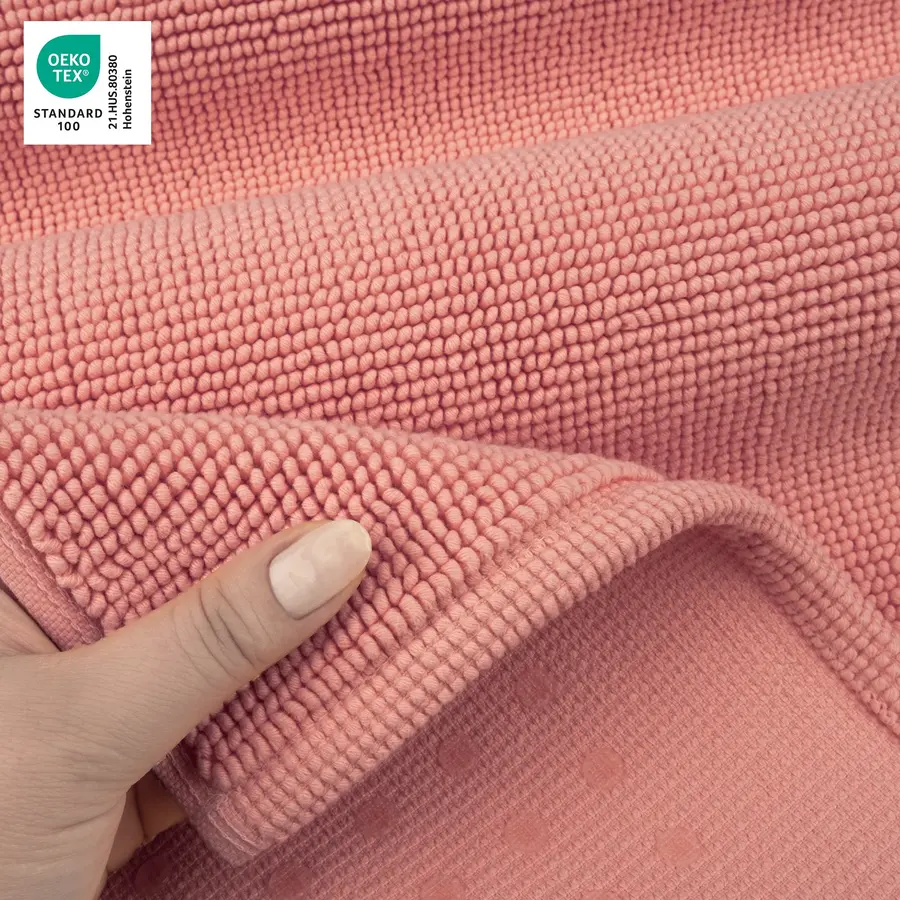
Mats with a breathable textile backing
A mat with a woven or textile underside is generally less likely to form a sealed layer against the floor than one with a continuous rubbery coating. It can also be easier to launder thoroughly.
Source: americansoftlinen
A textile-backed mat may slide more easily, however. If non-slip performance is essential, choose a mat specifically rated for heated floors rather than adding an unapproved rubber pad underneath.
Be cautious with rubber-backed and foam-backed mats
A rubber backed bath mat underfloor heating can be a poor combination unless both the mat and the floor manufacturer state that it is compatible. Some rubber, latex, PVC, and foam backings can hold heat below the mat. Depending on the material and floor finish, they may also soften, stick, discolor the surface, or leave residue over time.
That risk varies widely. Tile and stone may tolerate a mat differently from vinyl, laminate, engineered wood, or a coated floor. The output and controls of the heating system matter too. For that reason, there is no single rule that makes every rubber-backed mat unsafe or every unbacked mat safe.
Avoid treating a bath mat as acceptable simply because it is labeled “non-slip.” Non-slip describes grip, not necessarily compatibility with a heated floor.
Questions to check before buying
Use this short checklist when selecting a non slip bath mat for a heated tile floor:
- Does the bath-mat maker say it can be used over underfloor or radiant heating?
- What is the backing made from: woven fabric, latex, rubber, PVC, foam, or another material?
- Is the mat thin or low-pile rather than deeply cushioned?
- Does your heating-system manual restrict rugs, mats, or floor coverings?
- Does the floor manufacturer warn against rubber-backed products, plasticizers, or moisture held under mats?
- Can the mat be washed and fully dried regularly?
If the available information is vague, choose a thin, reversible, washable mat with no added backing, or ask the heating installer, system manufacturer, or flooring manufacturer for guidance.
Placement makes a difference
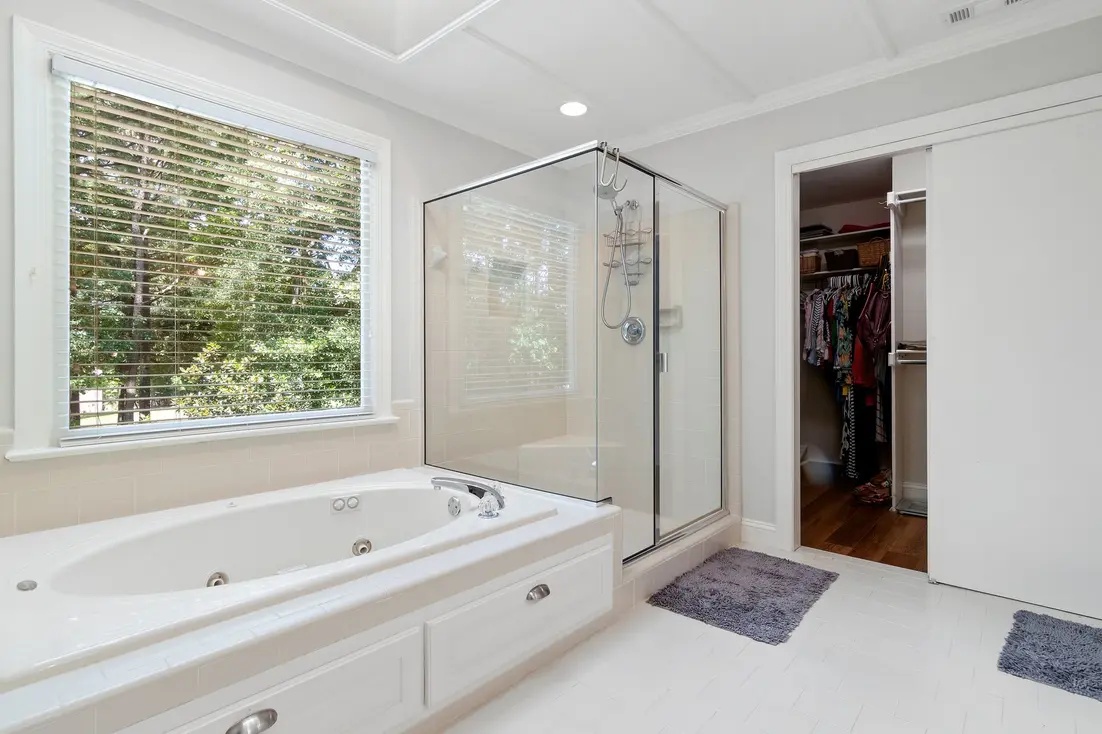
Keep the mat where it is needed: immediately outside the shower or tub, rather than covering a large part of the bathroom floor. A compact mat is easier to lift, dry, and inspect.
Do not layer a bath mat over a separate non-slip rug pad unless the pad is also approved for heated floors. Two soft layers can trap more heat and moisture than the mat alone. They can also make the surface less stable underfoot.
If your floor has a thermostat or floor-temperature sensor, follow the system instructions rather than trying to adjust settings around the mat. Do not increase the heat just to compensate for a thick rug; switching to a less insulating mat is the more practical fix.
A simple care routine for bath mat safety
Underfloor heating bath mat safety is largely about preventing a wet, covered patch of floor from becoming a permanent condition. A simple routine helps:
- Hang or drape the mat after bathing so both sides can dry.
- Lift it completely when cleaning the bathroom floor.
- Check the underside of the mat and the floor below it for tackiness, discoloration, trapped grit, or persistent dampness.
- Wash the mat according to its label, and dry it fully before putting it back.
- Replace the mat if its backing is cracking, shedding, sticky, or no longer grips safely.
This routine is particularly useful in bathrooms with limited ventilation, where a thick mat may stay damp much longer than expected.
Signs that your current mat is not a good match
Remove the mat and reassess it if you notice that the area underneath feels unusually hot compared with the surrounding floor, the backing feels soft or sticky, or the floor finish changes color or texture. Also reconsider the mat if it remains damp underneath after normal drying time, slides when stepped on, or leaves a residue when lifted.
These signs do not identify the exact cause on their own. Stop using the mat until you can check the instructions for the floor, heating system, and mat. If you see damage to the floor finish or have concerns about the heating system, contact the appropriate manufacturer or installer rather than covering the area again.
The practical choice for most bathrooms
For a comfortable mat without unnecessarily blocking radiant warmth, choose a thin, low-pile, washable bath mat with a breathable or unbacked underside. Lift it to dry, clean beneath it regularly, and avoid thick foam, dense pads, and unspecified rubber-backed mats.
The safest final answer is always the one supported by your particular floor and heating-system documentation. Heated floors, mat backings, and finished surfaces are not all built the same, so manufacturer compatibility matters more than a general material label.
References
- Bath mats suitable for underfloor heating systems: materials and care. (n.d.). https://ru.ningbodwoo.com/news/bath-mats-suitable-for-underfloor-heating-systems-materials-and-care.html
- Rugs and underfloor heating: A complete guide - Rugvista. (n.d.). https://www.rugvista.co.uk/inspiration/guides/rugs-and-underfloor-heating
- Rugs for Underfloor Heating: Safe Materials and Tog. (n.d.). https://the-rugs.com/blogs/interior-design-guides/best-rugs-for-underfloor-heating
- Can mats damage underfloor heating? : r/Tile - Reddit. (n.d.). https://www.reddit.com/r/Tile/comments/1br1ka5/can_mats_damage_underfloor_heating
- Rugs on Underfloor Heating | A Practical Guide. (n.d.). https://casaamar.it/en/blogs/blogs/rugs-underfloor-heating-practical-guide
- The Ultimate Guide to Underfloor Heating Mats - Tempsens. (n.d.). https://tempsens.com/blog/the-ultimate-guide-to-underfloor-heating-mats-construction-installation-and-benefits
- Underfloor Heating And Rugs: 10 Tips For Choosing The Best. (n.d.). https://renoazul.com/underfloor-heating-and-rugs
- Bath Rugs for Heated Bathroom Floors: 2026 Buying Guide – Superior Brand. (n.d.). https://www.superiorbrand.com/blogs/resources/bath-rugs-for-heated-bathroom-floors