Why Does My Bath Mat Stay Wet for Hours?
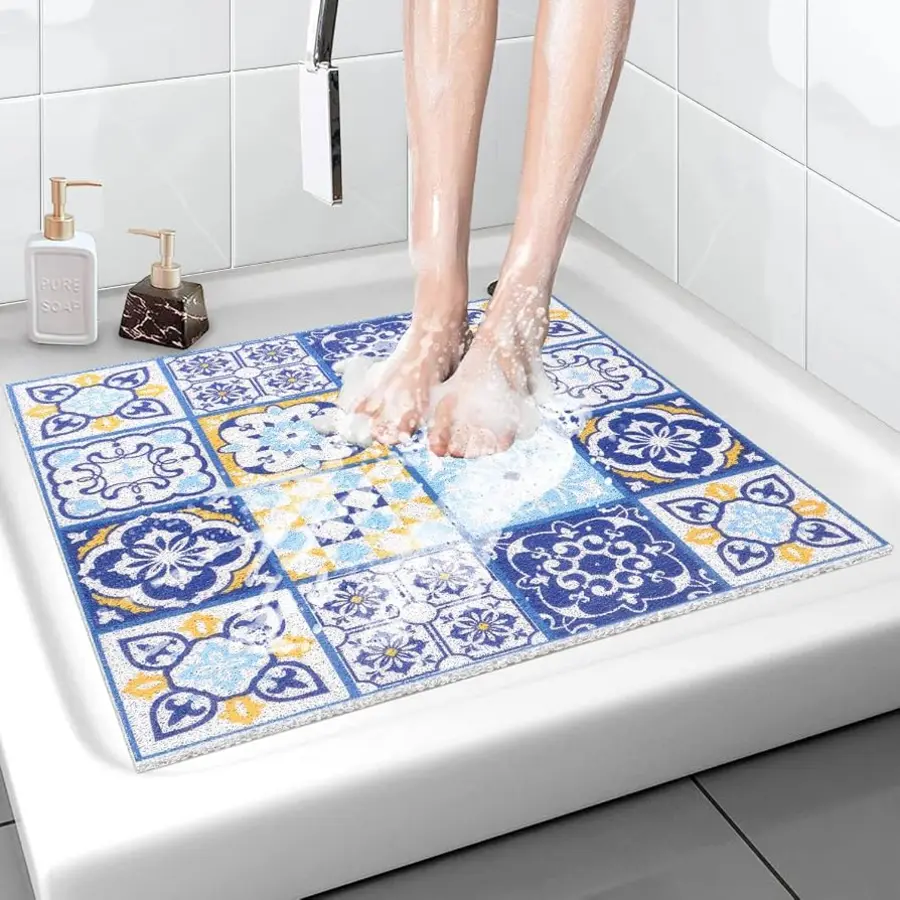
A bath mat stays wet because it is absorbing more water than the room can evaporate between showers. The usual causes are a thick or dense mat, a moisture-trapping non-slip backing, water underneath the mat, limited bathroom airflow, or several people using the same mat in a short period.
The quickest improvement is usually not buying a new mat. After each shower, lift it off the floor, shake it out, and hang or drape it so air can reach both the top and the backing. If it still feels damp long after the room itself has dried, look closely at the mat material, its placement, and how it has been washed.
Start by checking where the moisture is
A wet surface tells you something different from a wet underside. Pick up the mat rather than judging it only by how it feels underfoot.
- Wet on top, dry underneath: The pile or fabric is holding water from feet and needs more airflow or more time between uses.
- Dry-ish on top, wet underneath: Water may be pooling below it, or the backing may be holding moisture against the floor.
- Wet all the way through: The mat may be too thick for the bathroom conditions, heavily used, or not fully rinsed after washing.
- Mat is wet and nearby floor is wet: More water may be escaping the shower area than the mat can reasonably handle.
Do this check shortly after a shower and again later in the day. It helps separate a slow-drying mat from a floor-water problem.
Common reasons a bath mat is not drying
The mat is too dense for the room
Plush cotton, high-pile microfiber, and padded memory-foam styles can feel comfortable because they hold a lot of material—and, once wet, a lot of water. A thick mat may dry acceptably in a bright, well-ventilated bathroom but stay damp in a small, enclosed one.
Dense rubber or latex-style backing can slow drying too. It prevents water from passing through to the floor, which is useful, but it also means the underside has less exposure to moving air. A mat can seem nearly dry on top while the backing remains damp for much longer.
This does not automatically mean a thick mat is a poor choice. It means it needs a drying routine and may be less practical for a busy bathroom with back-to-back showers.
The mat is left flat on the floor
A mat placed flat on tile has very little airflow beneath it. If the floor was damp before the mat went down, the backing can seal that moisture in. Even a relatively quick-drying fabric cannot dry well when one entire side is pressed against a cool, damp floor.
Avoid pushing the mat tightly against the tub, shower threshold, vanity, or wall. These spots often receive splashes and restrict air around the edges.
The bathroom has limited airflow
Bathrooms hold humidity after showers, particularly when the door stays closed and there is no effective path for moist air to leave. If the mirror remains foggy and towels also stay damp, the bath mat is probably part of a wider moisture issue rather than the only problem.
Use the bathroom exhaust fan if one is installed and working, following its manufacturer instructions. Open the door when practical after showering, and avoid blocking a fan grille with dust buildup. If a window is available and conditions allow, opening it can also help move humid air out.
A fan that is noisy but does not seem to clear steam may need attention from a landlord, building manager, or qualified professional. Renters should report ongoing ventilation problems rather than trying to alter electrical equipment themselves.
More than one person uses the mat
One shower may leave a fabric mat damp. Several showers close together can saturate it before it has any chance to recover. This is especially common in shared homes, family bathrooms, and bathrooms used during a busy morning routine.
In this situation, the mat is not necessarily defective. It may simply be undersized or unsuitable for the amount of water and foot traffic it receives.
Water is escaping the shower area
A bath mat is meant to catch drips from clean feet as people step out. It is not designed to manage a steady stream of water from outside the shower.
Check for a shower curtain that hangs outside the tub, gaps at the curtain edges, a liner that is too short or too narrow, or water splashing through an open shower-door gap. Also look at where people step out. If the mat is set well away from the exit point, water may land on the floor first and work underneath it.
If water repeatedly appears beyond the mat, address containment first. Drying the mat faster will not solve recurring puddles.
A simple routine to dry a bath mat faster
Use this routine after showering, especially if the bathroom is small or shared:
- Check the floor beneath the mat. If there is water under it, wipe the floor dry before putting the mat back.
- Lift and shake the mat. This releases surface moisture and prevents it from sitting flat against the tile.
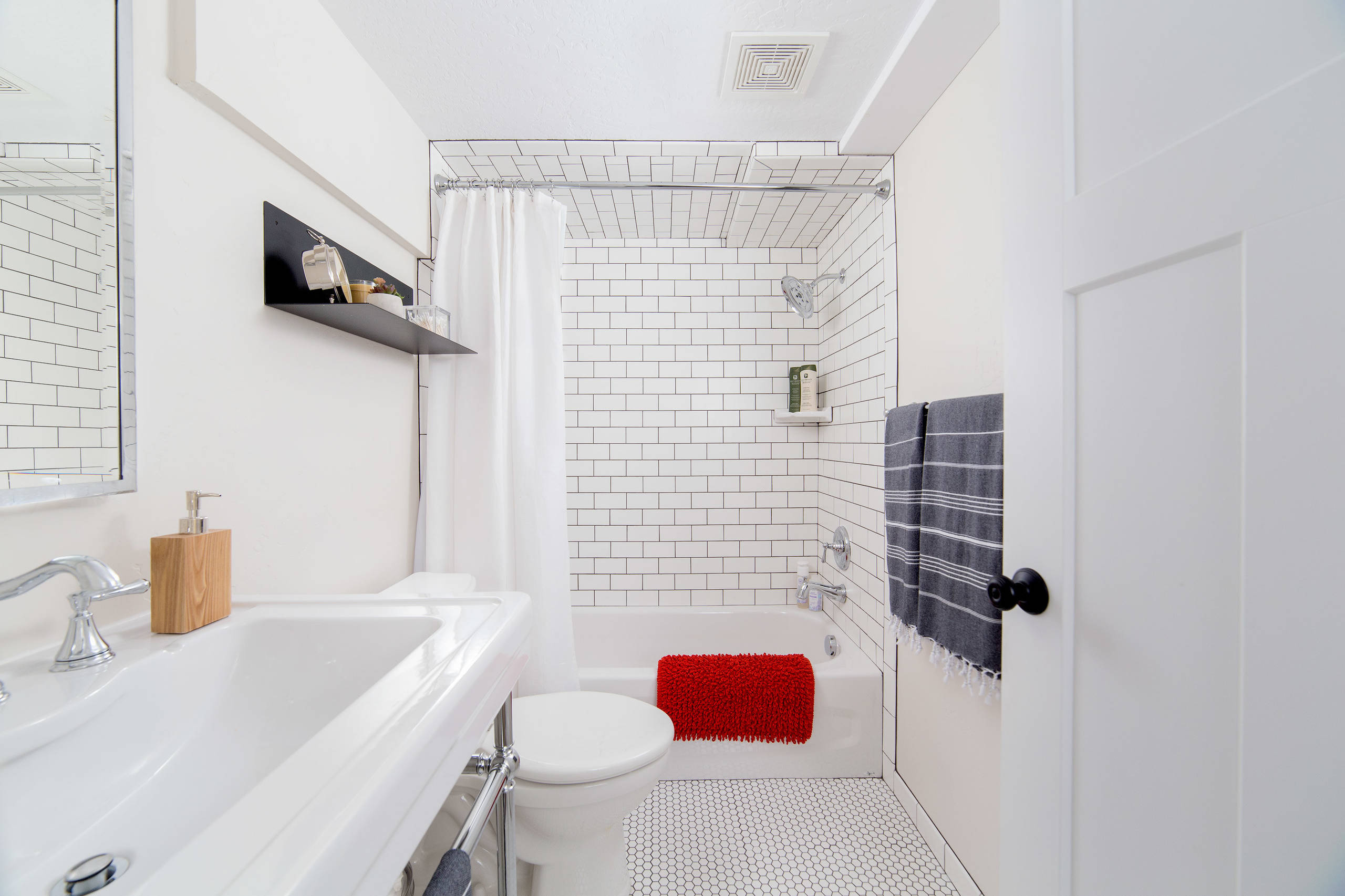
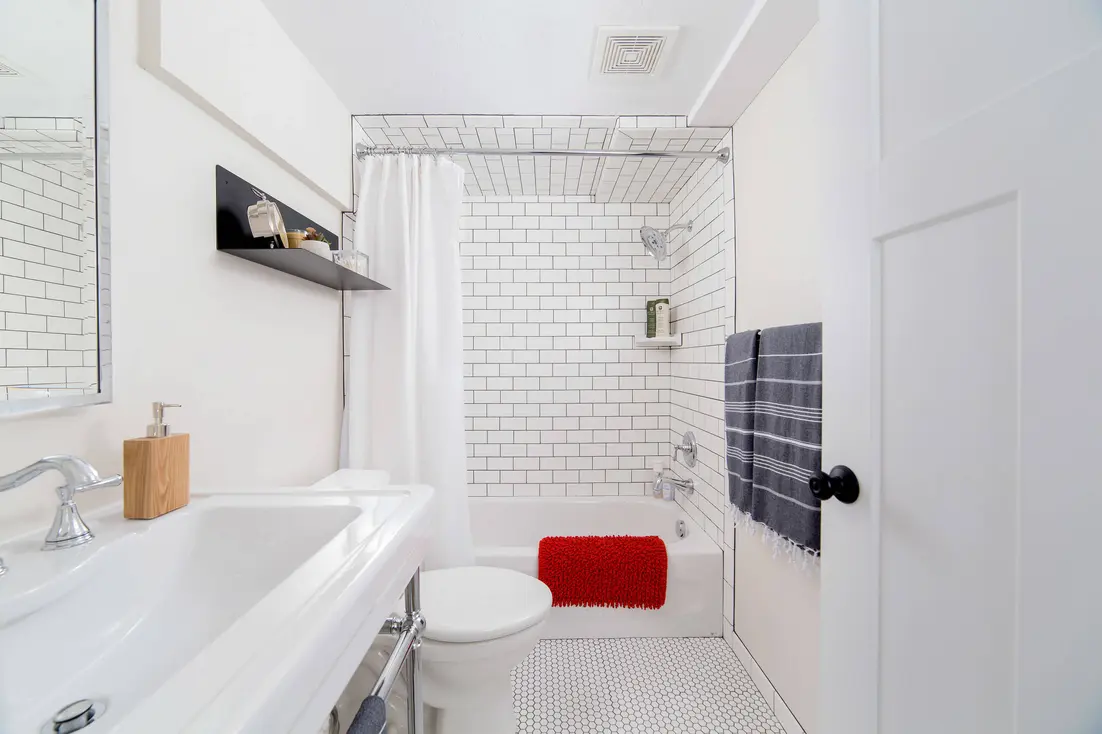
- Hang or drape it open. Use a towel bar, drying rack, shower rod, or another stable spot where both sides can air out. Do not hang it where it can fall into the tub or create an obstacle.
- Move humid air out. Use normal bathroom ventilation and leave enough space around the mat for air to circulate.
- Return it to the floor only when the underside is dry. If you need a mat on the floor sooner, use a clean spare.
Source: st.hzcdn
Do not place a damp mat over a heater, use it near an open flame, or improvise with unsafe electrical drying methods. For machine drying, heat settings, or whether the backing can tolerate a dryer, follow the care label rather than assuming all bath mats can be treated alike.
Wash it in a way that restores absorbency
A bath mat can become less effective when detergent, softener, body-care residue, or general soil builds up in the fibers. The result can be confusing: the mat may feel stiff, smell stale, absorb slowly, or stay wet because its fibers are coated and its bulk is not rinsing cleanly.
Check the sewn-in care label before laundering. Wash according to its fabric and backing instructions, use the recommended detergent amount, and make sure the mat is thoroughly rinsed and fully dried before returning it to the bathroom. Avoid adding products that the label advises against. Some mats, especially foam-backed or rubber-backed styles, can be damaged by unsuitable washing or drying methods.
If the mat smells damp soon after washing, inspect it once dry. The odor may be coming from the backing, trapped residue, or moisture under the mat rather than the visible fabric alone.
Use a rotation in busy bathrooms
Keeping two bath mats is often the simplest answer when one cannot dry between showers. One mat can be on the floor while the other dries completely elsewhere. This approach is particularly useful if the bathroom has no window, several people shower there, or the mat is thick by design.
A rotation also gives you a chance to clean the floor underneath. A dry mat placed on a damp floor will quickly become part of the moisture problem.
For a bathroom that stays humid, consider a mat with a lower pile, less bulky construction, or a design intended to dry more quickly. Prioritize a stable backing and a size that covers the real step-out area without folding, curling, or reaching into the shower path.
When the mat may need replacing
A bath mat is worth replacing when its condition—not just the bathroom environment—is preventing it from doing its job. Look for these signs:
- The backing is cracked, peeling, sticky, warped, or no longer grips the floor reliably.
- The mat stays damp despite being washed, fully dried, and hung after use.
- It has a persistent stale odor that returns quickly after proper laundering.
- The fabric has become flattened, matted, or noticeably less absorbent.
- The mat sheds backing fragments or leaves residue on the floor.
- It curls at the edges or slides when stepped on.
A damaged backing can reduce stability and may hold moisture against the floor. Replace a mat that no longer lies flat or stays put, and keep the floor dry before placing a new one down.
When to look beyond the bath mat
If towels, walls, mirror surfaces, and the bath mat all remain damp for a long time, the problem may be room-wide humidity or inadequate ventilation. Repeated moisture around baseboards, under a vanity, near the tub, or outside the shower can also point to a containment issue or a leak that needs investigation.
For renters, document recurring wet areas and report them through the appropriate maintenance channel. For homeowners, persistent unexplained moisture, staining, or material damage is a reason to have the source checked rather than repeatedly replacing textiles.
A bath mat should absorb the last drips after a shower, then dry between uses. If it cannot, improve airflow, keep the underside dry, hang it up after use, and choose a mat that matches the bathroom’s actual moisture level and daily traffic.
References
- Bathroom Stays Wet After Shower? A Drying Routine That Prevents Mold | BetterHomeHabits. (n.d.). https://betterhomehabits.com/articles/bathroom-dry-after-shower-routine.html
- This £13.59 Amazon bath mat tackles wet bathroom floors. (n.d.). https://www.netmums.com/home-garden/home/say-goodbye-to-cold-feet-this-13-59-heated-bath-mat-tackles-wet-bathroom-floors-and-its-machine-washable
- Upgrade Your Bathroom with Garnen Quick-Dry Bath Mats: Comfort, Safety & Style – Fosmon. (n.d.). https://fosmon.com/blogs/fosmon-blog/garnen-quick-dry-bath-mats-guide
- The Surprising Truth About Memory Foam Bath Mats: Do They Really Absorb Water? - HouseFixMaster. (n.d.). https://housefixmaster.com/do-memory-foam-bath-mats-absorb-water
- Stone Bath Mat vs Fabric Bath Mat: Which is Better for Your Bathroom?. (n.d.). https://www.naturevahome.com/en-au/blogs/news/stone-bath-mat-vs-fabric-bath-mat-which-is-better-for-your-bathroom
- memory foam bath mat - memory foam bath mat for sale.. (n.d.). https://www.everychina.com/site-memory-foam-bath-mat
- Ebern Designs Bathroom Rugs, Extra Soft Absorbent Bath Rugs, Non-Slip, Quick Drying, Machine Washable, Plush Comfort for Bathroom Floor, Tub, Shower and Home Decor Accessories & Reviews | Wayfair. (n.d.). https://www.wayfair.com/bed-bath/pdp/ebern-designs-bathroom-rugs-extra-soft-absorbent-bath-rugs-non-slip-quick-drying-machine-washable-plush-comfort-for-bathroom-floor-tub-shower-and-home-decor-accessories-w114526327.html?piid=2056725382%2C2056725387&auctionId=2d41d081-7c7e-4a79-8802-11152ec949f9&trackingId=%7B
- Ebern Designs Bathroom Rugs, Extra Soft Absorbent Bath Rugs, Non-Slip, Quick Drying, Machine Washable, Plush Comfort for Bathroom Floor, Tub, Shower and Home Decor Accessories & Reviews | Wayfair. (n.d.). https://www.wayfair.com/bed-bath/pdp/ebern-designs-bathroom-rugs-extra-soft-absorbent-bath-rugs-non-slip-quick-drying-machine-washable-plush-comfort-for-bathroom-floor-tub-shower-and-home-decor-accessories-w114526327.html?piid=2056725382%2C2056725387&auctionId=8dd0226f-b838-40ee-a381-17f3919703d9&trackingId=%7B