Bath Mat vs Bathroom Rug: What’s the Difference?
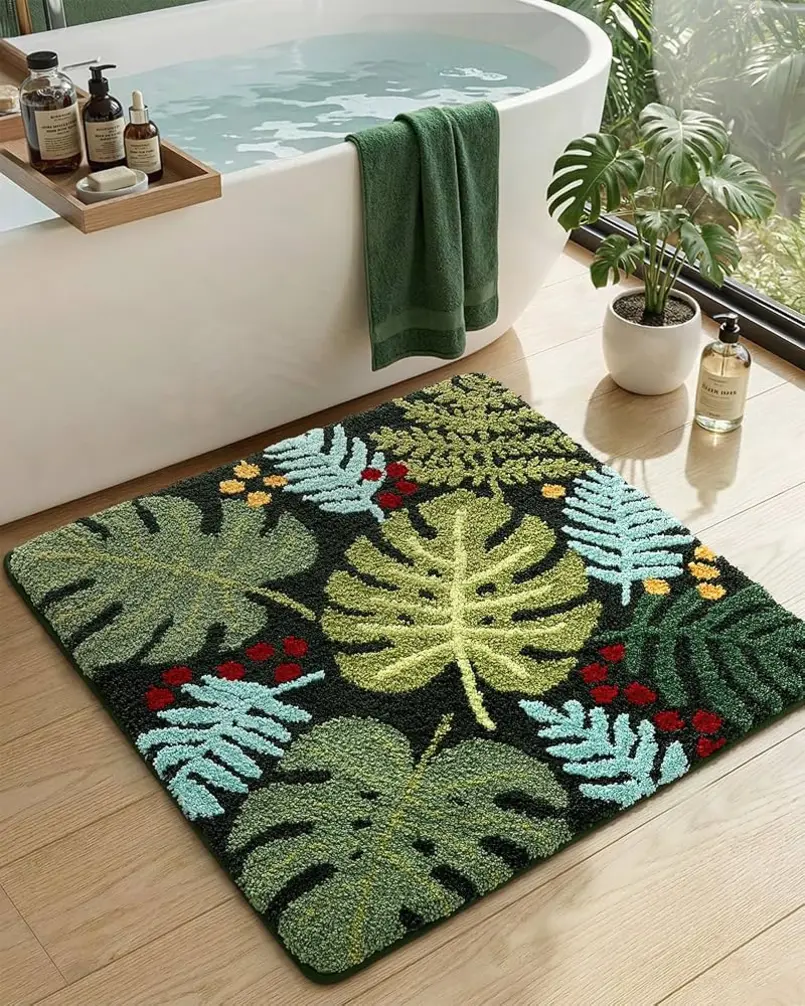
The main difference in bath mat vs bathroom rug is purpose. A bath mat is made to catch water from wet feet and provide a more practical surface beside a shower or bathtub. A bathroom rug is usually chosen more for appearance, comfort, and coverage, although some rugs can also handle light moisture.
That does not mean every bath mat is automatically slip-proof or every bathroom rug is unsuitable near water. Materials, backing, pile, construction, and care instructions matter. For the wettest area of the room, a purpose-built bath mat is generally the simpler choice. A decorative rug can work in a drier area, such as in front of a vanity, if it stays flat, dries properly, and has suitable slip resistance.
Bath mat vs bathroom rug at a glance
| Feature | Bath mat | Bathroom rug |
|---|---|---|
| Main purpose | Absorb water and provide a practical step-out surface | Add comfort, color, texture, or coverage |
| Best location | Directly outside a shower or bathtub | In front of a sink, vanity, or another relatively dry area |
| Water handling | Usually designed for regular splashes and wet feet | Varies widely by material and construction |
| Backing | May include a non-slip backing or require a separate pad | May have little or no grip unless specifically designed for bathrooms |
| Pile | Often low, looped, textured, or quick-drying | Can be low or plush, depending on the design |
| Care | Often selected for frequent washing and drying | Must be checked for washable construction and backing care |
The terms are not used consistently by every retailer. Some products labeled “bath rug” are highly absorbent and suitable beside a tub, while some mats are mainly decorative. Read the product details rather than relying on the name alone.
What makes a bath mat different?
A bath mat is intended to work immediately after bathing. Its main jobs are to catch water from your feet, reduce the amount of water transferred to the floor, and give you a more secure-feeling place to stand while drying off.
Commonly useful features include:
- Absorbent fibers, such as cotton or another material specified for moisture handling
- A surface that does not feel overly slippery when damp
- A backing designed to help limit movement, when appropriate for the floor
- Construction that can be washed and dried according to the care label
- A shape and size that fit the space without bunching against the tub or shower
A bath mat still needs maintenance. If it remains wet against the floor or is left in a heap, it can take longer to dry and may contribute to a damp, unpleasant bathroom environment. Lift or hang it when practical, and follow the manufacturer’s washing and drying instructions.
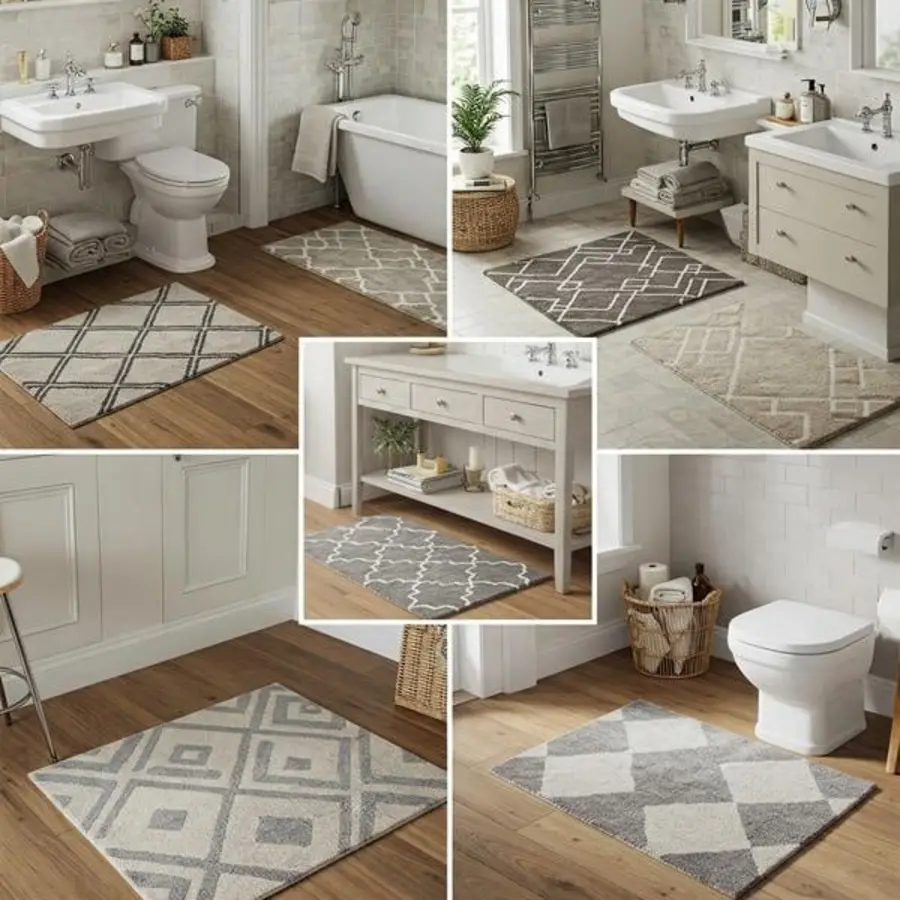
Source: the-rugs
What makes a bathroom rug different?
A bathroom rug is usually a decorative floor covering. It may coordinate with towels, a shower curtain, wall color, or other bathroom accessories. A rug can also make a hard floor more comfortable underfoot, especially in front of a sink where you may stand for several minutes.
The tradeoff is that a decorative rug is not necessarily designed for repeated soaking. A thick pile can hold moisture, and a backing that works well on a dry floor may not provide enough grip when the floor or rug becomes wet. Some rugs may also be difficult to wash or dry without damaging their shape or backing.
A washable bathroom rug is more practical than a standard household rug, but “washable” does not by itself mean absorbent, quick-drying, or slip-resistant. Check all three qualities separately.
Absorbency and drying
Absorbency matters most beside the shower or bathtub. A mat that takes in water from wet feet can help keep the surrounding floor drier. However, a very thick or dense surface may also hold more moisture and dry slowly.
For everyday use, consider the balance between absorption and drying:
- Choose a surface that can handle the amount of water your household typically brings out of the shower.
- Avoid placing a thick rug where it will receive repeated splashes unless the care instructions support that use.
- Make sure the mat or rug can be lifted and dried rather than staying pressed against the floor.
- Look for laundering instructions that fit your routine, including whether the item can be machine washed and how it should be dried.
If the floor underneath remains damp, the problem may be the product’s drying routine, the amount of water escaping the shower, or the mat’s size and placement—not simply whether the label says “mat” or “rug.”
Backing and bathroom floor safety
A non-slip bathroom rug or bath mat should stay reasonably stable on the type of flooring where it will be used. Backing that grips one floor may behave differently on another, particularly if the surface is dusty, wet, textured, or uneven.
Do not assume that a rubberized backing makes a product safe in every situation. Check the care instructions, because some backings can deteriorate with certain washing or drying methods. Also inspect the edges regularly. Curling, cracking, or a loose backing can create a trip concern.
If you use a rug in front of the sink, choose one that lies flat and does not shift when you step on or off it. A separate rug pad may be appropriate only if it is compatible with both the rug and the bathroom floor. Avoid improvising with materials that can slide, trap moisture, or damage the flooring.
Where should each one go?
Outside the shower or bathtub
Use a bath mat when this area receives water from wet feet or splashes. Place it where you naturally step out, while keeping it clear of the door swing and any floor drain. The mat should lie flat and should not be forced tightly against a fixture.
In front of the sink
A bathroom rug in front of the sink can work well because this area is often more decorative and receives less water than the shower exit. Select a low-profile, washable option with a suitable backing. If the sink frequently splashes or children use the area, prioritize easy drying and stable footing over a thick pile.
Around the toilet
A small rug may be used for comfort or appearance, but avoid shapes that bunch around the base or interfere with cleaning. Toilet-contour rugs can be harder to clean around and may not lie flat on every floor. A simple, washable shape is often easier to maintain.
Across the main walking path
Use caution with any loose textile in a high-traffic area. A rug that shifts, curls, or overlaps another mat can become a tripping problem. Keep pathways clear when possible.
Which should you choose?
Choose a bath mat if you need to:
- Catch water immediately after a shower or bath
- Reduce wet-foot traffic across the room
- Use a surface intended for frequent laundering
- Prioritize function near the main water source
Choose a bathroom rug if you need to:
- Add color, texture, or visual separation around the vanity
- Cover a larger, relatively dry section of floor
- Create a softer standing area in front of the sink
- Use a washable design that remains flat and stable
Many bathrooms work best with both: a purpose-built bath mat beside the shower or tub, plus a smaller washable rug in a drier area. The important point is to assign each item to the location its construction can handle.
A quick buying checklist
Before choosing either one, check:
- Location: Will it sit beside a shower, tub, sink, toilet, or in a walkway?
- Water exposure: Will it receive occasional splashes or regular water from wet feet?
- Backing: Is it intended for your floor type, and does it remain stable when damp?
- Pile and texture: Will it dry easily, lie flat, and avoid catching doors?
- Washability: Can you clean and dry it according to your household routine?
- Floor protection: Could the backing trap moisture, transfer color, or react poorly with the flooring?
The safest practical choice is usually a bath mat at the shower or tub and a low-profile, washable bathroom rug in front of the sink. When in doubt, favor stable footing, easy drying, and straightforward care over extra thickness or decoration.
References
- Bath Mat vs. Bath Rug: Understanding the Differences. (n.d.). https://www.rugs-direct.com/bath-mat-vs-bath-rugs
- Bath Mat vs Bath Rug: What’s The Difference? | Peacock Alley. (n.d.). https://www.peacockalley.com/pages/bath-rugs-vs-bath-mats
- Bath Mats vs. Bath Rugs - An Expert Guide - Elegant Strand. (n.d.). https://www.elegantstrand.com/blogs/designers-corner/bath-mats-vs-bath-rugs
- Let’s Talk Linens: What is the Difference Between a Bath Mat and a Bat. (n.d.). https://pioneerlinens.com/blogs/lets-talk-linens/what-is-the-difference-between-a-bath-mat-and-a-bath-rug
- Do I need a bath mat or can I use a rug in the bathroom? - Facebook. (n.d.). https://www.facebook.com/groups/lovenestconversation/posts/2478504382507393
- Bath Mat vs Bath Rug: The Key Differences when making a decision for your bathroom in 2026 | Badeloft. (n.d.). https://www.badeloft.com/blogs/guide/bath-mat-vs-bath-rug
- Best Bath Mats and Bath Rugs for Your Bathroom - The Home Depot. (n.d.). https://www.homedepot.com/c/ab/best-bath-mats-and-bath-rugs-for-your-bathroom/9ba683603be9fa5395fab901556808a3
- Bath Mat Buying Guide | The Company Store. (n.d.). https://www.thecompanystore.com/bath-mat-buying-guide.html