What Is the Best Material for Bath Towels?
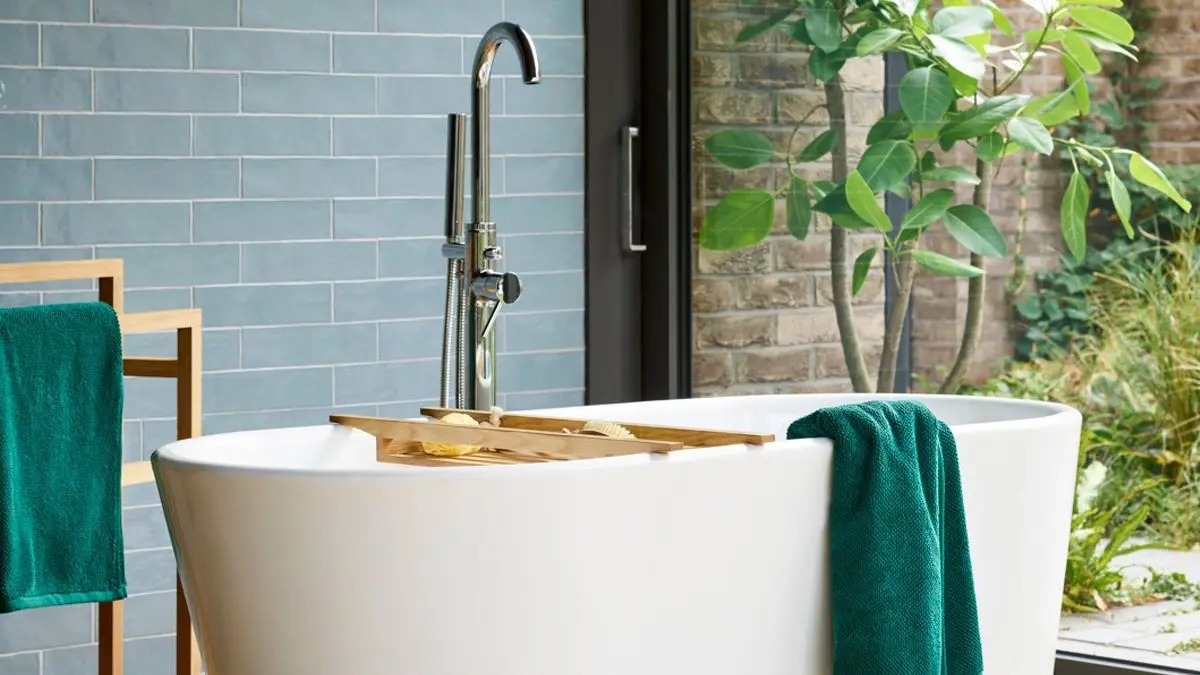
The best bath towel material for most homes is cotton, especially a well-made terry towel with a comfortable medium-to-high fabric weight. Cotton offers the most balanced combination of absorbency, softness, durability, availability, and straightforward care.
That does not make cotton the right choice for every bathroom. Linen can dry faster, microfiber is useful when compactness matters, and bamboo-based fabrics can feel smooth and absorbent. The practical choice depends on whether you value plush comfort, quick drying, easy storage, or low-maintenance everyday use.
Bath towel materials compared
| Material | Main strengths | Main tradeoffs | Often suits |
|---|---|---|---|
| Cotton | Absorbent, soft, durable, familiar to wash | Thick versions can take longer to dry | Everyday home use |
| Bamboo-based fabric | Smooth feel and good absorbency | May need more careful care and can dry more slowly than lightweight fabrics | Softness-focused bathrooms |
| Microfiber | Lightweight, compact, and quick-drying | Less plush and less natural-feeling | Travel, gyms, and humid spaces |
| Linen | Lightweight and fast-drying | Usually less fluffy and less absorbent than cotton | Warm or humid bathrooms |
These are broad tendencies rather than guarantees. The weave, pile, fabric weight, blend, and construction can change how a towel performs as much as the fiber itself.
Why cotton remains the best all-around choice
Cotton is widely used for bath towels because its fibers absorb water well while still feeling comfortable against the skin. Terry-loop construction adds surface area and creates the familiar soft, absorbent pile used in many household towels.
Cotton also provides a useful middle ground. A thick towel can feel substantial and hold plenty of water, while a lighter cotton towel is easier to wash, store, and dry. Cotton is generally durable enough for frequent laundering, and replacement towels are easy to find in many sizes and styles.
The main disadvantage is drying time. A dense, heavy cotton towel can stay damp in a poorly ventilated bathroom, particularly when it is folded over itself or hung where air cannot circulate. If your bathroom is humid, the best cotton towel may be a medium-weight or waffle-textured option rather than the thickest towel available.
Cotton types: Egyptian, Turkish, Pima, and organic cotton
Cotton labels can help describe the fiber or its origin, but they do not tell the whole story. A towel’s absorbency and drying time still depend on its weave, pile height, fabric weight, finishing, and construction.
Egyptian cotton is often associated with soft, luxurious towels. Turkish cotton is commonly chosen for a lighter feel and quicker drying compared with very thick cotton towels. Pima cotton can also feel soft and smooth. These descriptions are useful starting points, but a cotton name alone should not outweigh the towel’s actual construction and care requirements.
Organic cotton refers to how the cotton was grown, not to a guaranteed level of softness or absorbency. If these distinctions matter to you, check the complete fabric description and care label rather than relying only on a prominent marketing term.
Bamboo bath towels: soft and absorbent, but not automatically easier
Bamboo-based towels are valued for a smooth, silky feel and good absorbency. They can be appealing if you want something softer and less traditionally plush than standard cotton.
The term “bamboo towel” can describe a fabric made from bamboo-derived rayon or viscose, sometimes blended with cotton. That means the label should be read carefully. The fiber blend, weave, and weight affect the towel’s actual behavior.
Bamboo towels may not be the simplest choice if your priority is fast drying and uncomplicated laundering. Check the care instructions, and make sure the towel can be hung fully open in your bathroom. A soft towel that remains damp between uses will be less practical than a slightly lighter towel that dries reliably.
Microfiber bath towels: practical, compact, and quick-drying
Microfiber towels are made from synthetic fibers and are known for being lightweight, compact, and efficient at picking up moisture. They can dry quickly, which makes them useful for travel, gym bags, shared bathrooms, or spaces with limited airflow.
Their main drawback is feel. Microfiber usually does not provide the same fluffy, natural, spa-like texture as a cotton terry towel. Some people also prefer not to use synthetic fabric for a towel that touches the body after every shower.
Choose microfiber when storage space and drying speed are more important than plush comfort. For a main home bath towel, cotton is usually the more balanced option; for a secondary towel or frequent travel, microfiber can be convenient.
Linen bath towels: the quick-drying option
Linen towels are lightweight and breathable, and they can dry faster than thick cotton towels. This makes linen attractive in humid bathrooms, small spaces, and homes where towels must be washed and reused frequently.
Linen generally feels less fluffy than cotton and may absorb less water in a single use. Its appeal is not maximum plushness. It is a good fit if you prefer a thinner towel, want less bulk on a towel bar, or have difficulty keeping heavy towels dry.
A linen towel can also work well as a secondary hand or hair towel, even if you prefer cotton for drying after a bath or shower.
[[IMAGE:towel-drying]]
Weave and fabric weight matter as much as the fiber
Material is only one part of towel performance. Two towels made from the same cotton can feel and behave very differently.
- Terry weave: Looped yarn creates a soft, absorbent surface and is common for traditional bath towels.
- Waffle weave: A textured grid can reduce bulk and help a towel dry more readily than a dense, plush towel.
- Flat weave: Lightweight and often quicker to dry, but usually less cushioned and less absorbent than thick terry.
- Ribbed or textured construction: Can balance surface area, grip, and drying speed.
Fabric weight is often described with GSM, or grams per square meter. Higher GSM usually means a denser, heavier towel that feels more substantial and can hold more water. It can also take longer to dry. Lower GSM towels are easier to wash and dry, but may feel less luxurious.
Do not choose the highest fabric weight automatically. In a small or humid bathroom, a medium-weight towel that dries fully may be more comfortable to use than an extra-thick towel that stays damp.
How to choose for your bathroom
Use your bathroom and laundry routine to narrow the choice:
- Choose cotton terry for the best general balance of comfort, absorbency, and durability.
- Choose lighter cotton or waffle cotton if you want cotton’s familiar feel but need shorter drying times.
- Choose bamboo-based fabric if a smooth, soft texture is a priority and you can follow its care instructions.
- Choose microfiber for travel, compact storage, gym use, or very fast drying.
- Choose linen if low bulk and airflow matter more than a fluffy feel.
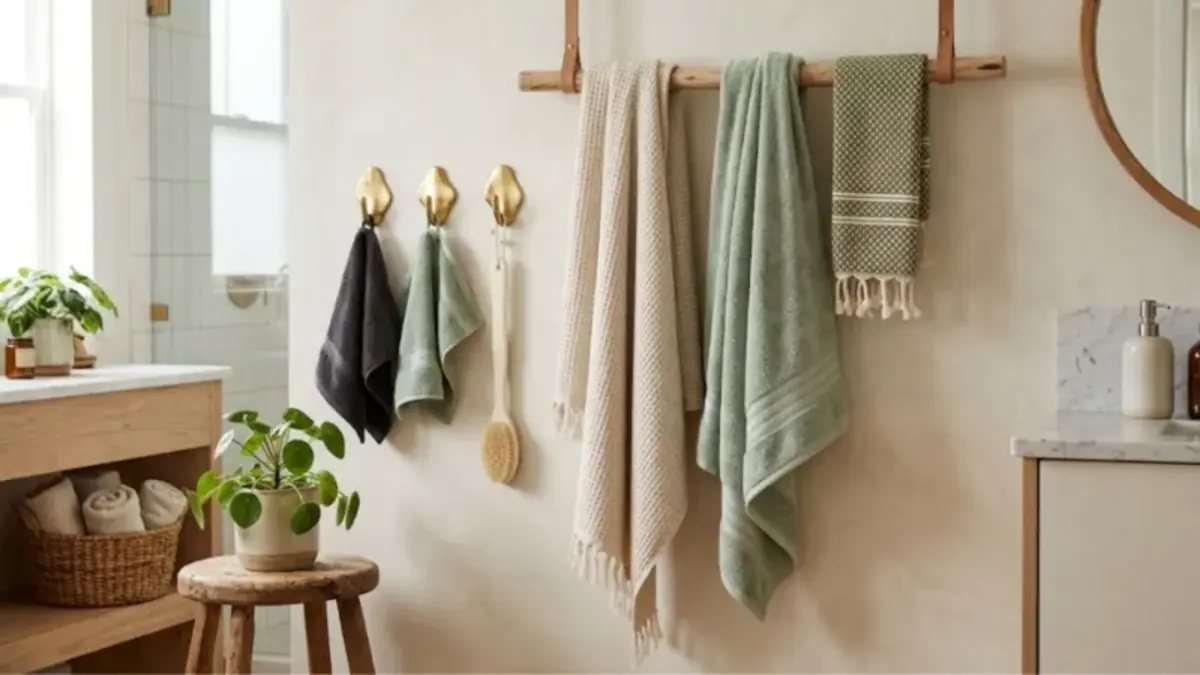
Also consider where the towel will hang. A towel draped fully open on a ventilated rack will usually dry more effectively than one crowded onto a narrow hook, regardless of its material.
Care habits that protect absorbency
Follow the manufacturer’s washing instructions, avoid crowding towels in the washer, and hang them open after use. Make sure they are completely dry before folding them into a cabinet or linen closet.
If a towel repeatedly smells damp, the problem may be insufficient drying rather than the fiber alone. Improve airflow, give each towel enough hanging space, and consider a lighter weave or fabric weight if the bathroom remains humid.
Bottom line
For most households, cotton is the best bath towel material because it combines strong absorbency, softness, durability, and manageable care. Choose a lighter cotton or waffle weave when drying time is a concern. Select linen or microfiber when quick drying and low bulk are the priority, and consider bamboo-based fabric when a smooth feel matters most. The best towel is not simply the one with the most luxurious label; it is the one that dries properly and fits the way your bathroom is used.
References
- Which Bath Towel Material Absorbs Best? Cotton, Linen, Bamboo or Micro – Loom Home Textiles. (n.d.). https://loomhometextiles.com/blogs/news/which-bath-towel-material-absorbs-best-cotton-linen-bamboo-or-microfiber
- Cotton vs. Bamboo vs. Microfiber: What Makes the Best Bath Towel?. (n.d.). https://authenticity50.com/blogs/news/cotton-vs-bamboo-vs-microfiber-what-makes-the-best-bath-towel
- What is the Best Material for Bath Towels?. (n.d.). https://www.healthierhomes.com/post/what-is-the-best-material-for-bath-towels
- Best Bath Towels for 2025: How to Choose the Perfect Option – monoya. (n.d.). https://www.monoya.com/blogs/blog/best-bath-towels-for-2025-how-to-choose-the-perfect-option
- How to Choose the Best Material for Bath Towels – Superior – Superior Brand. (n.d.). https://www.superiorbrand.com/blogs/resources/how-to-choose-the-best-material-for-bath-towels
- Best Bath Towels – Simplest ways to pick a perfect towel. (n.d.). https://bathfable.com/best-bath-towels-india-guide-to-perfect-bath-towel
- How bath towel is made - material, production process, making, history, used, composition, product, industry. (n.d.). https://www.madehow.com/Volume-4/Bath-Towel.html
- Cotton vs Microfibre vs Bamboo Towels - Which is the Best?. (n.d.). https://www.towelogy.co.uk/blogs/news/cotton-towels-vs-microfibre-towels-vs-bamboo-towels-a-thorough-comparison