How to Choose Bathroom Colors That Work With an Adjacent Hallway
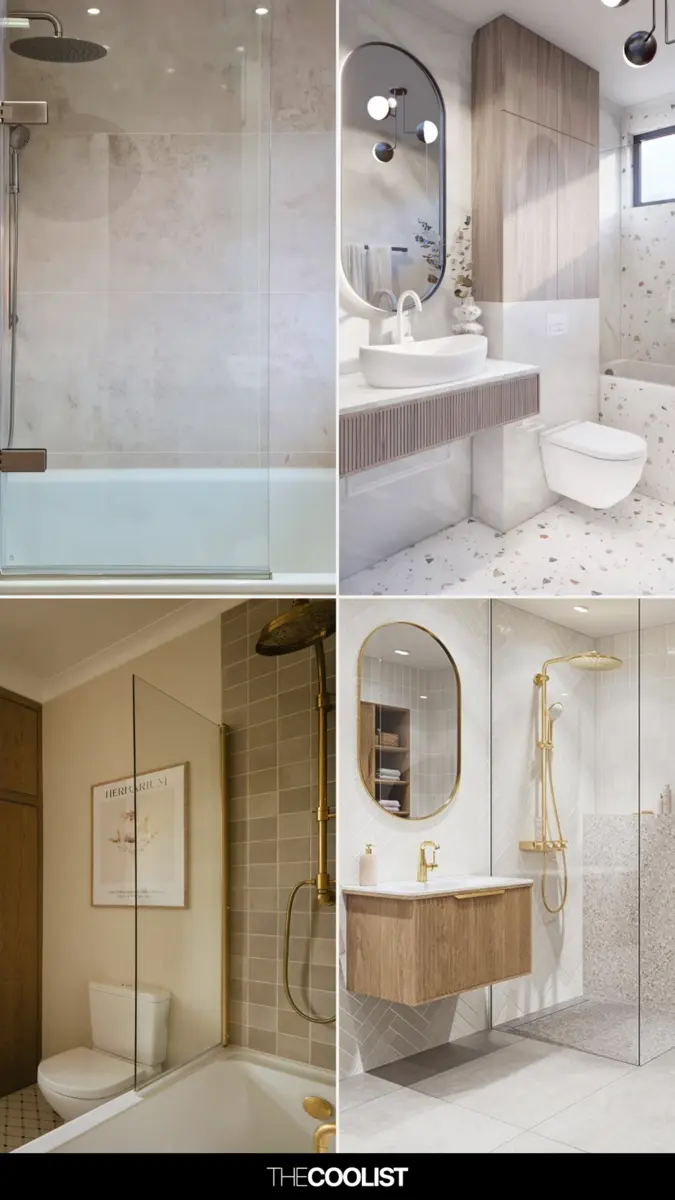
Bathroom colors that flow with hallway walls do not need to match exactly. The easier and more polished approach is to coordinate the spaces through a shared undertone, consistent trim, and one or two repeated colors or materials. This lets the bathroom have its own character without looking disconnected every time the door is open.
Start with what is fixed in the hallway: wall color, trim, flooring, nearby doors, and any room visible from the same sightline. Then choose a bathroom color that relates to those elements rather than choosing a favorite paint chip in isolation. A small bathroom can handle more color than a hallway, but the transition should still make visual sense.
Start With the View From the Hallway
The most important perspective is not from inside the bathroom. Stand in the hall where someone naturally approaches the room and look through the open door. Notice what appears together:
- Hallway wall color and bathroom wall color
- Door, frame, baseboards, and other trim
- Hallway flooring and bathroom tile
- Vanity color and countertop
- Shower curtain, bath mat, and towels
A bathroom door creates a clear frame around the room beyond it. If the bathroom walls are strongly cool while the hallway is noticeably warm, that contrast may feel abrupt even when each color looks good separately. The issue is usually not that the colors differ; it is that their undertones compete.
Keep the door open while evaluating color samples. If the door is usually closed, the relationship still matters, but you can be more flexible because the colors are seen together less often.
Match Undertones, Not Necessarily Paint Colors
Undertone is the subtle warm or cool cast beneath a color. Cream may lean yellow, pink, peach, or gray. Gray may lean blue, green, violet, or beige. White trim may look crisp and cool in one setting but soft and warm beside another paint color.
For bathroom and hallway colors to feel connected, their undertones should generally agree.
Warm hallway colors
A hallway with cream, ivory, warm beige, tan, honey-toned wood, or warm white trim usually works well with bathroom colors that have some warmth, such as:
- Soft sage with a muted yellow or olive base
- Dusty blue with gray-green softness rather than icy blue
- Blush, muted clay, or pale peach
- Mushroom, greige, or warm gray
- Deep olive, charcoal-brown, or softened navy for a more dramatic bathroom
A cool blue-gray bathroom can look sharp next to a yellow-cream hallway, especially under different lighting. It may still work if the bathroom includes a bridge color, such as warm wood, brass-toned hardware, cream towels, or a shower curtain with both hues.
Cool hallway colors
Hallways with blue-gray, cool white, slate, or charcoal elements tend to pair more easily with bathroom colors such as:
- Blue-green or muted aqua
- Cool sage or eucalyptus green
- Lavender-gray or soft mauve
- True gray, charcoal, or blue-black
- Clean white with cool gray or blue accents
The goal is not to make every room feel cool. A warm accent can add balance. Just avoid making the main bathroom wall color strongly golden, orange, or red-based unless another element repeats that warmth nearby.
Paint companies commonly recommend aligning the warm or cool undertones of adjoining spaces rather than using the same wall color throughout. Benjamin Moore’s bathroom color guidance makes the same practical point: connected rooms can use different colors while maintaining a related undertone.
Use Trim as the Connector
Consistent trim is one of the simplest ways to make different room colors feel intentional. If possible, keep the bathroom door, door frame, baseboards, and hallway trim in the same white or stain color.
This matters especially in a small bathroom, where the door casing takes up a noticeable amount of the view. Shared trim creates a visual pause between wall colors, so a pale green bathroom can sit comfortably beside a cream hallway or a deep blue bathroom can feel tied to a light neutral corridor.
You do not need to repaint all trim simply because the bathroom has a different wall color. But avoid introducing a third unrelated white in the bathroom unless there is a specific reason. A creamy hallway trim paired with stark, blue-white bathroom trim can make both whites look wrong.
Bathroom door color ideas
The bathroom door can either disappear into the trim scheme or act as a transition piece.
- Match the hallway trim: The most flexible option for a calm, continuous look.
- Match the bathroom trim: Useful when the bathroom has a distinct trim color used consistently inside the room.
- Paint it the hallway wall color: Can visually quiet a door in a narrow hall, provided the trim still offers enough definition.
- Use a muted accent color: Best when the accent already appears in both rooms, such as deep green repeated in a bathroom shower curtain and hallway artwork.
In most homes, a door color should support the overall palette rather than become the only bold note between two rooms.
Build a Bridge With Repeated Details
When the hallway and bathroom walls are different, repeat at least one color or finish across the threshold. This is more effective than trying to force an exact paint match.
Useful bridge elements include:
- A bathroom shower curtain that includes the hallway’s cream, gray, blue, or green
- Towels in a shade echoed by hallway art, runners, or nearby upholstery
- A bath mat that relates to the hallway floor or wall tone
- Wood tones repeated between a hallway console and bathroom mirror frame
- Black, brass, chrome, or nickel hardware used in both areas
- A neutral basket, tray, or storage bin in a color shared with the hallway
For example, a bathroom color scheme with a cream hallway could use muted green walls, white trim, natural wood, and a cream-and-green shower curtain. The cream is not the main bathroom color, but it appears enough to make the transition feel deliberate.
A bold bathroom can work the same way. If the bathroom is deep navy, use an off-white curtain with a navy detail, cream towels, or a warm wood accessory to relate it to a cream hallway. The dark color then reads as a contained choice, not a visual interruption.
Test Paint Swatches in Both Spaces
Paint samples often change dramatically between a hallway and a bathroom. Hallways may receive indirect daylight, while bathrooms may have a small window, no window, or strong vanity lighting. Tile, mirrors, and glossy surfaces also bounce color around the room.
Before committing, test samples in both locations.
- Paint large sample areas or use movable painted boards instead of relying only on small chips.
- Place one sample in the hallway near the bathroom door and one inside the bathroom.
- Look at both with the bathroom door open.
- Check them in daylight, evening light, and with the bathroom light on.
- Hold towels, a shower curtain sample, and a bath mat near the paint if those pieces will carry a noticeable accent color.
Do not judge a sample only against a white wall. Compare it directly with the hallway paint, the trim, and the bathroom’s fixed tile or countertop. A color that appears neutral by itself may reveal a green, pink, yellow, or blue cast when placed beside another neutral.
Choose the Bathroom’s Color Role
It helps to decide whether the bathroom should extend the hallway palette or provide a controlled contrast.
| Approach | How it works | Best for |
|---|---|---|
| Same or near-same neutral | Use a related shade of the hallway color, often lighter or darker | Small homes, open sightlines, rental updates |
| Related color family | Use different colors with compatible undertones, such as warm cream and muted sage | Most homes that need gentle definition between rooms |
| Deliberate contrast | Use a darker or bolder bathroom shade, tied back with trim and accessories | Bathrooms with a door that is often closed or a contained, more decorative look |
A related color family is usually the easiest choice. Lowe’s guidance on coordinated rooms similarly suggests using different shades of a color or colors with similar undertones to create a visual connection.
Let Soft Goods Carry the Bolder Color
If you are unsure about painting a bathroom a saturated color, introduce it first through removable pieces. This is particularly useful in rentals or when the hallway has a difficult-to-coordinate fixed color.
Try a neutral wall color that relates to the hall, then bring in stronger color with:
- A patterned shower curtain
- Two or three coordinating towels
- A bath mat
- Window fabric, if the bathroom has a window
- Soap dispenser, tray, or small storage containers
- Framed artwork kept away from direct splash zones
A shower curtain is especially useful because it occupies a large visual area in many bathrooms. Choose one that includes a hallway-friendly neutral plus the bathroom accent color. This makes the bolder shade look integrated before it appears on every wall.
Common Coordination Mistakes
Choosing paint under store lighting only
A paint chip can look warmer, cooler, darker, or cleaner once it is next to the hallway walls and bathroom tile. Always assess it at home in the actual sightline.
Treating all whites as interchangeable
White is not automatically neutral. Compare the bathroom’s white paint, vanity, toilet, tile, and trim with the hallway trim before selecting a new wall color.
Ignoring the floor transition
Flooring is often the strongest fixed connection between rooms. Warm oak hall flooring and pink-beige bathroom tile need a different paint direction than gray vinyl flooring and cool white tile.
Adding too many new accents
A bathroom does not need a new wall color, new trim color, new vanity finish, new shower curtain palette, and new hardware finish all at once. Keep one or two elements consistent with the hall, then let one feature take the lead.
A Simple Final Check
Before buying paint, stand in the hall with the bathroom door open and ask three questions:
- Do the wall colors look compatible in the same view?
- Does the trim look consistent rather than accidentally mismatched?
- Is there at least one repeated color or finish linking the rooms?
If the answer is yes, the bathroom does not need to match the hallway. It simply needs to look like it belongs in the same home. A coordinated undertone, shared trim, and a few connecting details are usually enough to make the transition feel calm and intentional.
References
- 14 Bathroom Paint Colors | Ideas and Inspiration | Benjamin Moore. (n.d.). https://www.benjaminmoore.com/en-us/project-ideas-inspiration/interiors/bathroom-ideas-inspiration
- Benjamin Moore Paint Colors for Bathroom. (n.d.). https://www.pinterest.com/ideas/benjamin-moore-paint-colors-for-bathroom/901474877615
- Paint Color Ideas for a Coordinated Bedroom and Bathroom. (n.d.). https://www.lowes.com/n/how-to/paint-color-ideas-for-coordinated-bedroom-bathroom
- 12 Interior Wall and Trim Colour Combinations. (n.d.). https://www.littlegreene.us/blog/12-interior-wall-and-trim-colour-combinations
- 12 Casa Brasil ideas | house interior, house design, paint colors for home. (n.d.). https://www.pinterest.com/chrissyp5/casa-brasil
- What colors to paint a bathroom with bold blue and grey …. (n.d.). https://www.facebook.com/groups/homedesign/posts/1497006894355492
- 37 Bathroom Color Ideas to Brighten Your Lackluster Loo | Architectural Digest. (n.d.). https://www.architecturaldigest.com/gallery/bathroom-color-ideas-to-try
- 5 Tips for Coordinating Paint Colors Between Adjoining Rooms. (n.d.). https://imagelinepainting.com/5-tips-for-coordinating-paint-colors