Bathroom Furniture Buying Guide: Choosing the Right Pieces
Buying bathroom furniture involves more than finding a vanity or cabinet that suits your décor. The right pieces must fit the room, provide practical storage, tolerate humid conditions, and work within your total renovation budget. This bathroom furniture buying guide explains how to balance space, function, design, durability, accessibility, and cost before making a purchase.
Plan Your Bathroom Storage Requirements
Begin by deciding what the bathroom furniture needs to hold. A cabinet that looks spacious in a product image may not be useful if its shelves, drawers, or compartments do not suit your belongings.
List the items normally stored in the bathroom, such as:
- Everyday toiletries
- Towels and washcloths
- Grooming tools
- Cleaning products
- Spare soap, shampoo, and toilet paper
- Medicines or personal items that need secure storage
- Decorative objects and frequently used accessories
Next, separate these belongings into two groups: items you want to conceal and items you are comfortable displaying. Cleaning products, refill packages, and personal care items often make a bathroom look untidy when left exposed. Doors and drawers keep them out of sight. Towels, attractive containers, and a small selection of everyday products may work well on open shelves.
This decision will help you choose between closed cabinets, open shelving, drawer units, or a combination of storage types. Do not select open storage purely because it looks appealing in a styled bathroom. Think about whether you are prepared to keep the contents organized and visually presentable.
Furniture placement matters just as much as capacity. Frequently used toiletries should be close to the basin or the area where they are needed. Towels should be easy to reach without crossing the room while wet. Cleaning products can occupy a less prominent cabinet, provided that the location is still practical and appropriate for the household.
Avoid storage positions that create daily frustration. A deep cabinet squeezed behind a door, for example, may have plenty of theoretical capacity but remain awkward to access. Similarly, a drawer that cannot open fully because it meets another fixture will not function as intended.
Before shopping, consider these questions:
- Which items are used every day?
- What should remain hidden?
- Which belongings can be displayed?
- Where will each category be most convenient?
- Do any items require restricted access for children or other household members?
- Will doors and drawers open without hitting nearby fixtures?
Planning around real belongings prevents you from buying furniture that provides storage in the wrong form or location.
Measure and Make the Most of Your Space
Accurate measurements are essential when choosing bathroom furniture. Measure the available width, depth, and height rather than relying on a rough impression of the room. Record the positions of doors, windows, plumbing connections, electrical fittings, and permanent fixtures.
Measure how doors and windows move, too. Furniture may fit against a wall but still block a door from opening fully. Cabinet doors and drawers also need enough clearance to operate. Take note of skirting boards, projecting trim, sloped ceilings, and other details that could affect how closely a unit sits against the wall.
It can be helpful to mark the proposed furniture footprint on the floor with removable tape. This offers a clearer sense of how much walking space will remain and whether the unit will feel too deep or intrusive. Check the dimensions more than once before ordering, especially when buying fitted or difficult-to-return pieces.
In a small bathroom, look upward rather than filling every section of the floor. Tall cabinets can offer considerable capacity through a narrow footprint. Wall-mounted units preserve visible floor area and may help the room feel less crowded. A mirrored cabinet above the basin can also use wall space for two purposes.
However, more storage is not automatically better. Filling every empty wall can make the bathroom feel cramped and create additional surfaces to maintain. Prioritize the pieces that solve a specific storage problem.
When planning the layout, work around fixtures that are difficult to move. Relocating a toilet or bathtub can become a major complication, particularly in homes with concrete foundations. Instead of assuming that fixtures can be repositioned to accommodate a preferred cabinet, first investigate whether the furniture can fit the existing arrangement.
Use the following measurement checklist before buying:
- Available wall width and height
- Maximum practical furniture depth
- Space needed for doors and drawers
- Distance from nearby toilets, baths, showers, and basins
- Locations of existing plumbing and electrical points
- Door and window clearances
- Access route for bringing furniture into the room
The final point is easy to overlook. A fully assembled cabinet must pass through doors, hallways, and other restricted areas before it reaches the bathroom. Flat-pack furniture may be easier to bring into a difficult location, although it still needs suitable assembly space.
Set a Realistic Bathroom Furniture Budget
Bathroom furniture is available across a broad range of budgets. Set a spending limit before comparing finishes and styles, but base that figure on the entire bathroom project—not only the most visible cabinet.
A common budgeting mistake is spending heavily on the vanity and then discovering that too little remains for lighting or other necessary purchases. Keep a separate allowance for the remaining fixtures, installation needs, and finishing details. If the overall budget is fixed, identify priorities early.
Flat-pack furniture can be a practical option when cost and transportation are important. It often requires more involvement from the buyer because the pieces must be assembled correctly. Before choosing it, consider whether you have the tools, time, and confidence to complete the assembly or whether you need to allow for assistance.
Solid-wood furniture may sit at a higher price point, depending on its construction and finish. The term “solid wood” should not be treated as an automatic guarantee that a piece is right for the bathroom. Construction quality, protective finish, hardware, and suitability for humid conditions still matter.
Used furniture offers another possible route. A well-made secondhand cabinet that can be refinished may provide better quality for less than a new low-cost unit. It can also add individual character to the bathroom. However, availability and condition vary, so inspect a used piece carefully. Check that it is structurally sound, that doors and drawers work, and that the material is suitable for refinishing and bathroom use.
A simple way to allocate the budget is to divide purchases into three categories:
| Priority | Examples | Approach |
|---|---|---|
| Essential | Vanity, necessary storage, installation requirements | Fund these first |
| Supporting | Mirror cabinet, extra drawer unit, shelving | Add according to daily need |
| Optional | Decorative storage, matching accessories | Buy only if funds remain |
Compare value rather than purchase price alone. A cheap cabinet that deteriorates quickly may cost more over time if it needs to be repaired or replaced. Conversely, the most expensive option is unnecessary if a moderately priced unit provides the required storage, suitable materials, and reliable construction.
Match Furniture Design with Daily Function
Furniture should support the way the bathroom is actually used. A streamlined cabinet may look attractive, but its value depends on whether it organizes daily items effectively.
Concealed storage creates a quieter, less cluttered appearance. It works well for mixed packaging, bulk supplies, and personal items. Doors can conceal larger products, while drawers make small belongings easier to separate and retrieve.
Open storage provides immediate visibility and access. It can suit folded towels, baskets, or a limited selection of attractive containers. However, everything remains on display. If the household tends to accumulate products, fully open furniture may require more organization than expected.
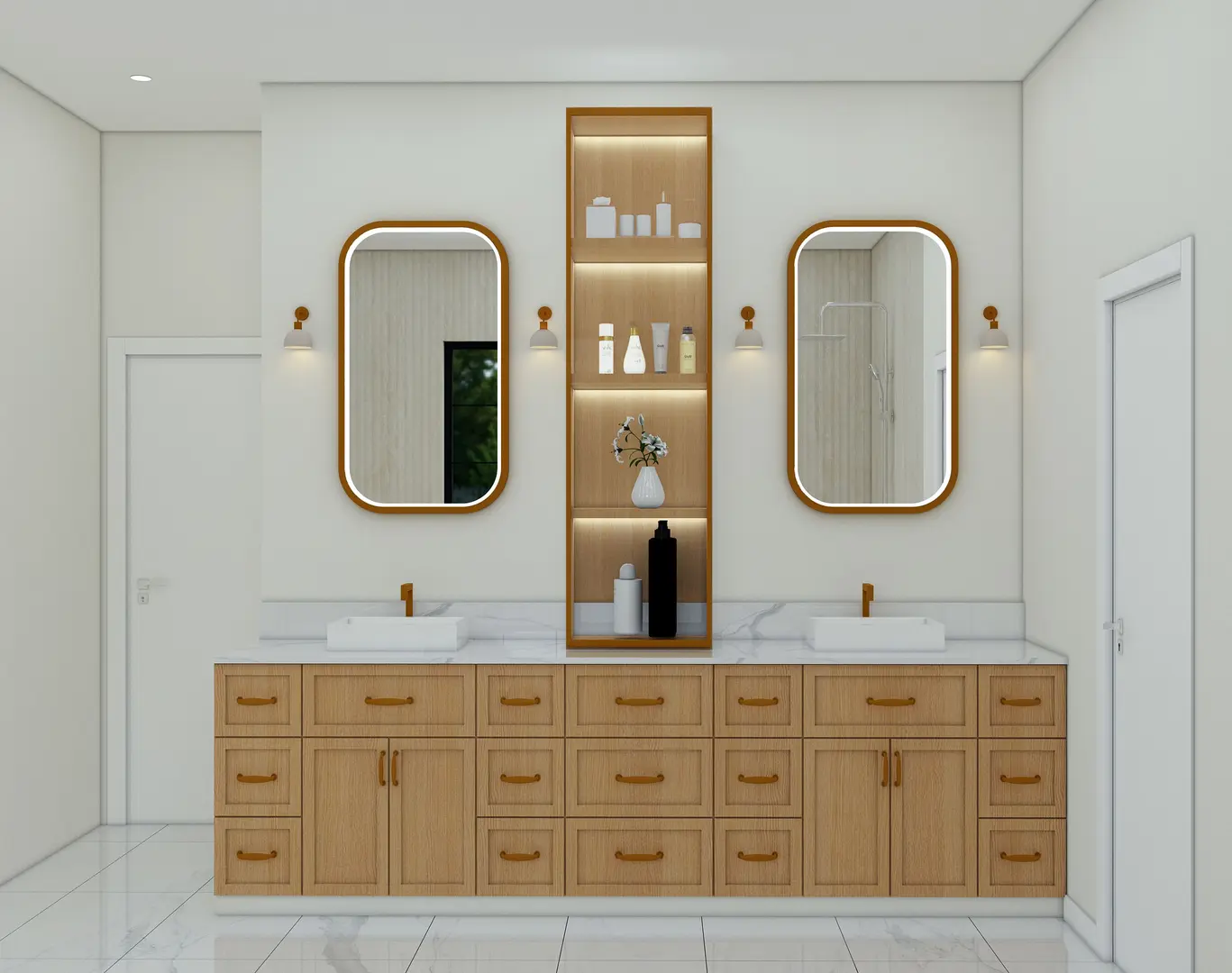
Many bathrooms benefit from a mixture of both. Open shelves can hold a few frequently used or decorative items, while drawers and cabinets contain everything else.
A vanity unit is particularly useful because it combines basin support with storage. It can organize the toiletries and grooming products used around the sink, reducing the need to leave items on the countertop. When comparing vanity units, consider the internal arrangement rather than focusing only on the exterior. Think about whether drawers, shelves, or cupboards will best accommodate your belongings.
Check how the unit relates to existing plumbing. Pipework may reduce usable cabinet space, so confirm the internal layout before purchasing. Also consider who shares the bathroom. Separate drawers or compartments can make it easier for multiple users to organize their everyday products.
Mirrored cabinets provide both storage and a functional mirror. Positioned near the basin, they can keep frequently used items conveniently located while reducing the need for a separate wall mirror and cabinet. Choose a size and position that allow comfortable mirror use without overwhelming the wall.
Hardware affects everyday function as well. Handles should be easy to grasp, and doors and drawers should move comfortably within the available space. Soft visual styling is of little benefit if the furniture is awkward to open or difficult to clean around.
Buying Bathroom Furniture Online: Benefits and Risks
Online shopping offers convenience and makes it easier to compare furniture styles, configurations, and prices without visiting several stores. It can be especially useful when local choices are limited or when you already know the exact type and dimensions required.
The concern is that buying furniture online can feel risky or complicated because you cannot inspect the piece in person before ordering. Photographs may not communicate the finish, proportions, or construction as clearly as a physical inspection. Delivery, assembly, and returns can also require more planning.
Reduce uncertainty by reviewing the practical details rather than buying from images alone:
- Compare the listed dimensions with your own measurements.
- Check whether the unit arrives assembled or flat-packed.
- Review the stated materials and finish.
- Look at interior images and storage configurations.
- Confirm whether the basin, handles, or other pictured components are included.
- Read the delivery and return terms before ordering.
- Check how damaged or unsuitable items must be reported.
- Keep a copy of the product description and order details.
If a finish must match existing furniture closely, viewing a sample or shopping in person may be preferable when that option is available. For straightforward pieces where dimensions and specifications are clearly provided, online purchasing may offer a convenient route. The best choice depends on how much uncertainty you are comfortable accepting and how easy it would be to correct a problem.
Designing Bathrooms for Accessibility
A bathroom should work for everyone who uses it, including older adults and people with limited mobility. Accessibility is easier to incorporate during the planning stage than after furniture has been installed.
Start by keeping routes through the room as clear as possible. Oversized or poorly positioned cabinets can restrict movement and make fixtures harder to approach. Furniture doors and drawers should not block the main usable area when open.
Storage should also be positioned within a comfortable reach for its intended user. A tall cabinet may maximize capacity, but its highest and lowest sections may not be practical for everyone. Reserve the easiest-to-reach areas for everyday items and use less accessible shelves for belongings needed only occasionally.
Consider the following functional details:
- Handles that are comfortable to grip
- Drawers that bring contents forward rather than hiding them at the back
- Frequently used storage at a convenient height
- Clear access to the basin and other essential fixtures
- Furniture placement that does not create narrow or awkward routes
- Stable construction that does not shift during use
Wall-mounted furniture can help maintain open floor space, but its position should suit the people using it. Similarly, an open shelf may provide simple access, while concealed storage may require additional door or drawer operation. There is no single design that works for everyone, so assess the abilities and routines of the household.
If needs are likely to change, choose a layout that can adapt. Avoid crowding the room with optional furniture, and prioritize accessible circulation over maximum storage capacity.
Choose Furniture Built for Bathroom Conditions
Bathrooms expose furniture to moisture, humidity, splashes, and frequent use. A piece that performs well in a bedroom or hallway may not be appropriate beside a basin, bath, or shower. Before buying, consider where the furniture will stand and how demanding that location will be.
Furniture close to wet areas benefits from doors and drawers that keep stored items protected and surfaces visually organized. Open shelving may be better reserved for locations less exposed to splashes or for belongings that can tolerate the environment.
Material quality has a major influence on durability. Low-cost materials or weak finishes may wear out quickly in demanding bathroom conditions, turning an inexpensive purchase into a higher long-term cost. Assess the complete construction, including edges, joints, backing, hinges, drawer mechanisms, and surface finish.
Ask practical questions before choosing:
- Is the piece intended for bathroom use?
- Are exposed edges and surfaces properly finished?
- Do doors and drawers feel secure and aligned?
- Will the hardware tolerate frequent operation?
- Is the furniture suitable for its proposed distance from wet fixtures?
- Can surfaces be cleaned and maintained easily?
- Is there guidance for installation and care?
Expected lifespan should reflect usage. Furniture in a lightly used guest bathroom may face fewer daily demands than furniture in a busy shared bathroom. In a high-use room, reliable drawers, hinges, finishes, and materials deserve greater priority.
Installation and maintenance also affect longevity. Follow the supplier’s fitting and care instructions, address plumbing leaks promptly, and avoid allowing water to remain on surfaces. Even bathroom-suitable furniture benefits from sensible placement and routine care.
Ultimately, the right choice balances storage, dimensions, budget, design, accessibility, and durability. Measure carefully, plan around fixed fixtures, and select furniture based on daily routines rather than appearance alone. A thoughtful purchase will keep the bathroom easier to use, easier to organize, and more comfortable for everyone in the household.