Bathroom Mirror Styles and Trends for Every Space
A bathroom mirror is both a practical fixture and an important design feature. Its shape, size, frame and lighting can affect how spacious and coordinated the room feels. The latest bathroom mirror styles and trends range from streamlined illuminated models to decorative vintage designs, making it possible to find an option for almost any layout.
Before choosing, consider the available wall area, the proportions of the vanity and the wider bathroom style. The right mirror should be useful at the basin while also supporting the room’s overall character.
Which Bathroom Mirror Types Can You Choose?
Bathroom mirrors can be grouped into five broad types. Some categories overlap, so it is useful to think about both the installation style and the features you need.
- Wall-mounted mirrors: These are fixed above a basin, vanity or another suitable wall area. They come in many shapes and frame styles, making them adaptable to contemporary, traditional and rustic bathrooms.
- Illuminated mirrors: Integrated lighting provides convenient illumination around or within the mirror. These designs can reduce the need to coordinate separate mirror lights and often create a clean, modern appearance.
- Bluetooth-enabled mirrors: Bluetooth features add an extra level of convenience for people who want connected functionality in the bathroom. The technology is usually incorporated into an otherwise contemporary mirror design.
- Mirrors with shaving sockets: A built-in shaving socket can keep a frequently used power point close to the mirror. This feature is worth considering when planning the placement of electrical fittings.
- Floor-to-ceiling mirrors: Large mirrored surfaces reflect more of the room and can create the illusion of additional space. They are especially effective when the aim is to make a compact bathroom feel more open.
These options are not mutually exclusive. For example, a wall-mounted mirror may also include lighting, Bluetooth connectivity and a shaving socket. Prioritise the functions you will use, rather than selecting a feature-heavy model simply because it appears more advanced.
Scale also matters. A small mirror can look lost above a broad vanity, while an oversized design may dominate a narrow wall. Look at the mirror in relation to the basin, taps, lighting and nearby storage. Its outline should feel connected to the rest of the bathroom rather than appearing as an isolated addition.
Practical Lighting Solutions for Bathroom Mirrors
Poorly positioned bathroom lighting can cast shadows across the face, making everyday tasks less comfortable. A ceiling light alone may illuminate the room without directing enough balanced light towards the person using the mirror.
One practical solution is to install two light fixtures, with one on each side of the mirror. This arrangement distributes light from both directions and helps reduce facial shadows. It can be particularly useful at a vanity used for shaving, applying make-up or other close-up routines.
However, separate side lights need enough wall space and careful planning. They also require additional installation work and expense. Their size and position should suit the mirror so that the overall layout feels balanced rather than crowded.
If side fixtures are being considered, plan them at the same time as the mirror. This makes it easier to coordinate the available wall area and achieve a deliberate, symmetrical result.
Advantages of Lighted Mirrors in Bathroom Design
A lighted mirror combines useful illumination with a strong decorative presence. Instead of treating the mirror and vanity lighting as unrelated elements, it brings both functions together in one visually coherent feature.
Illuminated designs are particularly well suited to clean-lined bathrooms because the light can appear integrated rather than added afterwards. They may also help a mirror stand out against tiles or a painted wall without requiring an ornate frame.
From a practical perspective, the light is located where it is most relevant: around the mirror area. The exact effect depends on the design, so consider whether the model provides the type of illumination required for daily use. A lighted mirror can be stylish and functional, but it should still fit the scale and visual tone of the space.
Creative Ways to Use Non-Bathroom Mirrors
A mirror does not always need to be marketed specifically for bathrooms to inspire a successful design. Decorative mirrors normally associated with bedrooms, hallways or living spaces can introduce more personality than a conventional vanity mirror.
For example, a statement frame can make a simple basin area feel more like a carefully furnished interior. A group of smaller mirrors can create a decorative composition, while an unusual shape may work as a focal point. Reusing an existing mirror can also help connect the bathroom with the style found elsewhere in the home.
This approach fits current en-suite design trends, where the bathroom is often treated as an extension of the adjoining bedroom rather than as a completely separate utility space. Repeating a frame color, shape or decorative detail from the bedroom can create continuity between the two areas.
Practical suitability still needs to guide the choice. Consider whether the mirror can be securely installed in the intended position and whether its materials and finish are appropriate for that bathroom setting. Decorative appeal should not come at the expense of everyday usability.
Glamorous Art Deco Mirror Designs
Art Deco mirrors bring a glamorous, decorative quality to the bathroom. Their strong geometry and refined details make them an effective choice when a plain rectangular mirror would feel too understated.
Bevelled edges are especially characteristic of this look. They add definition to the perimeter and allow the mirror itself to appear decorative, even without a heavy frame. Stepped outlines, angular forms and balanced symmetry can further reinforce the style.
These mirrors work particularly well with marble fittings or marble-effect surfaces. The polished character of the mirror complements the luxurious appearance of marble, helping the basin area feel cohesive. For a restrained interpretation, use one Art Deco mirror as the main statement and keep nearby accessories relatively simple.
Clean-Lined Minimalist Mirrors
Minimalist mirrors focus on clear outlines and limited ornamentation. They are a natural fit for modern bathrooms where the visual emphasis is on proportion, open surfaces and an uncluttered finish.
A frameless mirror is one of the simplest choices. Without a strong border interrupting the wall, it can enhance the sense of depth and make the reflective surface feel integrated with its surroundings. This approach works well when tiles or other finishes already provide enough visual interest.
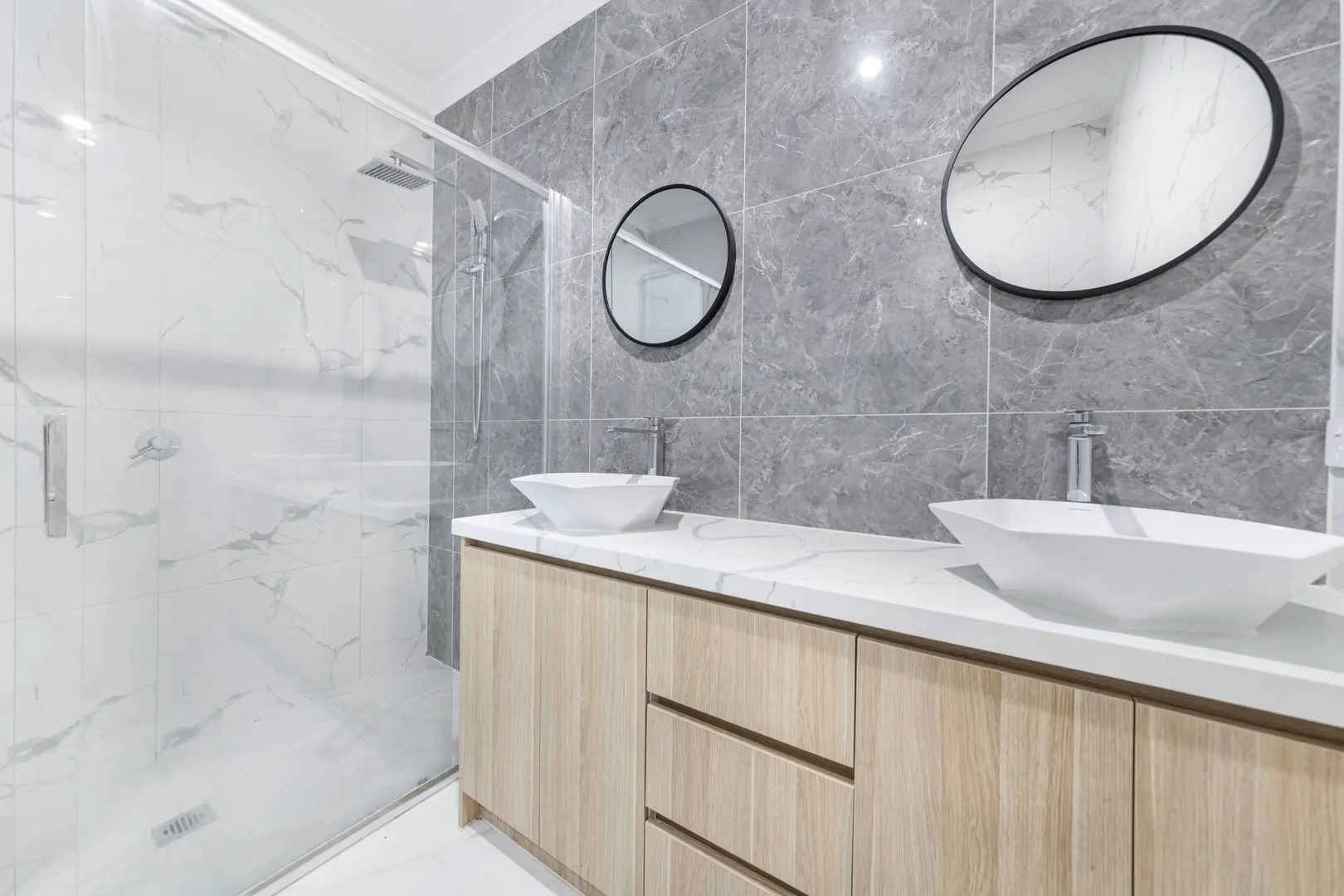
Minimalism does not have to mean an entirely invisible edge. A narrow black border can add crisp definition and connect the mirror with black taps, handles or shower framing. Curved corners offer a softer alternative to a sharp rectangle while preserving a streamlined appearance.
The key is restraint. Choose one clear idea—frameless depth, a black outline or gently rounded corners—and allow the mirror’s proportions to carry the design.
Metal-Framed Mirrors for Classic Bathrooms
Metal-framed mirrors can strengthen traditional decor by giving the vanity area a more substantial, finished appearance. The frame acts as a bridge between the mirror and other details such as taps, handles and light fixtures.
A gold frame creates an antique-inspired impression. It can bring warmth to a traditional scheme and help an otherwise practical mirror function as a decorative centerpiece. The frame does not need to be highly elaborate; even a simple gold border can suggest a classic influence.
Silver frames have a cooler quality and work especially well with subway tiles. Their clean, reflective finish complements the orderly pattern of the tiles without competing with it. This pairing can suit bathrooms that combine traditional references with a lighter, more contemporary finish.
For a coordinated result, repeat the frame’s metal tone selectively. Too many matching details can feel forced, while a few related finishes can make the design look intentional.
Vintage and Rustic Mirror Ideas
Wooden frames are an effective way to give a bathroom a natural, rustic character. Visible grain, a substantial profile or a time-worn appearance can soften hard surfaces such as tile, glass and ceramic.
A wood frame can also be painted to coordinate with the surrounding decor. It might echo the vanity color, relate to a painted wall or introduce a contrasting accent. This flexibility makes wooden mirrors useful in both colorful vintage bathrooms and quieter neutral spaces.
Pairing a wooden frame with bronze fixtures reinforces the warm, aged quality of the design. Bronze taps, handles or lighting details can create a cohesive link with the natural tones of the wood.
Keep the room’s overall balance in mind. A heavily textured frame may be the main feature above the basin, whereas a simpler painted frame can support patterned tiles or other decorative elements without overwhelming them.
Curved and Sculptural Mirror Shapes
Shaped mirrors introduce movement and visual flow. Instead of repeating the straight lines commonly found in bathrooms, a round, arched or irregular outline can soften the room and draw attention towards the vanity.
One approach is to coordinate the mirror with existing fixtures. A round mirror might relate to curved tap forms, while an arch could repeat the profile of another architectural or decorative element. The shape can also respond to the tiles, either echoing their geometry or providing a deliberate contrast.
Curves are especially prominent in contemporary mirror design. Rounded corners and flowing outlines offer a modern alternative to standard squares and rectangles without requiring decorative frames. These shapes can make a compact area feel less rigid and give a simple bathroom a distinctive focal point.
A sculptural mirror is most effective when its outline remains visible. Avoid surrounding it with too many competing objects or patterns that would make the shape harder to appreciate.
Space-Saving Mirrors with Cut Corners
Bathrooms with sloping ceilings, narrow recesses or unusually positioned fixtures do not always suit a standard rectangular mirror. A folded-corner or cut-corner design can use the available area more efficiently.
Removing or visually folding a corner allows the mirror to fit around an awkward section of wall while retaining a generous reflective surface. It can turn a layout limitation into an intentional design detail, rather than leaving the room with an undersized or poorly positioned mirror.
Strong colors can make the unusual outline even more noticeable. A bold wall or tile shade behind the mirror creates contrast around the cut corner and emphasises its shape. If the room already contains several prominent colors, a simpler surrounding finish may produce a more balanced result.
Careful planning is essential for awkward spaces. The mirror should still provide a practical view from the basin, even when its shape has been adapted to fit the wall.
Full-Height Mirrors and Mirrored Tile Alternatives
A full-height or full-length mirror reflects more of the bathroom than a small vanity design. This broader reflection can create an impression of greater depth and make the room feel more spacious. It also provides a useful head-to-toe view where the layout allows.
Full-height mirrors can be mounted directly on a wall or fixed to a suitable door. A wall-mounted version can become a major design feature, while a door-fixed mirror uses an existing surface and may be helpful where open wall space is limited. Placement should account for how the door moves and what the mirror will reflect.
Floor-to-ceiling installations take the same idea further by treating the reflective surface almost like an architectural finish. They can visually extend a compact room, particularly when positioned to reflect light or an uncluttered part of the space.
Mirrored tiles provide an alternative to a single large panel. They can cover a selected section of wall, form a patterned feature or introduce reflection in smaller areas. The visible divisions between tiles create a more decorative effect than one uninterrupted mirror, making them suitable for designs that need texture as well as a sense of space.
Whether you choose mirrored tiles, a full-height panel or a smaller framed design, the best result comes from matching the mirror to the bathroom’s proportions and style. Thoughtful placement allows it to improve everyday function while contributing depth, character and visual balance.