Do You Need a Splashback Behind a Bathroom Sink?
A bathroom sink splashback is useful when the wall behind the basin regularly gets wet, marked, or difficult to clean. It is not essential in every bathroom, though. A washable, well-sealed wall finish may be enough for a lightly used basin with limited splash, while a tile, panel, glass, or countertop upstand provides more dependable protection where water reaches the wall often.
The right choice depends on the basin style, faucet position, countertop layout, wall finish, and how much cleaning you want to do. A splashback should be planned as a practical water-control detail first and a decorative feature second.
What does a bathroom sink splashback do?
A splashback is a water-resistant surface fitted to the wall behind a basin. It catches droplets from hand washing, faucet use, soap, and toothpaste before they reach paint, wallpaper, plaster, or the joint between the wall and vanity.
It also gives you a surface that is usually easier to wipe than a painted wall. This matters most in family bathrooms, shared bathrooms, children’s bathrooms, and compact spaces where the faucet and basin are close to the wall.
A splashback will not stop every mark around a sink. Water can still reach the sides of the basin, the countertop, the faucet base, and the wall beside the vanity. Its purpose is to protect the most exposed section directly behind the sink.
When do you need a splashback behind a bathroom sink?
You are more likely to benefit from one when:
- The basin is close to the wall and sends water backward during normal use.
- The faucet has a strong flow, a high arc, or an angle that directs water toward the wall.
- The wall is finished with ordinary paint, paper wallpaper, or another surface that does not tolerate repeated moisture.
- The vanity countertop meets the wall without a sealed upstand or rear edge.
- Children use the bathroom or several people share it daily.
- You want to reduce wiping, repainting, or marks around the basin.
- The sink is a countertop or vessel basin that leaves more of the wall visually and physically exposed.
A splashback is less important when the basin is used occasionally, the faucet and bowl contain water well, and the wall has a durable washable finish. In that situation, adding one may be a styling choice rather than a necessity.
Source: thebathroombox.co
How basin style changes the decision
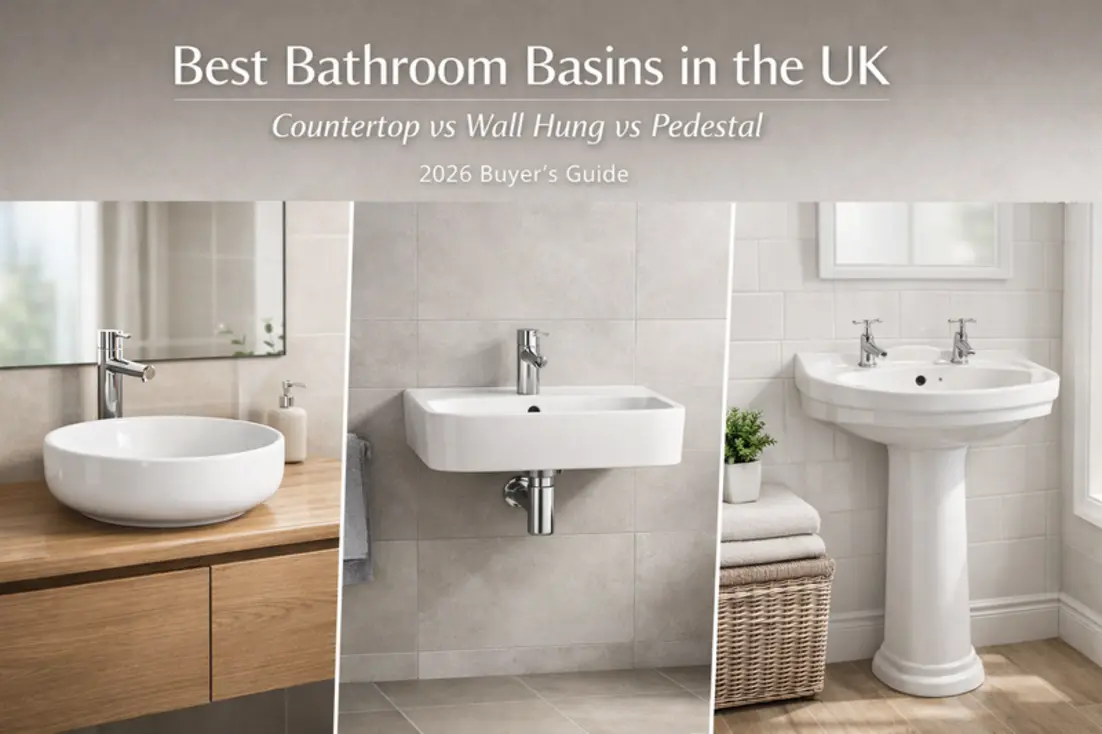
Pedestal basins
A pedestal basin often leaves the wall visible around and behind the bowl. Because there is no broad vanity top to catch drips, a splashback can be particularly useful behind the faucet and basin. A tiled area or wall panel can also make the exposed plumbing zone easier to clean.
The splashback does not need to cover every inch behind the pedestal. Focus on the area that receives water, and consider how far the basin projects from the wall.
Wall-hung basins
A wall-hung basin can work with a short splashback, a taller tiled section, or no separate splashback if the wall finish is suitable. Since the basin may have little or no countertop behind it, check the wall-to-basin joint carefully. A neat, sealed transition is important because water can collect where the basin meets the wall.
Countertop and vessel basins
A countertop basin can throw water onto the wall behind it, especially when the faucet is mounted on the countertop and sits close to the bowl. A splashback behind a countertop basin is therefore often a sensible choice, even if the rest of the wall is painted.
The height may need more thought than with a conventional inset basin. A very low strip can protect the countertop joint but leave the wall behind the bowl exposed. Watch the actual splash pattern and the position of the faucet, mirror, and basin before choosing the final height.
Vanity units with integrated tops
A vanity may already include a short rear upstand made from the countertop material. This can function as a small splashback if the joint is properly sealed and the faucet does not send water well above it.
If the vanity top meets a painted wall with no raised rear edge, you still need to decide whether the wall finish is durable enough for the expected use.
How high should a sink splashback be?
There is no single required sink splashback height for every bathroom. A common short splashback is about 4 to 6 inches high above the countertop or basin support. This low-profile option protects the most vulnerable wall joint without creating another strong horizontal line.
A taller splashback may be more practical when:
- The faucet is tall or produces noticeable backward splash.
- The basin is a vessel or countertop style.
- Children use the sink.
- The wall is wallpapered or difficult to repaint.
- The mirror begins higher above the basin.
- You want a larger, easier-to-wipe surface around the sink.
A splashback can also extend to the underside of the mirror or across a larger section of the vanity wall. That is not automatically better, however. A tall tiled panel may add visual weight in a small bathroom, while a short strip can look incomplete if it ends awkwardly beside a mirror or cabinet.
Use the faucet, basin rim, countertop, mirror, and nearby wall edges as a group when deciding the height. The best proportion is usually the one that protects the splash zone and finishes cleanly against another feature.
Source: d26d755wulekqd.cloudfront
Practical bathroom sink splashback ideas
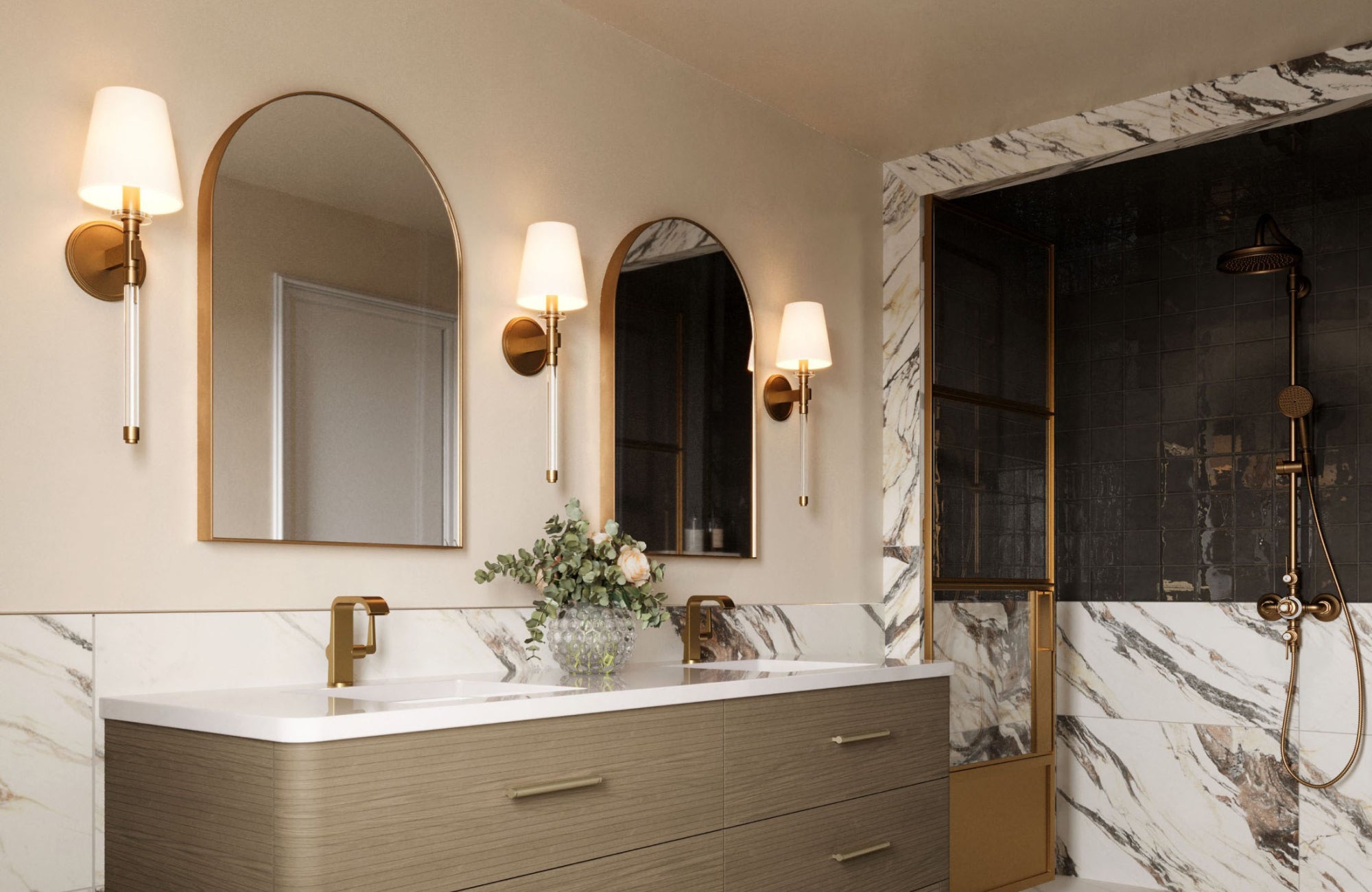
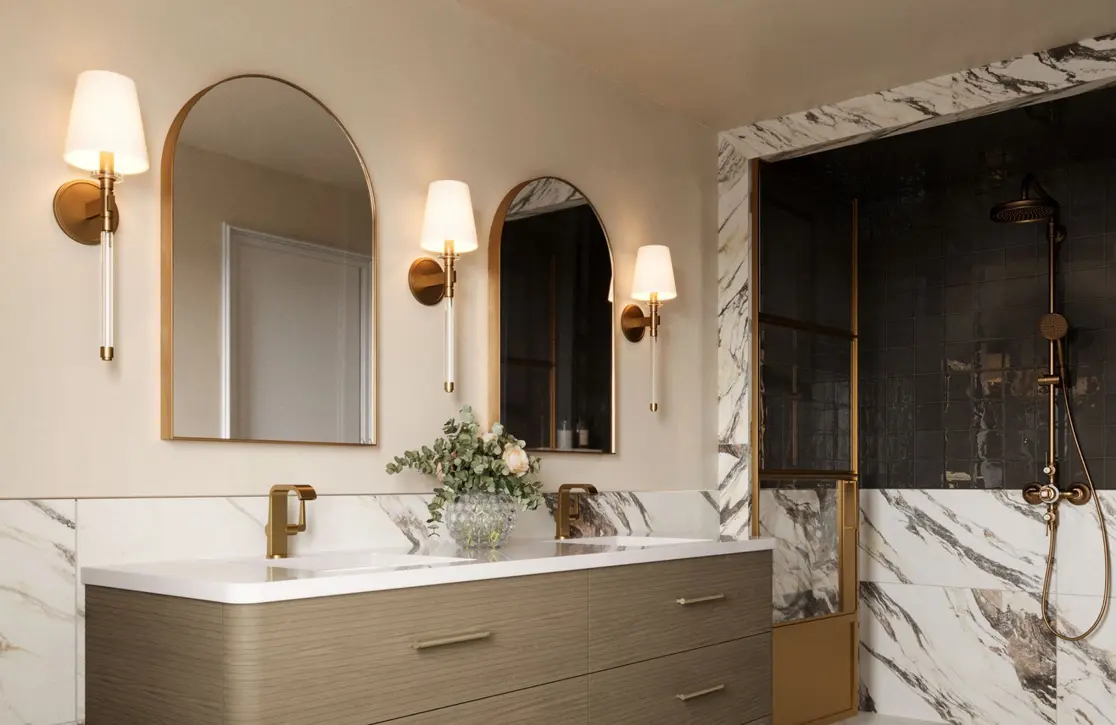
Matching countertop material
A short strip made from the same material as the vanity top creates a quiet, continuous look. It is useful when you want protection at the rear joint but do not want a strong decorative wall feature. This works especially well when the mirror sits close above the sink.
Ceramic or porcelain tile
Tile gives you many choices of color, pattern, and size. Small tiles can add detail to a plain vanity, while larger tiles create fewer grout lines and a calmer surface. Grout still needs regular cleaning, so choose the pattern with maintenance in mind.
Large-format slab or stone-effect panel
A slab provides a broad surface with fewer joints than a tiled splashback. It can coordinate with a countertop or create contrast behind a simple basin. Check that the material is suitable for the intended bathroom application and that the edges and wall joint can be finished neatly.
Glass
A glass splashback gives a smooth surface with minimal visible joints. It can be clear, colored, or used to protect a wall finish behind it. The surrounding edges need careful sealing, and the design should allow access for ordinary cleaning.
Waterproof wall panels
Decorative bathroom panels can cover a larger area without the grout lines found in tile. They can be useful in rental-friendly or quick-update projects when you want a wipeable surface behind the sink. Pay close attention to the manufacturer’s installation and sealing requirements rather than treating every wall panel as automatically waterproof.
Washable paint
Paint may be sufficient in a low-splash bathroom, particularly when the basin is well contained and the wall can be wiped without damage. It is the least protective option, though, and repeated water, soap, and toothpaste marks may still require more frequent cleaning or touch-ups.
Wallpaper deserves extra caution. Even washable wallpaper should not be assumed to provide the same protection as a sealed tile, panel, glass, or slab surface. Keep the most exposed area protected or choose a finish specifically intended for damp bathroom conditions.
Sealing matters as much as the material
A splashback only works well when water cannot easily pass behind it. The important details include:
- A sealed joint where the splashback meets the countertop, basin, or vanity.
- Sealed vertical edges where the splashback ends against a wall or cabinet.
- A neat transition around the faucet and any other penetrations.
- A sound, suitable wall behind the splashback.
- Edges that are finished rather than left porous or chipped.
The exact adhesive and sealant depend on the material and installation method. Follow the product instructions, especially for natural stone, panels, glass, and surfaces with special backing requirements.
A simple way to choose
Before selecting a bathroom sink splashback, ask four questions:
- Where does water actually land behind the basin?
- Can the existing wall finish be wiped repeatedly without damage?
- Would a short strip protect the joint, or does the splash reach higher?
- Which finish will meet the mirror, countertop, and side walls cleanly?
If the answer to the second question is no, a dedicated splashback is the safer practical choice for the wall finish. If the wall is durable and splash is limited, you may prefer to keep the area painted and use the splashback only as an optional design feature.
A bathroom sink splashback is therefore not an automatic requirement. It is a useful layer of protection when the basin, faucet, wall finish, or household routine creates regular moisture. Choose the smallest surface that properly covers the splash zone, seal its edges carefully, and make sure it fits the rest of the sink wall rather than treating it as an isolated decoration.
References
- Bathroom Splashback Ideas: Protect Your Walls in Style. (n.d.). https://www.myhomeware.com.au/blogs/design/bathroom-splashback-ideas-in-style
- Bathroom Vanity Backsplash Options and Details. (n.d.). https://allianceconstructionfl.com/bathroom-vanity-backsplash-options
- Basin Splashback Ideas. (n.d.). https://www.pinterest.com/ideas/basin-splashback-ideas/946618072846
- Ideal bathroom sink installation height guide. (n.d.). https://www.facebook.com/100088678633257/posts/-wash-basin-installation-height-guide-ever-wondered-what-the-ideal-height-for-yo/821633587469255
- Bathroom Splashback Ideas: 10 Ways to Make a Splash in Your Bathroom - Wholesale Domestic. (n.d.). https://www.wholesaledomestic.com/blog/splashback-ideas
- Does a bathroom vanity need a backsplash? Potentially, no…. (n.d.). https://www.livingetc.com/advice/does-a-bathroom-vanity-need-a-backsplash
- 12 Creative Bathroom Splashback Ideas. (n.d.). https://thebathroomcompany.co.uk/12-creative-bathroom-splashback-ideas
- How Tall Should A Bathroom Backsplash Be?. (n.d.). https://www.edwardmartin.com/blogs/information/how-tall-should-a-bathroom-backsplash-be