Is Bathroom Wallpaper a Good or Bad Idea?
Bathroom wallpaper can be a good or bad idea depending on the material, location, installation, and ventilation. The right moisture-resistant covering can add colour and character without sacrificing practicality. Standard paper installed beside a shower, however, may struggle with repeated splashes and humidity.
Wallpaper has appeared in bathrooms since the Victorian era, but today’s vinyl coatings and improved adhesives make it a more practical option. If you are considering whether bathroom wallpaper is a good or bad idea, focus first on moisture protection and then on design.
Which Wallpaper Works Best in a Bathroom?
Waterproof or water-resistant wallpaper is the best choice for a bathroom. Look for products designed for humid interiors, particularly wallpaper with a vinyl coating. The coating helps deflect moisture rather than allowing it to soak readily into the surface.
Modern wallpaper adhesives also improve bathroom suitability. When correctly applied to a well-prepared wall, a strong adhesive helps keep the paper firmly attached and limits the opportunities for water to reach behind it. Complete, even coverage is important because loose edges and poorly bonded seams are more vulnerable to moisture.
The terms “water-resistant” and “waterproof” should not automatically be treated as interchangeable:
- Water-resistant wallpaper is suited to humid areas and occasional light contact with moisture.
- Waterproof wallpaper offers greater protection and may be more appropriate where splashes are likely.
- Standard wallpaper is best reserved for dry areas with reliable ventilation and little risk of direct water contact.
Even a vinyl-coated design should be installed according to its care and application instructions. Wallpaper may work well above wall tiles, behind a toilet, or on a wall away from the bath and shower. Inside a shower enclosure or immediately beside a frequently splashed basin, a more robust waterproof surface is generally the sensible choice.
The condition of the room matters as much as the wallpaper. Persistent humidity, weak ventilation, or walls that are already damp can undermine an otherwise suitable covering. Address those issues before decorating rather than expecting wallpaper to conceal them.
How to Wallpaper Your Bathroom Successfully
Successful bathroom wallpapering starts with choosing the right wall. Ordinary wallpaper should stay away from showers, baths, and basin splash zones unless it has suitable waterproof protection. In areas exposed to frequent water, use tiles or another purpose-made protective finish.
Prepare the room and wall carefully:
- Check the wall condition. The surface should be clean, smooth, dry, and stable. Remove loose material and deal with existing moisture problems first.
- Plan around wet areas. Identify where water commonly lands and decide whether those sections need tile rather than wallpaper.
- Choose a strong adhesive. Use an adhesive appropriate for the chosen wallpaper and the conditions in the room.
- Apply the covering carefully. Aim for secure seams and edges so that moisture has fewer places to get behind the paper.
- Maintain ventilation. Use the room’s ventilation and allow humid air to clear after bathing or showering.
- Inspect the finish periodically. Pay attention to seams, corners, and edges around fittings, where lifting may first become noticeable.
A clear protective coat can add durability, particularly where the wallpaper may encounter occasional moisture. Before applying one, confirm that it is compatible with the wallpaper. A coating can alter the colour, texture, or sheen, so follow the wallpaper and coating manufacturers’ instructions.
Good ventilation remains necessary after installation. Moisture-resistant wallpaper is not a substitute for managing humidity. Clearing steam and avoiding constant condensation will help protect the wallpaper, adhesive, paintwork, and other bathroom finishes.
Bathroom Wallpaper Design Ideas
Wallpaper can change a plain functional room into a distinctive interior. It may introduce botanical shapes, geometry, traditional ornament, or a dramatic block of colour without requiring every wall to become a focal point.
Begin with the bathroom’s existing features. Coordinate the wallpaper with the tiles, flooring, vanity, fixtures, towels, and storage rather than choosing a pattern in isolation. Repeating one colour from the existing decor can make a highly decorative print feel intentional.
Pattern scale also affects the overall result. A compact design can create a detailed backdrop, while a broad pattern has a stronger graphic presence. Think about how much uninterrupted wall space is available. In a small bathroom filled with mirrors, shelving, and fittings, parts of a large motif may be hidden. A simpler or smaller-scale repeat may remain easier to appreciate.
In a larger or less cluttered room, oversized designs have more space to make an impact. Samples can help you judge how a print responds to the bathroom’s lighting and how it looks alongside permanent surfaces such as tile.
Harnessing Bathroom Time for Creative Thinking
A bathroom can provide a quiet pause from a busy routine. That relaxed setting may encourage creative thinking, making it easier to notice which colours, patterns, and details would improve the space.
Use that time to observe the room rather than making a rushed decision elsewhere. Consider where your eye naturally rests, which wall receives the most light, and whether the room feels calm, dark, narrow, or visually cluttered. These impressions can guide the wallpaper choice.
For example, if you tend to look toward the mirror wall, that area may suit a feature pattern. If the room feels enclosed, a lighter or reflective design could be more appropriate. If the bathroom already feels visually busy, a restrained print may create a better balance. The aim is to select a design that supports how the space feels in everyday use.
Classic Black-and-White Bathroom Wallpaper
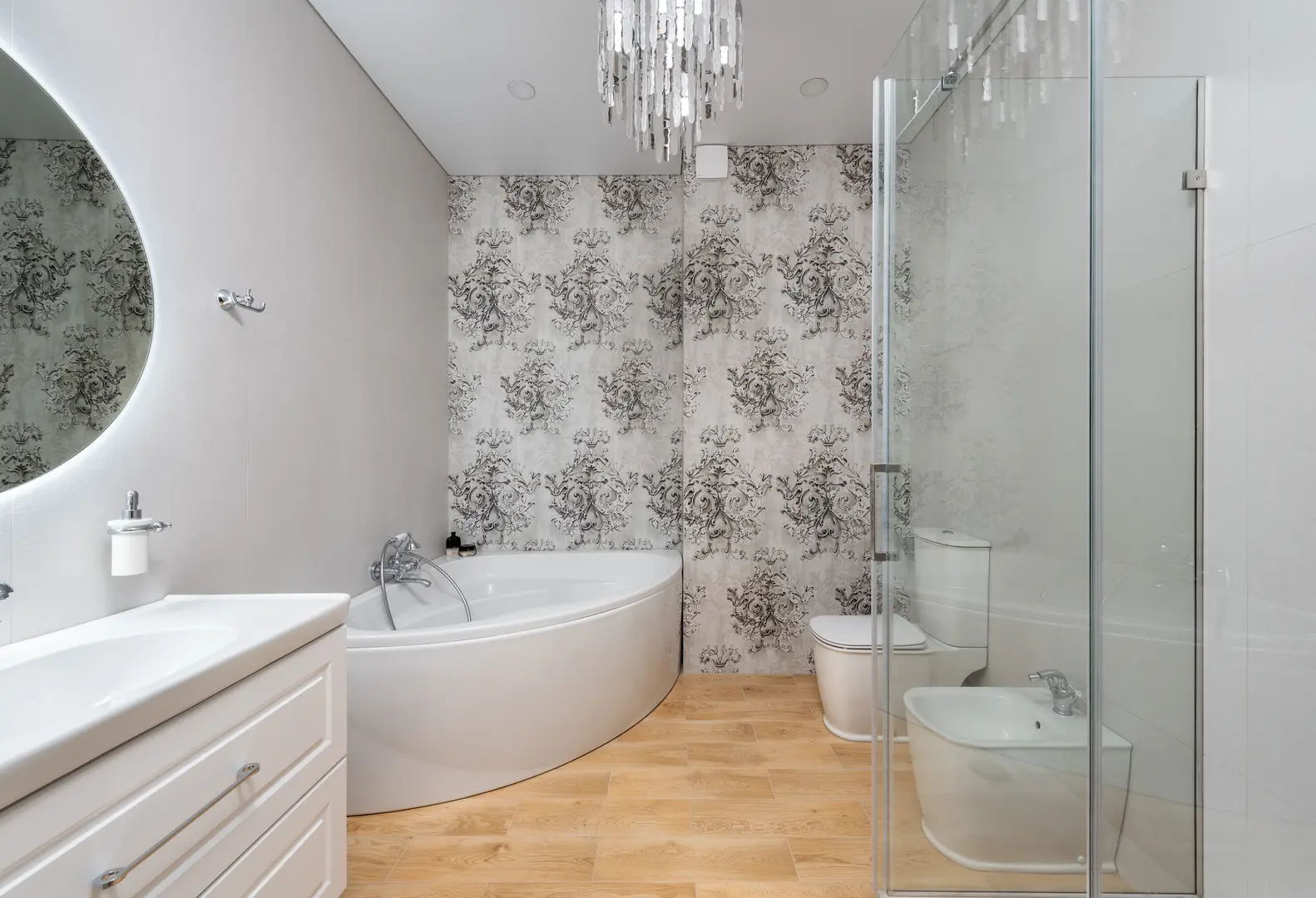
Black-and-white wallpaper is a traditional choice that can work with both period-inspired and contemporary bathrooms. The restricted palette lets the pattern provide interest while maintaining a coordinated appearance.
Chrome fixtures complement this combination particularly well. Their cool reflective finish sits naturally beside monochrome patterns and can reinforce a clean, polished look. Black details, white sanitaryware, and chrome taps can all connect back to the wallpaper without requiring additional colours.
The proportion of black to white affects the mood. A design with a mostly white background can feel lighter, while a dark-dominant print creates more drama. In a compact bathroom, consider how much natural and artificial light is available before committing to a heavily black pattern.
Bring in a Bold Touch of Colour
Bold wallpaper gives a bathroom personality and can turn a small room into a memorable part of the home. Deep colours create a rich backdrop, while vivid tones can make the scheme feel energetic. The best choice depends on the desired atmosphere and the colours already present in permanent fixtures.
Intricate designs can be effective, but visibility matters. A detailed pattern may lose some of its impact if most of the wall is interrupted by cabinets, towel rails, or mirrors. Choose a repeat that can still be understood within the available sections.
Pattern scale is equally important. A large motif creates a strong statement when enough of it remains visible. Smaller repeats can deliver colour and detail more consistently across fragmented walls. Coordinate at least one tone with tiles, towels, or accessories so the bold design feels integrated rather than unrelated.
Turn One Wall into a Feature
A feature wall offers the visual impact of wallpaper without covering the whole bathroom. It is also a practical way to keep paper away from the wettest areas.
Choose a wall that naturally attracts attention. The space around a sink or mirror can work well, provided the vulnerable splash area has appropriate protection. Wallpaper can frame the mirror, emphasise the vanity, and establish a focal point as soon as someone enters the room.
Avoid selecting a wall simply because it is empty. Consider sightlines from the doorway and how the pattern will interact with lighting and fixtures. A feature wall should look deliberate, not like an isolated leftover surface.
Disguise Radiators with Strategic Patterns
A radiator can interrupt an otherwise coordinated wall, but patterned wallpaper can make it less visually prominent. Repeated motifs and varied colours draw attention across the whole surface rather than concentrating it on the radiator.
Choose wallpaper that works with the radiator’s colour instead of relying on pattern alone. A sharply contrasting radiator may still stand out, while related tones can help it settle into the scheme.
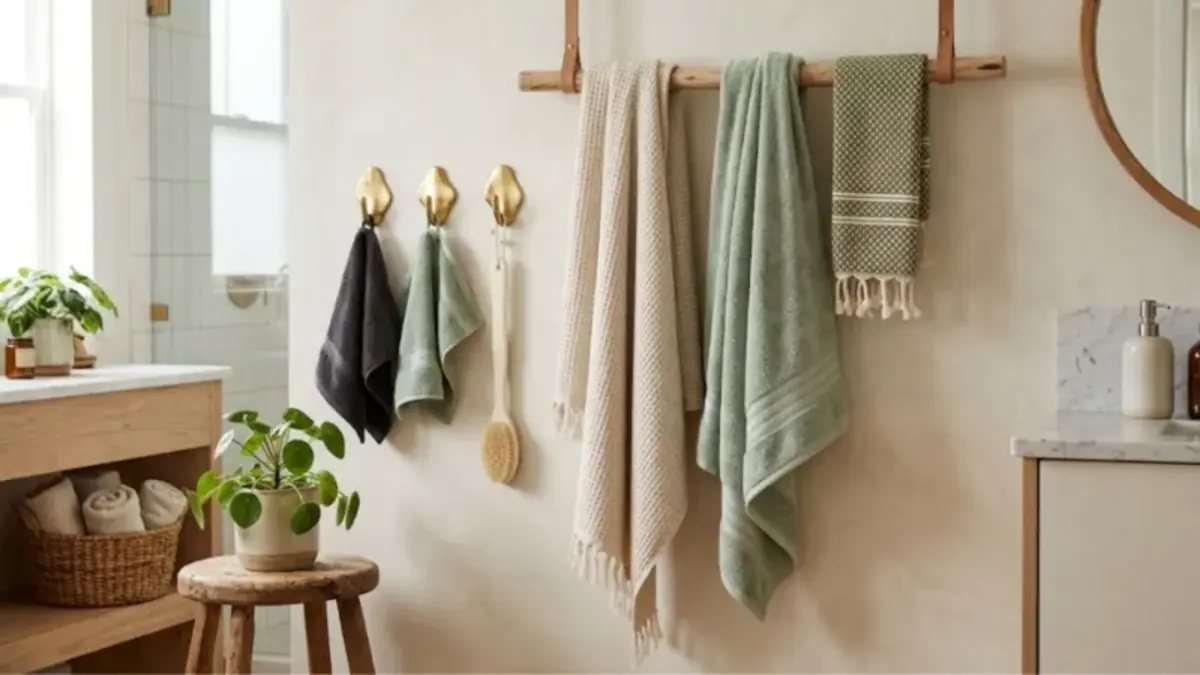
Towels are another useful connection. Select towels that repeat a background colour or accent from the wallpaper. This links the radiator area to the wider decor, especially when towels are stored or hung nearby. Keep the wallpaper installation consistent with any clearance and decorating guidance relevant to the radiator.
Continue the Wallpaper Around a Corner
Wallpaper does not need to stop at the edge of a feature wall. Continuing a pattern around a corner can lead the eye into the adjoining area and create the impression of a longer space.
This approach works particularly well when two connected wall sections are visible from the entrance. Rather than visually dividing the room, the continuous pattern connects them. It can also highlight an architectural turn, recessed area, or vanity zone.
Pattern alignment deserves careful attention at the corner. Plan where the design will fall before installation so that the transition looks intentional. The visual effect is strongest when the pattern seems to flow naturally from one wall to the next.
Brighten the Room with Reflective Wallpaper
Foil-print wallpaper can help distribute light by adding a reflective sheen. Instead of absorbing all available illumination, metallic details catch it and create brighter highlights across the wall.
This can make a bathroom appear more open and spacious, particularly when reflective wallpaper is combined with mirrors and chrome fixtures. It does not have to be fully metallic; a print with selective foil details can add luminosity without dominating the room.
Consider where the light comes from when positioning the paper. A wall that receives daylight or light from bathroom fittings will show the reflective finish more clearly. Because foil effects can look different as the viewing angle changes, examine a sample in the room before making a final selection.
Pair Wallpaper with Protective Tiling
Combining wallpaper and tile is one of the most practical ways to balance decoration with moisture protection. Install tile in areas exposed to regular splashes, such as around a bath, shower, or basin, and use wallpaper on the drier wall sections.
This arrangement allows each material to perform an appropriate role:
- Tile provides a durable barrier in splash-prone areas.
- Wallpaper introduces pattern and colour where direct water contact is limited.
- Contrasting finishes add visual depth to the room.
- The boundary between tile and wallpaper can help organise the overall design.
For a unified result, repeat a tile colour in the wallpaper. For greater contrast, pair simple tiles with an expressive pattern. The tile can provide a calm base while the wallpaper adds movement above it. Make sure the transition between materials is neat and that the wallpaper edge is secure.
Choose Stencilling as an Alternative
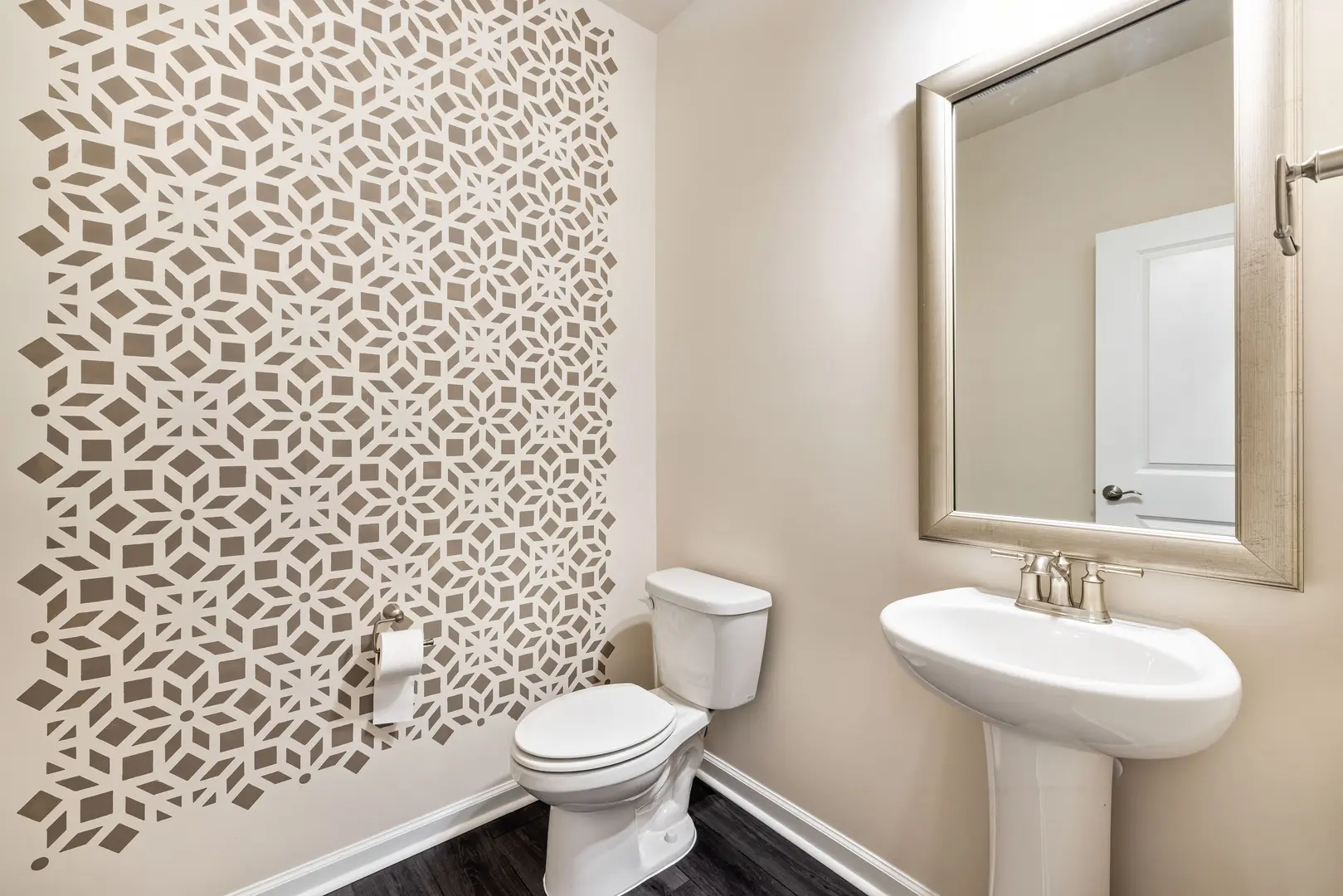
Stencilling is a useful alternative when wallpaper is unsuitable or when you want greater control over the placement of a pattern. It can recreate the effect of a repeated print using paint and a reusable design.
It is generally affordable and straightforward to apply. You can stencil an entire wall, create a border, or decorate only a small focal area. The scale, spacing, and colours can also be adjusted to fit around mirrors, shelves, and other bathroom features.
Because the design is painted directly onto the wall, there are no wallpaper seams to align. However, the underlying wall finish still needs to be appropriate for bathroom conditions. Use suitable paint and prepare the surface carefully for a clean, durable result.
Decorate with Moisture-Protected Wood Inlay
Wood inlay provides another way to add wall decoration without using wallpaper. Geometric pieces, decorative panels, or crafted wall art can introduce natural colour, texture, and visual depth.
Bathroom moisture must be considered before installing wood. Choose pieces with suitable moisture-resistant treatment and avoid placing untreated inlay where it will be exposed to frequent splashes. Even treated decorative wood is best positioned in a relatively dry, well-ventilated part of the room.
Wood inlay can serve as a single focal artwork or form part of a broader wall composition. Coordinate its tones with the vanity, shelving, flooring, or accessories to make it feel connected to the room.
Ultimately, bathroom wallpaper is a good idea when the product suits humid conditions, the walls are properly prepared, and direct splash zones receive stronger protection. It becomes a bad idea when standard paper is used on damp surfaces or where water repeatedly reaches it. Choosing the right material—and placing it thoughtfully—allows wallpaper to deliver character without ignoring the bathroom’s practical demands.