Bespoke vs Ready-Made Vanity Units: Is Customisation Worth It?
Choosing a bathroom vanity involves more than just its appearance. The unit must fit the available wall space, align with plumbing, provide effective storage, and suit the project budget. Delivery time is also a crucial factor in the decision-making process.
Deciding between bespoke and ready-made vanity units is a practical matter. Ready-made options are typically quicker and more budget-friendly, while bespoke options offer greater size, finish, and internal layout control. Customization is most beneficial when it addresses a specific issue, rather than replacing a standard unit that would otherwise suffice.
Comparing Bespoke and Ready-Made Vanity Units
Ready-made vanity units come in standard sizes and designs, allowing for easy selection and installation without the added stages of custom furniture design and production. Their standardized construction makes them ideal for many conventional bathrooms.
A bespoke vanity is tailored to specific room requirements, offering flexibility in width, height, finish, and storage arrangement. This adaptability is useful for spaces with unique architectural features or plumbing configurations that a standard unit cannot accommodate neatly.
The primary consideration is the degree of flexibility needed. For straightforward layouts, ready-made is usually the more practical choice. For complicated configurations demanding specific solutions, bespoke might justify its additional cost and time.
Ready-Made Vanity Units: The Main Benefits
Ready-made vanity units are suitable for most bathrooms, offering accessibility, choice, and value. Available in various dimensions and styles, these units allow buyers to compare options without starting from scratch.
Their main benefits include:
- Lower prices than bespoke alternatives
- Faster ordering and availability
- A broad selection of designs and finishes
- Easy comparison between models
- Suitability for common bathroom dimensions
A ready-made unit can provide an effective long-term solution when its proportions and storage meet the household’s needs, eliminating the need for custom work.
Bespoke Vanity Units: The Main Benefits
Bespoke vanity units cater to the bathroom, solving issues with unusual wall widths, compact layouts, alcoves, sloping ceilings, or uneven surfaces.
Custom manufacturing allows for greater control over both visual and practical details. Depending on the maker, buyers can specify the finish, proportions, door or drawer arrangement, and internal storage.
Bespoke solutions are most beneficial when several requirements must be met simultaneously, such as filling an exact space, coordinating with a particular design, and providing a unique storage layout.
Situations Where Ready-Made Works Best
Ready-made is generally the best option when the available wall has standard dimensions and lacks complex architectural features. When a unit of suitable size fits neatly, custom manufacturing may not be necessary.
If the desired finish and storage options are readily available, starting with ready-made is advisable. Comparing standard ranges may reveal a broader variety than expected, potentially meeting the brief without additional expense.
Typical Bathroom Layouts and Dimensions
Many bathrooms follow common plumbing arrangements and furniture positions, supporting the use of ready-made units. Manufacturers design their ranges for these widely used room configurations.
Check more than just the wall width when reviewing the space. Consider the unit’s position relative to plumbing, nearby fixtures, and any features affecting access. Standard dimensions overall may still present obstructions at the vanity’s location.
Accurate measurements help determine whether customization is necessary or if a standard unit will suffice.
Choosing Ready-Made for a Quicker Delivery
Ready-made units are often available much faster than bespoke furniture. Already designed and manufactured, these units streamline the purchasing process by eliminating the need for detailed consultation and custom production.
This quick availability is crucial for projects with fixed schedules, making ready-made furniture a simpler option. However, availability should be confirmed before finalizing project plans to ensure timely completion.
Why Standard Spaces Often Offer Better Value
Mass production benefits ready-made units, with manufacturers using repeatable designs and production processes to keep costs lower than individually commissioned furniture.
In standard spaces, paying extra for a custom option may offer little practical benefit. If a ready-made unit fits well and meets storage needs, the added bespoke cost is often unwarranted.
Value involves paying for features that enhance the bathroom. Customization represents good value when solving real limitations; otherwise, a standard unit usually makes better use of the budget.
The Range of Ready-Made Styles Available
Ready-made does not imply a lack of variety. Standard collections offer diverse aesthetic choices, supporting both understated and distinctive bathroom designs.
When comparing styles, consider the overall form, finish, storage configuration, and how the unit fits with the room’s aesthetic. A suitable option may exist within standard ranges, providing the desired look without a custom commission.
Explore standard options first, especially when wall dimensions are conventional but the design is specific. Bespoke should be the next step only if existing styles do not satisfy the brief.
Circumstances That Make Bespoke Worth Considering
Bespoke units are valuable when ready-made options lead to compromises in fit, layout, or finish. Custom design addresses the room’s limitations, avoiding awkward gaps or unsuitable placements.
Consider bespoke when:
- The available width is non-standard
- The vanity must fit an alcove exactly
- Ceilings or walls disrupt normal placement
- The bathroom is compact
- A specific finish is unavailable ready-made
- A unique storage layout is necessary
In these scenarios, customization enhances both function and appearance.
Making the Most of Awkward or Compact Bathrooms
Bespoke furniture is particularly beneficial in small or awkward bathrooms. Poorly utilized sections of wall can impact storage or disrupt the overall layout.
Custom vanities are sized to fit the area available, reducing wasted space and improving storage use without requiring standard sizes that may not fit appropriately.
The true benefit lies in effectively addressing dimensions that standard products cannot accommodate.
Fitting Alcoves and Non-Standard Widths
Alcoves often show where standard furniture falls short. A ready-made vanity might be too wide to fit or too narrow, leaving unwanted spaces on either side.
Bespoke options allow precise matching of the desired width, creating cohesive results and avoiding narrow spaces that appear incidental.
Measure the alcove at various points before commissioning the unit. Walls may not be even, so designs should reflect actual dimensions rather than a single assumed width.
Working Around Sloping Ceilings and Uneven Walls
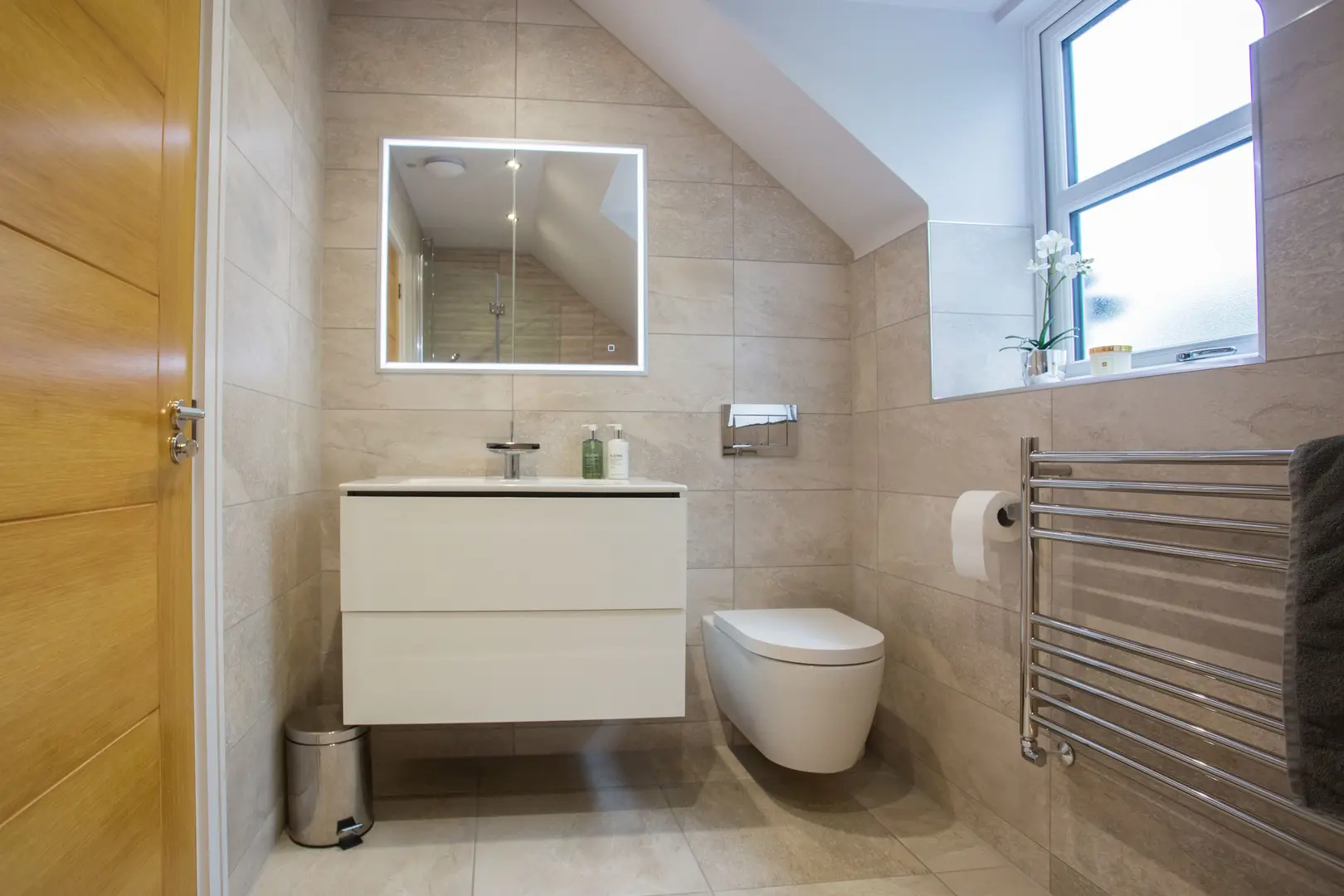
Sloping ceilings and uneven walls can impact the height, position, and proportions of a vanity. A standard unit might fit but still seem misplaced in the surrounding architecture.
Bespoke design adapts dimensions and positioning to suit these features, allowing furniture to integrate more naturally with available wall space.
Uneven walls require thorough assessment, as custom sizing won’t correct surface irregularities. Accurate measurements and a detailed fitting plan ensure a deliberate installation.
Getting a Precise Finish or Storage Layout
Custom furniture allows greater control over a vanity’s exact color, style, or storage requirements. Buyers can arrange storage based on specific needs rather than accepting predetermined layouts.
This could involve balancing enclosed storage, drawers, or compartments, depending on maker options. The external finish may also be chosen to complement a meticulous bathroom design.
Detail is worthwhile when it supports daily use or a clearly defined design, but if a ready-made model meets appearance and storage needs, customization might add cost without significant benefit.
Choosing Handmade or UK-Made Craftsmanship
Some opt for bespoke furniture valuing handmade or UK-made craftsmanship for its construction methods, attention to detail, or unique features.
This preference differs from solving fitting issues; a custom piece may be chosen for its character rather than functional necessity.
Buyers should verify what “bespoke” entails, as the level of customization varies. Confirm possible specifications regarding dimensions, finishes, and details beforehand.
Comparing Bespoke Costs with Lead Times
Bespoke vanity units typically cost more and take longer to produce than ready-made alternatives. Pricing reflects unique requirements and non-standard manufacture, while lead times accommodate the design and production process.
Investment is justified when no standard unit fits properly or a specific design is crucial. It is harder to justify if customization results in minimal differences.
Discuss lead times early. Coordinate bespoke vanities in project schedules rather than assuming they can be ordered swiftly.
Assessing the Fit You Will Live With Long Term
A poorly fitted vanity is noticeable long-term. Persistent gaps, improper proportions, or inefficient storage may frustrate users over time.
Determine if the problem is temporary or inherent to the unit. While styling can change, an incorrect width is hard to fix post-installation.
If ready-made units cause visible fitting problems, bespoke offers better long-term value. Sound fits usually maintain ready-made as the economical choice.
A Practical Method for Choosing Between the Two
Begin with accurate measurements rather than a preference for either option.
- Measure the available space. Record usable width, height, and depth along with features affecting installation.
- Use consistent units. Maintain measures in millimeters or a single unit to avoid conversion errors.
- Check the layout. Note plumbing positions, alcoves, and surface irregularities.
- Review ready-made ranges. Compare suitable units before considering bespoke options.
- Identify unresolved issues. List what ready-made cannot provide.
- Compare costs and timing. Decide if the bespoke premium and lead time are warranted.
- Think long term. Evaluate which fit and storage will remain satisfactory after renovation.
Evaluating the Practicality of Bespoke vs Ready-Made Vanity Units
A simple comparison can clarify the decision:
| Consideration | Ready-made | Bespoke |
|---|---|---|
| Space | Best for standard layouts | Ideal for unusual spaces |
| Design | Choose from existing collections | Greater control over finishes |
| Storage | Predetermined configurations | Custom arrangement options |
| Timing | Usually quicker | Requires planning |
| Budget | More economical | Generally higher cost |
| Fit | Effective for standard dimensions | Tailored for unique spaces |
The deciding factor should be whether bespoke features address a real fitting or design challenge. If not, ready-made generally offers the best balance of practicality and value.
Bespoke and Ready-Made Vanity Unit FAQs
The following questions address common concerns about cost, suitability, compact spaces, and lead times.
When Does a Bespoke Vanity Unit Justify the Investment?
A bespoke vanity is most justified when standard options don’t fit, the room has challenging architectural features, or desired finishes and layouts aren’t available ready-made. The investment should provide tangible benefits like eliminating gaps or optimizing space.
Does Custom Manufacturing Always Cost More?
Bespoke manufacturing costs more due to individual requirements; however, the premium is justified when standard units would compromise function or design. Compare costs based on problems being solved, not abstract benefits.
Can a Custom Vanity Unit Work in a Tiny Cloakroom?
Bespoke sizing is quite beneficial in tiny cloakrooms, where units must fit limited wall areas effectively. This approach reduces wasted space and ensures suitable proportions, though precise measurement remains crucial.
How Bespoke Lead Times Compare with Ready-Made
Ready-made units are faster since their design and manufacturing are complete. Bespoke units need time for specification, approval, and production. Confirm lead times and coordinate with the bathroom schedule beforehand.
What If the Wall Is Standard but the Look Is Specific?
Explore ready-made collections first, as they might offer the desired appearance without bespoke costs and delays. If standard designs fall short, bespoke becomes a valid choice for aesthetic needs not related to fit.
Are Ready-Made Units the Better Option for Most Bathrooms?
For most standard bathrooms, ready-made vanity units are practical, offering various styles, quick availability, and lower costs. Bespoke should be reserved for situations unmet by standard furniture. If an off-the-shelf unit fits and meets design needs, further customization is unnecessary.