Black Bathroom Fixtures Trend Design Guide: Showers, Taps and Styling
Matte black has moved beyond a short-lived decorative accent to become a versatile choice for contemporary bathrooms. This black bathroom fixtures trend design guide explains how to select and style black taps, showers and coordinating details while considering installation, durability, storage, sustainability and maintenance.
The finish can look bold against white ceramics, understated within a monochromatic room or luxurious when paired with selected metallic accents. The key is to plan the entire bathroom as one scheme rather than choosing each fitting in isolation.
Why Matte Black Fixtures Continue to Trend
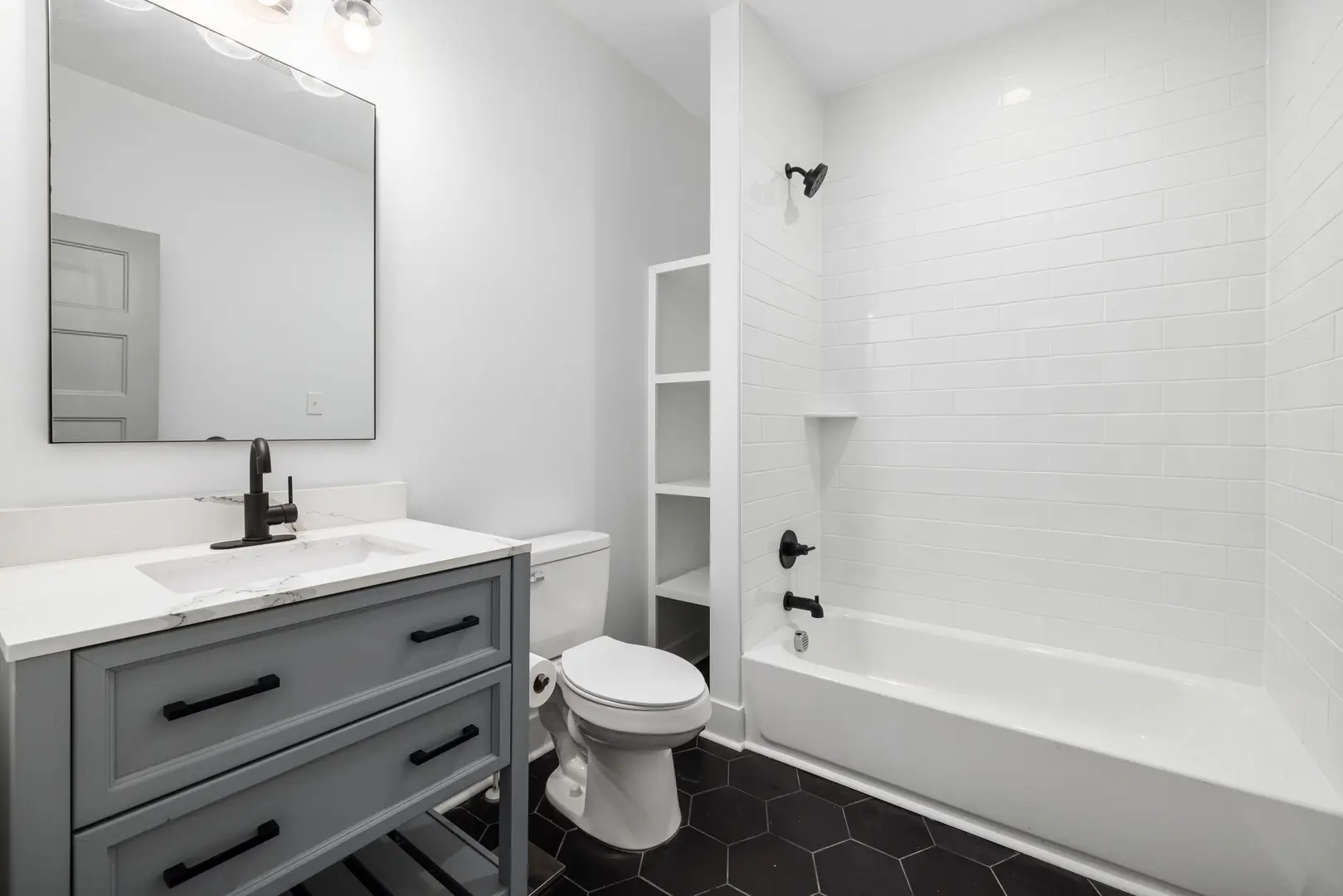
Traditional chrome and other bright metallic finishes tend to reflect their surroundings. Matte black takes the opposite approach: it creates a defined silhouette that is easy to notice. Against a white basin, bath, shower tray or tiled wall, a black fitting can become an immediate focal point.
This contrast is one reason matte black remains popular. Even a relatively simple basin tap can look distinctive when its outline is framed by white ceramic. A black shower system has an even greater visual impact because its riser, controls, hose and showerhead may form a strong graphic feature across the wall.
Black also works with a wide range of bathroom styles:
- Contemporary: Pair streamlined black taps with simple white surfaces and minimal accessories.
- Industrial: Use black fittings alongside concrete-inspired finishes, dark-framed screens and practical storage.
- Monochromatic: Combine black, white, charcoal and grey for a controlled tonal scheme.
- Classic with a modern update: Add black fixtures to familiar ceramic shapes to introduce sharper contrast.
- Luxury-inspired: Choose a large black showerhead or coordinated shower tower as the room’s main feature.
- Warm and decorative: Balance black with timber tones, textured surfaces or a limited amount of gold.
The range of fixtures available in black makes it possible to repeat the finish throughout the bathroom. Basin taps, bath fillers, shower controls, showerheads and accessories can all contribute to a cohesive result.
However, not every item must be black. The strongest designs usually use the finish with a clear purpose. Black can define the main water fixtures while white ceramics keep the room bright, or it can be repeated more extensively for a dramatic monochromatic effect. Establishing that approach before shopping prevents the finish from feeling like a collection of unrelated accents.
Choosing Matte Black Bathroom Taps
Black bathroom taps are available in many forms, from compact basin mixers to statement waterfall and wall-mounted designs. The right choice depends on the basin or bath, the plumbing arrangement and the level of visual impact you want.
A standard deck-mounted mixer is a practical option for many basins. It keeps the fitting contained within the basin area and introduces black without requiring it to dominate the wall. Coordinating bath taps or a black bath filler can then carry the finish across the room.
For a more distinctive feature, consider the following styles:
- Waterfall taps: These release water through an open spout, making the flow part of the design. Mixer versions can combine hot and cold supplies to provide a mixed water temperature.
- Wall-mounted taps: Installing the tap on the wall leaves the area around the basin visually uncluttered. The result can suit minimalist bathrooms particularly well.
- Tall basin mixers: These can work with countertop basins and give the black finish greater visual presence.
- Separate bath and basin fittings: Matching ranges allow the same shapes and finish to be used in both areas, even where the fixtures require different proportions or controls.
Appearance should not be the only consideration. Before choosing a tap, confirm that it suits the basin or bath configuration and the planned plumbing. Wall-mounted taps, in particular, need to be considered early because their position is tied closely to the wall construction, pipework, basin height and spout reach.
Controls also matter. A dramatic tap may look appealing, but it still needs to be comfortable to operate as part of a daily routine. Think about who will use the bathroom, how easily the controls can be reached and whether the proportions are appropriate for the ceramic fixture.
Frequently used fittings are not the best place to focus on the lowest purchase price. Cheap fixtures may wear sooner and lead to repeated replacement. A more durable tap can cost more initially, but investing in sound materials and a dependable finish can support longer service and reduce the need for repairs in a busy bathroom.
When comparing products, examine more than the colour shown in photographs. Check:
- The underlying fixture material
- The description of the black finish
- The manufacturer’s cleaning instructions
- The warranty terms
- The availability of compatible basin and bath fittings
- Whether replacement components can be obtained
- Installation requirements and compatibility with the room
Matching products from a coordinated range is the simplest way to achieve consistent shapes and shades. If you buy fixtures separately, compare them in person where possible. “Matte black” may not appear identical across every item, particularly when products have different surfaces or textures.
Exploring Black Shower Styles
A black shower can be a subtle detail or the main visual structure in the room. Its effect depends on the installation method, the number of visible components and the scale of the showerhead.
An exposed shower system places more of the design on view. The riser, controls, hose and head create a strong outline against the wall, making black especially effective on white or light-coloured tiles. This is a good approach when the goal is to celebrate the fixture rather than conceal it.
A more concealed installation can create a restrained appearance. Visible controls and outlets still add black accents, but much of the working arrangement is hidden. This option can suit a clean, minimal scheme, although it needs to be planned in coordination with the wall and plumbing work.
For a luxurious showering area, a black drencher head provides a broad, prominent feature. Its size and position draw the eye, so it should be selected in proportion to the enclosure and surrounding surfaces. It can be paired with black controls and a hand shower to create a complete, coordinated arrangement.
A shower tower offers a more comprehensive, spa-inspired appearance. Because several shower elements are brought together in one visible structure, a black tower can make a particularly strong statement. It may suit a room where the shower is intended to be the central feature rather than a background fitting.
Black can also be repeated in the shower enclosure. A black frame or dark detailing can connect the screen visually to the shower hardware, but repetition should be controlled. Too many strong outlines can make a compact room feel visually busy. In that situation, allowing one element—such as the shower system—to lead may produce a calmer result.
Careful planning is essential before buying or installing a black shower. Rushed remodels can take longer and lead to expensive corrections when fixture positions, wall finishes and plumbing have not been coordinated. Create a layout first and confirm:
- Where the shower controls will be positioned
- Which components will remain visible
- Whether the plumbing arrangement supports the chosen installation
- How doors or screens will open
- Where towels and shower products will be stored
- How the fixture relates to tile joints, niches and nearby accessories
- Whether the shower, taps and enclosure details have compatible finishes
The practical layout should come before the final decorative choice. A striking shower will not compensate for controls that are awkward to reach or storage that was omitted from the plan.
Styling Tips for Black Taps and Showers
White is the most direct partner for matte black. White basins, baths, shower trays and tiles provide a clean background that makes dark fixtures easy to see. This high-contrast combination can look crisp without requiring complicated decorative features.
For a softer result, introduce grey, off-white or natural-looking surfaces between the black and white elements. The black fixtures will remain noticeable, but the transition will feel less stark. Darker charcoal surfaces can support a more immersive monochromatic scheme.
Repeating black in small amounts helps connect the room. Suitable accessories may include:
- Towel rails or hooks
- Soap dispensers
- Mirror frames
- Shelf brackets
- Cabinet handles
- Shower-screen detailing
- Toilet-roll holders
- Small storage containers
These details do not all have to match exactly, but they should appear intentional. Choose a few repeated elements rather than turning every available object into a black accent.
A black or anthracite radiator can provide a larger coordinating feature. It may visually balance a prominent black shower on the opposite side of the room, or connect dark fittings across an otherwise pale scheme. Consider its scale carefully, as a large dark radiator will carry more visual weight than a tap or accessory.
Storage must be designed alongside the fixture layout. A common post-remodel frustration is discovering that the finished bathroom has nowhere convenient for toiletries, spare towels or cleaning supplies. Planning storage late can also lead to cabinets or shelves being placed awkwardly around taps and shower controls.
Before installation, decide where everyday items will live. A vanity can provide enclosed storage below the basin, while shelves, wall cabinets and shower niches can keep frequently used products accessible. Check that doors and drawers have room to open and that storage will not obstruct a wall-mounted tap, shower control or towel rail.
Finish coordination is partly a matter of preference. Some homeowners favour complete uniformity, with black used for every tap, shower component and accessory. This creates a controlled, consistent look and can simplify product selection.
Others prefer intentional mixing. Black and gold, for example, can create an expressive, layered scheme. If mixing finishes, assign each one a role. Black might define the water fixtures and shower frame, while gold is reserved for the mirror or a small number of accessories. Repeating both finishes selectively makes the combination look planned rather than accidental.
Avoid choosing mixed finishes item by item without an overall rule. A useful approach is to select one dominant finish and one secondary accent. Also consider undertones and surface character: a matte black fixture and a highly reflective metallic accent create a stronger contrast than two muted finishes.
Sustainability deserves attention when products are compared. The environmental impact of a fixture is not determined by its colour alone. Consider the base material, finish, expected working life, repairability, care requirements and whether replacement parts are available. A durable fixture that can be maintained and repaired may avoid the need for frequent replacement.
Ask manufacturers or retailers for material and finish information instead of assuming that all black fixtures are made in the same way. Choosing a product for longevity may involve a higher initial cost, but buying repeatedly because a cheap fitting wears out is not necessarily the better environmental or financial option.
Maintenance Tips for Black Bathroom Fixtures
Black bathroom fixtures are not inherently impossible to keep clean, but their appearance can make residue more noticeable. Maintenance expectations should therefore be part of the buying decision, especially in a frequently used bathroom.
The safest routine is simple and regular:
- Rinse away product residue. Do not allow soap or bathroom products to remain on taps and shower components unnecessarily.
- Wipe with a soft cloth. Gentle wiping removes moisture and everyday marks without aggressive scrubbing.
- Dry the surface. Drying after cleaning helps preserve the even appearance of the matte finish.
- Follow the manufacturer’s instructions. Approved cleaning methods can vary according to the underlying material and surface treatment.
- Avoid abrasive tools. Rough pads and harsh scrubbing may damage the finish.
- Use cleaning products cautiously. Do not assume that a cleaner suitable for ceramic or chrome is appropriate for matte black.
- Address marks regularly. Brief, routine care is preferable to allowing heavy residue to build up and then using forceful cleaning.
Do not scrape a black fixture or use an abrasive product on a stubborn mark. Check the product’s care guidance and repeat the recommended gentle cleaning process instead. The aim is to clean the surface without wearing or changing its finish.
Durability and maintenance are closely connected. A well-made fixture with a finish intended for regular bathroom use should still be treated according to its care instructions. Conversely, careful cleaning cannot fully compensate for a poor-quality product that wears prematurely.
Before purchasing, review the care requirements and decide whether they suit your household. A bathroom used by several people may benefit from fixtures selected for durability and a simple cleaning routine. With thoughtful product selection, planned placement and regular gentle care, matte black taps and showers can remain striking features rather than becoming demanding decorative choices.