Black framed bathroom mirrors
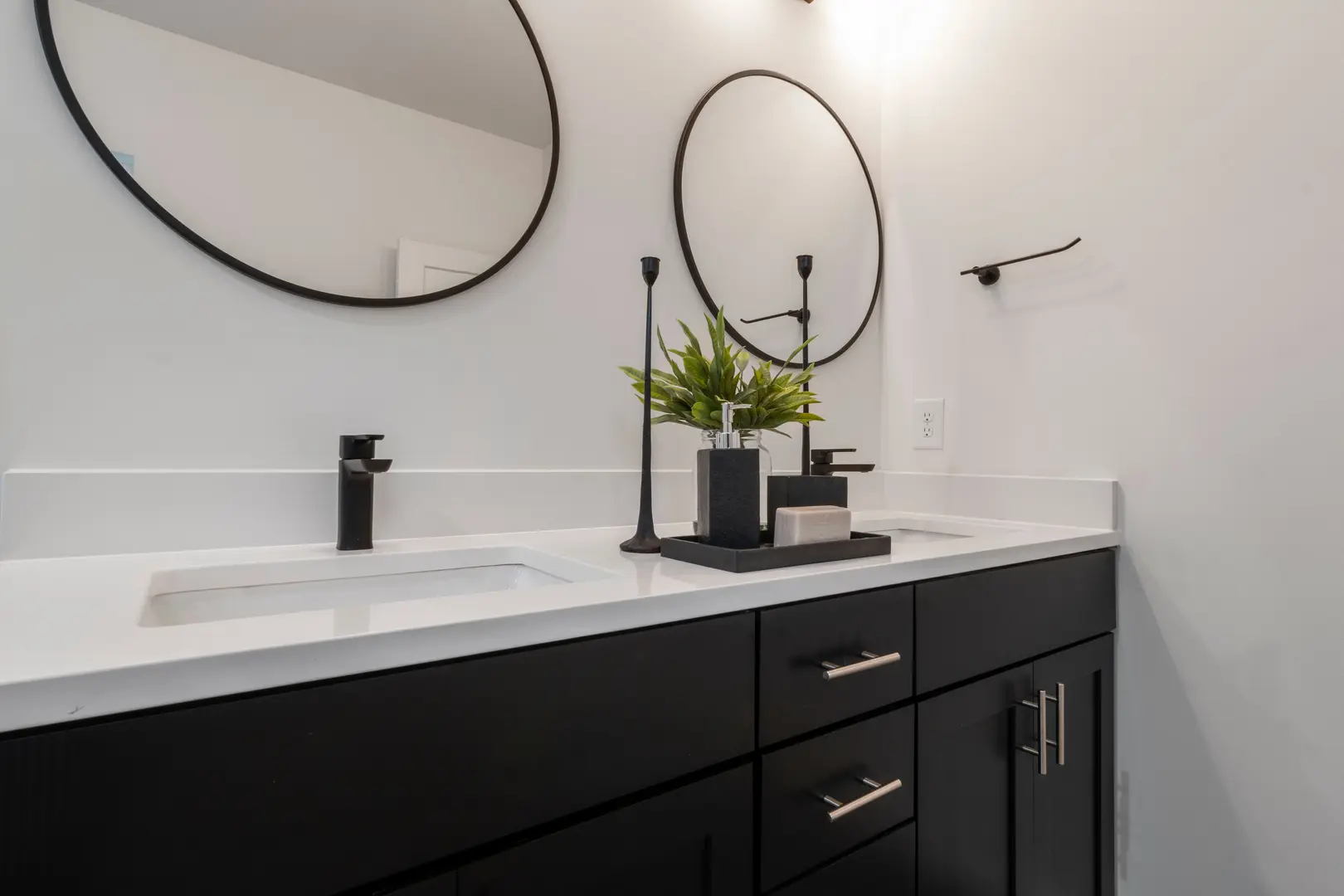
Black framed bathroom mirrors bring structure, contrast and a coordinated finish to a bathroom. Their dark outline makes the reflective surface feel intentional, while the neutral colour works with many modern interiors. A matte black frame can also connect the mirror visually with taps, shower fittings and smaller accessories.
Choosing well involves more than selecting a frame colour. Shape, size, surrounding metalwork, storage needs and long-term maintenance all affect whether a mirror looks right and remains in good condition.
Why choose a black frame?
A black frame gives a bathroom mirror a clearly defined outline. This can be particularly effective against white tiles, pale paint or lightly patterned walls, where an unframed mirror may otherwise blend into the background. The contrast turns a practical fitting into a stronger design feature without introducing a bright or complicated colour.
Black also coordinates naturally with black brassware. If the bathroom already includes matte black taps, a black shower frame or dark cabinet handles, the mirror can connect those separate elements. Instead of each black detail appearing isolated, the repeated finish creates a coherent scheme.
This coordination does not mean every surface must be black. In fact, a black-framed mirror often works best as part of a balanced palette. It can provide definition among:
- White sanitaryware and wall tiles
- Natural wood vanity units
- Stone-effect surfaces
- Neutral paint colours
- Concrete-inspired finishes
- Softly patterned tiles
Black is less closely associated with a particular decorative period than some more distinctive metallic finishes. That makes it a versatile choice when designing a bathroom intended to remain visually relevant as smaller accessories and wall colours change.
Black framed bathroom mirrors are suitable for several modern bathroom styles. In a minimalist room, a slim frame adds a precise edge without unnecessary decoration. In an industrial-inspired bathroom, black can echo metal shower screens and exposed-style fittings. It can also introduce useful contrast in a softer contemporary space featuring rounded basins, warm wood and neutral colours.
The width and visual weight of the frame matter. A fine black border has a subtle, streamlined appearance, while a heavier frame creates a more prominent focal point. Consider how much contrast the room needs. A compact bathroom may benefit from a lighter-looking frame, whereas a broad vanity wall can often accommodate a more substantial outline.
The finish should also relate to nearby fittings. Matte black tends to integrate especially well with modern black brassware because it has a restrained appearance. If the other dark details are glossy or textured, compare them carefully rather than assuming all black finishes will look identical.
Choosing the right black-framed mirror shape
Mirror shape changes both the appearance of the wall and the amount of useful reflection. The best option depends on the vanity dimensions, surrounding geometry and personal preference.
Round black-framed mirrors soften the angular lines commonly found in bathrooms. Tiles, vanity units, shower enclosures and baths often introduce rectangles and straight edges. A circular mirror breaks up this geometry and creates a gentler focal point. It can work particularly well above a single basin or a compact vanity where the mirror has enough open wall around it to make its shape clear.
A round mirror is also a popular decorative choice. The black frame defines the circle, making the curved form stand out against the wall. However, the shape may provide less reflection at the upper corners than a rectangular design of similar overall width. Consider how the mirror will be used rather than selecting it purely as wall decoration.
Rectangular mirrors usually maximise the reflective area available above a vanity. Their straight sides align easily with basins, cabinets and splashbacks, helping the layout feel ordered. A horizontal rectangle can span a wider vanity, while a vertical format can provide a generous head-to-shoulder view without taking up as much wall width.
A rectangular black frame can appear strong and architectural. This suits bathrooms that already feature crisp tile lines and square-edged furniture. If the room risks feeling too rigid, a rectangle with subtly softened corners can provide a compromise, provided its design still coordinates with the rest of the space.
Oval mirrors offer another way to introduce curves. Their narrower proportions can suit slim vanities or wall areas where a full circle would either look too wide or provide insufficient vertical reflection. A vertical oval draws the eye upwards and can make good use of a tall, restricted section of wall.
There is no universal winner in the choice between round and oval mirrors. Some people prefer the balanced symmetry of a round black-framed mirror, while others find an oval is a better fit for the vanity and available wall space. Treat these preferences as design considerations rather than rules.
Before deciding, assess:
- Vanity width: The mirror should relate visually to the furniture and basin below it.
- Available wall area: Check for nearby cabinets, tiles, lights and other fittings.
- Useful reflection: Think about who will use the mirror and the view they need.
- Existing shapes: Curves can soften an angular room, while straight edges can reinforce an orderly layout.
- Visual balance: Allow enough space around a shaped mirror for its outline to be appreciated.
For a double vanity, one wide rectangular mirror can create a continuous reflective area. Alternatively, two round or oval black-framed mirrors can define separate basin positions. The right approach depends on whether the design should feel unified or individually structured.
Lighting placement should be considered at the same time as mirror shape. A planned wall light, ceiling pendant or side lighting may affect the available space. Looking at the complete wall composition before purchasing the mirror helps prevent the frame and lighting from appearing crowded.
Coordinate the mirror with black brassware
A black-framed mirror looks most convincing when its finish relates to the bathroom’s other metalwork. Matte black taps are an obvious starting point, but they are only one part of the scheme. Shower controls, shower screens, handles, hooks, towel rails and other visible hardware all contribute to the overall impression.
Consistency is more important than using black on every available item. Choose the elements that will be seen together and make sure they feel connected. A mirror above a basin, for example, is viewed directly alongside the tap and vanity handles. If those finishes differ noticeably, the inconsistency may be more apparent than it would be elsewhere in the room.
A simple coordination checklist includes:
- Basin and bath taps
- Shower fittings and controls
- Shower-screen framing
- Vanity handles or knobs
- Towel rails and rings
- Robe hooks
- Shelves and brackets
- Smaller countertop accessories
Try to match not only the colour but also the character of the finish. Matte black hardware generally sits most naturally with a matte black mirror frame. Mixing a flat frame with highly glossy fittings can work as a deliberate contrast, but it should not appear accidental.
Avoid adding black items one at a time without considering the room as a whole. Too few repeated details may make the mirror look disconnected, while too many heavy black features can dominate a small or pale bathroom. Repetition at several well-spaced points usually creates a clearer visual rhythm.
Smaller bathroom accessories can complete the connection. A soap dispenser, tray or wall hook may reinforce the scheme, but these details do not all need to match perfectly. Permanent metalwork deserves the closest attention because it is more difficult to change than moveable accessories.
If the bathroom contains another metal finish, decide whether the combination is intentional. A controlled mixed-metal scheme can look considered, but random variations among taps, handles and frames may weaken the result. Keep the most prominent pieces consistent and use any secondary finish sparingly.
Consider a black-framed bathroom cabinet
A black-framed bathroom cabinet combines a mirror with concealed storage. This can be useful when the wall above the basin needs to perform more than one function. Everyday toiletries can be kept close at hand without remaining visible on the vanity.
The black exterior reinforces the same design ideas as a simple framed mirror. It can coordinate with taps, handles and shower framing while giving the cabinet a defined outline. This helps a practical storage unit feel integrated into the wider bathroom scheme.
Although the exterior may be black, the cabinet interior is typically white. The contrast is normal and can make the inside feel visually separate from the outer design. Check product images or view the cabinet open if the interior colour is important to you.
When comparing a cabinet with a standard mirror, consider:
- How much storage the bathroom needs
- Whether the cabinet will project noticeably from the wall
- How its width relates to the vanity
- Whether doors have sufficient room to open
- How the outer black finish coordinates with nearby fittings
A cabinet is not automatically better than a flat mirror. In a bathroom with ample vanity storage, a simple black-framed mirror may offer a cleaner profile. In a room where surfaces quickly become cluttered, the additional storage can be more valuable.
Preventing and Fixing Mirror Rot
Dark spots, cloudy edges or spreading discolouration can indicate damage to the mirror’s reflective backing, often described as mirror rot. It commonly becomes noticeable around the edges, where the deterioration can interrupt an otherwise clean reflection.
Do not ignore the first signs. Once damage spreads, restoring the appearance may become impractical and complete mirror replacement may be necessary. Early attention gives you the opportunity to identify a moisture or installation issue before selecting a repair or replacement.
Discolouration does not always mean the mirror must be replaced immediately. The appropriate response depends on its location, extent and cause. A small affected edge may be visually tolerable or concealable, while widespread deterioration across the reflective area is much harder to disguise. The underlying mirror coating cannot be restored simply by cleaning the front surface.
First, distinguish between a surface mark and damage behind the glass. Clean the mirror gently using an appropriate method. If the dark or cloudy area remains and appears to sit within or behind the reflective layer, ordinary cleaning is unlikely to resolve it. Avoid aggressive attempts to scrub it away, as the problem is not necessarily on the exposed face.
Caulk around bathroom mirrors is another common concern. In damp conditions, perimeter caulk may crack, darken or develop visible mould. Whether a mirror should be caulked depends on its design, installation method, wall surface and the manufacturer’s instructions. Caulk should not be treated as a universal fix for every mirror edge.
If perimeter caulk has failed:
- Inspect the edge to see whether the issue is limited to the caulk or accompanied by mirror discolouration.
- Look for persistent dampness or water exposure around the mirror and vanity.
- Remove and replace failed caulk correctly rather than covering cracked or mouldy material with another layer.
- Use a sealant suitable for the mirror and bathroom application.
- Follow the mirror manufacturer’s guidance or consult a qualified installer when the correct method is unclear.
Replacing mouldy caulk can improve the visible joint, but it will not reverse damage already present in the reflective backing. Likewise, resealing an edge without addressing repeated moisture exposure may leave the original cause unresolved.
Good day-to-day care focuses on keeping water from remaining around the mirror edges. Wipe away splashes, maintain normal bathroom ventilation and inspect the perimeter occasionally for lifting sealant, persistent dampness or new dark marks. These simple checks make early changes easier to notice.
Building a black frame around an existing unframed mirror is sometimes used to conceal discoloured edges. It can improve the mirror’s appearance and connect it with black brassware without immediately replacing the full glass. However, a new frame only hides the affected area. It does not repair the compromised backing or stop mirror rot from progressing.
Before framing a damaged mirror, determine whether the glass remains suitable to keep. If the deterioration is spreading, the mirror is insecure, or the cause has not been addressed, concealment may only delay replacement. A new black-framed mirror could be the more dependable option when the reflective surface is extensively affected.
For a replacement, pay attention to both appearance and installation. Choose a shape that fits the vanity, coordinate the frame with the bathroom’s metalwork, and follow the supplied fitting and sealing guidance. This ensures the new mirror contributes to the design while avoiding a repeat of preventable maintenance problems.