Can You Clean a Toilet With a Washcloth?
Yes, you can clean parts of a toilet with a washcloth, but it should be a dedicated cleaning cloth—not a washcloth used for bathing, drying hands, or wiping the sink. For the inside of the bowl, a toilet brush is usually the more practical choice because it reaches under the rim and is designed for scrubbing that confined, wet area.
The main hygiene issue is not the word “washcloth.” It is cross-contamination. A cloth used on a toilet can carry soil and germs to other surfaces or into the laundry if it is reused, stored, or washed carelessly. Treat it as a toilet-cleaning tool from the moment you use it.
Which cloth is safe to use?
Choose one of these options:
- A disposable cleaning cloth or paper towel for a one-time job.
- A washable cloth reserved only for the toilet.
- A small, clearly marked bundle of toilet-cleaning cloths kept separate from bath linens.
Do not use a shared bath washcloth, face cloth, hand towel, or kitchen cloth. Even if a reusable cloth looks clean after wiping, appearance does not establish that it is free of contamination.
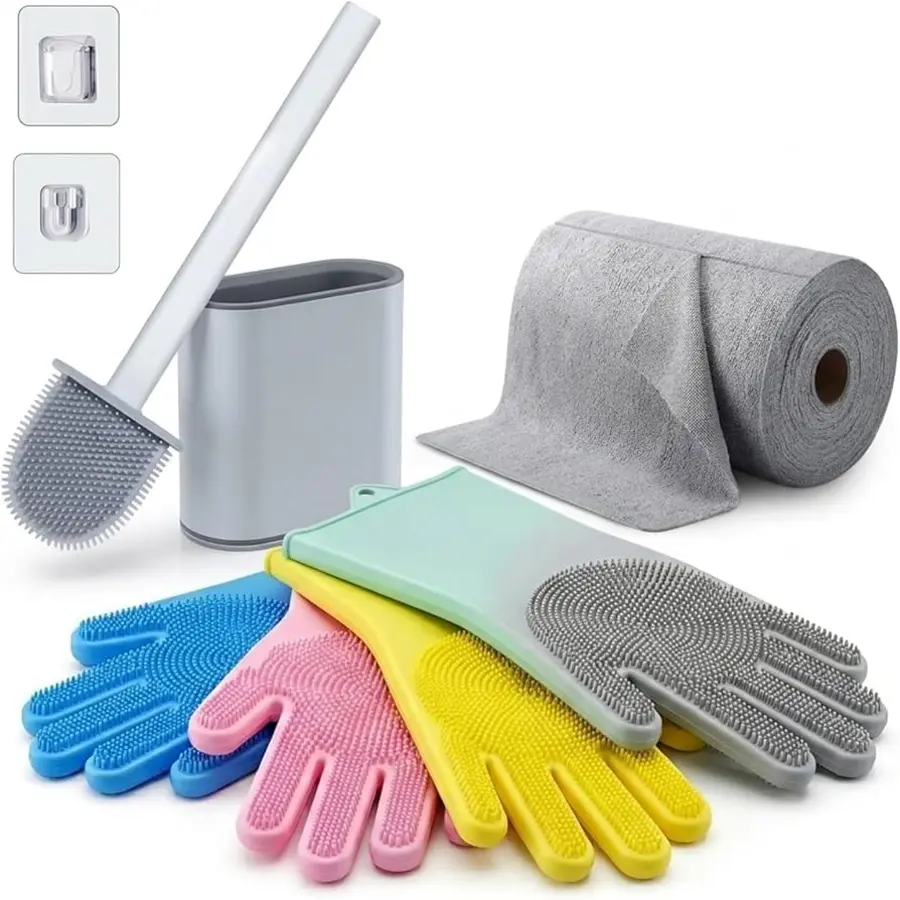
A dedicated cloth is most useful for the toilet’s exterior: the lid, seat, hinges, tank, base, and nearby hard surfaces. Use a separate section of the cloth—or a second cloth—for different areas, and avoid moving from a visibly dirtier area to a cleaner one.
Source: m.media-amazon
Toilet brush vs. washcloth
A washcloth can wipe and lift residue, but it is awkward for the bowl itself. It may not reach beneath the rim well, and you have to put your hand close to contaminated water or surfaces. A toilet brush gives you more distance and is better suited to scrubbing the bowl.
| Tool | Best use | Main limitation |
|---|---|---|
| Toilet brush | Scrubbing the bowl and beneath the rim | Needs careful rinsing, draining, and storage |
| Dedicated washable cloth | Wiping the seat, lid, tank, base, and exterior | Can spread contamination if reused or laundered with ordinary towels |
| Disposable cloth or paper towel | One-time wiping of exterior surfaces | Creates waste and may be less effective on stuck-on residue |
Using both tools is often the simplest approach: brush the bowl, then wipe the exterior with a dedicated cloth or disposable towel.
How to clean a toilet safely
The exact product you use matters. Read the label for suitable surfaces, required contact time, ventilation, and any rinsing instructions. Cleaning removes soil; disinfecting is a separate product step when it is needed.
1. Gather separate supplies
Set out the toilet brush, dedicated cloth or disposable towels, gloves, and the cleaner you intend to use. Keep these items away from bath towels, toiletries, and clean laundry.
If someone in the household has an illness that may spread through contaminated surfaces, follow the disinfectant label carefully and clean frequently touched toilet surfaces, such as the flush handle, lid, and seat. For routine cleaning, use the product according to its directions rather than adding extra product or guessing at a stronger mixture.
2. Improve ventilation and protect your hands
Open a window or run the bathroom exhaust fan if appropriate. Wear gloves if the product label recommends them or if you prefer a barrier between your hands and the cleaner. Keep children and pets away from the area while products are in use.
Never mix toilet cleaner with bleach, ammonia, vinegar, or another cleaning product. Combining products can create dangerous fumes or unwanted chemical reactions. If you change products, follow the label directions and rinse surfaces as instructed before using something else.
3. Clean the bowl with a toilet brush
Apply the bowl cleaner as directed, paying attention to the area under the rim. Let it sit only for the time stated on the label, then scrub with the brush. Flush according to the product directions and local bathroom setup.
A toilet lid may help limit the direction of spray during flushing, but it is not a substitute for cleaning or disinfection. Keep your hands away from your face while cleaning, and avoid splashing the surrounding floor or fixtures.
4. Wipe the exterior with the dedicated cloth
Apply cleaner to the cloth or surface as directed by the product label. Wipe the flush handle, tank, lid, seat, hinges, outside rim, and base. Work from cleaner areas toward dirtier ones, and change or refold the cloth as it becomes soiled.
Do not use the same cloth on the sink, tub, shower curtain, bath mat, shelves, or door handles. If toilet water or cleaner splashes onto another surface, clean that surface with a suitable product rather than simply wiping it dry.
5. Handle the cloth and brush without spreading residue
A disposable cloth should go into the appropriate waste bin. Do not flush cleaning cloths, wipes, or paper towels unless the packaging specifically says they are suitable for flushing—and even then, follow local plumbing guidance.
For a reusable cloth, avoid carrying it loose through the bathroom or dropping it into a hamper with bath towels. Place it in a designated, washable container or bag until laundering. Rinse the toilet brush as directed by the product or tool manufacturer, allow it to drain, and store it where it can dry rather than in a closed pool of dirty water.
6. Wash your hands
Remove gloves without touching the contaminated outside surfaces, then wash your hands thoroughly with soap and water. Handwashing is important even when gloves were worn.
How should a reusable toilet cloth be laundered?
Check the cloth’s care label first. Wash toilet-cleaning cloths separately from bath towels, washcloths, clothing, and kitchen linens. Use the laundering temperature, detergent, and drying method allowed by the fabric and machine instructions.
Do not assume that a bleach wash makes every cloth sterile. Bleach can damage some fabrics, and its safe use depends on the product label and the material. If bleach is appropriate for the cloth, follow the bleach label and never combine it with other cleaners.
Keep the cloths visibly separate in storage. A color-coded system or a label such as “toilet only” can prevent someone from accidentally using one at the sink or on their face.
When should you avoid using a washcloth?
Use a disposable towel or a toilet brush instead when:
- The cloth is shared with other bathroom users.
- The cloth has already been used on the sink, shower, or bath linens.
- There is heavy visible contamination that would be difficult to contain during laundering.
- You do not have a separate place to store used cleaning cloths.
- Someone in the household is sick and you cannot keep toilet textiles separate.
For a small bathroom or rental, a toilet brush plus a small supply of dedicated, washable cloths is usually easier to manage than trying to repurpose everyday washcloths. Store the brush and cloths in a ventilated area, away from clean towels and toiletries.
The bottom line
You can clean a toilet with a washcloth if it is reserved for toilet cleaning and handled as a contaminated cleaning tool. Use it mainly for the exterior, launder it separately according to its care label, and never return it to the bath-linen pile. For the bowl, a toilet brush is generally the better choice because it provides reach and scrubbing power while keeping your hands farther from the mess.
References
- Tips for toilet cleaning please, particularly cloths. I don’t like …. (n.d.). https://www.facebook.com/groups/847800375645747/posts/1625942121164898
- Preventing Cross-Contamination Is as Easy as 1, 2, 3. (n.d.). https://cmmonline.com/articles/preventing-cross-contamination-is-as-easy-as-1-2-3
- It’s embarrassing but my mom uses one towel to clean …. (n.d.). https://www.quora.com/It-s-embarrassing-but-my-mom-uses-one-towel-to-clean-the-toilet-tub-and-sink-I-m-a-germophobe-and-this-kills-me-She-says-she-cleans-the-towel-with-bleach-so-it-s-normal-Me-I-think-not-anyone-else-does-this-or-she
- The CDC advises that you clean all surfaces using soap …. (n.d.). https://www.facebook.com/dignityhealth/posts/the-cdc-advises-that-you-clean-all-surfaces-using-soap-and-water-practice-routin/3973814712658914
- Are your bath towels hiding harmful bacteria like E. coli and …. (n.d.). https://www.facebook.com/nontoxicdad/videos/-are-your-bath-towels-hiding-harmful-bacteria-like-e-coli-and-coliform-unfortuna/1026946835632917
- CDC Guidance for Cleaning and Disinfecting Facilities. (n.d.). https://www.cbia.com/resources/small-business/cdc-guidance-cleaning-disinfecting-facilities
- New Analysis Shows that Disinfection Is the Most Effective Way to Prevent Viral Contamination of Restroom Surfaces - APIC. (n.d.). https://apic.org/news/new-analysis-shows-that-disinfection-is-the-most-effective-way-to-prevent-viral-contamination-of-restroom-surfaces
- Levels of Cleaning for Better Health. (n.d.). https://www.cleaninginstitute.org/cleaning-levels