Can You Use a Shower Curtain With a Bath Screen?
Yes, you can use a shower curtain with a bath screen
You can use a shower curtain with a bath screen if there is enough room for the curtain to move freely and the two barriers do not obstruct each other. In many bathrooms, the screen handles spray near the shower end while the curtain closes the remaining open side of the bath.
This combination can make sense when you want better privacy, a softer appearance, or extra protection against water escaping at the open end. It is not automatically an improvement, though. A poorly positioned curtain can bunch against the screen, interfere with a hinged panel, trap dampness, or leave an awkward gap where water can escape.
The key is to treat the screen and curtain as two parts of one water-containment arrangement, rather than trying to make them occupy exactly the same space.
How a bath screen and curtain can work together
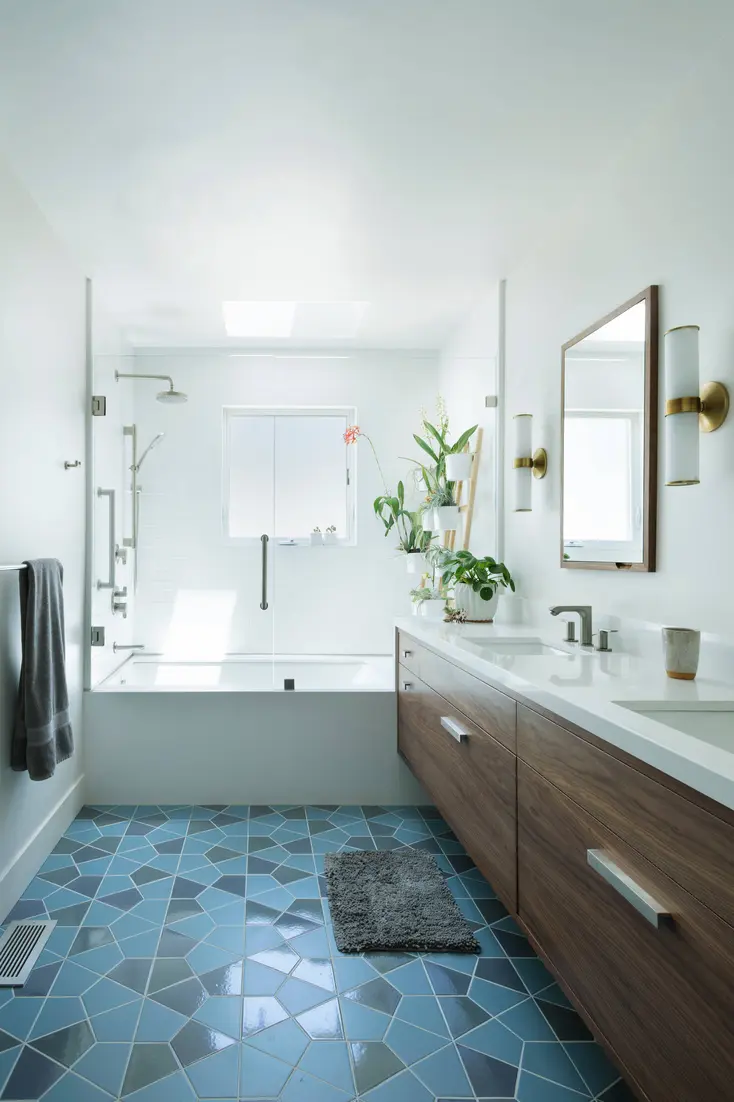
A bath screen usually protects the wall and floor near the showering end of the bath. A curtain can then cover the length of the bath that the screen does not reach.
For example, a fixed screen may be installed at one end of the tub, with a curtain rod running along the long side of the bath. When the curtain is closed, it should extend from the wall or screen area across the open side of the tub. The curtain does not necessarily need to cover the entire face of the screen, but it should close the open route around the screen’s outer edge.
A curtain can also add privacy that a clear screen does not provide. In a small bathroom, it may be easier to leave the curtain open when the bath is not in use and draw it only for showering.
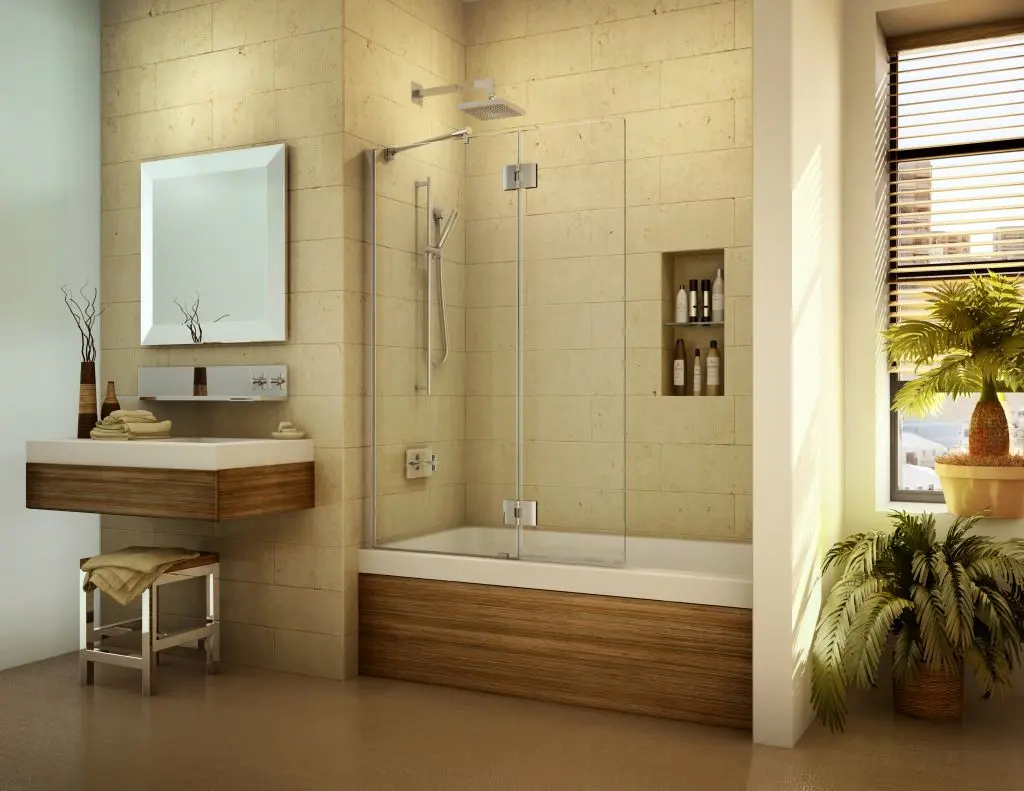
Source: blog.innovatebuildingsolutions
The curtain’s position matters more than the fact that both are present
The most practical arrangement depends on the type and position of the screen.
Fixed screen
A fixed screen is usually the simplest type to combine with a curtain. The curtain can run along the open side of the bath and meet the screen near its free edge. Some overlap is useful because it reduces the open channel between the two barriers.
The curtain should still be able to close without being pressed tightly against the glass. If it hangs directly against the screen, water may run along the glass and collect between the fabric and the panel. Leave enough space for the curtain to hang naturally and dry after use.
Hinged or folding screen
A hinged or folding screen needs more clearance. Check where the panels swing or fold before fitting a rod or track. A curtain that catches on the screen can make both parts difficult to use and may prevent the panel from opening fully for cleaning or access.
If the screen folds inward, avoid positioning the curtain so it is trapped inside the folded panels. If the screen swings outward, make sure the curtain does not block its movement.
Short or unusually positioned screen
A screen that stops well before the end of the bath may not provide enough coverage on its own. A curtain can fill that gap, but its width and closing direction become important. The curtain should close toward the screen or wall in a way that does not leave an exposed opening beside the showering area.
Should the curtain go in front of or behind the screen?
There is no single arrangement that works for every bathroom, but the curtain should generally sit on the bath side of the water-containment line, with its lower edge inside the tub while showering. It should not be draped over the top of the screen or wedged into the screen’s fittings.
At the point where the curtain meets the screen, aim for a clean overlap rather than a loose gap. The exact position depends on the rod, the screen frame, the direction of the shower spray, and whether the screen is fixed or movable.
Avoid pulling the curtain so tightly against the glass that it cannot dry. Avoid leaving it so far away that spray can pass between the curtain and screen. After installation, run the shower briefly and watch where water travels. Small changes to the curtain’s closing position can make a noticeable difference.
When combining them is useful
Using both a screen and a curtain can be worthwhile when:
- The screen leaves an exposed section of the bath’s open side.
- You want more privacy than a clear glass panel provides.
- You like the softness or changeability of a curtain but still want a rigid splash barrier near the shower.
- The bathroom is rented and a removable curtain is a simpler change than replacing the screen.
- The curtain can be drawn out of the way when the bath is used or when the room needs to feel more open.
- Water is escaping around the screen’s open end, and a properly positioned curtain can close that route.
A curtain can also be helpful when the screen alone stops most, but not all, splash. However, it should not be expected to correct a screen that is badly positioned or a shower spray that is aimed directly toward the open end of the bath.
When the combination may be awkward
The setup is less suitable when the bathroom is too narrow for the curtain to hang without touching nearby fixtures. It can also be troublesome when the rod must pass through the screen’s operating area or when the screen already extends across most of the bath and leaves no useful path for a curtain.
Be cautious if:
- The screen is hinged and needs the same space as the curtain.
- The curtain would have to bunch tightly at one end of the bath.
- The rod or track would prevent the screen from opening for cleaning.
- The curtain would sit in a pocket of poorly ventilated space between the screen and wall.
- The bath edge is too narrow for the curtain to fall inside without spilling water outward.
- The curtain cannot be pulled far enough across the open end to close the gap.
In these cases, a screen alone may be easier to live with, or a curtain alone may provide a simpler and more flexible enclosure.
Screen versus curtain alone
A screen provides a fixed barrier and does not shift with air movement or normal use. It can give the bath area a more open appearance, but a short or narrow screen may leave part of the bath exposed. It also cannot provide the same level of visual privacy as an opaque curtain.
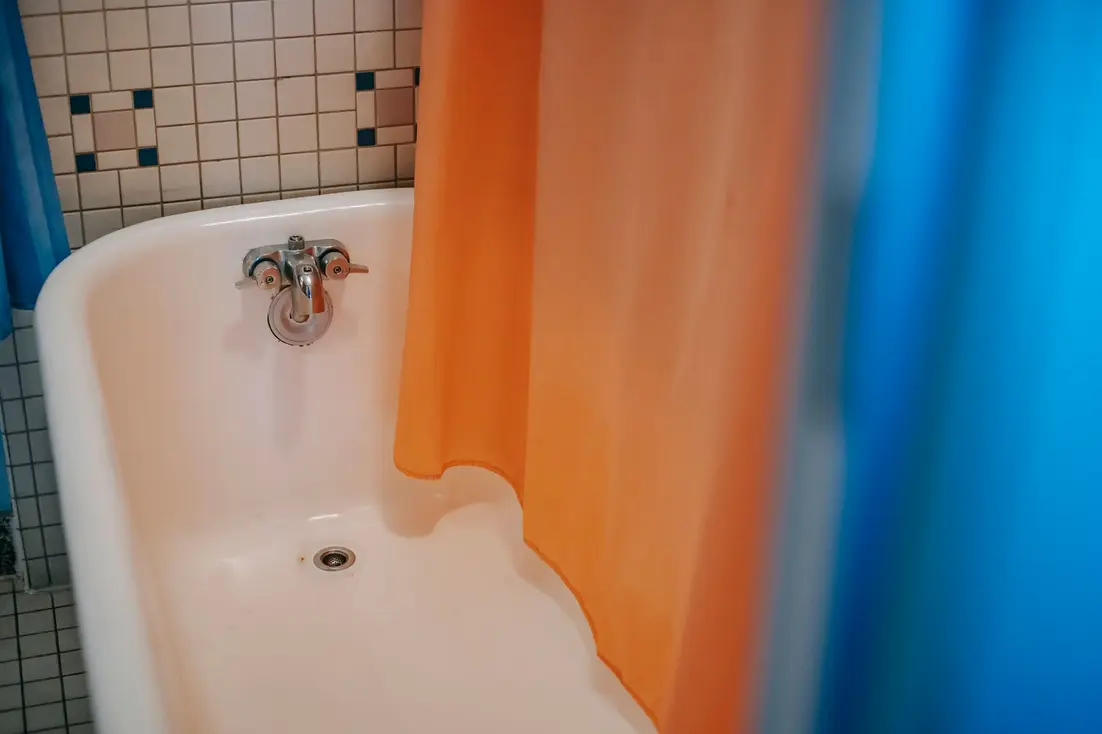
A curtain is flexible, usually easier to change, and can cover a wider area when the rod is positioned correctly. It may move inward during showering, and its bottom edge needs regular attention so it does not stay wet or collect residue.
Using both can combine the strengths of each, but it also adds another surface to clean and another part that must be positioned correctly. The best choice is the one that controls water without making the bath difficult to enter, clean, or use.
How to make the combined setup work
Before installing or changing anything, check these points:
- Measure the usable bath-side space. Note where the screen begins and ends, where the rod can be supported, and how far the curtain can travel.
- Check all movement. Open and fold the screen while the curtain is both open and closed. Nothing should catch, scrape, or block the panel.
- Close the route around the screen. When drawn, the curtain should meet or overlap the screen area closely enough to reduce a direct path for spray.
- Keep the bottom inside the tub. The curtain should fall inside the bath while showering, not over the outer edge.
- Allow drying space. After use, spread the curtain rather than leaving it tightly compressed against the glass or wall.
- Test with the shower running. Look for water escaping at the screen edge, curtain bottom, wall connection, and bath rim. Adjust the closing direction or curtain position if needed.
Bottom line
Can you use a shower curtain with a bath screen? Yes, provided the curtain has its own clear path and works with the screen rather than blocking it. The most useful arrangement is usually a fixed screen covering the shower end and a curtain closing the open side of the bath, with enough overlap to limit splash but enough separation for both surfaces to dry.
If the screen’s hinges, folding panels, or surrounding fixtures leave no room for the curtain to move, using only one enclosure may be more practical. The decision should be based on the actual bath layout, the direction of the shower spray, and whether the combined setup remains easy to open, clean, and dry.
References
- Bath Shower Screens vs Shower Curtains. (n.d.). https://www.sanctuary-bathrooms.co.uk/guides/bath-shower-screens-vs-shower-curtains
- Shower curtain vs shower screen : r/HousingUK. (n.d.). https://www.reddit.com/r/HousingUK/comments/1022ynl/shower_curtain_vs_shower_screen
- Shower screen or shower curtain? …. (n.d.). https://www.facebook.com/bathroomsbath/videos/shower-screen-or-shower-curtain-shower-screens-look-sleek-and-are-easy-to-clean-/1235255691369012
- The great divide: glass screens versus shower curtains. (n.d.). https://www.houseandgarden.co.uk/article/glass-screens-versus-shower-curtains
- Shower screen or shower curtain? Shower screens …. (n.d.). https://www.facebook.com/bathroomsbath/videos/shower-screen-or-shower-curtain-shower-screens-feel-sleek-and-are-easy-to-clean-/1201690648827476
- Bathtub Glass Shower Screen vs Shower Curtain | Dulles Glass. (n.d.). https://www.dullesglass.com/blog/bathtub-glass-shower-screen-vs-shower-curtain-which-is-better
- CMV: Shower curtains are better than screens for …. (n.d.). https://www.reddit.com/r/changemyview/comments/oz81qn/cmv_shower_curtains_are_better_than_screens_for
- Shower Door vs. Shower Curtain – Which is right for my …. (n.d.). https://abcglassandmirror.com/shower-door-vs-shower-curtain-which-is-right-for-my-bathroom