How to Choose a Bathroom Mirror That Fits Your Space

A bathroom mirror is both a practical necessity and a major design feature. The right choice can make daily routines easier, brighten the room, and help a compact bathroom feel more open. The wrong one may look out of proportion, provide inadequate visibility, or create installation problems.
If you are wondering how to choose a bathroom mirror, consider more than appearance alone. Size, shape, lighting, storage, placement, and installation all influence how well the mirror works in your space.
Why the Right Bathroom Mirror Matters
A mirror usually occupies a prominent position above the vanity, impacting the bathroom’s visual effect. It can reinforce the room’s style, connect finishes and colors, or act as a decorative focal point.
Mirrors also affect how a bathroom feels. By reflecting the room, they can create a sense of depth that makes a small space seem more open. They redistribute natural and artificial light as well, which may make the vanity area feel brighter and more inviting.
From a practical perspective, the mirror needs to provide a clear, conveniently positioned reflection for grooming. Features like integrated lighting, fog resistance, or hidden storage can enhance its usefulness further.
A well-chosen mirror should:
- Suit the proportions of the vanity and wall
- Support grooming and other daily activities
- Complement the bathroom’s fixtures and decor
- Make effective use of available light
- Fit the installation conditions and remodeling budget
Treat the mirror as part of the overall design rather than as a last-minute accessory.
Key Factors for Selecting a Bathroom Mirror
Consider size, proportions, shape, frame style, lighting, placement, and installation. Storage needs and electrical requirements may also affect the decision.
Before shopping, examine the entire vanity wall. Note the width of the vanity, the location of faucets and sinks, the height of the ceiling, nearby windows, existing light fixtures, and available wall space. This helps narrow the options before committing to a particular design.
Choosing the Right Mirror Size and Proportions
Mirror size influences the room’s appearance. A mirror that’s too small can feel disconnected from the vanity, while one that’s too large may overpower the wall or compete with lighting and other features.
Keep the mirror proportionate to the vanity. Many prefer a mirror that fits within the vanity’s width. However, the best dimensions depend on the wall, the desired visual effect, and whether you are using one mirror or several.
Consider:
- Vanity width: Use it as the primary reference for mirror width.
- Wall space: Ensure enough visual separation from adjacent cabinets, windows, and walls.
- Fixture placement: Check that faucets and light fixtures won’t crowd the mirror.
- Room scale: A broad mirror adds depth but shouldn’t overwhelm a compact bathroom.
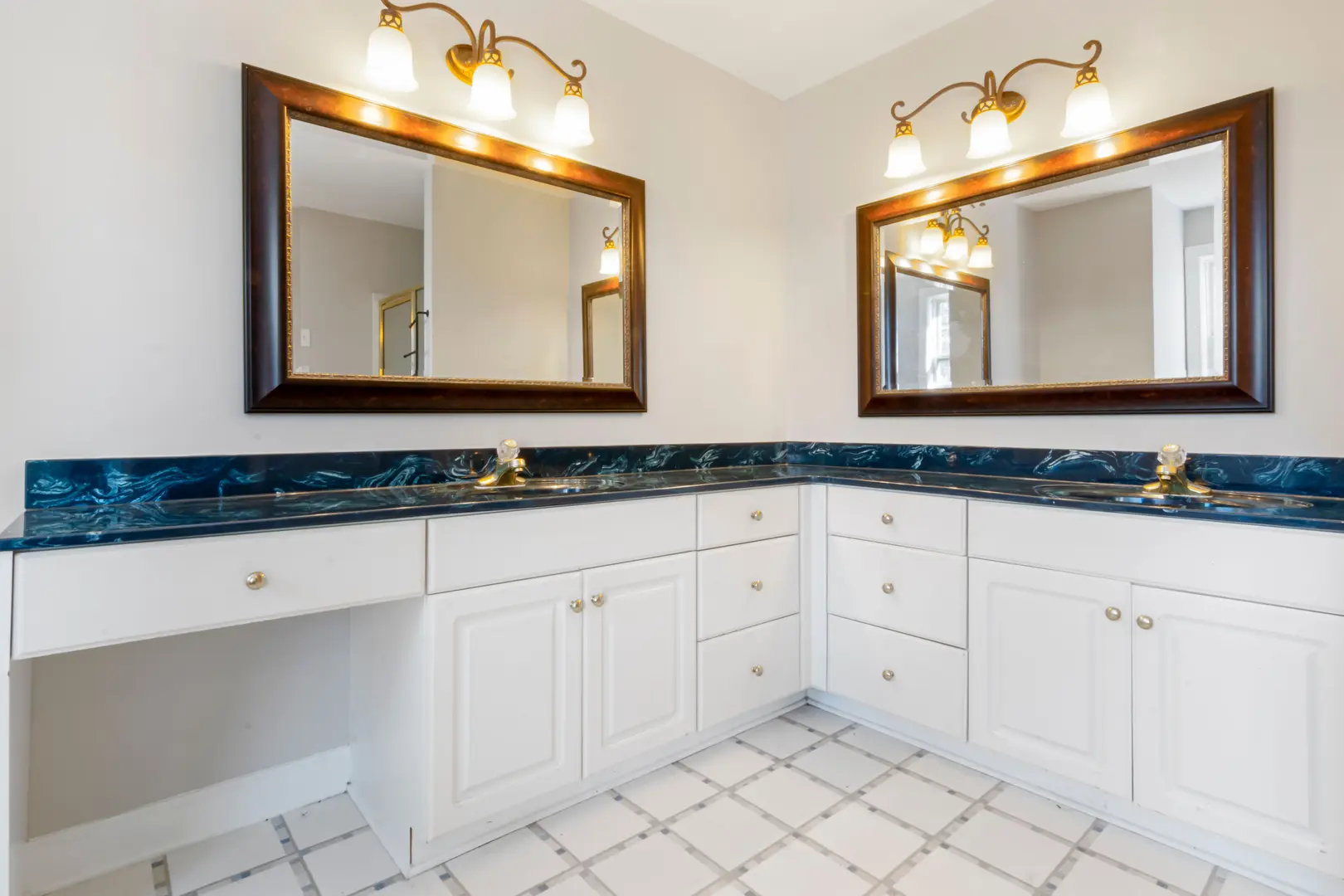
- Number of sinks: A double vanity may suit one wide mirror or two coordinated mirrors.
Don’t focus on width alone. Height matters for visibility and visual balance, especially with high ceilings or limited space between the vanity and lighting.
Matching Mirror Shape to Your Bathroom Style
Mirror shape influences both the mood and its relationship with surrounding design elements.
Rectangular mirrors are versatile and orderly. Vertical rectangles emphasize height, while wide horizontal designs visually expand the vanity area.
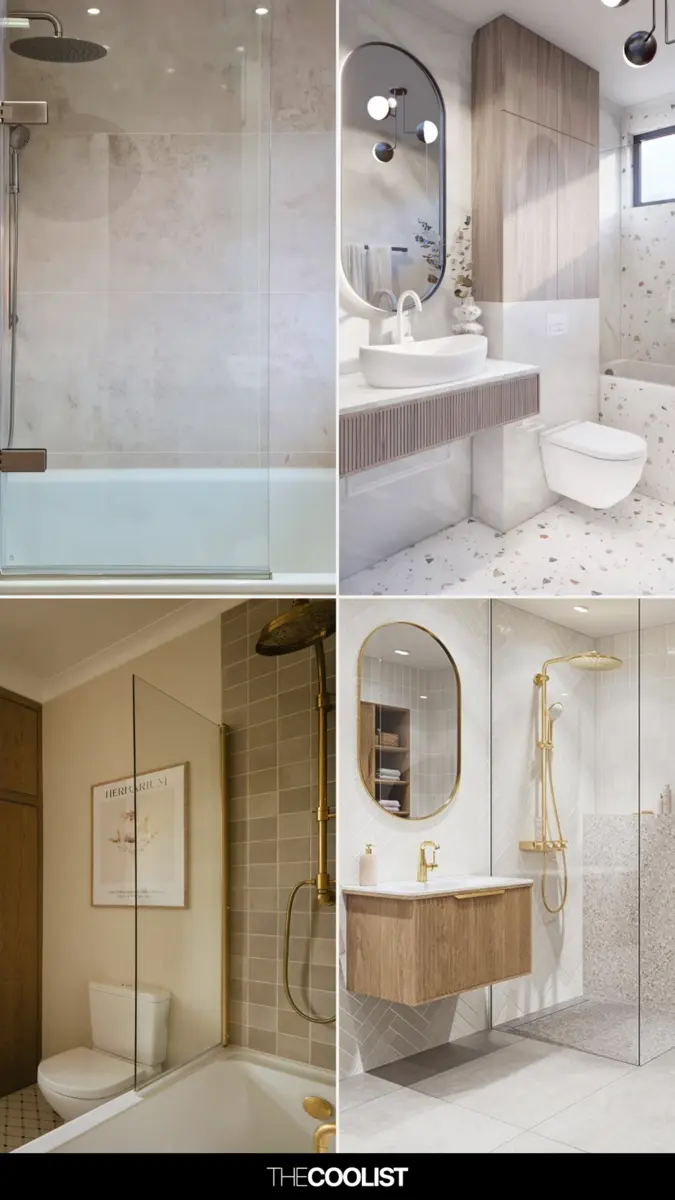
Round mirrors soften bathrooms dominated by straight lines and hard surfaces. They add contrast above a boxy vanity and often suit modern, transitional, or casual interiors.
Arched mirrors combine straight and curved lines, adding architectural interest. They work well in traditional, vintage-inspired, transitional, and softly modern bathrooms.
Look for repetition and contrast. A curved mirror can balance angular cabinets, while a rectangular mirror can echo the clean geometry of tile and fixtures.
Should You Choose a Framed or Frameless Mirror?
Framed mirrors bring color, texture, and character to a bathroom. They can coordinate with the vanity, hardware, faucets, light fixtures, or other finishes. Wood may add warmth, while metallic or ornate frames offer a polished effect.
A frameless mirror offers a clean, minimal appearance. It feels lighter on the wall and suits small bathrooms. Frameless designs are particularly compatible with modern interiors.
When deciding, consider whether the mirror should blend in or attract attention:
- Choose framed for a stronger decorative feature.
- Choose frameless for simplicity and visual openness.
Also, consider quality and durability. Balance price with construction, finish quality, and suitability for a bathroom environment.
Planning for Light and Mirror Placement
A mirror reflects available light, influencing how bright the bathroom feels. Before installation, observe the room at different times of day and identify where natural light enters. A mirror placed to catch that light can make the vanity area feel more open.
Artificial lighting is equally important. Consider how fixture position affects visibility and whether it creates uneven lighting on the face.
If natural light is limited, an illuminated mirror or well-coordinated vanity lighting may be useful. If the room is bright, a standard mirror may suffice.
Placement should support both function and atmosphere. A mirror facing an attractive section of the bathroom can repeat desirable colors or finishes. One positioned without considering the view may emphasize clutter instead.
Electrical Requirements for Lighted Mirrors
LED and smart mirrors need electrical planning. Confirm how it receives power and whether your bathroom has a suitable electrical connection. Some installations may require concealed wiring or changes behind the wall.
Review the manufacturer’s installation requirements and coordinate the mirror location with switches, outlets, and existing fixtures. If new wiring or alterations are necessary, use a qualified professional and follow local requirements.
Electrical planning should happen before wall finishes are completed. Choosing a lighted mirror late in a remodel can lead to extra labor or costs.
Practical Tips for Installing and Positioning the Mirror
A mirror should be comfortable for those who use it often. Eye-level positioning is important, but the mirror must provide visibility for different household members. Check the proposed location before drilling by marking the outline or positioning a template.
Keep these points in mind:
- Center the mirror in relation to the sink or vanity unless an asymmetrical design is planned.
- Confirm faucets, backsplashes, shelves, and lighting allow room for installation.
- Check the reflected view from the bathroom entrance.
- Ensure cabinet and medicine cabinet doors can open fully.
- Use installation hardware appropriate for the mirror and wall.
- For double vanities, maintain spacing and symmetry between mirrors.
When using a wide mirror above two sinks, align with the vanity. When using separate mirrors, center each over its respective sink and keep heights consistent.
Bathroom Mirror Types to Consider
Once you know the dimensions and placement, compare mirror types. Standard mirrors offer versatility, LED and smart models add convenience, medicine cabinet mirrors provide storage, and decorative mirrors emphasize personality.
Your choice should reflect how the bathroom is used. A busy primary bathroom may benefit from lighting, fog control, or storage, while a powder room may prioritize visual impact.
Standard Mirrors for Vanity Areas
Standard vanity mirrors are commonly mounted above the sink and available in various shapes, sizes, and frame styles. Their simplicity makes them timeless and adaptable.
They work well when the bathroom already has effective lighting and sufficient storage. Fewer integrated features simplify selection and installation.
A standard mirror need not be basic. Shape, edge treatment, frame material, and orientation can fit styles from modern to traditional.
LED and Smart Mirrors for Added Functionality
LED mirrors combine reflection with integrated illumination. They improve visibility, especially where overhead or natural light is limited. Their appearance makes them a popular choice for contemporary bathrooms.
Smart mirrors offer features to support daily routines. Available functions vary, so focus on useful features rather than unnecessary technology.
Before choosing, verify:
- Power and installation requirements
- Lighting control
- Brightness suitability
- Design coordination with other bathroom lights
- Whether features justify the cost
Plan for maintenance and long-term practicality.
Choosing the Right Fog-Free Mirror
Mirrors often fog after a hot shower, making them difficult to use immediately. A fog-free mirror preserves clarity under steamy conditions. Some LED and smart mirrors include a built-in demisting feature, while others rely on antifog treatments.
Check whether the fog-resistant function is built in or applied as a coating. Surface treatments may need periodic reapplication.
Fogging isn’t only about the mirror. Bathroom ventilation affects how quickly steam clears. In some spaces, improving ventilation may be more effective than relying solely on a coating. A practical strategy may combine suitable ventilation with a mirror that has a demisting feature.
Medicine Cabinet Mirrors for Hidden Storage
A mirrored medicine cabinet combines a reflective surface with concealed storage. It keeps toiletries close to the sink while reducing visible countertop clutter.
This option is useful when space is limited. It supports a cleaner appearance without sacrificing convenience.
Consider depth, door movement, interior organization, and installation method. Ensure it won’t interfere with faucets, lighting, shelves, or walls. Its exterior style should relate to the vanity and wider bathroom design.
Decorative Mirrors That Make a Statement
A decorative mirror can become the focal point of the bathroom. Unusual shapes, distinctive frames, and expressive materials introduce personality without changing fixtures or finishes.
Statement mirrors are effective in powder rooms, where practical demands may be simpler. They can also enliven a neutral primary bathroom.
Keep the composition balanced. If the mirror is ornate, simpler lighting and accessories may allow it to stand out. If the vanity, tile, or wallpaper is strong, a quieter mirror can prevent a crowded feel.
Selecting a Mirror for Your Bathroom’s Design Style
The mirror should connect with the bathroom’s design language. Consider its relationship with cabinet profiles, hardware, faucets, tile, lighting, and color. Exact finish matching is unnecessary, but choices should feel intentional.
Mirror Ideas for Modern and Minimalist Bathrooms
Modern and minimalist bathrooms benefit from clean forms and limited visual clutter. Frameless mirrors, slim frames, and LED designs are natural choices.
Simple rectangular and circular shapes work well. Coordinate mirror proportions with the vanity and align with nearby lighting.
Mirror Choices for Traditional and Vintage Bathrooms
Traditional and vintage-inspired bathrooms suit framed mirrors with detail. Ornate profiles and wooden frames contribute warmth and charm.
An arched mirror adds architectural character, while a rectangular mirror with a substantial frame may complement classic cabinetry. Look for connections between the mirror and elements like furniture-style vanities and traditional hardware.
Avoid adding detail indiscriminately. A decorative mirror is most effective when it supports the room’s character rather than competing with every feature.
Making the Most of Mirrors in Small Bathrooms and Powder Rooms
In a small bathroom, a mirror can create depth and distribute light. Frameless designs help the wall feel open rather than divided by a heavy frame.
A broad mirror may enhance spaciousness but should remain proportionate to the vanity and wall. A mirrored medicine cabinet combines reflection and storage without needing a separate cabinet.
For a powder room, decide whether openness or personality is the priority. A simple mirror lightens the space, while a decorative frame can turn a small wall into a memorable focal point.
Ultimately, choosing a bathroom mirror comes down to balancing design with daily use. Start with the vanity’s proportions, consider lighting and installation needs, and select a shape, frame, and features that complement the room. The best mirror will feel visually connected to the bathroom while making the space brighter, more practical, and easier to enjoy.