How to Choose the Right Shower Light for Your Bathroom
Choosing the right shower light is about more than simply banishing shadows from a wet room. The shower is where many days start and end, and the quality of light in that compact space affects safety, comfort, and atmosphere. Showers also create a demanding environment: moisture, steam, and direct water are present every day, so ordinary light fittings are not designed to cope. The aesthetic side matters as well; harsh, cold glare makes it difficult to relax, while soft, warm illumination creates a much more welcoming feel. This guide covers fixture types, IP ratings and safety zones, colour temperature, installation rules, and the needs of different shower layouts.
Why Your Shower Deserves Thoughtful Lighting
Safety is the strongest reason to plan shower lighting with care. A wet tile floor, soap suds, and a shower tray can test anyone’s balance, and poor lighting makes the situation worse. If the light is dim, uneven, or positioned badly, it is difficult to see the edge of the tray, where your feet are, or a bottle that has been left on a shelf. Consistent, shadow-free light gives your eyes clear reference points before you step in and while you move around. Slips and falls are among the most common bathroom accidents, so dark patches are not just an annoyance; they are a hazard. Light also influences mood. Warm white light around 2700K to 3300K promotes a calm, spa-like atmosphere, while cool, stark light can make the space feel clinical. When you choose light with both safety and atmosphere in mind, the shower becomes a more pleasant and secure part of your daily routine.
The Main Considerations When Buying Shower Lighting
The most important factor is moisture protection. Shower lights must handle steam and direct water, so choose waterproof LED shower fixtures with an appropriate IP rating. IP stands for Ingress Protection. The first number describes resistance to solids, while the second number describes resistance to water. An IP65 rating means the fitting is dust-tight and protected against water jets from any direction, which is why it is standard for shower ceilings. IP44 is not enough for direct spray, and IP67 is needed where a light could be submerged.
The type of fixture you choose is also important. Recessed downlights are popular because they sit flush with the ceiling, look clean, and direct light downward. They are especially useful in rooms with low ceilings. Surface-mounted ceiling lights work well when the ceiling void is too shallow for recessing or when the structure is concrete. Wall-mounted IP-rated lights can be used for accent lighting, but keep them away from direct water spray. Hanging lights are best avoided inside a shower cubicle; they can sway, cast awkward shadows, and sit closer to water.
Here is a quick overview of common fixtures:
- Recessed downlights: Sleek and unobtrusive, ideal for low ceilings.
- Surface-mounted ceiling lights: A practical option when recessing is not possible.
- IP-rated wall lights: Useful for accent light outside the direct spray zone.
- LED shower kits: Sealed units that combine the light and driver in one watertight body.
- Trimless recessed lights: A seamless, high-end ceiling finish.
Beam angle should be matched to the shower layout. A narrow beam works well in a small enclosure, concentrating light where the bather stands. A wider beam suits a spacious walk-in shower, spreading light across the whole area and preventing dark corners. Finally, keep colour temperature in mind: warm white, around 2700K to 3300K, suits the relaxing mood of a bathroom and flatters skin tones far better than cooler light.
What Electrical and Safety Rules Apply to Shower Lights?
Bathroom electrical safety is organised into zones based on distance from water. Each zone requires a minimum level of protection.
- Zone 0: The inside of the bath, shower tray, or basin. Any fitting here must be IP67, fully protected against immersion.
- Zone 1: The area directly above the bath or shower, up to 2.25 metres from the floor. Fixtures need at least IP65 against water jets.
- Zone 2: The area extending 0.6 metres beyond Zone 1, including the space around a washbasin. The minimum is IP44.
Most shower ceiling lights are installed in Zone 1, which is why IP65 is the rating recommended again and again. These rules are consistent with BS 7671, the UK wiring standard, and Part P of the Building Regulations imposes legal requirements for bathroom electrical work. Work on a bathroom circuit must be completed by a competent person and certified. There are also practical specifications beyond the legal minimum. If you are fitting recessed downlights in a ceiling that provides fire separation between storeys, choose fire-rated versions; otherwise the fitting can become a route for flames and smoke to spread. Look for a high CRI as well. Colour Rendering Index measures how accurately light reveals colours, and a CRI of 90 or above will make skin tones look natural and bathroom finishes appear at their best. These guidelines are useful, but they do not replace the advice of a qualified electrician.
Selecting the Ideal Colour Temperature for Shower Lighting
Colour temperature, or CCT, is a measure of how warm or cool a light appears, expressed in kelvins. Lower numbers, around 2700K, produce the warm amber glow that people associate with traditional bulbs. Higher numbers, around 5000K and above, produce a crisp, blue-tinted daylight effect. The right choice for a shower depends on the feeling you want.
Warm white, between 2700K and 3300K, is the most popular bathroom choice. It supports a relaxed, spa-like mood, softens the hard edges of tiles and sanitary ware, and flatters skin tones. It is a natural fit for a bathroom designed for unwinding at the end of the day. Neutral white, around 4000K, is a brighter and more energising alternative while still avoiding a clinical look. This can work well in a family bathroom used during the morning rush.
Light at 5000K and above is better suited to task areas such as kitchens, garages, and utility rooms. In a shower, it can feel harsh and unwelcoming, highlighting every watermark or blemish on the tiles. Consider how the shower will be used. If it is primarily for waking up and washing quickly, neutral white may be useful. If it is for slow, relaxing evenings, warm white is the better option. Some LED fixtures allow you to adjust the colour temperature, so you can switch from warm for a bath to cooler for shaving or applying skincare.
Avoid These Shower Lighting Installation Mistakes
One of the most common mistakes is using a non-waterproof fixture above a shower. A standard ceiling light can look fine before it is installed, but condensation will soon enter the fitting, causing corrosion, short circuits, and failure.
Choosing the wrong IP rating for the zone is another frequent issue. An IP44 light is suitable in Zone 2, but it is not protected against direct water jets, so placing it above a shower head would be unsafe and non-compliant. Always check the zone and err on the side of higher protection when you are unsure.
Fire-rated downlights are easy to forget. If the ceiling separates floors, a non-fire-rated fitting becomes a weak point in the event of a fire. Choose a fire-rated model wherever the construction requires it. Mixing colour temperatures is a more subtle mistake. Warm white in the shower and cool white over the basin will make the whole bathroom feel disjointed, so choose one temperature for the entire scheme. Finally, plan for maintenance. Recessed lights need ventilation and must be accessible if they need cleaning or replacement. LEDs can fail early if they overheat, so leave enough space above the fitting for heat to dissipate.
Should You Attempt a DIY Shower Lighting Installation?
Bathrooms are classed as special electrical installation areas under UK wiring regulations because water, metal pipes, and limited floor space create a far higher risk than in ordinary rooms. An electric shock in a bathroom can be severe, and poor work can leave behind danger for years.
Part P of the Building Regulations sets the legal framework. Any work that adds a new circuit, or alters an existing circuit, in a bathroom must comply with Part P. This means the installer must be competent and able to certify that the work meets the regulations. In most cases, the installer must also notify building control.
For most homeowners, this is not a DIY task. A qualified electrician has the tools and training needed to verify earthing, circuit protection, and correct zoning. They can also manage the certification and notification process. DIY is only lawful if you are Part P certified and can self-certify the work yourself. If you do not hold that qualification, the safe and legally sound route is to hire a professional. The paperwork is an important part of the work, and it protects anyone who later buys or lives in the home.
What Makes LED Shower Lighting a Smart Choice?
LED lighting has become the standard in modern bathrooms, and for good reason. Compared with halogen lamps, LEDs use far less energy and produce much less heat. Halogen bulbs waste a large proportion of their energy as heat and can leave a shower ceiling uncomfortably warm. LEDs run cooler, making them safer and more pleasant in a compact, humid space.
The lifespan is another major benefit. A quality LED module lasts for many years, so a shower ceiling light will not need frequent replacement. This matters because accessing a ceiling fitting in a shower can be awkward. LEDs are also more robust than glass bulbs and contain no mercury, which makes disposal easier and reduces the risk of breakage.
The design flexibility is useful too. LED fittings come in many colour temperatures, brightness levels, and dimmable versions. You can set a bright, energising light for a morning shower and a soft, warm glow for the evening. For most projects, LED shower lighting is both practical and easy to live with.
Lighting Guidance for Different Shower Designs
Over-bath showers need shadow-free illumination because the bather stands on a curved, slippery surface and has limited room to move. A single wide-beam IP65 light above the centre of the tub is usually enough, provided it sits safely beyond direct water flow. If any light needs to be placed inside the tub area, use an IP67 fixture. The aim is to keep the edges of the bath visible and avoid shadows cast by the body.
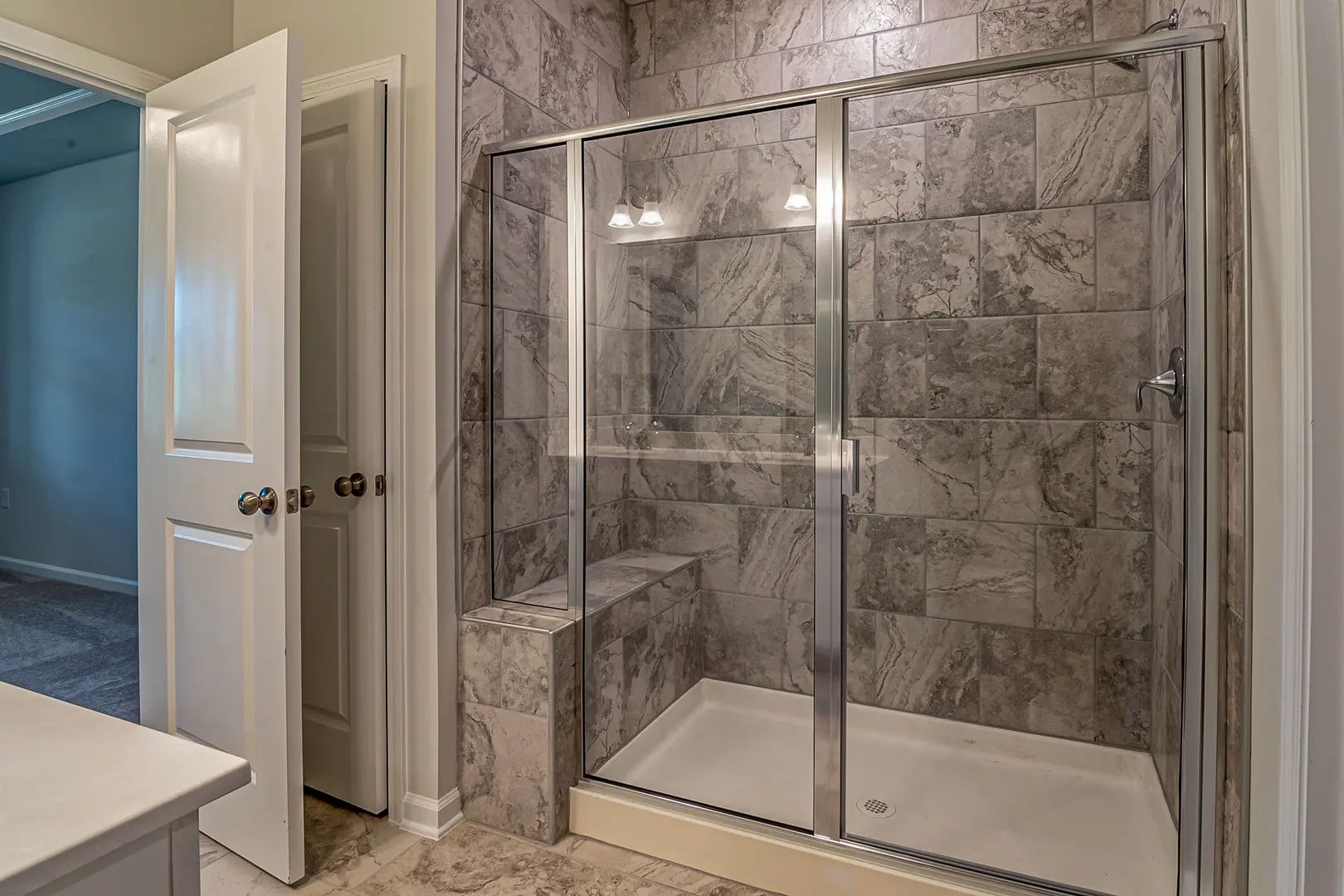
Walk-in showers are the most straightforward to light. They are open to the bathroom and often separated only by a glass panel, so they feel more spacious. A wide-beam IP65 recessed light above the centre of the shower area spreads illumination evenly across the wet zone. This avoids the tunnel effect of a narrow beam and ensures the floor, controls, and niche shelves are all clearly visible.
Enclosed cubicles have the opposite needs. They are compact and full of corners that can trap shadows. A narrow-beam fixture is often better because it focuses light on the bather rather than wasting it on the walls of the cubicle. Position the light slightly forward of the shower head, not directly above it, so light falls on the person instead of being blocked by the fitting.
Colour temperature should follow the design as well. A spacious walk-in shower can take a slightly cooler neutral white around 3500K–4000K, which enhances the feeling of openness. A small enclosed cubicle benefits from warmer light around 2700K–3000K, which softens the cramped surroundings and creates a more intimate, spa-like feel. If the shower is intended for a particular mood, let that mood guide both the fixture type and the colour temperature.