How to Measure for a Clawfoot Tub Shower Curtain

A typical clawfoot tub shower curtain size is often described as about 180 inches wide and 68 to 72 inches long. That can be a helpful shopping starting point, but it is not a substitute for measuring. A freestanding tub needs curtain coverage around the whole rod, and the correct width depends on the rod’s actual perimeter, the number of panels, and the overlap where panels meet.
For length, measure from the point where the curtain will hang—not just from the ceiling—to the place you want the liner to end inside the tub. A high-sided tub, a ceiling-mounted rod, and long rings can all change the finished drop considerably. The goal is a liner that directs water into the tub without bunching heavily in the bathing area.
Measure the rod, not just the tub
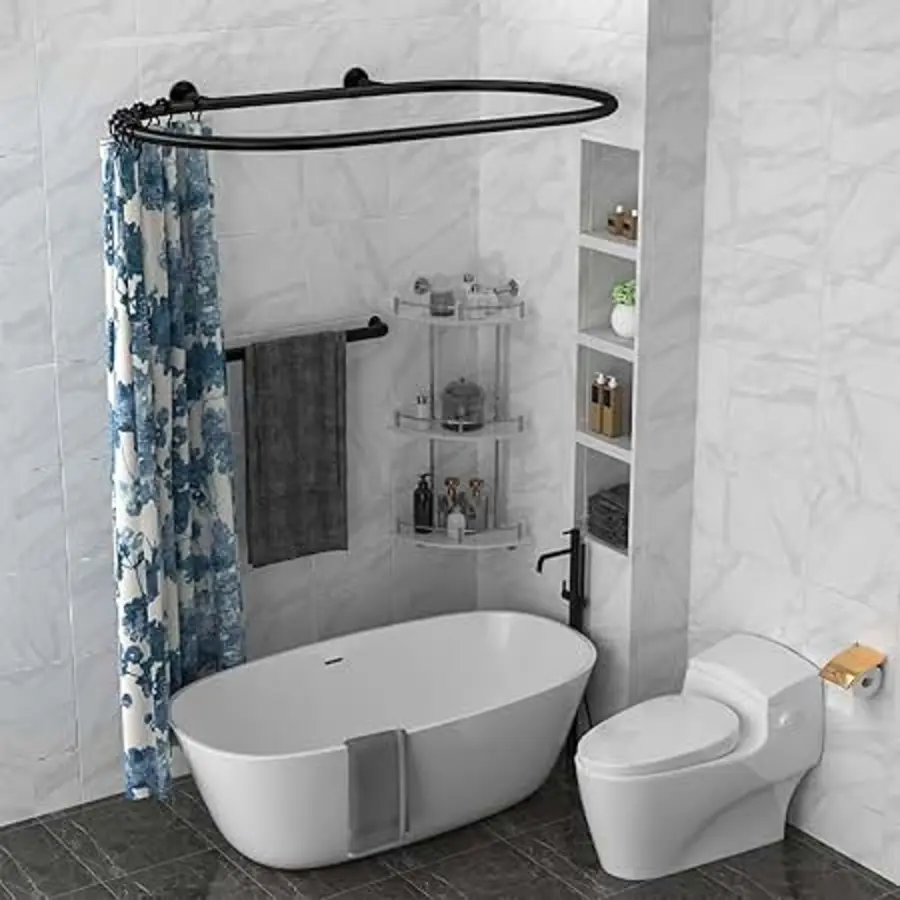
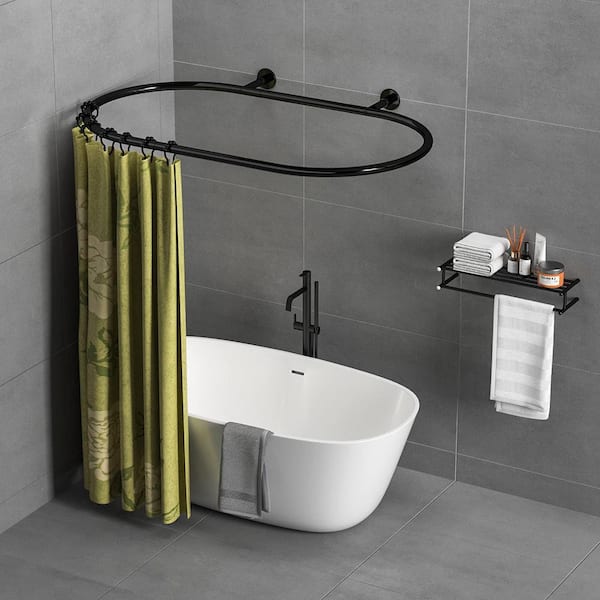
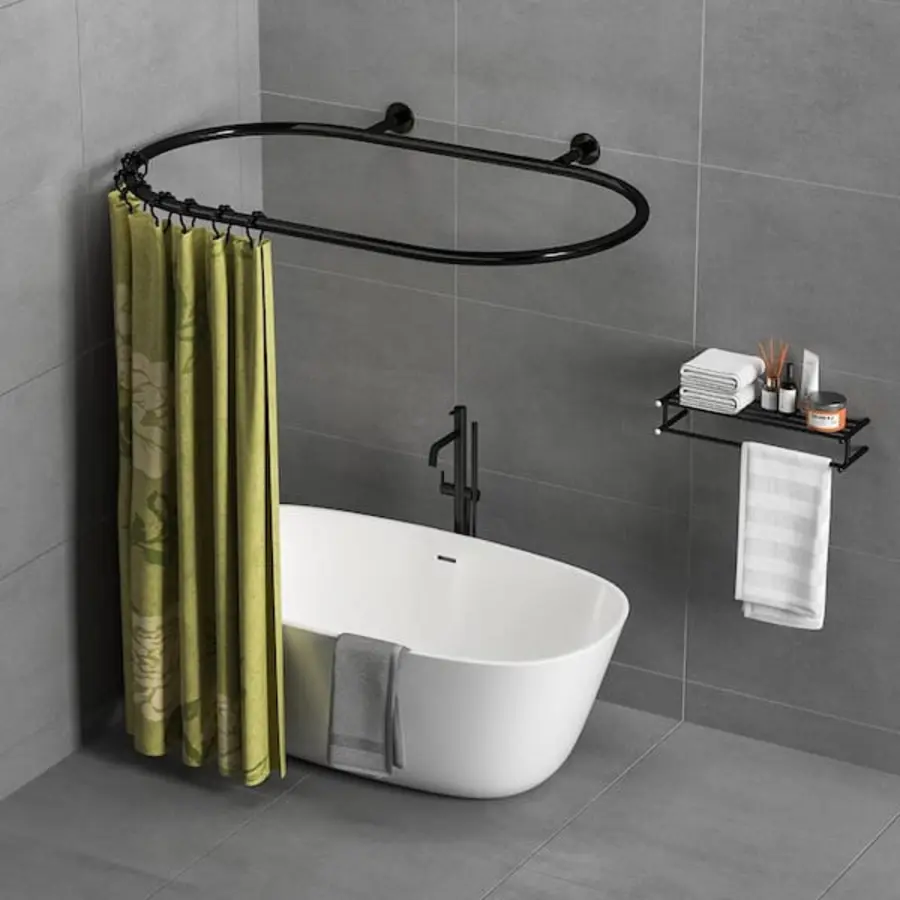
An oval, rectangular, or custom-shaped shower rod is usually slightly larger than the tub so curtains can hang inside the rim. That means the tub’s outside length and width are useful reference measurements, but they do not tell you exactly how much curtain fabric you need.
The most reliable width measurement is the full distance around the rod’s hanging path. If the rod is already installed, use a flexible tape measure and follow the rod all the way around. Start at the point where you expect the curtain opening or panel overlap to be, then return to that point.
If the rod is not installed yet, measure its specified outside dimensions and shape, or make a full-size outline on the floor with tape or string. Measure the string after tracing the planned rod path. This is especially useful with oval rods, which are harder to estimate accurately from length and width alone.
Source: images.thdstatic
Write down these measurements before shopping:
- Rod perimeter: the complete distance around the curtain rod.
- Rod-to-tub clearance: the space between the rod and tub rim, especially at the ends.
- Tub rim height: floor to the top edge of the tub.
- Hanging-point height: floor to the underside of the rod, hook, or ring location where the curtain will actually hang.
- Ceiling height: useful for checking whether the rod position and curtain length will look proportionate.
A common shorthand for a simple rectangular tub footprint is twice the tub length plus twice the tub width. For example, a 60-by-30-inch tub gives 180 inches before allowing for the rod’s larger footprint. This helps explain why 180-inch-wide surround curtains are common, but an oval rod, oversized surround, or unusual antique tub can produce a different result. Vintage Tub & Bath notes that standard 72-inch-wide curtains may not suit every clawfoot tub.
Calculate the curtain width you need
Your curtain’s combined width should be at least as wide as the rod perimeter, plus enough extra fabric for panel overlap. Do not treat the listed width of one panel as the coverage for the whole tub.
Use this simple approach:
- Measure the full rod perimeter.
- Decide where the curtain will open and where panels will overlap.
- Add overlap allowance for every meeting point that could otherwise leave a gap.
- Compare that total with the combined finished widths of the curtain panels or surround curtain you plan to use.
For a shower setup, overlap matters more than a perfectly smooth, taut appearance. Curtains that only just meet can separate when someone enters the tub, when the liner moves, or when water pushes against the material.
One surround curtain vs. separate panels
A purpose-made 180-inch-wide clawfoot curtain may wrap around a typical rod with a single opening. It can be visually simple, but confirm whether its listed width is one continuous panel, whether it includes a liner, and where its opening will land relative to the showerhead.
Separate panels are often more flexible. Two 72-inch-wide panels total 144 inches, which is usually not enough to fully surround a rod with a 180-inch perimeter. You may need more panels or wider specialty panels. Measure the combined width after allowing for overlaps, rather than assuming two standard curtains will work.
Place the most secure overlap away from the direct spray whenever possible. If the showerhead is at one end of the tub, avoid leaving a lightly overlapped seam directly beneath it. The Cheviot overview of clawfoot shower setups likewise emphasizes allowing enough overlap for curtains and liners to contain water while still allowing entry.
Measure the right finished curtain length
Curtain length is not simply the distance from ceiling to floor. The correct target depends on whether you are measuring the decorative outer curtain, the water-blocking liner, or a combined curtain-and-liner setup.
For the liner, measure from the curtain’s hanging point down to the inside of the tub. The liner should hang inside the tub so water drains back into it. Aim for a drop that reaches below the tub rim and into the tub without creating an excessive pool of material on the tub floor.
For the outer curtain, choose the look you want:
- Outer curtain near the floor: This gives fuller visual coverage around the tub and can hide more of the tub exterior. Check that it will not drag on a bath mat or stay damp after showers.
- Outer curtain ending above the floor: This can keep the tub feet visible and makes floor cleaning easier. It also works well when the outer fabric is mostly decorative and the liner handles water containment.
- Outer curtain near the rim or lower tub body: This is a lighter-looking option, but it provides less visual enclosure and requires careful liner placement.
Include ring or hook drop
The fabric does not begin at the rod itself. Rings, hooks, clips, and grommets all create a drop between the rod and the top of the curtain fabric. Measure from the actual point that supports the curtain, or install one ring and temporarily hang a tape measure from it.
This detail prevents a frequent mistake: buying a curtain based on the floor-to-rod height, then finding that it hangs several inches lower than expected. It is particularly important with ceiling-mounted oval rods, where a standard 72-inch curtain can be too long for a tall tub or low rod position.
A practical way to check before purchasing is to hold a tape measure at the hanging point and let it fall to the desired liner endpoint. Record that number as your target finished liner length. Then repeat the check for the outer curtain if you want it to stop at a different height.
Plan liner placement separately from the outer curtain
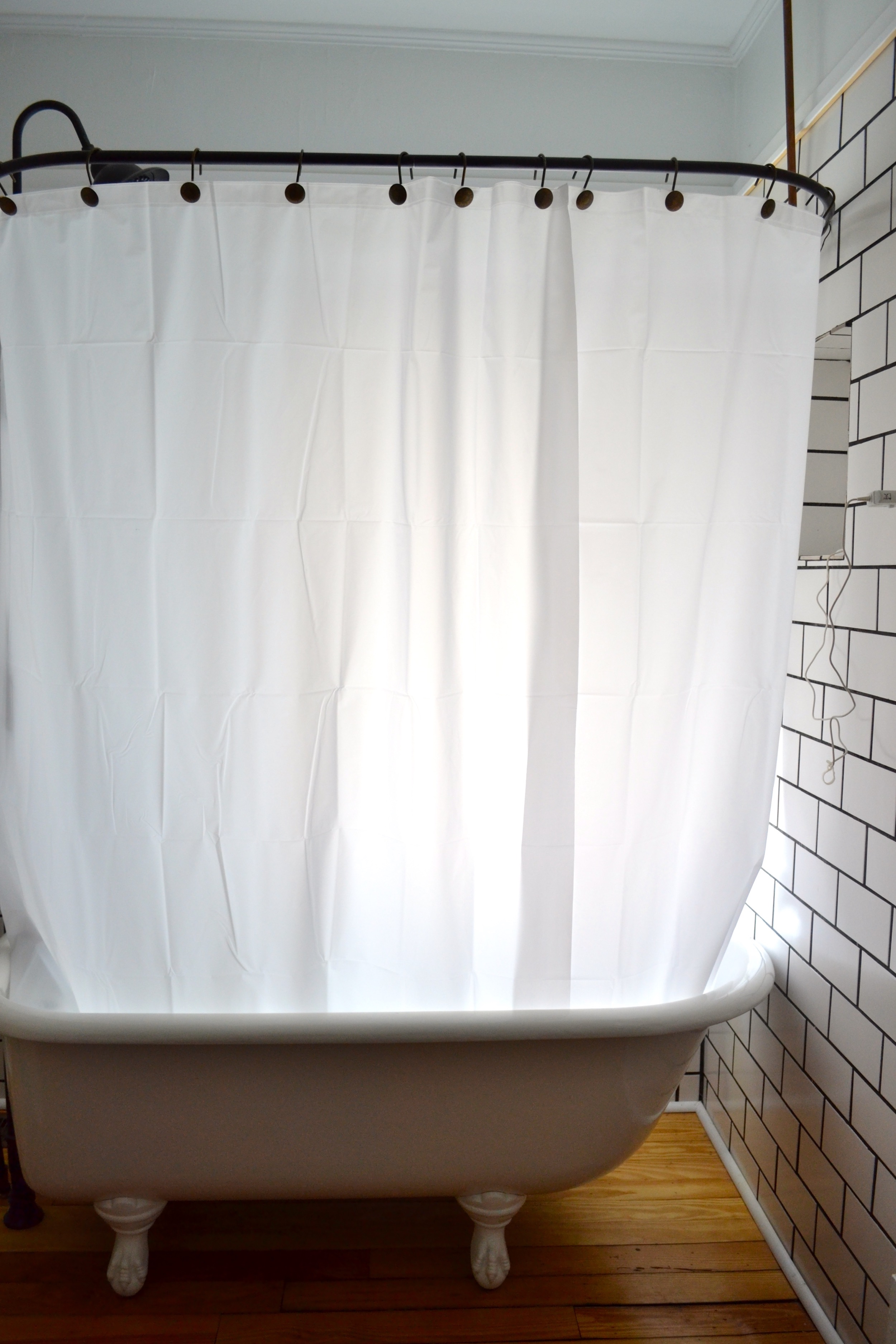
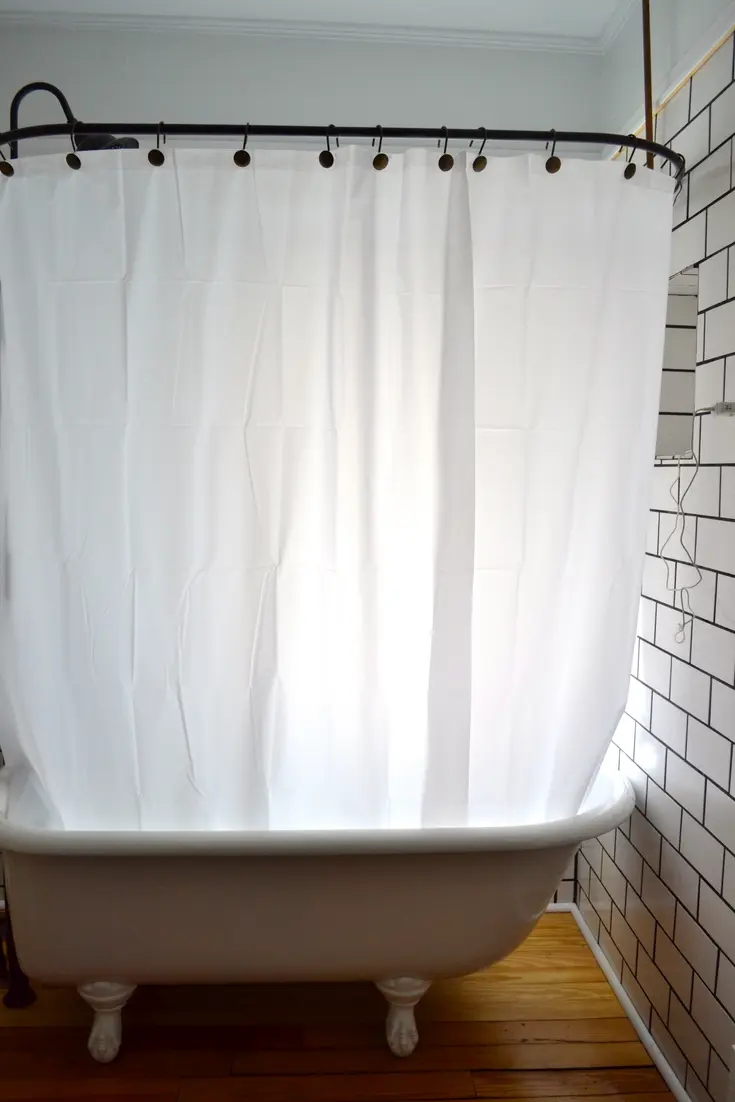
The liner is the working layer. It belongs inside the tub during a shower, while the decorative curtain can remain outside the tub. This arrangement gives water a direct route back into the basin instead of down the exterior wall of the tub or onto the floor.
Source: images.squarespace-cdn
When measuring a clawfoot tub shower curtain liner size, check the following:
- The liner reaches around the shower area without uncovered gaps.
- Its lower edge falls inside the tub, not outside the rim.
- It has enough overlap at openings and between separate panels.
- It can move freely without catching on faucet hardware, a shower riser, or the tub’s high sides.
- It does not hang so far into the tub that it interferes with standing or cleaning.
Many freestanding-tub setups use more than one liner section because a single standard-width liner cannot cover the whole surround. If you are using multiple pieces, plan their overlap before ordering and make sure every seam can stay inside the tub while showering.
A quick measuring worksheet
Before ordering, fill in these blanks:
| What to measure | Your measurement | Why it matters |
|---|---|---|
| Full rod perimeter | ____ inches | Determines combined curtain and liner width |
| Number of curtain panels | ____ | Helps divide the total coverage needed |
| Planned overlap at each opening | ____ inches | Prevents water gaps between panels |
| Hanging point to desired liner end | ____ inches | Determines practical liner length |
| Hanging point to desired outer-curtain end | ____ inches | Determines decorative curtain length |
| Tub rim height | ____ inches | Confirms that the liner will hang inside the tub |
| Floor-to-rod height | ____ inches | Helps identify an overly long outer curtain |
Common clawfoot tub curtain measuring mistakes
Buying by tub length alone
A 60-inch tub does not need a 60-inch curtain. The curtain must travel around both sides and both ends of the rod. Start with the rod perimeter instead.
Forgetting that the rod is larger than the tub
A rod needs clearance around the tub so the liner can fall inside the rim. Measuring only the tub footprint can leave you short on curtain width.
Counting listed panel width without overlap
Two panels that add up exactly to the rod perimeter have no reserve for meeting points. Include the overlap in your total requirement.
Measuring from the ceiling instead of the curtain attachment point
Hooks and rings lower the curtain fabric. Measure from where the curtain top will actually sit.
Matching outer-curtain and liner length automatically
They can be the same length, but they serve different jobs. The liner needs to end inside the tub; the outer curtain may look better near the floor or above it.
Letting the liner stay outside the tub
A liner outside the rim directs shower water toward the bathroom floor. Pull it inside before showering, then spread it out afterward so it can dry.
Final size check before you order
A clawfoot tub shower curtain arrangement fits well when the curtains cover the whole rod with intentional overlap, the liner reaches into the tub, and the outer fabric ends where it makes sense for the room. For many tubs, 180 inches wide by roughly 68 to 72 inches long is a useful baseline, but your rod perimeter and hanging height should make the final decision.
If your measurements fall between ready-made sizes, prioritize full width and overlap first. A curtain that is slightly fuller is usually easier to arrange than one that leaves a persistent opening around a freestanding shower tub.
References
- Clawfoot Tub Sizing Guide. (n.d.). https://www.vintagetub.com/buying-guides/clawfoot-tub-sizing-guide
- Shower Curtain Sizes: The Complete Guide for Clawfoot and Corner Tubs – Sand Snow Linen. (n.d.). https://www.sandsnowlinen.com/blogs/blog/shower-curtain-sizes-the-complete-guide-for-clawfoot-and-corner-tubs
- Curtains, Hooks and Rods: How to Outfit Your Clawfoot Tub With a Showe – Cheviot. (n.d.). https://cheviotproducts.com/blogs/news/curtains-hooks-and-rods-how-to-outfit-your-clawfoot-tub-with-a-shower
- Shorter shower curtains for clawfoot tubs. (n.d.). https://www.facebook.com/groups/1706748102970911/posts/3520966794882357
- The Definitive Guide to Owning a Clawfoot Tub. (n.d.). https://food52.com/story/26052-how-to-use-a-clawfoot-tub
- How To Put A Shower Curtain Around A Clawfoot Tub | Storables. (n.d.). https://storables.com/furniture-and-design/bathroom-accessories/how-to-put-a-shower-curtain-around-a-clawfoot-tub
- How to Put A Shower Curtain on A Clawfoot Tub. (n.d.). https://showerdrape.com/how-to-put-a-shower-curtain-on-a-clawfoot-tub
- Transform Your Bathroom: How To Hang A Shower Curtain Clawfoot Tub - HouseFixMaster. (n.d.). https://housefixmaster.com/how-to-shower-curtain-clawfoot-tub