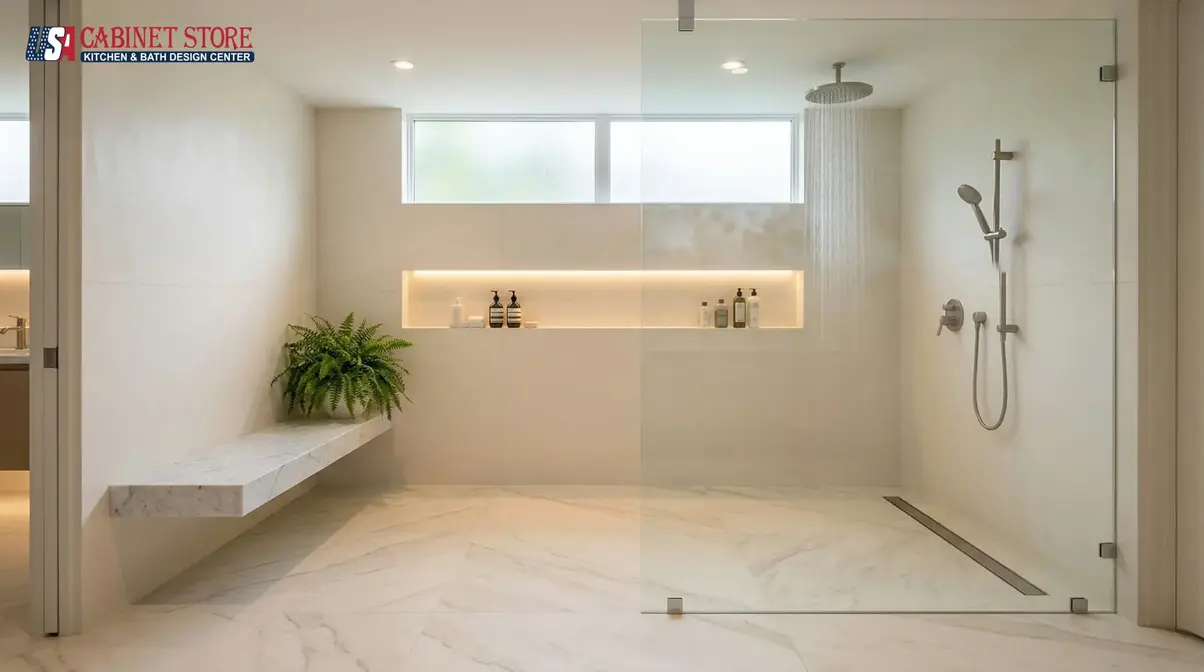
Can You Use a Shower Curtain in a Curbless Shower?

A curbless shower with curtain can work, but the curtain is only one part of water containment. It is most practical when the shower floor is properly sloped to its drain, the showerhead does not spray toward the opening, and the curtain can hang inside the wet area without leaving large gaps.
A curtain adds privacy at a much lower cost and with more flexibility than a glass enclosure. But unlike a shower curb or fixed glass panel, it does not physically stop a rush of water across the floor. In a shallow, narrow, or poorly drained shower, water can still escape around or underneath it. The goal is to reduce splashing and guide water back toward the drain—not to expect a fabric or vinyl panel to correct a layout problem.
When a shower curtain can work well
A shower curtain for a curbless shower is usually a reasonable choice when the shower has a clear wet zone and the floor directs water back to the drain. It is especially useful in bathrooms where a door would crowd the room, where accessibility calls for an open entry, or where the homeowner wants an inexpensive, replaceable privacy solution.
The most favorable setup usually has:
- A showerhead aimed away from the open side of the shower
- A drain positioned so water does not naturally travel toward the bathroom floor
- Enough shower depth for the curtain to hang inside the shower footprint
- A rod located close enough to the wet area that the liner can block spray
- A relatively gentle shower spray rather than a forceful body spray or rain head pointed outward
- Good bathroom ventilation and a routine for drying stray water
The shower’s floor design remains the first line of defense. A curbless shower relies on slope and drainage to direct water toward the drain before it reaches the rest of the bathroom. A curtain can limit splash, but it cannot compensate for a floor that holds water or slopes in the wrong direction.
When a curtain is risky
A walk-in shower curtain is less dependable when the shower is very shallow from back wall to opening. In a tight stall, the person showering can easily bump or pull the curtain out of position. Once the bottom edge is outside the wet zone, water may follow it onto the main bathroom floor.
The Curbless Showers installation guide notes that even a 36-inch-deep curbless shower needs careful floor and water-containment planning, while greater depth gives more room for the bather and curtain. This is particularly relevant when a flexible curtain is the only barrier at the opening.
Be cautious about relying on a curtain if any of these conditions apply:
- The showerhead faces the opening or creates heavy outward spray.
- The shower is so narrow that the curtain will be bumped frequently.
- The floor outside the shower is level with the wet area and water already tends to travel outward.
- There is no practical place to tuck the liner inside the shower area.
- Multiple showerheads, body sprays, or a large rain head create a wide spray pattern.
- The bathroom has flooring, storage, or electrical items that should not regularly get wet.
If water already reaches the bathroom floor during normal use, changing curtains alone is unlikely to solve it. Check the showerhead direction, rod placement, drain performance, and floor slope first. Persistent pooling or water running away from the drain calls for an assessment by a qualified bathroom or tile professional.
Choose a liner that stays put
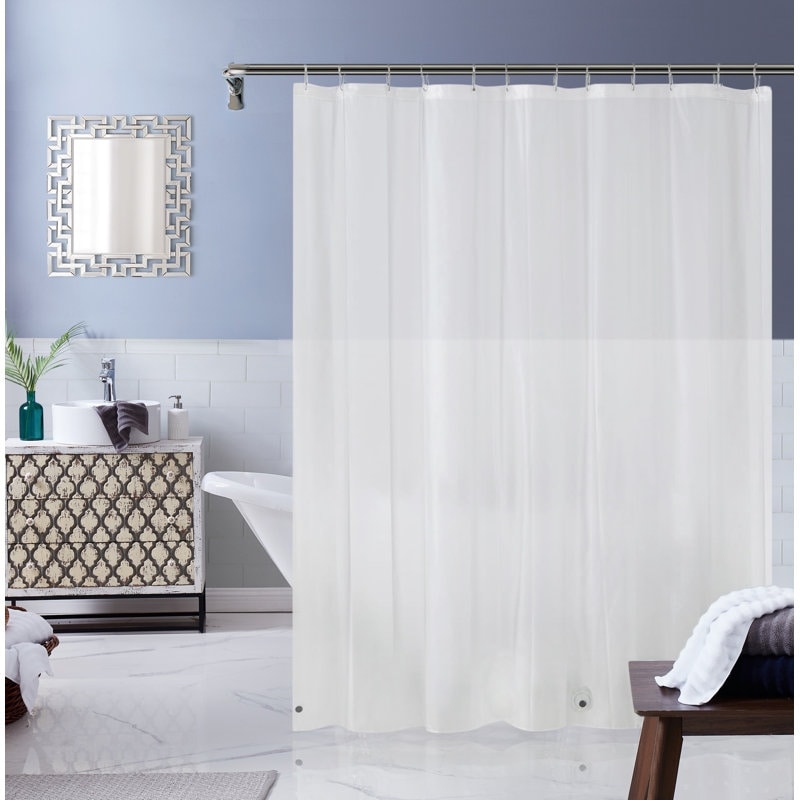
For a curbless shower, a liner generally does more containment work than the decorative outer curtain. A smooth, waterproof liner is easier to keep inside the shower and easier to rinse clean after use.
A weighted shower curtain liner is often the best starting point. Weights or magnets at the hem help the liner hang vertically instead of blowing inward with moving air or clinging to the person showering. Some curbless-shower products are specifically made with weighted hems for this purpose.
Look for these practical features:
- A weighted bottom hem: This helps the liner fall straight and reduces movement.
- Magnets, where suitable: Magnetic corners can help hold a liner against compatible metal surfaces, but they will not attach to tile, fiberglass, or acrylic walls.
- A washable material: A liner that can be cleaned or replaced easily is more useful than one that stays damp and develops buildup.
- A quiet, flexible feel: Very stiff liners can pull outward or leave awkward gaps at the sides.
Source: ak1.ostkcdn
Avoid treating a heavier liner as a complete waterproof barrier. It can improve control of splash, but water can still pass around either side, travel along the hem, or run out if the liner is left outside the shower.
Get the width and overlap right
Curtain width matters more in a curbless shower than it may in a tub alcove. The curtain should be wide enough to close without being stretched flat. A little fullness allows the liner to overlap at the opening and follow the shower’s shape.
For a straight rod, measure the usable rod span, then choose a curtain or liner that is wider than that span. The exact amount of extra width depends on the layout, but the finished curtain should not look taut when pulled closed.
If the shower has an open end rather than two side walls, consider how the curtain will close at the exposed edge. A curtain that ends exactly at the opening can leave a direct path for spray. A longer panel or two overlapping panels may provide better coverage, provided the extra material does not become a tripping or cleaning nuisance.
For an unusually wide shower opening, two panels can be easier to manage than one oversized panel. They can meet in the middle, overlap slightly, and be pushed aside separately after showering.
Set the rod and hem in the right place
Rod placement determines whether the liner protects the shower zone or simply divides the room visually. In most setups, the liner should hang on the shower side of the floor transition, where its bottom edge can drip back into the shower.
Keep these details in mind:
- Place the rod so the liner falls inside the shower area. If the liner hangs beyond the drain-side wet zone, it may direct dripping water onto the bathroom floor.
- Keep the hem close to the floor without dragging. A liner that drags can trap moisture and grime; one that hangs too high leaves an easy route for splash.
- Use the wall return where available. Let the liner overlap the side wall rather than stopping short of it.
- Test the curtain while the shower runs. Look for spray escaping at the sides, water tracking along the bottom edge, or the liner being pulled outward.
A curved rod can create more elbow room, but it also moves part of the curtain farther into the bathroom. In a curbless setup, that extra outward projection can make containment harder unless the rod is positioned carefully and the liner still falls inside the shower area.
Reduce spray before it reaches the curtain
The easiest water to contain is water that never reaches the opening. Aim the showerhead toward a back or side wall, not directly toward the curtain. If the fixture is adjustable, a slightly lower or more inward-facing spray angle may reduce splash without changing the rest of the shower.
A handheld showerhead can also make a curbless shower easier to manage because the spray can be directed toward the drain-side interior. It should still be returned to a position that does not send water through the curtain opening when not in hand.
Pay attention to the shower control location as well. If the curtain must be pulled aside to reach the controls, a burst of cold or hot water can spray into the bathroom before the curtain is closed. A layout that lets the user turn on water from a drier position is more practical.
Plan for the floor outside the shower
Even a well-planned curtain setup may leave occasional droplets outside a curbless shower. Keep a washable bath mat or absorbent towel just beyond the wet zone, but do not use it to hide regular flooding. A saturated mat can stay damp, slide, and make it harder to notice that water containment is failing.
After showering, pull the liner fully closed or spread it out so both sides can dry. Do not bunch a wet liner against the wall. Run the exhaust fan, if available, and wipe up any water that reaches the bathroom floor.
The practical bottom line
A curbless shower with curtain can be a useful, affordable solution when the shower already has sound drainage, an inward-directed spray pattern, and enough room for the liner to remain inside the wet area. Choose a wide, washable weighted liner, allow overlap at the sides, hang it close to the floor without letting it drag, and position the rod so drips return to the shower.
If the curtain repeatedly blows out, water consistently crosses the bathroom floor, or the shower floor does not drain as intended, the problem is bigger than the curtain. Improving the shower layout, drainage, or fixed water barrier may be necessary before a curtain can perform reliably.
References
- Curbless Showers - An Installation Guide. (n.d.). https://sci-bc.ca/wp-content/uploads/2024/05/curbless-showers-an-installation-guide.pdf
- Curbless Shower Design: Zero-Threshold Shower Guide. (n.d.). https://hanodecor.com/blog/curbless-shower-design-guide
- Curved & Straight Shower Curtain Rods. (n.d.). https://ezable.com/shower-curtains-shower-curtain-rods
- Curbless shower with curtains : r/BathroomRemodeling. (n.d.). https://www.reddit.com/r/BathroomRemodeling/comments/1wjv6ok/curbless_shower_with_curtains
- Subject: Curbless Shower: Residential ( Non-Accessible. (n.d.). https://www.yorbalindaca.gov/DocumentCenter/View/9661/Curbless-Shower-Residential-Non-Accessible--Non-Adaptable-PDF
- Curbless shower: design, cost, and accessibility. (n.d.). https://accessiblebathguide.com/curbless-shower
- Designing Barrier-Free Showers: Your Comprehensive Guide …. (n.d.). https://aginginplacedirectory.com/designing-barrier-free-showers
- Curbless Showers: The Ultimate Guide to Modern Bathroom …. (n.d.). https://drains-unlimited.com/blogs/curbless-showers-the-ultimate-guide-to-modern-bathroom-design