Curved vs Straight Shower Curtain Rods: Which Gives You More Space?
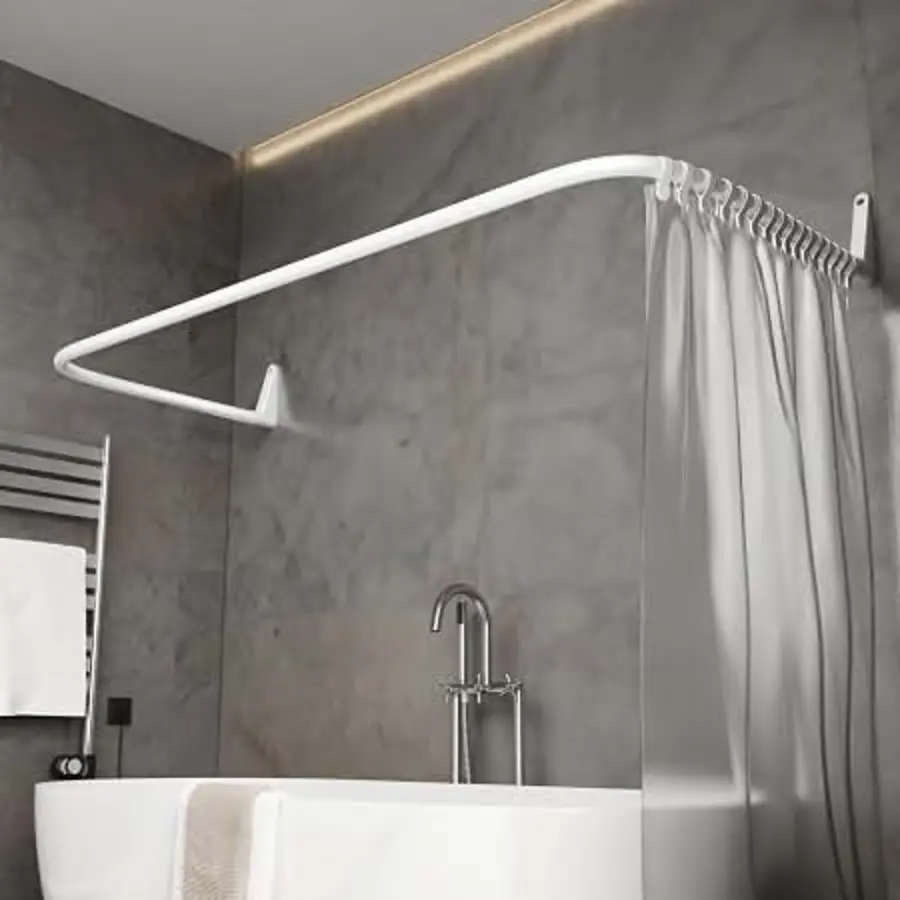
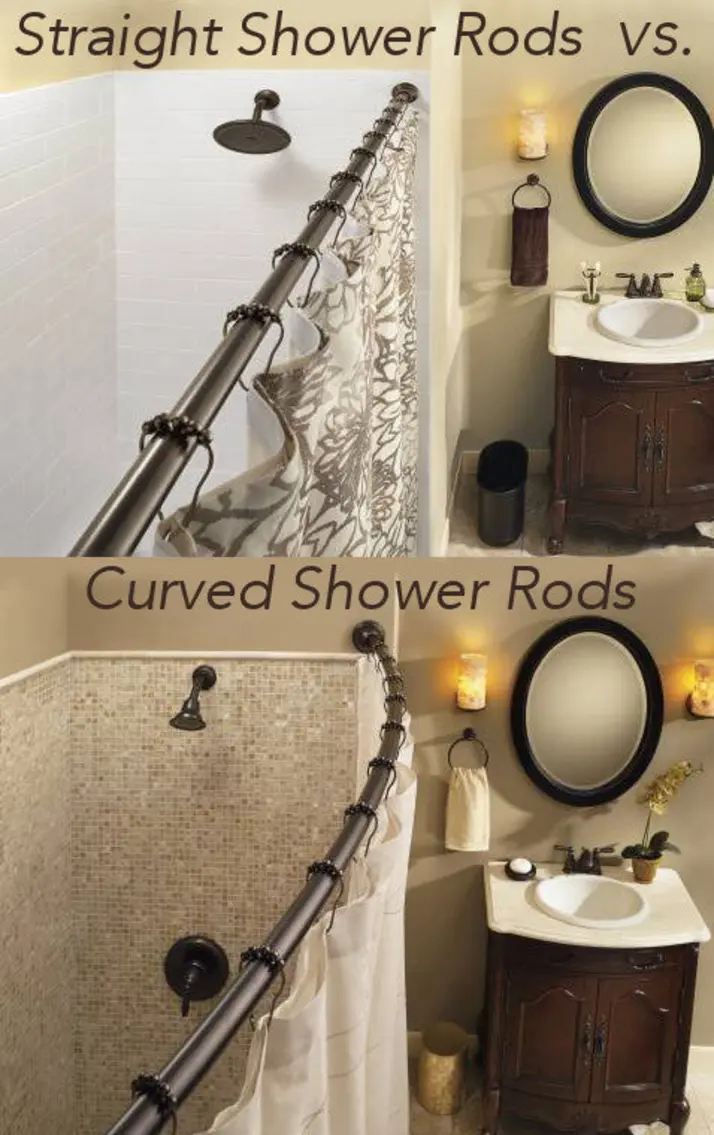
A curved shower curtain rod usually gives you more usable room inside the shower. Its bow pushes the curtain and liner outward from the tub, creating more elbow room and reducing the chance that a wet liner will brush against you. A straight shower curtain rod keeps the curtain on a direct line across the tub, so it uses less of the bathroom floor area outside the shower.
The better choice depends on where your bathroom is tight. Choose curved if the shower itself feels cramped and there is clear space in front of the tub. Choose straight if the walkway, toilet, vanity, or bathroom door is already close to the tub. In the curved vs straight shower curtain rod decision, the extra shower comfort is real, but it comes from borrowing a little room from the bathroom.
Curved vs. straight shower curtain rod at a glance
| Factor | Curved rod | Straight rod |
|---|---|---|
| Space inside the shower | More room around shoulders and elbows | Curtain stays closer to the tub edge |
| Space outside the tub | Projects into the room | Keeps the front edge of the tub clear |
| Curtain and liner needs | Often needs more width to close well | Works with standard-width curtains more easily |
| Curtain cling | Less likely because the curtain sits farther away | More likely in a tight shower |
| Best for | Standard tubs with open floor space in front | Narrow bathrooms and tight clearances |
| Installation | May need careful placement to keep the curve centered | Usually simpler geometry and placement |
How a curved rod creates more shower space
A curved rod does not make the tub larger. Instead, it changes where the curtain hangs. Rather than dropping straight down at the tub’s outer edge, the curtain hangs along an outward arc. That arc moves flexible curtain material away from the bather.
This can make a familiar tub shower feel noticeably less confining when washing hair, turning around, or using a towel after stepping out. It is also helpful for people who dislike the liner drifting inward during a shower. The liner still needs to be weighted or properly positioned inside the tub, but it begins farther from the center of the bathing area.
These curved shower curtain rod benefits are most useful when the shower is the cramped part of the room—not when the bathroom circulation space is the real problem.
Why a curved rod can make a small bathroom feel tighter
From outside the shower, the same outward curve that creates elbow room becomes an obstruction. The curtain, when closed, extends farther into the bathroom than it would on a straight rod.
That can be inconvenient when:
- The toilet sits close to the tub.
- A vanity, cabinet, or hamper faces the tub.
- The bathroom door swings toward the shower area.
- Two people need to pass through the room during busy mornings.
- The room already feels narrow from wall to wall.
A curved shower rod bathroom space issue is often less about the rod itself and more about the closed curtain. A decorative fabric curtain may be pulled open most of the day, but the liner must close while showering. Picture where that full, closed curtain will sit before changing rods.
In a truly narrow bathroom, a straight shower curtain rod can make the room feel calmer and easier to move through. Its simpler line also keeps the tub enclosure visually contained rather than projecting into the room.
Does a curved shower curtain rod need a wider curtain?
Usually, yes. The curtain must travel along the longer curved path of the rod, not merely cover the straight width of the tub. A curtain that was only just wide enough on a straight rod may look skimpy on a curved one, leave gaps near the ends, or need to be stretched flat to close.
The practical rule is to measure before buying:
- Install the rod, or use its stated shape and planned position.
- Measure along the rod from one end to the other, following the curve.
- Choose a curtain and liner wide enough to cover that path with some fullness.
- Check that both ends still overlap the tub walls when closed.
The same principle applies to liners. A liner that is too narrow can leave the tub ends exposed, which makes water containment harder. A liner that is excessively wide may bunch up, drag, or be awkward to spread out. Curtain-sizing guidance from AmazerBath also notes that curved rods can require additional width.
Do not assume every curtain labeled for a standard tub will fit equally well. Labels are a starting point; the actual rod path and the amount of gathering you prefer decide whether it will work.
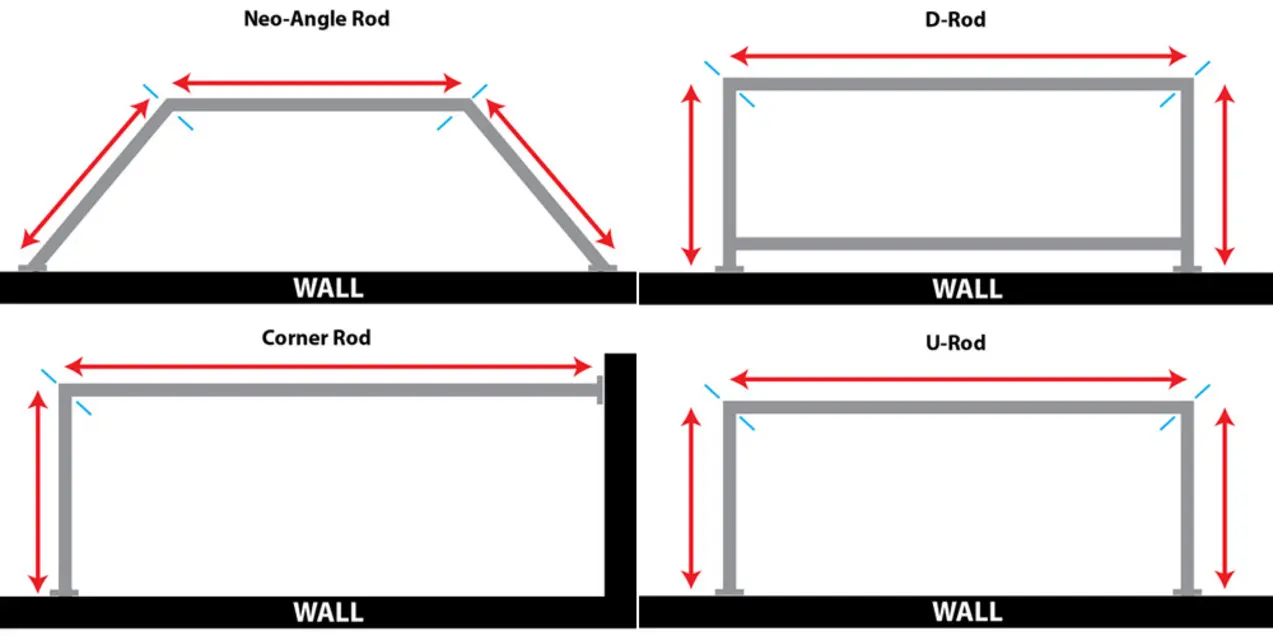
Source: 2.bp.blogspot
Liner behavior and water containment
A curved rod can reduce ordinary curtain cling because it places the liner farther from your body. That does not mean the liner can be left loose outside the tub. The liner should still hang inside the tub basin when the shower is in use.
Pay attention to these details after installation:
- End coverage: The liner should reach the tub walls at both ends without leaving obvious openings.
- Tub placement: Keep the bottom of the liner inside the tub, not draped over the outer edge.
- Weights or magnets: If your liner has them, use them as intended to help it stay in place.
- Curtain rings: Rings should slide freely enough that you can close the curtain completely every time.
- Drying: Spread the liner after showering so folds do not stay damp against one another.
A straight rod can work just as well for containing water when the liner fits properly and is kept inside the tub. The key difference is that the liner starts closer to the person showering, so movement and airflow may make inward billowing more noticeable.
Installation and clearance checks
A curved rod needs more planning than simply matching the wall-to-wall width. Before installing one, check the entire arc it will create.
Check the room-side clearance
Hold the new rod in its intended position, or use a piece of string to approximate the curve. Open the bathroom door and stand near the toilet and vanity. Make sure the projected curtain line will not interfere with normal use.
Keep the curve centered over the tub
The curve should project outward from the middle of the tub opening, not favor one end. An off-center placement can reduce end coverage and make the curtain pull awkwardly toward one wall.
Consider wall type and mounting method
Some rods use permanent wall mounts, while others are tension-mounted. A fixed rod is generally the more secure option for a heavy curtain-and-liner setup, but it requires suitable mounting points and may not suit every rental. A tension rod avoids screw holes, yet it needs a firm, stable fit and should be checked regularly for slipping.
If drilling is involved, confirm what is behind the mounting surface and follow the rod maker’s instructions for the specific wall material. Avoid treating a rod as a grab bar or hanging heavy items from it.
Check nearby fixtures
Make sure the rod and curtain will not conflict with a showerhead, shelves, a window, wall hooks, or a door. This is especially important with a deep curve, where the curtain line can reach farther into the room than expected.
Source: cdn.shopify
When a straight shower curtain rod is the better choice
A straight rod remains the practical option in several situations:
- Your bathroom has a narrow walkway in front of the tub.
- The toilet or vanity is very close to the tub edge.
- You already have curtains and liners that fit well and do not need replacing.
- You want the simplest replacement with minimal measuring.
- You prefer the curtain to stay visually aligned with the tub rather than bow into the room.
- The shower is used lightly, and a little less elbow room is not a major concern.
Straight rods are not inferior; they simply prioritize room clearance over shower expansion. As House Digest’s comparison notes, they can be a sensible fit in small bathrooms, while curved rods are better at improving room inside the shower.
A practical way to decide
Choose a curved rod if you can answer yes to both questions: Does the shower feel restrictive, and is there enough clear space in front of the tub for the curtain to project outward?
Choose a straight rod if the outside of the tub is already a pinch point, even if the shower feels somewhat close. Preserving an easy path to the toilet, vanity, and door is usually more important than gaining a little interior shower room.
If you are unsure, measure the tub opening, the available floor clearance, and the path of the closed curtain before buying anything. That small check will tell you whether a curved rod will make your shower feel more open—or simply move the crowding to the rest of the bathroom.
References
- Pros And Cons Of A Straight Vs. Curved Shower Curtain Rod. (n.d.). https://www.housedigest.com/1305858/pros-cons-straight-vs-curved-shower-curtain-rod
- Straight Vs. Curved Shower Rods Comparison | Curved shower curtain rod placement, Curved shower curtain rod vs straight, Curved shower rod length options. (n.d.). https://www.pinterest.com/pin/198791771026951052
- How to Choose the Right Shower Curtain Size. (n.d.). https://amazerbath.com/blogs/be-inspired/shower-curtain-sizes
- Curved Hanging Rod. (n.d.). https://www.pinterest.ca/ideas/curved-hanging-rod/958659224139
- Curved Shower Curtain Ideas - Pinterest. (n.d.). https://www.pinterest.com/ideas/curved-shower-curtain-ideas/951850439933
- Top 5 Best Curved Shower Curtain Rod (Hot Picks) of 2026. (n.d.). https://top5best.com/curved-shower-curtain-rod
- What Size Shower Curtain For A Curved Rod | Storables. (n.d.). https://storables.com/furniture-and-design/bathroom-accessories/what-size-shower-curtain-for-a-curved-rod
- How To Install Curved Shower Curtain Rod | CitizenSide. (n.d.). https://citizenside.com/general/how-to-install-curved-shower-curtain-rod