What Bathroom Tile Is Easiest to Keep Clean?
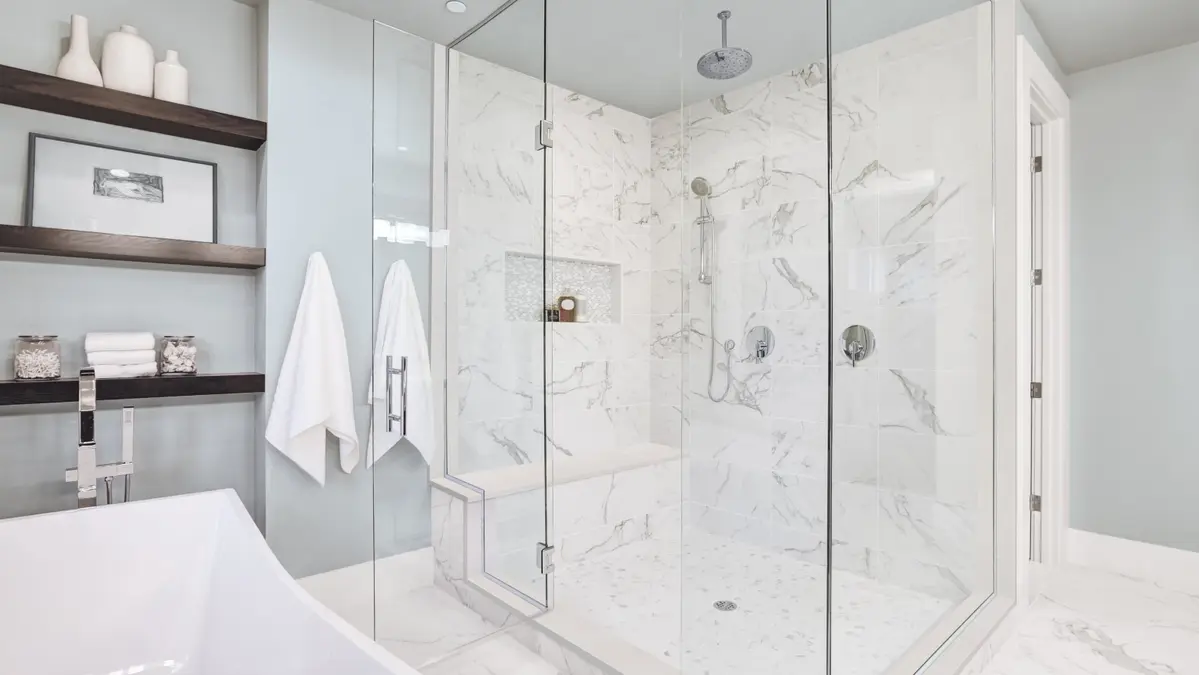
Porcelain tile is usually the easiest bathroom tile to keep clean, especially when it has a smooth glazed surface and is paired with well-maintained grout. Its low water absorption helps it resist staining and moisture-related cleanup problems.
But the tile material is only part of the decision. Large-format pieces, fewer grout joints, a smooth finish, a practical grout color, and a surface that does not hold soap or mineral deposits can matter just as much. A modest ceramic tile with simple grout may be easier to live with than a premium tile covered in deep texture and numerous joints.
What makes a bathroom tile easy to clean?
A low-maintenance bathroom surface generally has four useful characteristics:
- Low porosity, so water and stains are less likely to penetrate the tile.
- A smooth surface, so soap residue and grime do not collect in texture.
- Fewer grout joints, because grout usually takes more attention than the tile itself.
- A finish and color that do not make every water mark immediately noticeable.
These factors are particularly important in shower walls, where the surface is exposed to regular water, body oils, soap, and shampoo residue.
Porcelain vs. ceramic tile maintenance
Glazed porcelain
Glazed porcelain is one of the strongest choices for an easy-clean shower or bathroom. It is dense, handles frequent cleaning well, and generally does not need sealing when the glazed surface is intact. A smooth glaze also gives residue fewer places to cling.
Porcelain is not maintenance-free. Grout still needs attention, and a textured or deeply embossed porcelain tile can be more difficult to clean than a smooth one. Polished porcelain may also make water spots more visible, especially in areas with hard water.
Glazed ceramic
Glazed ceramic tile is also a practical low-maintenance option for bathroom walls. The glaze creates a cleanable surface, and many ceramic designs are available in simple shapes that make grout lines easy to inspect and wipe.
The main distinction is that ceramic tile is generally less dense than porcelain. For ordinary wall use, a suitable glazed ceramic tile can still be easy to maintain. For shower floors or other areas with regular standing water, confirm that the specific tile is rated for the intended use and follow the manufacturer’s installation guidance.
Natural stone
Natural stone can look attractive, but it usually asks for more care than glazed porcelain or ceramic. Many stones are porous or have a naturally varied surface, so they may require sealing and more careful cleaning. Some stones can also react poorly to acidic or abrasive products.
If you choose marble, travertine, slate, or another natural stone, check the care instructions from the tile manufacturer or supplier. Do not assume that a cleaner suitable for glazed tile is automatically suitable for stone.
Glass tile
Glass tile has a nonporous surface and can be easy to wipe clean. It is often used as an accent rather than across an entire shower, and the installation still includes grout joints that can collect residue.
Glass can make water marks highly visible, particularly on dark or glossy colors. It may be easy to clean but not always easy to keep looking spotless between cleanings.
Tile size and grout often matter more than expected
Grout is usually the most demanding part of a tiled bathroom. It is recessed, more textured than glazed tile, and more likely to show discoloration. Choosing larger tiles can reduce the total number of joints, which may reduce the amount of scrubbing needed.
Large-format tile is not automatically the easiest option. More substantial pieces can be harder to handle and may require a flatter installation surface. They also create fewer opportunities to adjust around corners, niches, drains, and other details. Ask the installer whether the selected format suits the wall or floor and the layout of the room.
Small mosaic tile can be useful on a shower floor because the many joints help create a more adjustable surface. However, all those joints also add cleaning area. Use it where its practical benefits matter, rather than selecting it solely for appearance.
Which grout is easiest to maintain?
For most bathrooms, the simplest approach is a quality grout selected for the location and installed according to its product instructions. Cement-based grout may need sealing and periodic care. Some specialty grouts resist staining more effectively and may require less sealing, but their cleaning and installation requirements vary.
The best grout color depends on what you want to hide:
- White grout gives a clean, bright appearance but can show discoloration quickly.
- Very dark grout can show pale mineral deposits, soap marks, or residue.
- A medium neutral shade often makes everyday variation less obvious.
- A color close to the tile creates a quieter look and reduces visual contrast at the joints.
No grout color prevents buildup. It only changes how visible that buildup is. Use the grout manufacturer’s instructions for sealing, cleaning, and compatible products.
Does glossy tile clean better than matte tile?
A smooth glossy or satin surface is generally easier to wipe than a heavily textured or irregular surface. This is one reason glazed tile is commonly recommended for easy-clean shower walls.
However, glossy tile can show water spots, fingerprints, and streaks more clearly. Matte tile may disguise some marks, but a textured matte surface can hold more residue. The useful distinction is not simply glossy versus matte; it is smooth versus difficult-to-reach texture.
For a shower wall, favor a surface you can wipe without working a cloth into grooves. For a bathroom floor, appearance is not the only consideration. Confirm that the tile is appropriate for wet-floor use and provides the slip characteristics required by the manufacturer or local guidance.
What bathroom tile does not show dirt easily?
A medium-toned tile with mild variation is often more forgiving than a perfectly white or very dark tile. Subtle variation can make small water marks and everyday dust less prominent without creating a busy pattern.
White tile is not necessarily harder to clean, but soap residue and grout discoloration tend to be easier to see. Dark tile can show dried droplets and pale mineral marks. Highly patterned tile may hide some residue while making it harder to notice when the surface actually needs cleaning.
Choose a color based on the type of residue your bathroom tends to show, not only on how the sample looks under showroom lighting. If possible, view a tile sample near the shower and compare it under the room’s normal lighting.
A practical low-maintenance tile combination
For many bathrooms, a sensible combination is:
- Smooth glazed porcelain or ceramic on the shower walls.
- A format that limits grout without creating installation problems.
- Medium-tone grout that is appropriate for wet areas.
- Minimal deep texture and few unnecessary niches or ledges.
- A shower-floor tile selected specifically for wet-floor use.
This combination reduces the surfaces most likely to trap residue while keeping cleaning straightforward. It does not eliminate routine care, since standing water, soap film, and grout discoloration can still develop.
Cleaning habits that protect the finish
Use the tile and grout manufacturer’s recommended cleaner, particularly for natural stone, specialty grout, and unusual finishes. Avoid abrasive tools or harsh products unless the manufacturer says they are compatible. Never mix cleaning chemicals.
After showering, removing excess water from the walls and floor can reduce the amount of residue left behind. Good ventilation also helps the bathroom dry. Clean small areas regularly rather than waiting until buildup is difficult to remove.
If a tile, grout, or cleaner label gives different instructions from general advice, follow the product-specific directions. When a surface is cracked, loose, persistently discolored, or damaged by a cleaner, stop experimenting and ask the manufacturer or a qualified tile professional for guidance.
Bottom line
The easiest bathroom tile to keep clean is usually smooth glazed porcelain, followed closely by suitable glazed ceramic. The lowest-effort installation is not determined by material alone: fewer grout joints, limited texture, a practical grout color, and correct product-specific care can make a larger difference than the tile name on the box.
For a shower, prioritize a smooth, low-porosity wall surface and choose the floor tile separately for wet-floor suitability. That gives you a bathroom that is easier to wipe, easier to inspect, and less likely to turn routine cleaning into a major chore.
References
- Which Bathroom Tile Is Easiest to Maintain?. (n.d.). https://tangotile.com/buying-tile-online-resources/easiest-bathroom-tile-to-maintain
- Which Type Of Bathroom Tile Is Easiest To Clean?. (n.d.). https://www.edwardmartin.com/blogs/information/which-type-of-bathroom-tile-is-easiest-to-clean
- What’s the easiest shower tile to keep clean?. (n.d.). https://www.houzz.com/discussions/316328/what-s-the-easiest-shower-tile-to-keep-clean
- Easy-Clean Bathroom Wall Tiles: Top Choices Revealed. (n.d.). https://www.belktile.com/blogs/cleaning/easy-clean-bathroom-wall-tiles-top-choices-revealed
- Picking the Best Tile for Your Bathroom. (n.d.). https://www.aladdincleans.com/blog/tile-and-grout-cleaning/picking-the-best-tile-for-your-bathroom
- Low Maintenance Shower Tile Options | Inspiration. (n.d.). https://tilemart.com/blogs/inspiration/low-maintenance-shower-tile-options
- What bathroom tile suggestions are easy to clean and non- …. (n.d.). https://www.facebook.com/groups/homedesign/posts/2082259935830182
- What are some low-maintenance, easy-to-clean tile options …. (n.d.). https://www.facebook.com/groups/homedesign/posts/2545996789456492