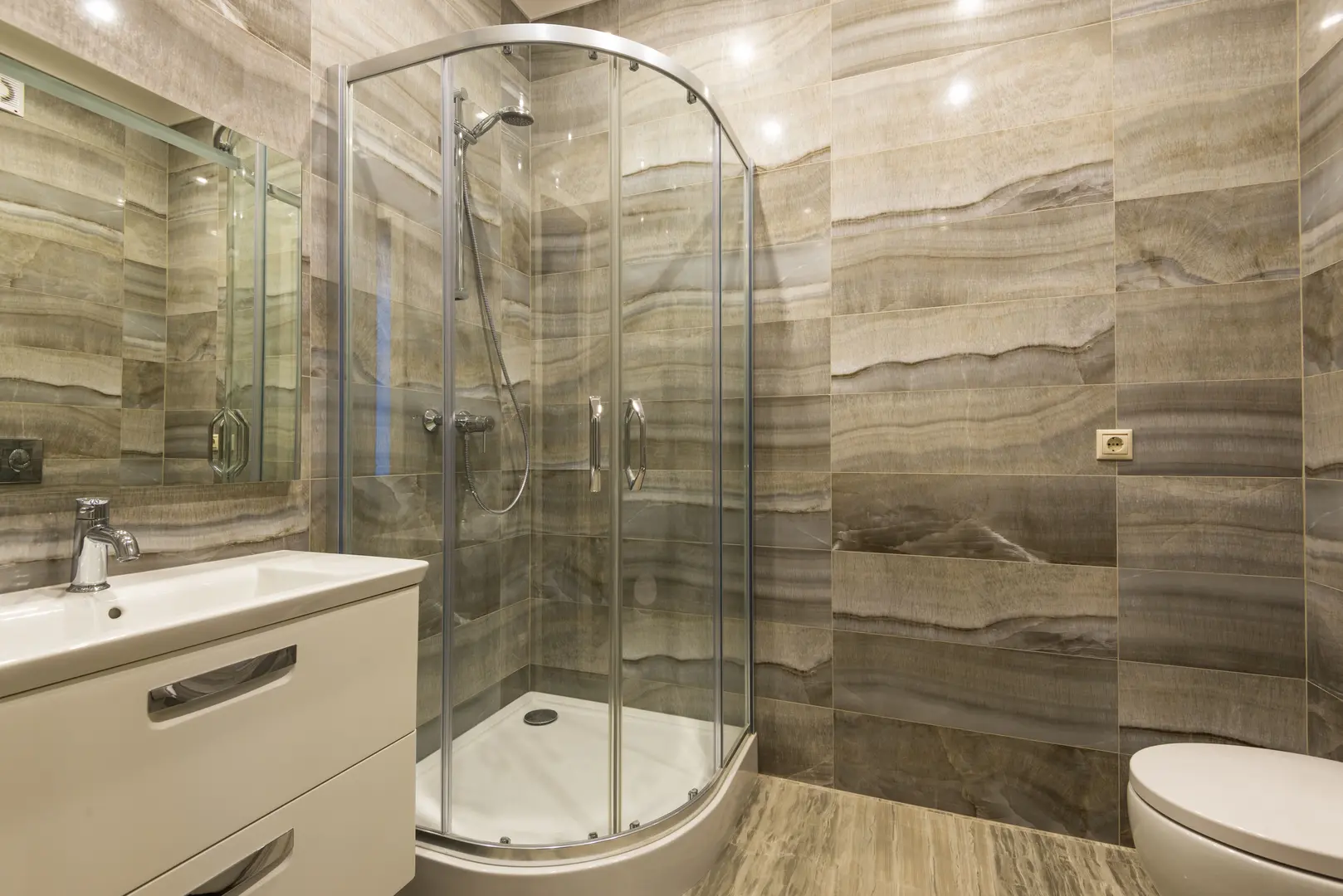
9 Epoxy Shower Grout Benefits for a Cleaner, Longer-Lasting Shower

A shower’s grout lines face constant moisture, soap residue, cleaning products, and daily wear. Traditional grout can gradually stain, erode, or require repeated sealing, while epoxy grout offers a denser and more durable alternative.
The main epoxy shower grout benefits include strong water and stain resistance, easier cleaning, lasting colour, and reduced maintenance. These qualities can make it a practical investment for homeowners who want a cleaner, longer-lasting tiled shower.
Understanding Epoxy Grout for Shower Areas
Epoxy grout is made by combining resin with a hardener. Once the components are mixed, they react and cure into a dense, non-porous surface. This structure makes epoxy grout particularly well suited to showers, wet rooms, and other high-moisture areas.
Unlike traditional cement grout, epoxy does not readily absorb water. It is also less vulnerable to staining, discolouration, cracking, and gradual erosion. Because the finished grout is durable and moisture resistant, it can help tile joints retain their appearance and integrity over many years of use.
Epoxy grout should not be confused with the shower’s underlying waterproofing system. The grout protects the joints between tiles, but the shower still needs correctly installed waterproofing behind or beneath the tiled surface.
Why Epoxy Grout Appeals to Homeowners and Professionals
Homeowners often choose epoxy grout because they want to spend less time scrubbing grout lines, resealing joints, or repairing worn areas. Its non-porous composition limits the moisture absorption that can contribute to mould and mildew growth.
Professionals may recommend it for demanding installations where long-term performance matters. Properly mixed and applied epoxy grout offers:
- Lasting resistance to water and stains
- Better colour retention than porous cement grout
- Lower sealing and maintenance requirements
- Strong resistance to chipping, cracking, and erosion
- Fewer repairs over the life of the tiled surface
These advantages are particularly valuable in showers that are used every day. Although epoxy grout is generally more expensive and more demanding to install, its longevity can help offset those initial disadvantages.
Key Advantages of Using Epoxy Grout in a Shower
The benefits of epoxy grout go beyond basic water resistance. Its combination of strength, low porosity, chemical resistance, and stable colour makes it useful in both domestic and frequently used bathrooms.
The following nine advantages explain why it is often considered a high-performance shower grout.
Superior Protection Against Water and Stains
Water resistance is one of the most important epoxy shower grout benefits. Once cured, the grout forms a non-porous barrier that does not readily take in shower water, soap residue, or other liquids.
This resistance helps prevent stains from becoming embedded within the grout. Soap, body-care products, and surface dirt are less likely to cause permanent discolouration, especially when spills and residue are cleaned regularly.
Cement grout, by comparison, is porous unless it is properly sealed. Water and contaminants can penetrate its surface, making stains and colour changes more difficult to avoid.
Exceptional Strength for Long-Term Use
Epoxy grout is stronger than conventional cement grout and is designed to withstand regular exposure to moisture and wear. Its dense cured structure resists chipping and cracking, helping joints remain intact in a heavily used shower.
Cement grout can weaken or erode over time, particularly if it is continually exposed to water, aggressive cleaning, or movement. Loose or damaged joints may then need to be removed and replaced.
Epoxy’s durability does not mean that installation quality can be ignored. Tiles must be stable, joints must be prepared correctly, and the grout must be mixed according to its instructions. When those conditions are met, epoxy can provide reliable long-term performance with fewer repairs.
Built-In Resistance to Mould and Mildew
Mould and mildew tend to thrive where moisture and residue remain. Because epoxy grout does not readily absorb water, it provides a less hospitable surface than porous cement grout.
This built-in resistance supports a cleaner shower environment. It also reduces the chance of dark staining becoming established within the grout itself.
However, no grout eliminates the need for cleaning and ventilation. Mould can still develop on soap residue sitting on top of a surface, particularly in damp bathrooms. Regular rinsing, routine cleaning, and adequate ventilation remain important.
Simpler Cleaning with Less Routine Upkeep
The smooth, non-porous surface of cured epoxy grout is generally easy to wipe clean. Dirt and shower residue tend to remain on the surface rather than soaking into the joint, so routine cleaning usually requires less effort than it would with porous grout.
This can reduce the need for intensive grout-line scrubbing. It also helps the shower maintain a more consistent appearance between cleaning sessions.
Installation cleanup is a different matter. Uncured epoxy grout must be removed promptly from tile faces and surrounding areas. Once it hardens where it is not wanted, residue can be difficult to remove. Installers should work in manageable sections, follow the specified cleaning process, and avoid spreading more grout than they can finish and clean within the available working time.
A Sealer Is Generally Not Required
Cement grout is often sealed to reduce water and stain absorption. That sealer may eventually need attention or reapplication as part of the shower’s maintenance routine.
Epoxy grout is naturally non-porous once cured, so it generally does not require a separate grout sealer. Eliminating that step can save both time and ongoing maintenance costs.
This does not remove every maintenance requirement. Tile surfaces, corners, and movement joints still need appropriate care, and any separate sealant used within the shower should be inspected periodically. The advantage is that the epoxy grout lines themselves normally do not depend on a surface sealer for stain and water resistance.
Reliable Tile Bonding with Flexibility
Epoxy grout provides strong adhesion within properly prepared tile joints. This helps create stable, durable joints that remain firmly connected to the tile edges.
It also offers useful resistance to cracking caused by limited movement. In comparison, rigid and erosion-prone cement joints may be more likely to deteriorate when exposed to repeated stress.
Epoxy grout is not a replacement for movement joints or flexible sealant where the shower design requires them. Corners, changes of plane, and other designated movement areas should still be treated according to the tile system’s installation requirements.
Colour Choices That Preserve Shower Style
Epoxy grout is available in a broad selection of colours. It can be matched closely to the tile for a restrained finish or used as a contrasting design feature that highlights the tile pattern.
Its low porosity also helps the chosen colour remain consistent. Because moisture and stains are less likely to penetrate the grout, it is better able to retain a fresh appearance over time.
White epoxy grout can be suitable for a high-traffic shower. Its stain resistance gives it an advantage over porous white cement grout, which can absorb discolouring residue. However, white grout will still show surface dirt, soap deposits, and neglected buildup more readily than some darker colours. Regular wiping and cleaning are therefore important if a bright white appearance is the goal.
Resistance to Chemicals and Strong Cleaning Products
Epoxy grout resists many of the strong cleaners commonly used in bathrooms. Its dense structure helps it retain its integrity during regular cleaning rather than softening or eroding as readily as cement-based material.
This resistance is useful in showers that require frequent cleaning. It can also reduce concerns about grout colour being altered by routine care.
Chemical resistance should not be treated as permission to use any product indiscriminately. Always check the grout and tile manufacturer’s care instructions, use cleaners suitable for both surfaces, and avoid unnecessarily harsh treatment.
A Practical Choice for Frequently Used Bathrooms
Busy bathrooms place greater demands on every tiled surface. Repeated showers mean more moisture, more cleaning, and more opportunities for stains or joint deterioration.
Epoxy grout is a practical choice for family bathrooms, guest facilities, and other frequently used shower areas because it combines:
- Low water absorption
- Strong resistance to stains
- Easy routine cleaning
- Long-lasting colour
- Reduced need for sealing and repairs
These qualities can be especially useful when a low-maintenance finish is more important than achieving the lowest possible initial installation cost.
Effective Techniques for Mixing and Applying Epoxy Grout
Epoxy grout is less forgiving to install than cement grout. Mixing starts a chemical curing process, and temperature can affect how quickly the material becomes too stiff to spread and clean. Careful preparation is therefore essential.
A practical application process includes the following steps:
- Prepare the shower and tools first. Ensure the joints are clean and ready to receive grout. Keep application tools, cleaning materials, water, and suitable sponges within reach before mixing begins.
- Read the product instructions fully. Mixing proportions, working methods, and cleanup procedures can differ. Follow the specified ratio rather than estimating the amount of resin or hardener.
- Mix only a manageable quantity. A common mistake is preparing too much epoxy at once. The material may harden before it can be spread, shaped, and cleaned, resulting in waste and frustration.
- Work in small sections. Fill and finish a limited area before moving on. This makes it easier to monitor the grout and clean the tile while residue is still removable.
- Watch the temperature. Warmer conditions can shorten the available working period. Keeping the mixed grout container in an ice bucket may slow curing, but it can also make the material stiffer and more difficult to apply.
- Clean immediately and repeatedly. Remove unwanted epoxy from tile faces and nearby surfaces as work progresses. Do not wait until the entire shower has been grouted.
- Inspect for residue. Check the tiles under good lighting before the epoxy has fully hardened. Any remaining haze or deposits should be addressed using the manufacturer’s recommended procedure.
For large showers, detailed tile patterns, or unfamiliar materials, professional installation may be worthwhile. The extra cost can help prevent hardened residue, uneven joints, or wasted batches.
Epoxy or Cement Grout: Which Is the Better Shower Option?
Epoxy is generally the stronger, more water-resistant, and lower-maintenance choice for a shower. Cement grout remains popular because it is less expensive initially and is usually easier to mix and install.
The better option depends on the project budget, installer experience, desired maintenance level, and expected shower use.
Epoxy grout should not normally be applied as a thin layer directly over existing cement grout. A shallow surface application may not provide enough joint depth or a suitable base for dependable adhesion. Old grout that is loose, contaminated, sealed, or deteriorated can further interfere with bonding.
Where epoxy is being used to replace cement grout, the existing joints should be assessed and prepared according to the epoxy manufacturer’s requirements. Damaged or unsuitable grout will usually need to be removed sufficiently before the joints are cleaned and refilled. If the condition of the existing installation is uncertain, consult the grout manufacturer or an experienced tile professional.
How Their Durability Compares
Epoxy grout has the advantage in demanding shower conditions. It resists cracking, chipping, and erosion, allowing it to maintain strong joints through regular use.
Cement grout is more porous and can gradually wear away. Water exposure, cleaning, and general use may lead to rough surfaces, recessed joints, or cracks that require repair.
Epoxy is still dependent on a sound tile installation. Significant substrate movement or incorrectly treated movement areas can cause problems that grout alone cannot prevent.
Cleaning and Maintenance Differences
Cured epoxy grout is usually easier to clean because dirt and liquids remain primarily on its surface. It does not generally need sealing, and stains are less likely to penetrate.
Cement grout requires more upkeep. Its porosity can make it vulnerable to staining and moisture absorption, while sealing may be needed to improve protection. Even when sealed, regular cleaning and periodic maintenance remain important.
Epoxy is more difficult during installation, however. Cement grout typically offers a more familiar and forgiving application process, while epoxy demands controlled mixing, quick work, and immediate cleanup.
Upfront Cost Versus Installation and Ongoing Care
Epoxy grout generally has a higher purchase price than cement grout. Installation can also cost more because the material sets quickly and requires greater care during application and cleanup.
Cement grout is more budget-friendly at the start, making it attractive for projects with limited initial funds. Its longer-term costs may include sealing, stain treatment, repairs, or replacement of eroded joints.
For a frequently used shower, epoxy’s durability and low maintenance can provide better long-term value. Cement grout may still be appropriate where upfront cost and easy installation are the main priorities, but epoxy is often the stronger choice for homeowners seeking lasting protection and fewer maintenance demands.