How to Fix a Loose Toilet Seat
A loose toilet seat is usually caused by fixings that have loosened, worn threads, damaged hinge parts, or missing rubber bumpers. To fix a loose toilet seat, first identify whether the nuts are accessible underneath the bowl or whether the seat uses top-fixing hardware. Center the seat, tighten both fixings evenly, and then check the hinges and bumpers. If a bolt spins without tightening, a nut is missing, or the hinge is cracked, replacing the fixing kit or the entire seat is usually more effective than forcing it tighter.
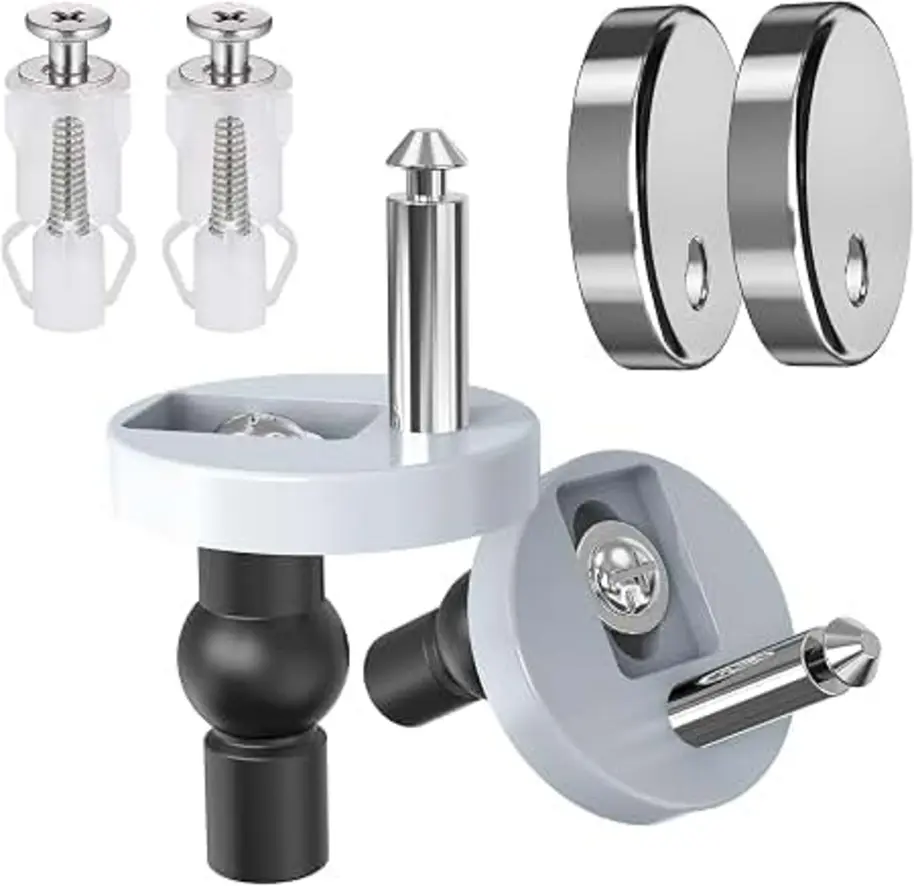
Source: m.media-amazon
What causes a toilet seat to keep moving?
A seat can shift for several different reasons, so tightening the visible screw is not always the complete fix.
- Loose bolts or nuts: The most common cause is a fixing that has worked loose over time.
- Top-fixing hardware: Some toilets do not provide useful access underneath the bowl. Their bolts tighten into rubber or other expanding fittings inserted from above.
- Worn or damaged threads: A screw may turn but never clamp the seat securely if the threads in the nut, anchor, or bolt are stripped.
- Loose hinges: The seat may be secure to the bowl while the hinge itself has developed play.
- Missing or worn bumpers: Small pads under the seat help it rest evenly on the rim. If they are missing or flattened, the seat can feel unstable even when the bolts are tight.
- Poor alignment: A seat that was tightened while sitting off-center may slide or twist during use.
Before taking anything apart, lift the lid and seat and gently check where the movement starts. If the hinge moves against the toilet bowl, focus on the fixings. If the seat moves within the hinge, inspect the hinge or its release mechanism instead.
What you need
The exact tools depend on the toilet seat, but a basic repair commonly needs:
- A screwdriver that matches the fixing screws
- An adjustable wrench or pliers for accessible nuts
- A cloth or small brush for cleaning around the hinges
- Replacement toilet-seat bolts, nuts, washers, or a universal fixing kit if existing parts are damaged
Some seats have decorative hinge covers or quick-release buttons. Check how these open before trying to pry them up. A manufacturer’s fitting instructions can be useful when the hinge design is not obvious.
How to tighten a toilet seat with accessible nuts
This is the traditional arrangement: a screw passes through each hinge and the toilet bowl, with a nut underneath.
1. Clean and expose the fixings
Raise the lid and seat. Open or remove the hinge covers if they hide the screw heads. Wipe away grime so the screwdriver and wrench can grip properly.
If the nuts are difficult to reach, look beneath the rear edge of the bowl. You may be able to hold the nut by hand, or you may need pliers or an adjustable wrench.
2. Center the seat before tightening
Position the seat so it follows the shape of the bowl and sits evenly on both sides. Hold it in place while checking that the rear hinges are aligned with the holes.
This step matters because tightening a misaligned seat can lock the wrong position in place. It can also leave one side carrying more movement than the other.
3. Tighten both fixings gradually
Turn one screw a little, then move to the other and repeat. If the nut underneath turns with the screw, hold the nut steady while tightening from above.
Tighten until the seat is secure, but do not keep forcing the screw once the hinge is firmly clamped. Plastic nuts and other plastic fixing parts can be damaged by excessive force.
4. Test the movement
Lower the seat and gently move it from side to side. If it still shifts, check whether the nuts are actually clamping the hinges or whether the hinge itself is loose. Recheck the alignment before making a small additional adjustment.
How to tighten a top-fixing toilet seat
Top-fixing seats are designed for toilets where the underside is hard to access. The bolt usually passes down through the hinge into a rubber plug, expansion fitting, or another anchor that grips inside the bowl opening.
1. Open the hinge covers
Lift the covers or use the seat’s release buttons if it has a quick-release design. Some seats can be lifted off the hinge plates before the screws are exposed.
Do not assume every cover lifts in the same direction. Look for a button, slot, or seam rather than levering aggressively against the ceramic bowl.
2. Check the anchor before tightening
Make sure the rubber or expanding fitting is sitting in the hole and is not turning freely. If the anchor has pulled out, spins with the screw, or will not grip, tightening the screw alone will not solve the problem.
Do not add lubricant to a fitting that is meant to grip inside the hole. A slippery anchor may be harder to hold in position.
3. Align the seat and tighten evenly
Center the seat on the bowl, then tighten each top screw in small turns. Keep checking the position as you work. Stop when the hinges are secure and the seat no longer shifts.
If the screw becomes tight but the seat still moves, the problem may be a worn anchor, loose hinge plate, or missing bumper rather than insufficient tightening.
Check the hinges and bumpers
Once the fixings are tight, test the seat again. Hold the seat near the hinge and lift it slightly. If there is movement between the seat and the hinge, the hinge assembly may be worn or damaged.
Look for:
- Cracks in the hinge body or hinge cover
- A missing screw, nut, washer, or rubber anchor
- A release button that no longer locks the seat in place
- Hinge plates that move even though the bowl fixings are tight
- Flattened, loose, or missing rubber bumpers under the seat
Bumpers are not the main fasteners, so replacing them will not correct a loose hinge. However, worn bumpers can allow extra sliding and can make a properly tightened seat feel unstable. If the seat design allows it, replace damaged bumpers with compatible parts rather than adding makeshift pads that change the seat’s position.
When to replace the fixing parts
Replace the toilet seat bolts or fixing kit when the existing hardware cannot hold tension. Common signs include:
- The screw turns continuously without becoming tighter
- The nut is stripped, cracked, or missing
- The bolt is bent or badly corroded
- A top-fixing rubber anchor spins or pulls out
- Tightening works briefly, but the seat quickly becomes loose again
Replacement toilet-seat hardware is often sold as a two-piece set or as a universal-style kit. Match the new parts to the seat’s fixing arrangement and the size and shape of the bowl holes. Keep any washers or sleeves that are specified for the particular fitting.
When installing replacement hardware, leave both sides slightly loose while you center the seat. Tighten the fixings alternately so the seat remains straight.
When to replace the whole toilet seat
A new fixing kit may not be enough if the seat or hinge is cracked, warped, or badly worn. Replace the complete seat when:
- The hinge is integrated into the seat and cannot be replaced separately
- The seat has a crack near a hinge or fixing hole
- The quick-release mechanism will not hold the seat securely
- The hinge remains loose after installing sound fixing hardware
- The seat no longer sits evenly on the bowl because its shape has changed
Choose a replacement based on the bowl’s shape, the distance between the fixing holes, and the available fixing type. A seat that fits the bowl but uses incompatible hardware may continue to move.
Common mistakes when tightening a loose toilet seat
Tightening only one side
One tight screw does not compensate for a loose fixing on the other side. Work on both hinges and alternate between them.
Skipping alignment
If the seat is off-center when tightened, it may rub against the bowl or shift when weight is applied. Center it before clamping the hardware.
Overtightening plastic parts
More force is not always a better repair. Excessive tightening can strip plastic threads, deform an anchor, or damage the hinge. Tighten until secure, then test the seat.
Ignoring a spinning fixing
A screw that spins without tightening usually indicates a problem with the nut, anchor, or threads. Replace the failed part instead of repeatedly turning the screw.
Treating hinge play as a loose bolt
If the bowl fixings are firm but the seat still moves within the hinge, the hinge mechanism is the likely problem. Inspect or replace it rather than forcing the bowl bolts tighter.
A simple maintenance check
Every few months, gently check whether the seat has developed side-to-side movement. Wipe beneath the hinge covers while cleaning the bathroom, because grime can make the hardware difficult to inspect and adjust. Correct small movement before the fixings or hinge parts become more difficult to remove.
The basic sequence is straightforward: find the fixing type, clean and expose the hardware, center the seat, tighten both sides gradually, and test the hinge and bumpers. If the hardware will not tighten or the hinge is damaged, replacement parts—or a new seat—are the reliable next step.
References
- How to Tighten Toilet Seat and Stop Wiggling. (n.d.). https://horow.com/blogs/guide/how-to-tighten-toilet-seat-and-stop-wiggling
- How To Tighten A Loose Fluent Toilet Seat. (n.d.). https://www.americanstandard-us.com/blogs/about-toilet-seats/how-to-tighten-a-loose-fluent-toilet-seat
- Fix loose toilet seat - replace hinge bolts - EASY DIY. (n.d.). https://www.youtube.com/watch?v=jXav7anmYNQ
- How to Tighten a Loose Toilet Seat. (n.d.). https://www.victorianplumbing.co.uk/bathroom-ideas-and-inspiration/how-to-tighten-toilet-seat
- How to fix a loose or broken toilet seat when you can’t access nuts.. (n.d.). https://www.youtube.com/watch?v=j-aZz4uIrEw
- How to Tighten a Loose Toilet Seat. (n.d.). https://www.toiletseats.com/education-and-inspiration/articles/how-to-tighten-a-toilet-seat
- How to Tighten or Replace a Toilet Seat in 3 Minutes. (n.d.). https://www.youtube.com/watch?v=y4ql6AANARU
- How can I stop a toilet seat from rapidly loosening?. (n.d.). https://diy.stackexchange.com/questions/149776/how-can-i-stop-a-toilet-seat-from-rapidly-loosening