How to Fix a Bathroom Drawer That Sticks

A bathroom drawer that sticks is usually suffering from one of a few practical problems: debris in the runners, a drawer that has shifted out of alignment, loose or damaged hardware, too much weight, or moisture-related swelling. Start by emptying the drawer and checking how it catches. Then remove it if possible, clean the runners, tighten loose screws, and adjust the slides before considering replacement.
Do not keep forcing the drawer. Pulling hard can loosen the cabinet, bend a runner, or damage the drawer front. Work through the likely causes in order, beginning with the simplest one.
First, identify where the drawer sticks
Open the drawer as far as it will go and notice what happens:
- If it feels gritty or rough throughout its travel, dirt or dried residue may be in the runners.
- If it catches at one point, look for a loose screw, bent rail, obstruction, or misaligned runner.
- If the drawer front sits crooked or rubs against the cabinet, the drawer or slides may be out of square.
- If the drawer is harder to open when full, it may be overloaded or sagging.
- If the edges look swollen, bubbled, or scraped, bathroom moisture may have affected the material.
- If you hear a grinding sound or see a cracked roller, the runner may be damaged.
Remove everything from the drawer before diagnosing it. Toiletries can shift into the slide path, and a heavy load can make a minor alignment problem much worse.
What you need
The exact tools depend on the drawer design, but these are commonly useful:
- A screwdriver that fits the runner screws
- A vacuum or soft brush
- A damp cloth and a dry cloth
- Silicone spray or paraffin wax, if suitable for the runner material
- A flashlight
- Replacement screws or runners, if existing hardware is damaged
Avoid using a large amount of household oil. It can attract dust and may leave residue on the cabinet or drawer contents. Check the runner or cabinet maker’s care instructions before applying any lubricant.
Remove the drawer carefully
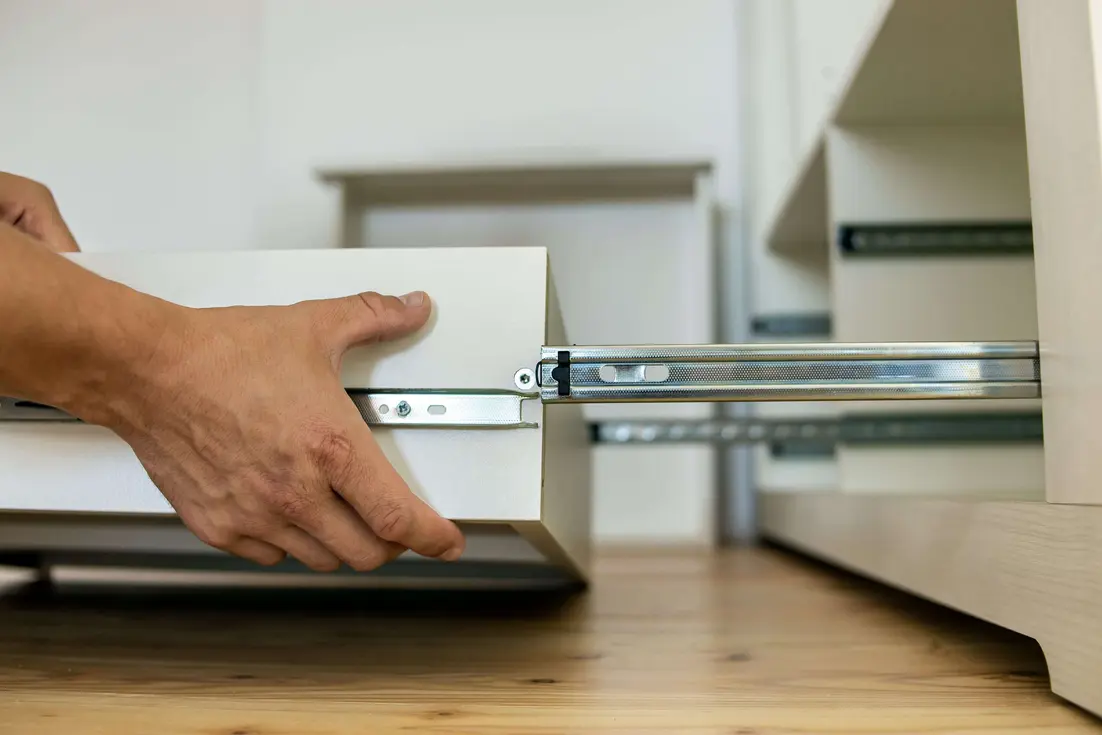
Many bathroom vanity drawers have release tabs, levers, clips, or a lift-and-pull mechanism. Others simply pull out until stops engage, then require the front to be lifted or the retaining screws to be removed. Look underneath and along both sides of the drawer to identify the mechanism.
Support the drawer with both hands as you remove it. Do not force it past a stop. If the drawer will not release, inspect the hardware first rather than twisting the box or pulling on the drawer front.
Some concealed runners have small release levers on each side. These levers may need to be moved in opposite directions, so compare both sides before applying pressure. If you are renting and the release method is unclear, take a photo of the hardware and check the vanity’s instructions or ask the landlord before dismantling it.
Clean the drawer and runners
With the drawer removed, inspect the cabinet opening, the underside of the drawer, and both runners. Look for hair, dust, dried soap, loose packaging, small objects, and screws that have backed out. Bathroom vanities can collect residue even when the visible surfaces look clean.
Use a vacuum or soft brush first. Wipe accessible surfaces with a slightly damp cloth, then dry them thoroughly. Do not soak wood-based panels or leave water inside the cabinet.
If the runners use rollers, check that each roller turns and is seated properly. If a roller is cracked, missing, or visibly misshapen, cleaning will not restore smooth movement. The runner will usually need adjustment or replacement.
Once clean, apply only a light amount of a compatible lubricant if the mechanism calls for it. Silicone spray or paraffin wax are commonly suggested for drawer movement, but avoid spraying blindly into concealed hardware. Protect the cabinet and wipe away excess product before reinstalling the drawer.
Source: eaglewoodworking
Check for loose screws and misalignment
Loose screws are a common reason a bathroom drawer rubs, tilts, or catches. Compare the left and right sides of the drawer opening. The runners should be positioned consistently and should not move when touched.
Tighten loose screws with the drawer removed, but do not overtighten them. Overtightening can strip a particleboard cabinet or pull the runner out of position. If a screw spins without tightening, the hole may be damaged. A longer or wider replacement screw is not always appropriate, especially where it could break through the cabinet wall or interfere with the runner.
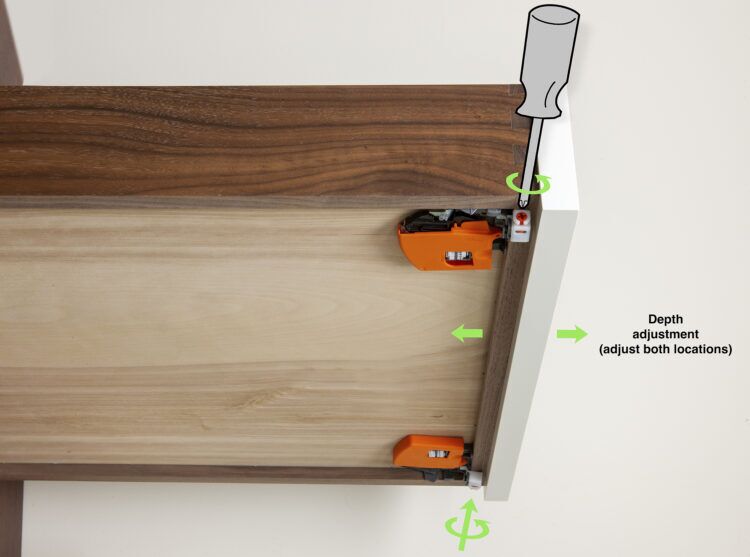
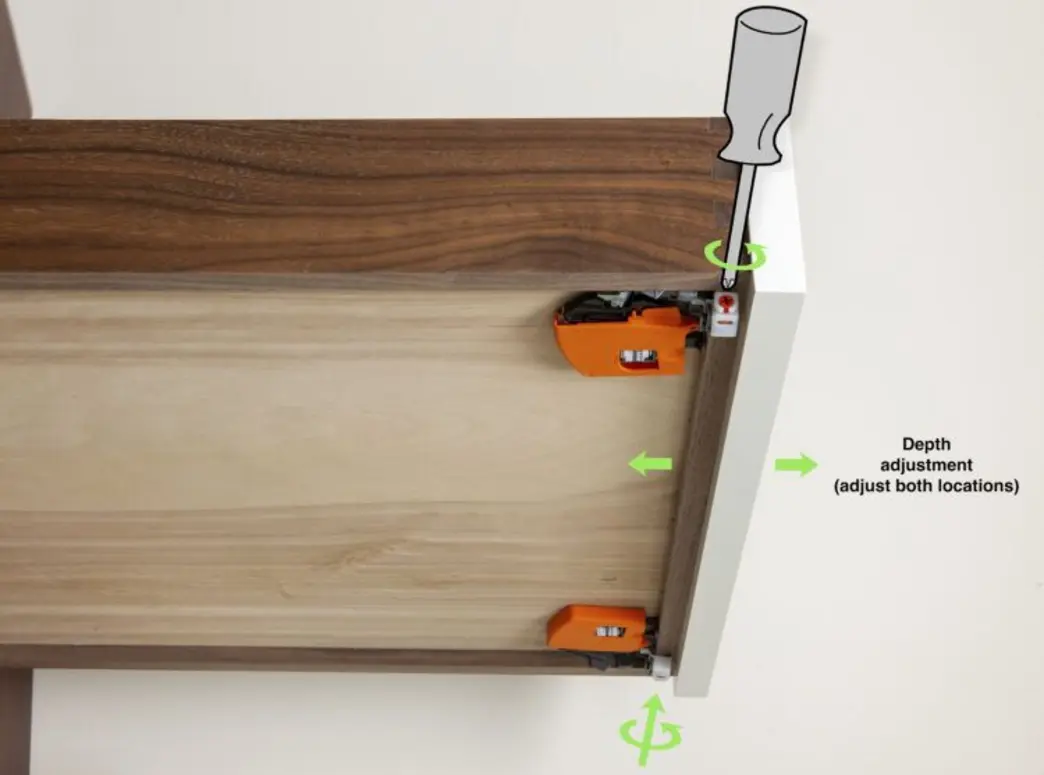
If the runner appears straight but the drawer is crooked, loosen the relevant screws slightly, realign the runner, and retighten them while holding it in position. Make small adjustments rather than shifting the entire slide at once. Refit the empty drawer and test it after each adjustment.
For side-mounted runners, check that both sides are at a similar height and run parallel. For undermount or concealed runners, look for clips or brackets that have shifted rather than trying to bend the runner into place.
Source: cdn-bmgpa.nitrocdn
Test the drawer before putting items back
Reinstall the empty drawer and open it slowly several times. It should move without rubbing, twisting, or needing a hard pull. Check that the drawer front stays even with nearby cabinet doors and that it closes completely.
If it slides well while empty but sticks when loaded, reduce the weight and redistribute the contents. Keep heavier bottles low and toward the center when possible. Avoid packing items against the back or sides, where they can press into the slide path.
A drawer that remains difficult to open after cleaning and adjustment may have worn runners, a bent rail, a broken roller, or a damaged mounting point. Replacing drawer runners can work, but the replacement must match the existing type and fit. Measure the old hardware and note how it is mounted before buying anything. The drawer length, side clearance, mounting position, and release style all matter.
When bathroom moisture has swollen the drawer
A swollen bathroom cabinet drawer often shows physical clues: expanded edges, peeling laminate, bubbling finish, swollen particleboard, or fresh rub marks where the drawer meets the cabinet. Moisture may come from repeated splashing, a leaking product, condensation, or a plumbing leak inside the vanity.
Dry the area and find the moisture source before making adjustments. If the panel has only minor surface swelling, improving ventilation and keeping the area dry may prevent further change. However, a badly swollen drawer box may not return to its original size. Sanding or trimming it can weaken the panel and may only hide the underlying moisture problem.
If water is coming from a supply line, drain, or valve, stop the drawer repair and address the leak through the appropriate maintenance route. Cabinet hardware will continue to fail if the surrounding material remains damp.
When to stop repairing it yourself
Replace or seek help for the drawer hardware when:
- A runner is cracked, bent, or missing parts.
- The drawer mounting area is pulled out or badly stripped.
- The cabinet side or drawer box is split.
- The drawer remains out of square after careful adjustment.
- Moisture damage is extensive or the source is not clear.
- The drawer cannot be removed without force.
For a rental, limit yourself to cleaning, removing excess contents, and reporting the problem unless your lease or landlord gives permission for hardware changes. Photograph the drawer, runners, and any swelling before making a repair request.
Prevent the drawer from sticking again
Keep the drawer below its practical load limit, wipe up spills quickly, and avoid storing leaking bottles against the back or sides. Periodically remove the contents and clear dust from the runners. Check for loose screws when the drawer begins to sit crooked, rather than waiting until it jams.
A sticky bathroom vanity drawer is often fixable without replacing the whole cabinet. Cleaning, careful alignment, and sensible storage solve many minor problems. If the drawer is swollen or the runner is damaged, however, replacing the affected part—or arranging maintenance—is more reliable than forcing the mechanism to work.
References
- Bathroom Cabinet Drawer Stuck? Expert Troubleshooting …. (n.d.). https://www.justanswer.com/home-improvement/p3jxd-wood-mowed-cabinets-home-home-43-years.html
- How to troubleshoot a stuck drawer in a bathroom wall cabinet?. (n.d.). https://www.jinghuglass.com/blog/how-to-troubleshoot-a-stuck-drawer-in-a-bathroom-wall-cabinet-1703965.html
- How to Repair a Drawer: Step-by-Step Guide - Furnica. (n.d.). https://furnica.com/blogs/guides/how-to-repair-drawer-step-by-step
- Is your drawer not sliding smoothly? 🛠️ Don’t replace it …. (n.d.). https://www.facebook.com/ernesto.caoile/videos/is-your-drawer-not-sliding-smoothly-%EF%B8%8F-dont-replace-it-just-yet-this-clever-repai/1826019915073532
- Help! misaligned Bathroom drawer fix? Been like this since …. (n.d.). https://www.reddit.com/r/IKEA/comments/1rxg1yd/help_misaligned_bathroom_drawer_fix_been_like
- How to Fix Drawer Slides Easily in 3 Steps - Woodworker Express Blog. (n.d.). https://www.woodworkerexpress.com/blog/2025/02/how-to-fix-drawer-slides
- How to Fix Drawer Slides: Maintaining & Troubleshooting Guide - Wurth Louis and Company. (n.d.). https://wurthlac.com/blog/how-to-fix-drawer-slides
- How to Fix a Squeaky Bathroom Vanity Drawer - Eclife Premier. (n.d.). https://www.eclifeusa.com/blogs/news/how-to-fix-squeaky-bathroom-vanity-drawer