Framed vs. Frameless Shower Enclosure: Which Option Is Better?
Choosing between a framed vs frameless shower enclosure affects more than appearance. The enclosure’s construction influences cost, installation, water containment, cleaning, and long-term maintenance. Framed models offer dependable support and practical value, while frameless designs create a more open, contemporary look. Understanding these differences will help you select an enclosure that suits your bathroom, budget, and daily routine.
Understanding Framed and Frameless Shower Enclosures
The main difference between framed and frameless shower enclosures is how the glass receives structural support.
A framed enclosure surrounds the glass with metal components. These pieces reinforce the panels and doors, allowing manufacturers to use comparatively thinner glass. A frameless enclosure relies primarily on thicker tempered glass, supported by discreet hinges, clips, and other minimal hardware.
Semi-frameless models fall between the two. They may have framing around fixed panels or the enclosure perimeter while leaving the door edges free of a full metal border. This can provide a cleaner look without eliminating framing altogether.
How Framed Shower Enclosures Are Built
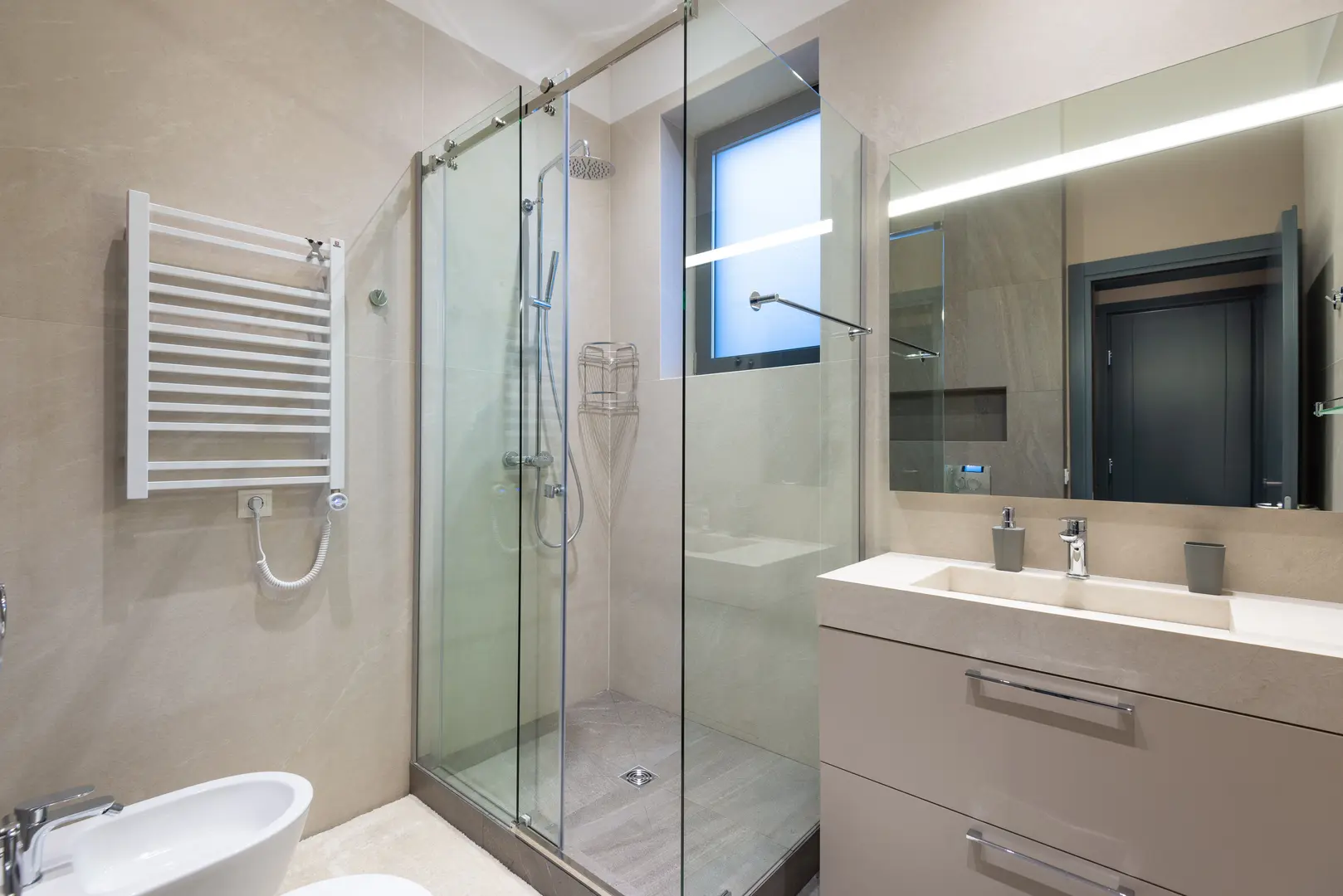
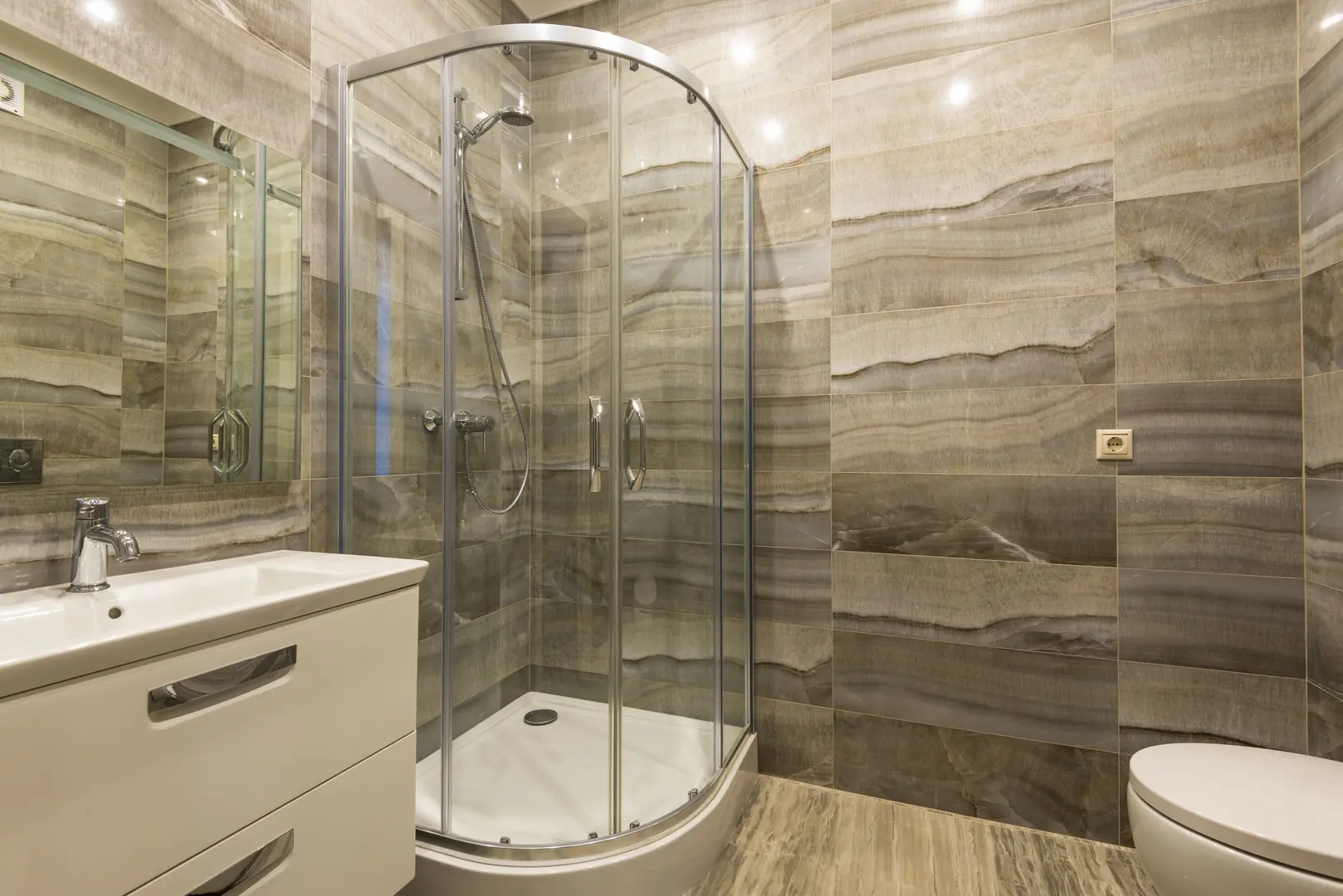
Framed shower enclosures use a metal framework to support and stabilize the glass. Depending on the design, framing may appear around the perimeter, vertical edges, doors, and fixed panels. Sliding framed doors also typically operate within upper and lower tracks.
Because the frame carries part of the structural load, the enclosure can use thinner glass than a frameless system. The metal components also provide defined contact points for seals and help control water around panel edges.
This construction makes framed enclosures adaptable to many bathroom layouts. The framework can accommodate certain variations in the opening more readily than a custom frameless design. Framed models are available with sliding, pivoting, and other door configurations, although the available choices depend on the shower’s dimensions and layout.
The visible metal is also part of the design. Its finish can coordinate with faucets, towel bars, cabinet hardware, and other bathroom fixtures.
The Design of Frameless Shower Enclosures
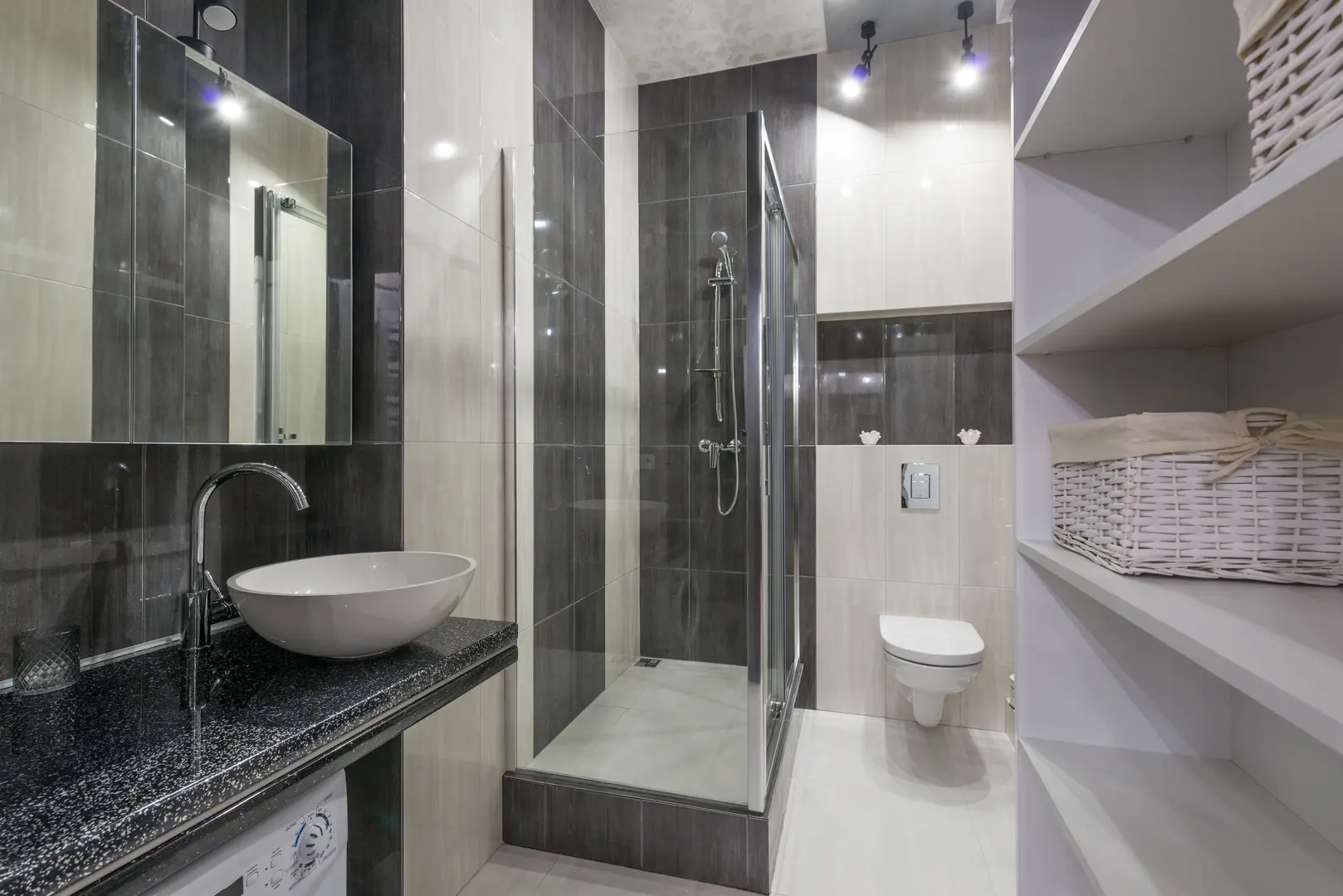
Frameless enclosures replace prominent perimeter framing with thicker tempered glass. Hinges, handles, clips, and brackets secure the panels, but these components are kept relatively subtle.
The reduced amount of metal creates uninterrupted sightlines. Tile patterns, stonework, and shower fixtures remain visible through the glass, making the room feel more open. This is why frameless enclosures are often associated with modern and high-end bathroom designs.
“Frameless” does not mean completely hardware-free. The doors and panels still require suitable supports, and some installations use seals or sweeps to manage water. However, the hardware is less visually dominant than the framework on a conventional framed model.
A semi-frameless enclosure offers a compromise. It retains structural framing in selected areas but reduces metal around the door or prominent glass edges.
Framed vs. Frameless Enclosures: Key Advantages and Disadvantages
Neither enclosure type is automatically better for every bathroom. Framed designs tend to prioritize affordability, stability, installation flexibility, and water containment. Frameless models emphasize visual openness, simplified glass cleaning, and a premium appearance.
| Factor | Framed enclosure | Frameless enclosure |
|---|---|---|
| Initial cost | Generally more budget-friendly | Generally more expensive |
| Glass support | Metal framework | Thicker tempered glass with clips and hinges |
| Appearance | Defined by visible framing | Open and contemporary |
| Water control | Framing and seals support containment | Depends heavily on layout and precise fitting |
| Cleaning | More joints, edges, and tracks | Fewer metal edges and channels |
| Installation | Usually more forgiving and versatile | Requires highly accurate measurement and fitting |
Advantages of Framed Shower Enclosures
The primary advantage of a framed enclosure is dependable structural support. Metal surrounds and stabilizes the thinner glass panels, creating a sturdy assembly. This established construction can reassure homeowners who are concerned about door stability.
Installation is generally easier and more adaptable than with a frameless enclosure. Framing can make it simpler to fit the enclosure within a range of bathroom configurations. This versatility is useful when remodeling an existing shower rather than building a new space around a custom glass design.
Framed enclosures also tend to contain water effectively. Frames, channels, and seals create clear barriers around panel and door edges. This does not eliminate the need for correct installation, but it can make water control more straightforward.
Other practical benefits include:
- A lower upfront price in many projects
- A broad range of door and panel configurations
- Finishes that can coordinate with traditional bathroom fixtures
- Strong support without requiring the thicker glass used in frameless systems
Sliding framed doors can be especially useful where there is not enough clearance for a door to swing outward. Both panels remain within the shower’s footprint, although their tracks require additional maintenance.
Limitations of Framed Shower Enclosures
The framework creates more areas where water residue and soap buildup can collect. Corners, seals, panel edges, and tracks may require detailed cleaning. A smooth glass panel is easy to wipe, but cleaning around multiple metal components can take more effort.
Visible framing can also interrupt the open appearance that many homeowners want from a modern bathroom. The metal border draws attention to the enclosure itself and may partially obscure decorative tile or other shower features.
Sliding-door tracks deserve particular attention. Repeated exposure to moisture can contribute to corrosion when the track and its finish are not properly cared for. Debris and corrosion may eventually prevent the doors from moving smoothly. Regular cleaning, drying, and inspection can help protect the track, but a damaged track may require repair rather than another glass-cleaning product.
Framed enclosures also contain more joints and seals to monitor. If these components loosen or deteriorate, they may affect the enclosure’s appearance or water control.
Benefits of Frameless Shower Enclosures
The strongest reason to choose a frameless enclosure is its clean, contemporary appearance. Large sections of glass make the shower feel integrated with the rest of the bathroom instead of visually separating it behind a metal border.
This design is particularly effective when the shower contains distinctive tile, stone, or fixtures worth displaying. Minimal hardware allows those features to remain visible.
Frameless models can also be easier to maintain in certain respects. With fewer frames and channels, there are fewer tight metal edges where residue can accumulate. The broad glass surfaces can be cleaned with a squeegee or suitable glass-care product.
Potential benefits include:
- A sleek, uncluttered visual style
- Better visibility of shower finishes
- Fewer framed edges and tracks to clean
- A premium appearance that may support the appeal and value of a renovated bathroom
Any effect on home value depends on the quality of the overall renovation and what prospective buyers prefer. A frameless enclosure should therefore be viewed as a design investment rather than a guaranteed financial return.
Potential Drawbacks of Frameless Shower Enclosures
Frameless enclosures usually have a higher upfront cost. The thicker tempered glass, specialized hardware, customization, and precise installation all contribute to the premium.
Accurate fitting is essential. The panels must align correctly, and the hardware must support the glass as intended. Errors in measurement or installation can affect door operation and create openings through which water can escape.
Water leakage is a common practical concern. Frameless doors do not have continuous metal framing around every edge, so their ability to contain water depends on several factors:
- The position of the showerhead
- The direction of water spray
- The threshold and surrounding shower layout
- Door and panel alignment
- The placement and condition of seals or sweeps
- Correct installation of all hardware
A properly planned frameless enclosure should manage normal shower use, but it may not provide the same physical barriers as a fully framed model. Directing water at door gaps can increase the likelihood of water escaping. If leakage continues, a surface treatment for the glass will not solve it; the alignment, seals, threshold, and enclosure layout need to be checked.
Installation Tips for Frameless Shower Doors
Frameless installation should begin with an accurate assessment of the finished opening. Measurements taken before tile and other surfaces are complete may not represent the final space. Walls and thresholds should also be checked for alignment because frameless glass cannot rely on a wide perimeter frame to conceal variations.
A practical installation process includes the following steps:
- Confirm the finished opening. Measure only after the relevant wall and threshold surfaces are complete.
- Review the shower layout. Consider door swing, nearby fixtures, walking space, and the direction of the shower spray.
- Verify structural support. Hinges and clips must attach to appropriate support according to the enclosure system’s requirements.
- Plan for water movement. Evaluate likely escape points around the door, fixed panels, and threshold.
- Dry-fit and align the components. Confirm glass placement and hardware positions before final tightening or sealing.
- Install seals and sweeps correctly. These components should match the door configuration without interfering with movement.
- Test door operation. The door should move as designed and remain correctly aligned.
- Perform a controlled water check. Look for water escaping at edges and address the source rather than simply applying more surface product.
Tempered glass and specialized hardware require careful handling, so professional installation is often the prudent choice. Installers should follow the specifications for the selected enclosure rather than applying a generic method.
Semi-frameless shower doors follow many of the same principles, but their framed sections add channels or perimeter supports. Installation generally involves positioning those framed components, aligning the fixed glass, mounting the door hardware, and checking seals and drainage. The partial frame may offer some fitting flexibility, but accurate alignment remains important.
Maintaining Framed and Frameless Shower Enclosures
Both enclosure types benefit from routine removal of water and residue. Wiping or squeegeeing the glass after use can reduce visible buildup and lessen the need for intensive cleaning.
For a frameless enclosure:
- Clean the broad glass panels with a product suitable for shower glass.
- Wipe around hinges, clips, and handles.
- Inspect sweeps and seals for movement or deterioration.
- Watch for changes in door alignment.
- Investigate recurring leaks promptly.
For a framed enclosure:
- Clean the glass and metal framework.
- Pay attention to corners, seals, and panel edges.
- Remove debris from sliding tracks.
- Dry tracks when practical and inspect them for corrosion.
- Check that sliding doors continue to move freely.
Some homeowners use a water-repellent glass treatment such as Rain-X to help keep shower glass looking clean. Any treatment should be approved for the specific surface and used according to its instructions. It may reduce water spotting or make routine cleaning easier, but it will not correct loose hardware, damaged seals, corroded tracks, poor alignment, or structural leaks.
Avoid treating every water issue as a cleaning problem. Water outside the enclosure may indicate a fitting or layout issue, while a sticking framed door may point to debris, corrosion, or track damage.
How to Select the Best Shower Enclosure for Your Bathroom
Start by identifying your priorities rather than choosing based only on appearance. The main considerations are:
- Available project budget
- Bathroom style
- Shower dimensions and configuration
- Door swing or sliding-door clearance
- Expected water containment
- Willingness to clean frames and tracks
- Installation complexity
- Visibility of tile and other shower finishes
A framed enclosure may be the better option when affordability, strong containment, and installation versatility lead the decision. A frameless model may be preferable when a clean visual design and minimal hardware are most important. Semi-frameless construction can balance these goals.
Comparing Framed and Frameless Enclosure Costs
Upfront cost is one of the clearest differences between the two options. Framed enclosures are generally more budget-friendly because their metal support system allows the use of thinner glass and usually involves a less demanding installation process.
Frameless designs cost more because they depend on thicker tempered glass, discreet hardware, accurate customization, and precise fitting. In return, they provide the premium, open appearance many homeowners want.
The lowest purchase price should not be considered in isolation. Account for installation, the selected door configuration, required hardware, and likely maintenance. For sliding framed doors, track care may become part of long-term ownership. For frameless doors, skilled installation is especially important because correcting alignment or leakage problems can undermine the value of choosing the premium design.
If the budget is firm, a well-selected framed enclosure is often the practical choice. If visual openness is a central renovation goal and the budget can accommodate the required glass and installation, frameless may be worth the additional expense.
Matching the Enclosure to Your Bathroom Style
Frameless enclosures are a natural fit for contemporary bathrooms. Their minimal hardware works well with simple lines, open layouts, and showers designed to showcase tile or stone. Clear glass also helps preserve visual continuity in the room.
Framed enclosures can complement traditional, transitional, or detail-rich bathrooms. The visible metal may coordinate with classic fixtures and decorative finishes, making the enclosure feel like an intentional part of the design.
The final choice should balance style with everyday performance. Select frameless when you value openness, easy access to broad glass surfaces, and a premium modern look. Choose framed when you prioritize cost, structural support, water containment, and flexible installation. The better enclosure is the one that fits both the bathroom’s design and the way the shower will be used.