9 Hidden Bathroom Storage Ideas for a Calm, Clutter-Free Space
A calm bathroom is not necessarily an empty one. It is a space where toiletries, towels, cleaning products, and grooming tools have logical homes—and where most of those homes stay out of sight. The best hidden bathroom storage ideas reduce visual clutter while keeping everyday essentials easy to reach. From mirrored cabinets to underused door space, these solutions can add practical capacity without making the room feel crowded.
Why Concealed Bathroom Storage Makes a Difference
Bathrooms have to support many activities within a relatively small area. The same room may need to hold shower products, spare towels, cosmetics, medicines, toilet paper, cleaning supplies, and electrical grooming tools. When everything is displayed on open shelves or crowded around the sink, even a clean bathroom can look disorganized.
Concealed storage creates a calmer visual backdrop. Closed cabinets, recessed compartments, and fitted drawers hide packaging and mismatched containers while leaving selected decorative items on display. This balance makes the room feel orderly without sacrificing practicality.
Multifunctional features are especially helpful in compact bathrooms. A mirror can also be a cabinet, a decorative shelf can contain a slim drawer, and the base beneath a vanity can provide another layer of storage. These combinations make better use of the room without filling valuable floor space with additional furniture.
Hidden storage also improves accessibility when it is organized thoughtfully. Instead of pushing supplies into one deep cabinet, drawers, dividers, and trays create defined spaces. Frequently used items remain close at hand, while backups and less attractive necessities stay enclosed.
Integrating Hidden Storage Solutions Into the Bathroom Layout
Before adding storage, consider how you already move through the bathroom. Storage should support the room’s daily routine rather than create obstacles around the sink, toilet, shower, or doorway.
Start by sorting items into three groups:
- Daily essentials: Toothbrushes, skincare, soap, and frequently used grooming tools
- Occasional items: Spare toiletries, extra towels, and backup supplies
- Household products: Cleaning cloths, sprays, and other maintenance items
Place daily items near the area where they are used. Store occasional supplies higher up, lower down, or behind less frequently opened doors. Keep household products separate from personal-care items so the cabinet does not become one undivided collection.
Next, examine the layout vertically. Empty wall space above the sink, toilet, or vanity may accommodate a mirrored or wall-integrated cabinet. Wall-mounted storage can free the floor and reduce the need for bulky furniture, although it must suit the room’s existing layout.
Multipurpose storage can be useful where space is limited, but it should still fit the bathroom’s design. A ladder rack may work in a relaxed or modern room, while seamless push-open cabinets may suit a more minimal interior. Matching finishes, tiles, or paint colors helps storage blend with its surroundings.
Awkward features can also become part of the plan. A lone door may interrupt a run of cabinetry or leave a narrow section of wall that feels difficult to use. Rather than forcing a large unit into that area, use the back of the door for a slim rack and reserve the nearby wall for shallow storage. This approach works with the room’s existing features instead of competing with them.
For a coordinated result, repeat a small selection of materials and colors. A recessed shower niche can use the same tile as the wall, while cabinet fronts can match nearby paintwork or vanity finishes. The more closely storage aligns with the surrounding surfaces, the less noticeable it becomes.
Use Mirrored Cabinets to Store Items Up High
A mirrored cabinet above the sink combines two bathroom necessities in one wall-mounted feature. It uses vertical space that might otherwise serve only as a mirror while keeping toiletries and grooming products behind closed doors.
Mirrored fronts also reflect light around the room, helping the cabinet feel less visually heavy than a solid-front wall unit. For the most streamlined effect, choose a design with minimal framing and simple hardware. A recessed model can blend especially closely with the wall, while a surface-mounted version may be easier to incorporate into an existing layout.
Organize the interior according to frequency of use. Place everyday skincare, dental products, and small grooming items at eye level. Higher shelves can hold backups or products used less often. Avoid filling every shelf edge to edge; defined groups make items easier to find and return.
Some modern mirrored cabinets include built-in charging ports. These can give compatible grooming tools and toothbrushes a designated place instead of leaving charging cables around the sink. When planning a new installation, select features that genuinely match your routine rather than adding compartments or technology you will not use.
Tame the Space Beneath the Sink With Drawers
The cabinet below a sink often has plenty of capacity but little structure. Pipes divide the interior, while bottles and spare products gather at the back. Fitted drawers turn this awkward area into more accessible storage.
Choose drawers designed around the plumbing so space is used on both sides of the sink fittings. Shallow upper drawers can hold cloths, brushes, or personal items, while deeper lower drawers can accommodate larger bottles and backup supplies.
Separating categories is more important than fitting in the maximum number of products. For example:
- Keep cleaning supplies in one drawer or divided section.
- Store spare toiletries in another.
- Use small containers to prevent loose items from moving around.
- Place frequently needed products toward the front.
Unlike a deep cupboard, a drawer brings its contents into view when opened. This makes it easier to reach items at the back without removing everything in front of them. Closed drawer fronts also preserve a neat vanity appearance, even when the interior contains practical household supplies.
Build Storage Into the Shower With Recessed Niches
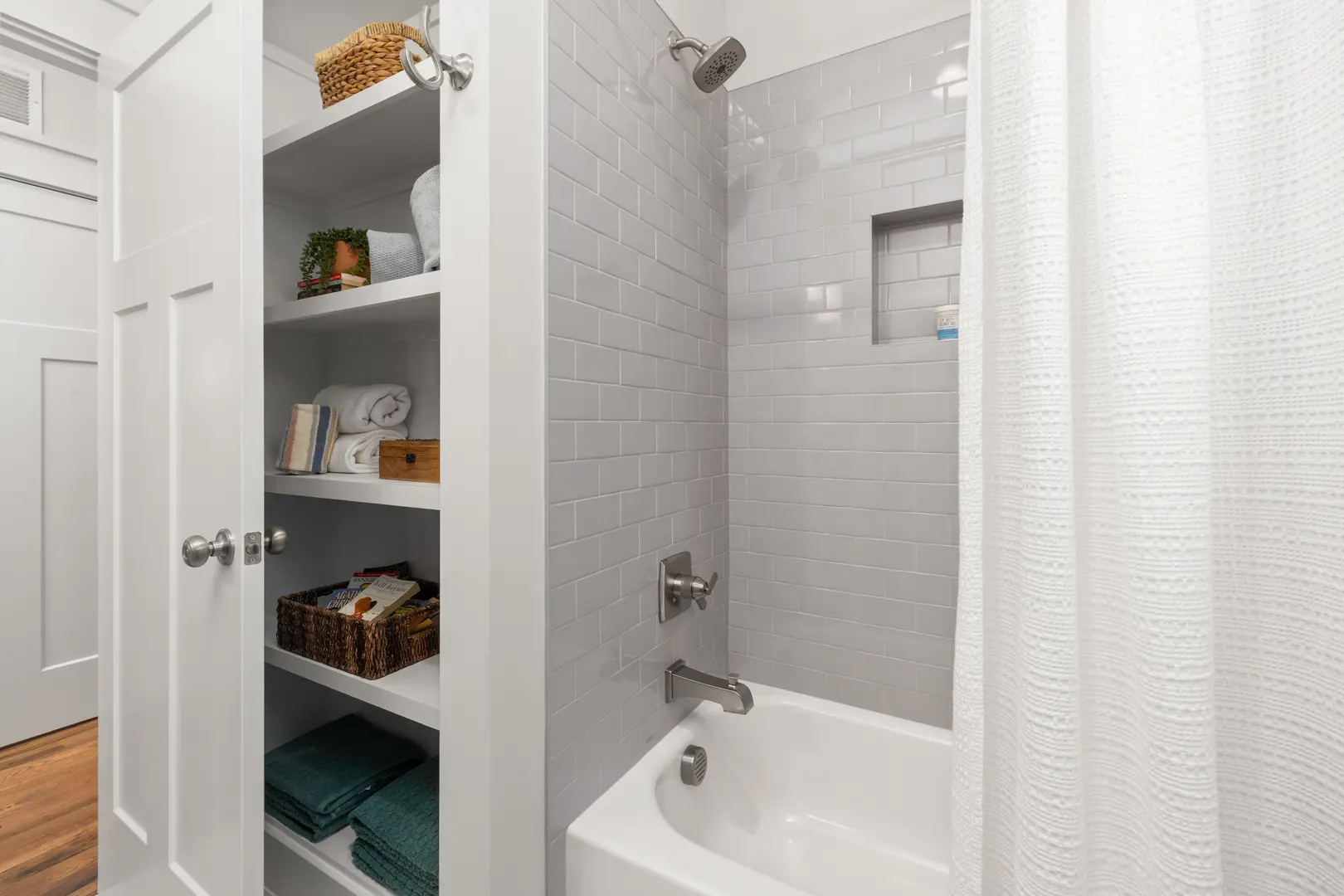
A recessed shower niche provides a permanent place for shampoo, soap, and other bathing products without relying on a hanging basket. Because it sits within the wall rather than projecting into the shower, it keeps the area looking open and intentional.
For subtle storage, continue the surrounding wall tile through the niche. Matching grout lines and finishes can make the compartment visually recede. If you want a controlled decorative detail, use a coordinating tile inside the recess while keeping the shape simple.
The niche should be positioned where products are comfortable to reach but do not dominate the first view into the bathroom. Its size should reflect what you actually keep in the shower; an oversized recess can quickly become another display area for clutter.
Suitable drainage is essential. The base needs to direct water outward rather than allowing it to collect around bottles. Because a niche is built into the shower wall, include it in the layout and waterproofing plan rather than treating it as a last-minute accessory.
Once installed, keep only current shower products in the niche. Store backups elsewhere so the recess remains functional and uncluttered.
Choose Floating Shelves With Concealed Compartments
Floating shelves usually provide open display space, but some designs also contain slim hidden compartments. This creates storage for small items without changing the shelf’s simple appearance.
A concealed compartment can hold spare razors, hair accessories, small toiletries, or other lightweight essentials that tend to clutter the vanity. Meanwhile, the visible surface can display a plant, folded hand towel, or a small number of decorative objects.
Placement is important. Install the shelf where its hidden section can be opened without hitting a mirror, tap, or nearby cabinet. It should also remain easy to access; storage that is too high or obstructed is likely to be forgotten.
To maintain the illusion of an ordinary floating shelf, choose clean lines and a finish that relates to the vanity or other bathroom details. The secret compartment should add quiet utility, not make the shelf appear bulky. Use it for a limited category of items rather than treating it as a replacement for a full cabinet.
Make Your Vanity Work Harder
A vanity may provide substantial storage, but wide drawers often become messy without internal organization. Dividers, small organizers, and lift-out trays help use the available space more efficiently.
Assign each drawer a purpose. One might hold dental supplies, another daily skincare, and another hair or grooming tools. Within those groups, dividers stop small items from mixing together. This makes it easier to see what you own and return products to the same place.
Lift-out trays are particularly useful in deeper drawers. Frequently used items can sit in the upper tray, while refills or occasional products stay below. Lifting the tray provides access to the lower level without requiring a permanent stack of loose containers.
A practical vanity setup might include:
- Narrow sections for brushes, combs, and tubes
- Small containers for clips and other accessories
- A removable tray for everyday products
- A separate area for backups
- Open space for taller or irregularly shaped items
Review the contents occasionally instead of adding more organizers whenever the drawer becomes full. The goal is accessible storage, not a complicated system that takes extra effort to maintain.
Add Low-Level Toe-Kick Drawers
The recessed strip beneath bathroom cabinets is easy to overlook, but it can contain a shallow toe-kick drawer. This solution adds capacity without altering the main profile of the vanity or taking up more floor area.
Because the drawer is low and slim, it works best for flat or infrequently used items. Spare cleaning cloths, folded bags, packaged refills, or other low-profile supplies can fit here while leaving conventional drawers available for daily essentials.
A toe-kick drawer should blend with the cabinet base when closed. Minimal or discreet opening hardware helps it remain unnoticed. It is also helpful to assign it a clear purpose; because it sits near the floor, it is not the best location for items needed several times each day.
This idea is easiest to consider when choosing or updating cabinetry. Even one shallow drawer can turn an otherwise unused area into practical storage while preserving the vanity’s clean appearance.
Hide Storage Behind Wall-Integrated Cabinets
For storage that almost disappears, use a cabinet designed to blend into the wall. Flat doors, matching paint or finishes, and minimal gaps can make the unit read as part of the surrounding surface.
Push-open doors support this seamless look by removing the need for visible knobs or pulls. Behind the doors, adjustable shelving can hold toilet paper, toiletries, cleaning products, and folded supplies. The closed frontage prevents different packages and colors from disrupting the room’s design.
Wall-integrated cabinetry is particularly effective where there is an unused wall section but not enough floor space for freestanding furniture. A shallow cabinet may provide useful capacity without projecting too far into the room.
Plan the internal arrangement as carefully as the exterior. Place everyday items at a convenient level and less frequently used supplies higher or lower. If the cabinet blends completely into the wall, keep its purpose consistent so household members know what is stored there.
Matching the doors to the wall creates the most discreet result, but integration does not have to mean invisibility. Coordinating the cabinet with the vanity can also produce a cohesive, built-in appearance.
Pair a Ladder Rack With Discreet Hooks
A ladder-style rack adds vertical structure and can hold towels without the bulk of a conventional cabinet. When fitted with discreet hooks along the sides or rear, it also offers less visible storage for smaller accessories.
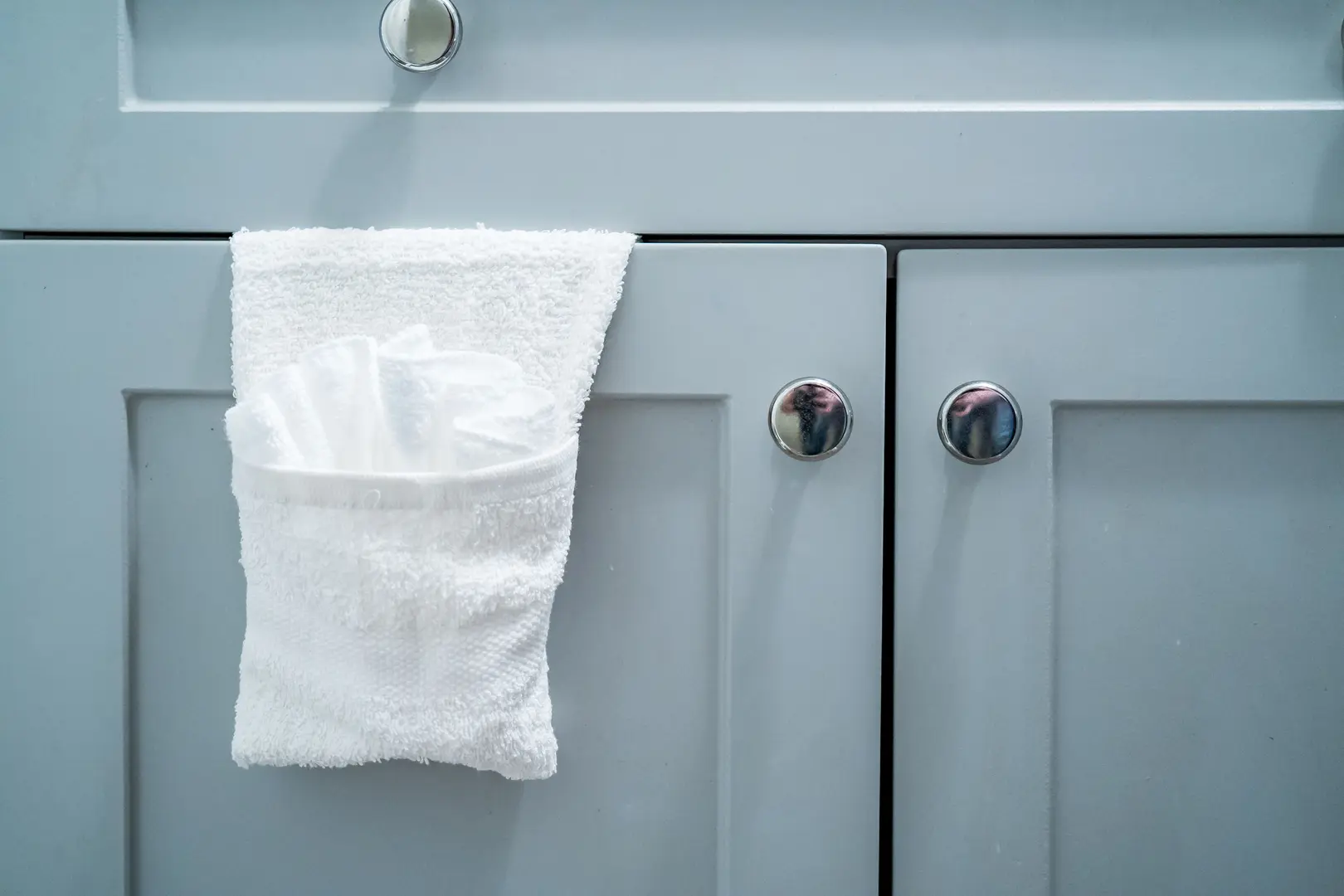
Use the main rails for neatly folded or draped towels. Reserve the hidden hooks for washcloths, brushes, or lightweight accessories that would otherwise collect on the vanity. Positioning the hooks behind the frame keeps these practical items from becoming the main visual focus.
This option works well when you want storage to contribute to the room’s decor rather than disappear completely. Choose a finish that complements nearby fittings, cabinetry, or shelving. Limiting the number of items on the rack will preserve its decorative quality.
A ladder rack is not a substitute for enclosed storage, but it can support the overall system. It gives frequently used textiles a dedicated place while cabinets handle spare products and less attractive necessities.
Turn the Back of the Door Into Quiet Storage
The back of the bathroom door is often unused, even in rooms where every shelf is crowded. A slim over-the-door rack can hold everyday supplies while remaining mostly out of view when the door is open.
Look for a shallow design that does not interfere with the door’s movement or nearby fixtures. Depending on the rack configuration, it can organize spare toiletries, hair accessories, cleaning cloths, or rolled hand towels. Separate sections or baskets help prevent small products from gathering at the bottom.
This solution is especially useful when a lone door disrupts an otherwise clean wall layout. Instead of adding mismatched storage beside it, let the door provide the extra capacity. Essentials remain easy to reach, but they no longer need to occupy open shelves.
Avoid overloading the rack or using it as a home for unrelated items. A simple category-based arrangement keeps it functional and quiet. Combined with mirrored cabinets, organized vanity drawers, or recessed shower storage, the back of the door can complete a layered system that keeps the bathroom calm, practical, and clutter-free.