How Far Inside the Tub Should a Shower Curtain Liner Hang?
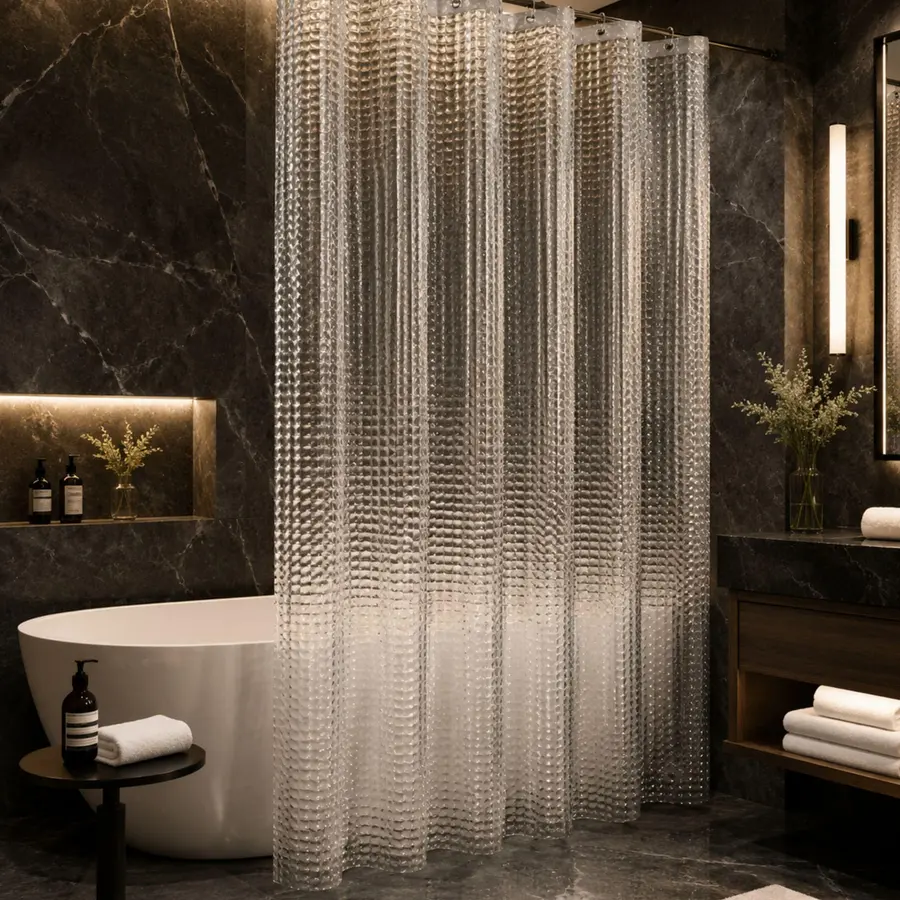
A shower curtain liner should hang inside the tub, with its bottom edge stopping close to the tub floor rather than resting on it. For most standard tubs, aim for the liner to end about 1 to 2 inches above the tub floor. That gives water a clear path back into the tub without leaving the liner in a puddle.
The important part is not a precise horizontal distance from the rim. The liner needs to stay on the wet side of the tub edge from end to end, including the corners. If it hangs outside the tub, or if its bottom rides above the inner tub wall, water can run behind it and onto the bathroom floor.
The practical placement rule
For a tub-and-shower combination, place the liner so that:
- The entire liner hangs on the inside of the tub rim while showering.
- Its lower edge falls nearly to the tub floor, usually stopping 1 to 2 inches above it.
- The liner does not bunch, fold upward, or float out over the tub edge.
- Both outer edges stay inside the tub, especially near the shower head and faucet wall.
A liner that is slightly too short is usually more likely to leak than one that is slightly long. Still, it should not drag across the tub floor. A liner that sits in standing water can collect soap residue, dry slowly, and become harder to clean.
Why the liner belongs inside the bathtub
A decorative fabric shower curtain can hang outside the tub. Its job is primarily privacy and appearance. The waterproof liner is different: it is the water barrier.
During a shower, water that hits the liner should run down its surface and land inside the tub. When the liner is outside the rim, water can follow the liner downward and drip directly onto the floor. Even a small gap at the bottom or sides can create a wet strip along the tub.
For this reason, keep the liner inside and the decorative curtain outside whenever you use a separate liner-and-curtain setup. After showering, you can leave the liner spread across the tub opening to help it dry.
Where the bottom of the liner should end
The right shower curtain liner length depends on where the rod is installed, how much length your hooks add, and the shape of the tub. Rather than choosing a liner by its package length alone, check where it lands after it is hung.
Use this quick guide:
| What you see | What it means | What to change |
|---|---|---|
| Liner ends 1 to 2 inches above the tub floor | Usually the right fit | No change needed |
| Liner rests or puddles on the tub floor | Too long for the current rod and hooks | Raise the rod, use shorter hooks, or choose a shorter liner |
| Liner ends well above the tub floor | Often too short or hung too high | Lower the rod if practical or use a longer liner |
| Liner sits outside the tub rim | Water can run onto the floor | Pull liner inside before showering; check side placement |
| Bottom blows or drifts toward the room | It may not stay inside consistently | Add magnets or weights, or improve the liner fit |
A liner should not need to be tucked under the tub rim or pressed against the tub floor. It simply needs enough length to create a continuous surface that directs water inward.
How to measure shower curtain liner placement
Measure after installing the rod, rings, hooks, or clips you plan to use. Those parts affect the finished drop more than many people expect.
1. Measure from the hanging point, not just the rod
Measure from the point where the liner actually starts hanging. With a grommet-style liner, that may be just below the rod. With traditional hooks or rings, the liner may begin an inch or more below the rod.
2. Measure down to the tub floor
Measure to the floor of the tub, not to the bathroom floor and not only to the top of the tub rim. The liner should reach close to the tub floor while remaining above it.
3. Account for the desired clearance
Subtract about 1 to 2 inches from the rod-to-tub-floor measurement. That gives you a useful target for the liner’s finished hanging length.
4. Check both ends of the tub
Older tubs, uneven floors, loose tension rods, and slightly sloped tub bases can make one side hang lower than the other. Check the liner near both ends, not only in the center.
If one corner drags but the rest of the liner looks right, adjust the rod level before buying a different liner.
Adjusting rod height when the liner is wrong
Changing the rod height is often the simplest way to improve shower curtain liner placement.
Raise the rod when the liner puddles on the tub floor. Even a small adjustment can keep the bottom from sitting in water. This is especially useful when you have a standard liner that is otherwise the right width and condition.
Lower the rod when the liner stops too high above the tub floor. Do this only if the rod can move safely and still clears tile, window trim, shelving, or the shower head. A liner that ends several inches above the tub floor can leave a gap where splashing water escapes.
Before moving a tension rod, make sure its new position will still hold securely. A rod that slips can pull the liner out of place and create a much bigger water-containment problem.
Magnets and weights can help keep the liner inside
Magnets and weighted hems do not correct a liner that is much too short, but they can help a correctly sized liner stay where it belongs.
Magnetic liner corners
Many vinyl, PEVA, and EVA liners have magnets at the lower corners. On a steel or cast-iron tub, these can hold the liner closer to the tub wall and reduce billowing.
Magnets may not work on acrylic, fiberglass, or nonmagnetic tub surfaces. If the magnets do not attach, they still add a little weight, but they will not anchor the liner to the tub.
Weighted hems
A weighted bottom edge helps the liner fall straight and resist movement from air circulation or shower spray. This can be helpful in bathrooms with strong exhaust fans, open windows, or a forceful shower head.
Suction cups and side clips
Some liners use suction cups or clips near the sides. These can be useful when water escapes at the corners, but they work best on smooth, clean surfaces. They may not stay attached to textured tile, grout lines, or uneven tub surrounds.
Curved rods change the liner’s position
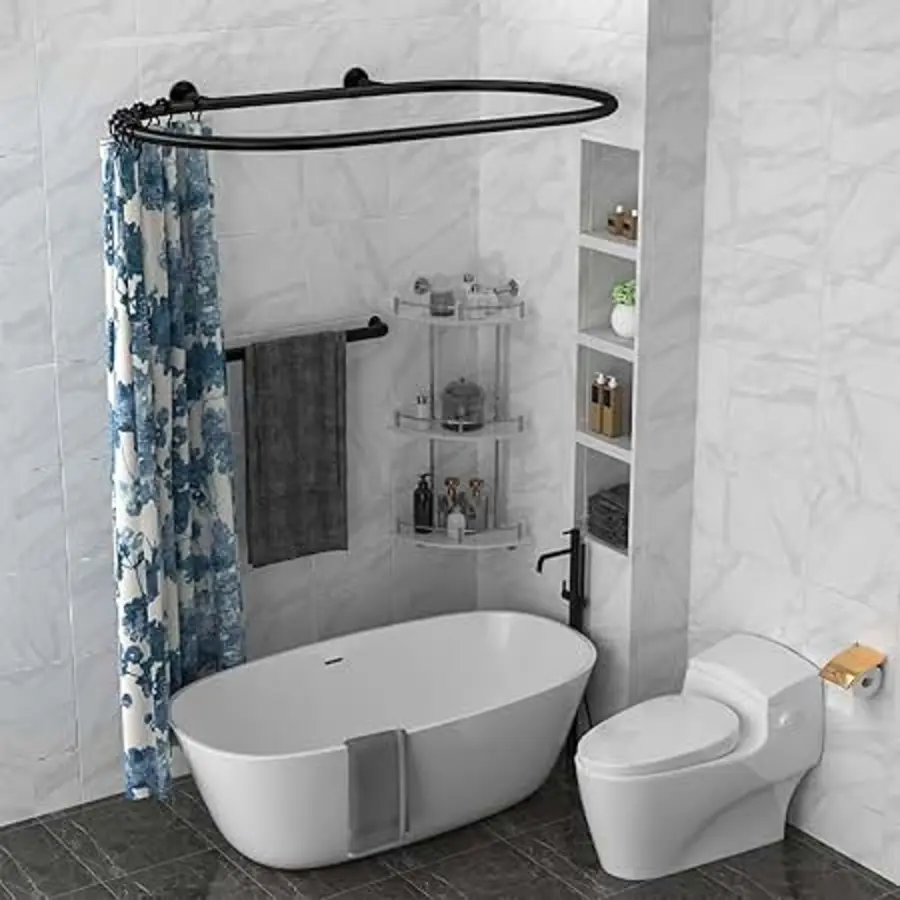
A curved shower rod creates more elbow room by bowing outward into the bathroom. That extra space is useful, but it can make it easier for the liner or outer curtain to drift toward the outside of the tub.
With a curved rod, make a habit of pulling the liner fully inside the tub before turning on the water. Pay special attention to the two end sections near the walls. The middle may look correctly placed while a side edge remains outside the rim.
If your liner seems short after installing a curved rod, check whether the rod was also mounted higher than the old one. The curve itself does not usually change the vertical length, but a new installation often does.
What changes for shower stalls and walk-in showers?
A shower stall follows the same basic principle: the liner should stay inside the wet area and direct water toward the drain. However, the bottom should generally stop just above the shower floor or curb rather than reaching into a bathtub basin.
For a shower with a raised curb, the liner should hang on the shower side of that curb. Avoid letting it trail across the bathroom floor outside the enclosure. In a curbless shower, water containment depends more heavily on the shower’s floor slope, drain placement, and the width of the wet area, so a curtain alone may not contain all spray.
Common placement mistakes that lead to wet floors
Leaving the liner outside the tub
This is the most direct route for water to drip onto the floor. Keep the waterproof liner inside; leave the decorative curtain outside.
Choosing the liner based only on a standard size
A standard liner may fit one bathroom perfectly and be too long or short in another. Rod height, hook style, and tub depth all affect the finished length.
Ignoring hook and ring height
Large decorative rings, roller hooks, and clips can lower the liner noticeably. Measure after everything is installed.
Letting the corners escape the tub
Water often leaks first at the ends. Pull both lower corners inward before showering, even if the center of the liner is already in place.
Treating a billowing liner as only a length problem
If the liner is the right length but keeps blowing inward or outward, try a heavier liner, weighted hem, magnets, or side attachments before changing rod height.
A quick final check before you shower
Stand outside the tub and look at the liner from end to end. It should form a simple barrier: top attached securely to the rod, sides inside the tub walls, and bottom close to the tub floor without touching it.
If water still escapes, look first at the corners and the liner’s overlap with the tub rim. In most cases, better shower curtain liner placement—not a thicker curtain or a major bathroom change—is what stops the leak.
References
- Does the shower curtain go on the inside of the bathtub or outside of …. (n.d.). https://www.reddit.com/r/Apartmentliving/comments/1ed502i/does_the_shower_curtain_go_on_the_inside_of_the
- Shower Curtain Placement: Inside vs. Outside for Your Bathroom. (n.d.). https://www.littlesquiffy.com.au/blogs/news/choosing-between-inside-or-outside-where-to-place-your-shower-curtain
- How High Should a Shower Curtain Be? - Bean Products. (n.d.). https://beanproducts.com/blogs/news/how-high-should-a-shower-curtain-be
- Shower Curtain Liner Length: A Step-by-Step Guide to Getting It Right - America’s Dream HomeWorks. (n.d.). https://www.dreamhomeworks.com/bathroom-remodeling/shower-curtain-liner-length
- What is the ideal height for hanging a shower curtain? - Facebook. (n.d.). https://www.facebook.com/groups/homedesign/posts/1504230593633122
- How to Hang a Shower Curtain So Water Doesn’t Escape. (n.d.). https://www.weekand.com/home-garden/article/hang-shower-curtain-water-doesnt-escape-18064283.php
- When you hang a shower curtain and liner on a rod, how …. (n.d.). https://www.quora.com/When-you-hang-a-shower-curtain-and-liner-on-a-rod-how-high-should-the-bottom-of-the-shower-curtain-be-from-the-floor-I-thought-about-6-inches-not-sure
- How to Hang an Extra Long Shower Curtain - Bless’er House. (n.d.). https://www.blesserhouse.com/how-to-hang-an-extra-long-shower-curtain