How Many Shower Curtain Rings Do I Need?
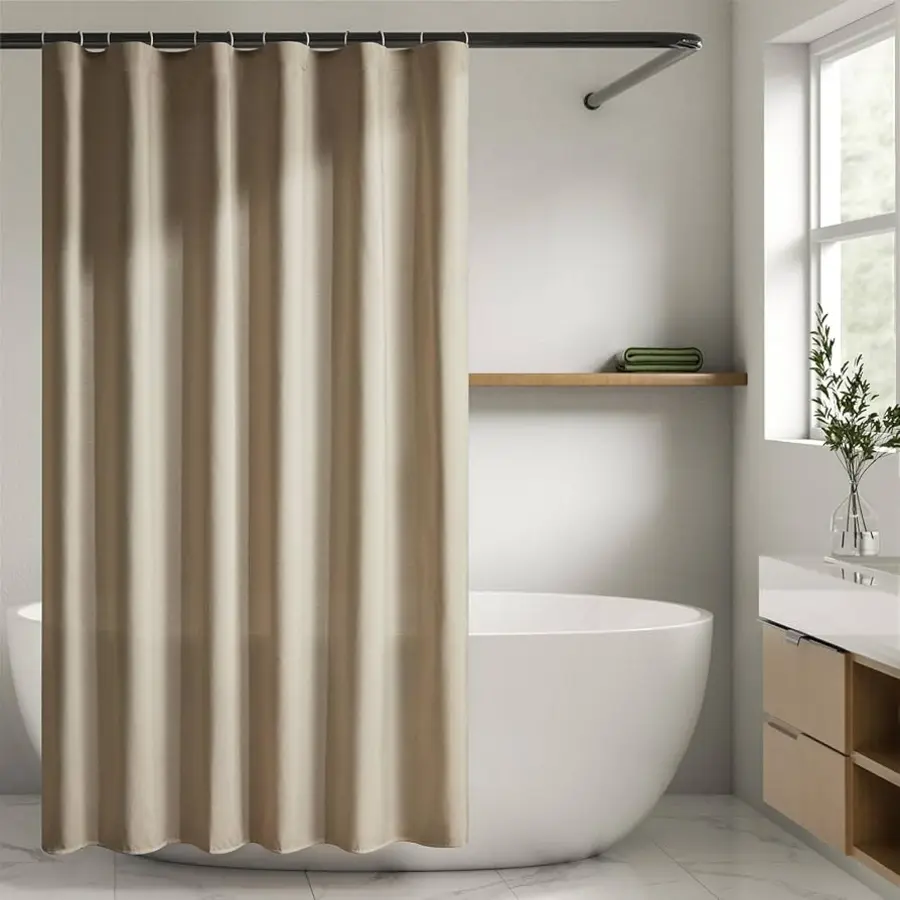
The simplest answer to “how many shower curtain rings do I need?” is: use one ring for every eyelet or hanging hole in the curtain. Count the holes across the top edge, then buy that many rings. A standard shower curtain commonly has 12 eyelets, so a 12-ring pack is often enough, but the curtain itself—not the rod width—determines the correct quantity.
If you hang a liner and a decorative curtain on the same rod, one appropriately sized ring can usually pass through the matching hole in both layers. In that arrangement, you normally need 12 rings for a 12-eyelet curtain, not 24. You need a separate set for each layer only when the layers hang from separate rods, separate tracks, or independent rings that are not designed to hold both pieces together.
The basic rule: count the eyelets
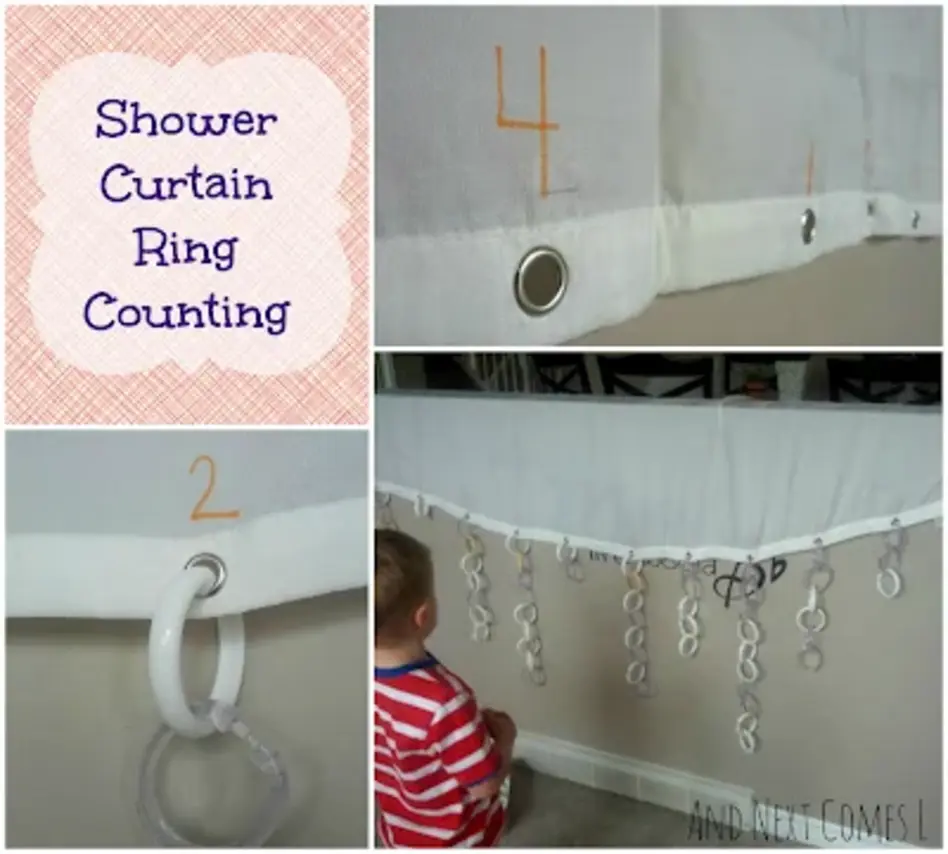
Look along the reinforced top edge of the shower curtain or liner and count every eyelet, grommet, buttonhole, or hanging slot. The total is the number of rings or hooks required for that piece.
For example:
| Curtain or liner eyelets | Rings needed |
|---|---|
| 10 | 10 |
| 12 | 12 |
| 14 | 14 |
| 16 | 16 |
Every eyelet should normally be supported. Leaving holes unused can make the top edge hang unevenly, create larger gaps between attachment points, and put more strain on the remaining rings. It can also make the curtain bunch in a way that is awkward to open and close.
Source: blogger.googleusercontent
Why curtain width is not the main calculation
A wider curtain does not automatically require more rings. Two curtains can have different widths but the same number of eyelets, while two curtains of similar width can have different eyelet counts.
The eyelets are the curtain’s built-in attachment points, so they provide the most reliable count. Curtain width matters when you are choosing a curtain that will cover the opening and have enough fullness, but it is not usually the best way to decide how many rings to buy.
A rough spacing rule can help only when a curtain has no usable eyelets or when you are adding attachment points to a custom panel. For an ordinary ready-made shower curtain, count the existing holes instead of estimating from width.
How many rings do you need for a curtain and liner?
There are two common setups.
One rod with both layers on the same rings
This is the usual arrangement for a shower curtain and a liner sharing one rod. Each ring passes through the liner’s hole and the curtain’s corresponding hole. If both pieces have 12 holes, use 12 rings.
The ring must be large and strong enough to hold both layers without making them difficult to slide. If the two pieces have different numbers of holes, match the rings to the layout rather than forcing the edges to line up perfectly. The liner should still cover the wet area, and the outer curtain should hang evenly.
Separate rods or separate tracks
If the liner and curtain move independently on different rods or tracks, count each layer separately. A 12-hole liner needs 12 attachment points, and a 12-hole curtain on its own track also needs 12. The total number of rings depends on the hardware used for each track.
Some systems use rings for one layer and integrated gliders, hooks, or carriers for the other. In that case, count the included attachment points rather than assuming every layer needs ordinary shower rings.
Does a curved shower rod need extra rings?
Usually, no. A curved rod changes the path of the curtain, not the number of eyelets in the curtain. Use one ring for each eyelet unless the curtain manufacturer provides a different hanging system.
A curved rod may make the curtain travel around a longer or more pronounced curve, so smooth-sliding rings can be useful. Roller rings or rings with low-friction surfaces may move more easily than basic plastic rings, especially if the curtain is wide or the rod has a noticeable bend. That is a ring-type decision, not a reason to leave eyelets unused or add extra rings between them.
Split curtains and two-panel setups
For two separate curtain panels, count the eyelets on each panel and add them together if both panels use the same rod.
For example, if one panel has seven eyelets and the other has seven, you need 14 attachment points in total. If both panels are also paired with a liner on the same rod, choose rings that can hold the corresponding curtain and liner layers together.
Some split curtains are designed to overlap in the middle. The overlap is handled by the panel width and placement; it does not usually require an extra ring in the center unless the panel has a center eyelet that is meant to be used.
What if the rod is unusually wide?
Do not add rings simply because the rod spans a wide opening. First count the eyelets in the curtain you intend to use. A wide curtain may still have 12 holes, while a custom or extra-wide curtain may have more.
If the curtain looks too loosely supported across a very wide opening, check whether it is the right width for the space and whether the manufacturer specifies a particular hanging layout. Adding rings where there are no reinforced eyelets can pull on the fabric and may cause tearing unless the curtain is designed for extra attachment points.
Replacing lost or broken rings
When replacing only a few rings, match the existing count and style as closely as practical. Check these details before buying:
- Opening style: Snap, open-loop, and closed rings attach differently.
- Ring size: The ring must fit over the rod and pass through the curtain eyelet.
- Load: A ring holding both a liner and a fabric curtain needs enough strength for both layers.
- Sliding surface: Rollers or smoother materials may help if the curtain is difficult to open.
- Corrosion resistance: Bathroom humidity makes durable, moisture-resistant hardware a sensible choice.
If one ring breaks but the curtain has 12 eyelets, replacing just that ring may be enough. If several rings are worn, replacing the full set can keep the curtain hanging at a consistent height and sliding with similar resistance.
What to do when the eyelet count and rings do not match
If you have more rings than eyelets, keep the extras as replacements rather than placing two rings through one hole. Doubling rings at a single eyelet usually does not improve support and can make the curtain harder to slide.
If you have fewer rings than eyelets, do not skip holes unless the curtain’s instructions specifically allow it. Buy enough rings to support every eyelet. If a liner and curtain have different hole counts, use the attachment arrangement recommended for that product, or hang them on separate hardware when independent movement is important.
Quick checklist
- Count the eyelets or hanging holes in the curtain.
- Buy one ring or hook for each eyelet.
- Count the liner separately if it uses its own rod or track.
- Use rings that can hold both layers when curtain and liner share one rod.
- Choose ring type for sliding and attachment needs—not to compensate for the wrong quantity.
For most standard installations, the answer is therefore straightforward: count the curtain’s eyelets and buy the same number of rings. In many bathrooms that means 12, but the curtain’s actual hanging points are the dependable guide.
References
- How Many Shower Curtain Hooks Do I Need. (n.d.). https://www.facebook.com/fb-answers/how-many-shower-curtain-hooks-do-i-need
- 5 Common Types of Shower Curtain Hooks. (n.d.). https://www.doityourself.com/stry/5-common-types-of-shower-curtain-hooks
- How many curtain rings do you really need 🤔 It’s one …. (n.d.). https://www.instagram.com/reel/DJRolUFte8Y?hl=en
- How to measure a shower curtain by Byretech. (n.d.). https://www.youtube.com/watch?v=6qW3G6E99ao&xstg=CAMSBhUDzO3xHw%3D%3D
- HOW TO MEASURE FOR DRAPERY & WINDOW. (n.d.). https://images.restorationhardware.com/content/catalog/product/pdfs/RH_Drapery_Window_Hardware.pdf
- Best Shower Curtain Rings. (n.d.). https://us.amazon.com/Best-Sellers-Shower-Curtain-Rings/zgbs/home-garden/13749861
- How To Install a Shower Curtain. (n.d.). https://www.youtube.com/watch?v=akyWsvxtzVY
- Shower Curtain FAQs. (n.d.). https://pepper-home.com/blogs/the-thread/shower-curtain-faqs