How to Clean a Bathroom Vanity Countertop Without Damage
The safest way to clean a bathroom vanity countertop is to start with warm water and a soft cloth, then add a small amount of mild dish soap if residue remains. Wipe away toothpaste, soap, cosmetics, and standing water rather than letting them dry on the surface. The important exception is the countertop material: laminate, ceramic, solid surface, quartz, marble, and wood do not all tolerate the same cleaners.
Before using any product, check the care instructions from the vanity or countertop manufacturer when available. If you do not know what the surface is, use the gentlest method first and test a hidden area.
How to clean a bathroom vanity countertop
Use this basic method for routine cleaning:
- Clear the counter. Move toiletries, cups, cosmetics, and appliances so you can reach the full surface and the area around the faucet.
- Remove loose debris. Wipe away hair, dust, and dry particles with a soft cloth. This helps prevent them from being dragged across the finish.
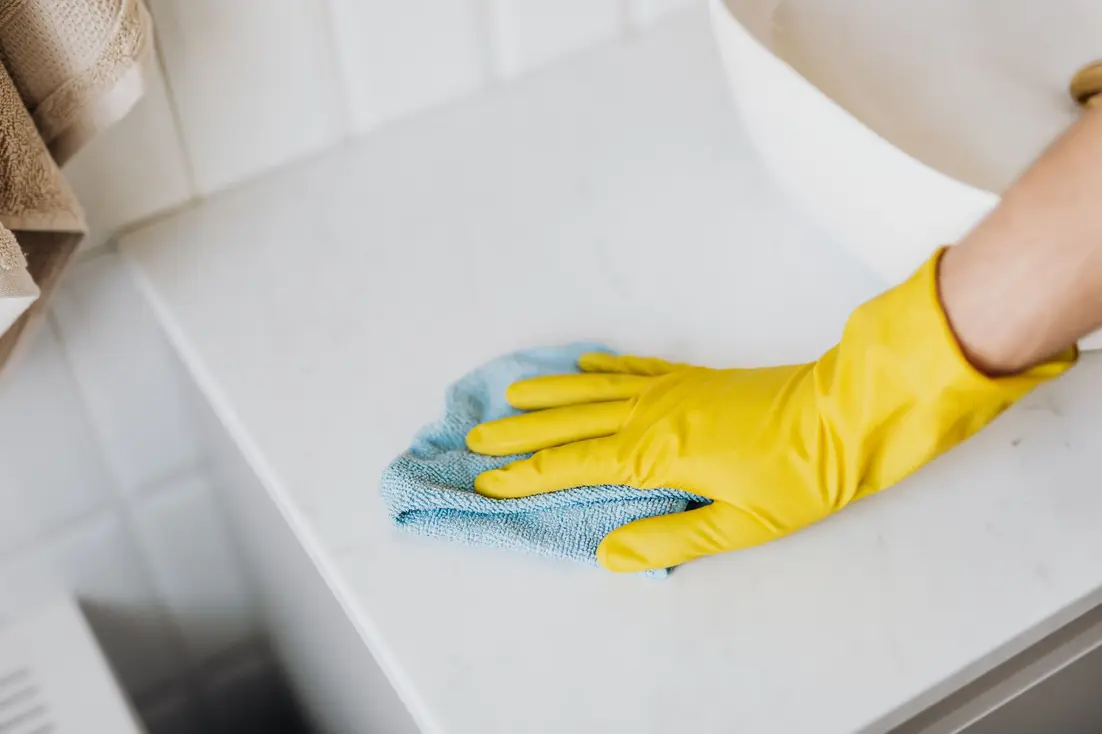
- Use warm water first. Dampen a microfiber cloth or soft sponge and wipe the countertop, backsplash area, and edges.
- Add mild dish soap for residue. Put a small amount of mild dish soap on the damp cloth rather than applying a large amount directly to the counter. Work over toothpaste, soap film, lotion, or makeup marks without scrubbing aggressively.
- Wipe away cleaner. Use a second cloth dampened with clean water so soap does not dry into a film.
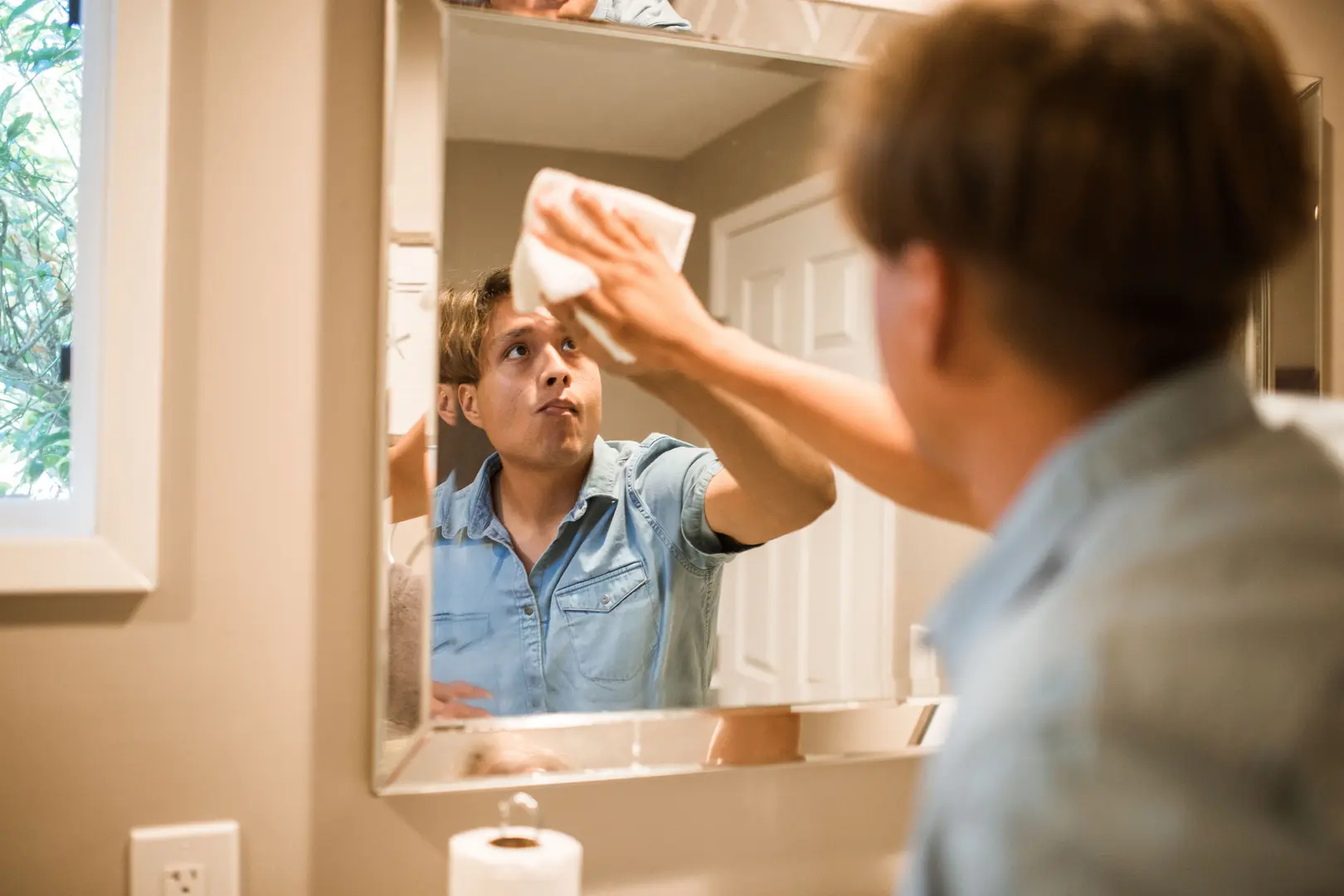
- Dry the surface. Finish with a clean, dry microfiber cloth, paying attention to faucet bases, seams, edges, and areas around the sink.
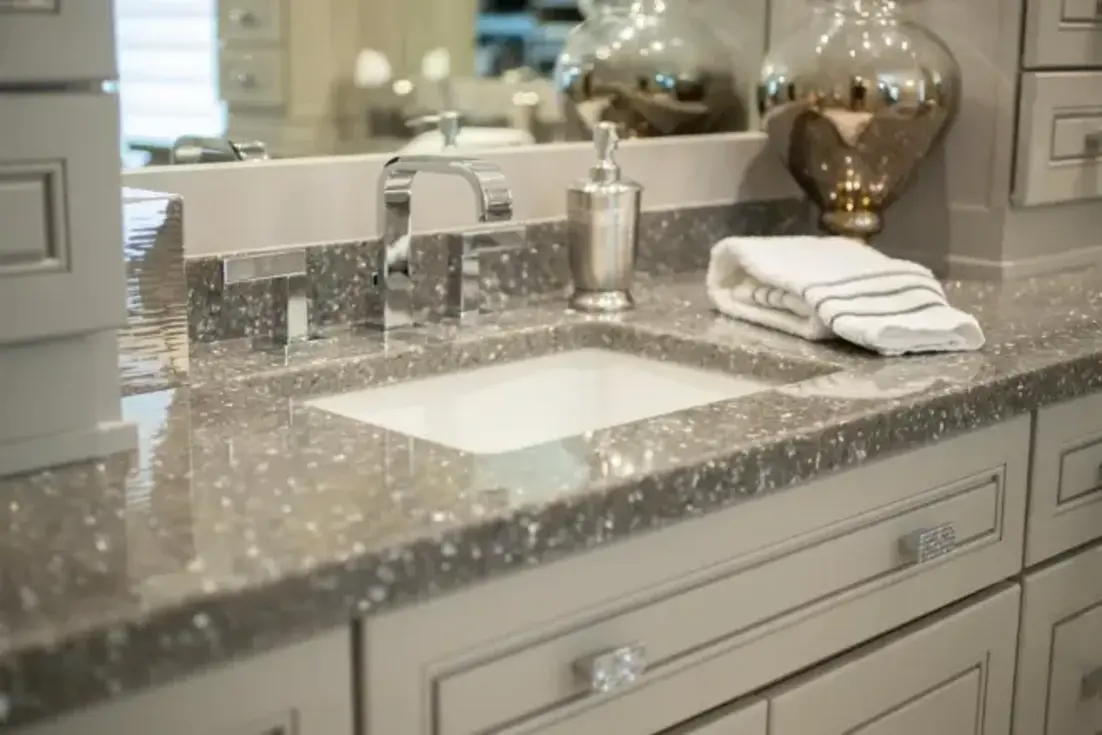
Source: ranneyblair
Drying is more than a finishing touch. Water left on a vanity can leave visible marks and can keep residue around the faucet and sink edge damp. Regular wiping also makes the next cleaning easier.
Match the method to the countertop material
Laminate
For laminate bathroom countertops, use warm water, a soft cloth, and a small amount of mild dish soap when needed. Wipe gently and dry the surface, especially near seams and exposed edges.
Avoid abrasive powders, rough scouring pads, and aggressive scrubbing. Do not leave water or cleaner pooled around seams, joints, or damaged areas. If the laminate is lifting, swollen, cracked, or separating, cleaning will not correct the underlying damage.
Ceramic or porcelain
Glazed ceramic and porcelain vanity tops are generally cleaned with warm water and mild dish soap on a soft cloth or sponge. Pay attention to the transition between the basin and counter, where toothpaste and soap can collect.
A nonabrasive bathroom cleaner may be suitable, but read its label and confirm that it is intended for the particular finish. Avoid abrasive tools that can dull or scratch the glaze, and do not assume that a strong bathroom product is automatically appropriate for the counter.
Solid surface
Solid-surface materials should be cleaned with a soft cloth or nonabrasive sponge and a mild, surface-safe cleaner. Warm water and mild dish soap are a practical starting point for daily residue.
Avoid abrasive cleaners unless the manufacturer specifically permits them. Matte and textured solid-surface finishes can respond differently from glossy ones, so test an unfamiliar product in an inconspicuous spot first. For deeper marks or scratches, follow the manufacturer’s repair and refinishing instructions instead of trying increasingly harsh cleaners.
Quartz or engineered stone
Clean quartz with warm water, a soft cloth or sponge, and a gentle dish soap. Remove toothpaste, lotion, hair products, and cosmetics promptly rather than allowing them to dry into a film.
Avoid abrasive cleaners, abrasive pads, and unapproved specialty products. Quartz is engineered, but that does not mean every household cleaner is suitable for it. Check the countertop care instructions before using disinfectants, solvents, bleach products, or highly alkaline or acidic cleaners.
Marble and other natural stone
Marble needs especially careful product selection. Use warm water and mild dish soap or a cleaner specifically recommended for the stone. Wipe spills promptly and dry the surface after cleaning.
Do not use vinegar, lemon-based cleaners, or other acidic products on marble unless the stone-care instructions specifically approve them. Acid can damage the surface finish, and a dull or lightened area may be etching rather than ordinary dirt. Abrasive powders and rough pads can also change the appearance of polished stone.
Sealed stone still needs gentle cleaning. A sealer may provide some protection, but it does not make the countertop immune to stains or etching. If the surface has persistent discoloration, dull patches, or a change in texture, contact the stone or vanity manufacturer for the appropriate remedy.
Wood or wood-look surfaces
For a sealed wood vanity top, use a lightly damp cloth and a small amount of mild soap when necessary. Wipe in the direction of the grain if the grain is visible, then dry the surface immediately.
Do not soak wood, leave wet cloths on it, or allow water to sit around the faucet and sink. Avoid abrasive products and cleaners not approved for the finish. If the surface is unfinished, worn, or showing swelling and darkened areas, cleaning alone may not be enough; use the finish manufacturer’s care instructions.
How to remove common vanity countertop stains
Toothpaste and soap residue
Start with a warm, damp microfiber cloth. If the residue has dried, hold the damp cloth over it briefly to soften it, then wipe gently. Add a small amount of mild dish soap if needed, rinse the area with a clean damp cloth, and dry it.
Avoid scraping with a razor, knife, or other sharp object. A hard edge can scratch laminate, solid surface, quartz, or a coated finish.
Water marks and mineral film
First remove any surface grime with warm water and mild dish soap. Dry the counter completely to see what remains. Some marks are simply residue or dried droplets; others may be mineral buildup or, on stone, a change to the finish.
Do not reach immediately for vinegar or another acidic cleaner. Acid may be unsuitable for marble and some other surfaces, and it will not repair etching. If the mark remains after gentle cleaning, identify the material and consult its care instructions before trying a stronger product.
Makeup, lotion, and hair products
Blot or wipe up fresh spills promptly with a soft damp cloth. For a dried cosmetic or lotion mark, use mild dish soap and warm water, followed by a clean-water wipe and thorough drying.
Avoid spreading an oily product over a larger area by using a saturated cloth. Rinse or change the cloth as you work, particularly on light-colored counters where a thin film can be easy to miss.
Dark or persistent stains
Do not assume a persistent mark is dirt. It may be discoloration, a scratch, etching, a failed finish, or moisture damage. Stop escalating the cleaning method if gentle soap and water do not help.
Check the manufacturer’s instructions for the specific material. If you cannot identify the surface or the mark is accompanied by cracking, swelling, lifting, or a change in texture, professional or manufacturer guidance is safer than repeated scrubbing.
Cleaners and tools to avoid
Unless the care instructions specifically allow them, avoid:
- Abrasive powders, scouring creams, and rough scrub pads
- Strong acidic cleaners, especially on marble and other acid-sensitive stone
- Solvents or specialty products that are not labeled for the surface
- Unapproved bleach or disinfecting products
- Steel wool, razor blades, and other sharp scraping tools
- Leaving cleaner, water, or wet items pooled on the counter
Never mix cleaning products. If you plan to switch products, wipe the surface with clean water first and follow the label directions for the product you use.
A simple maintenance routine
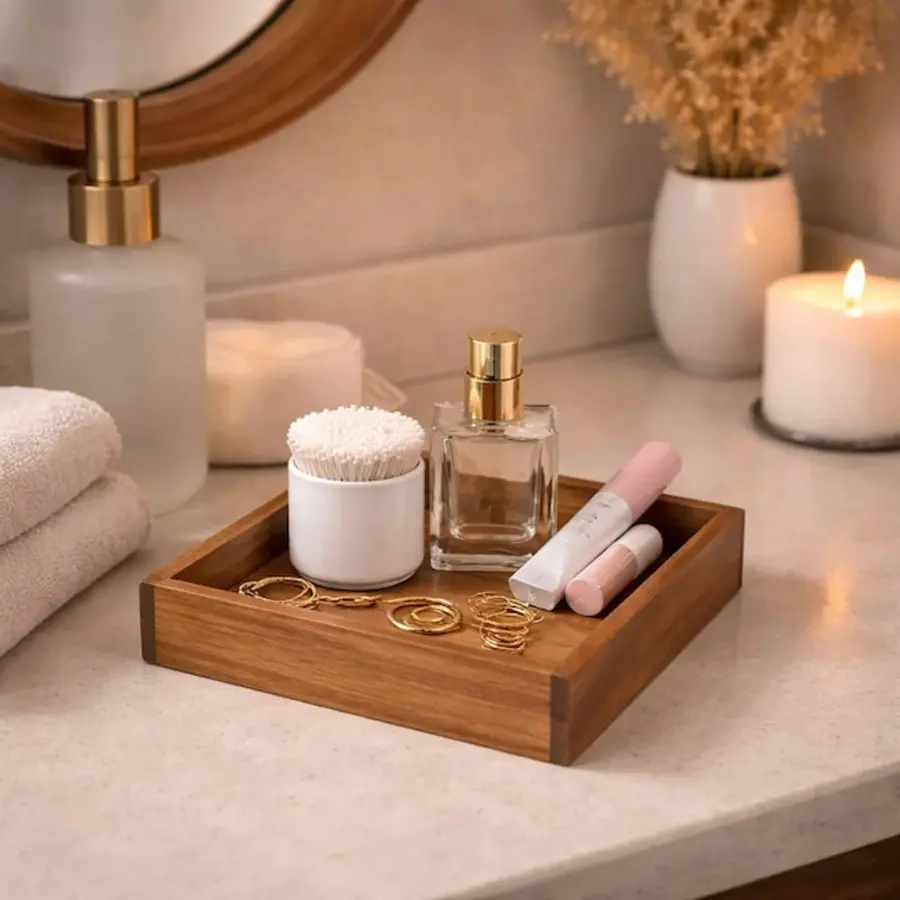
A quick daily or near-daily wipe helps prevent the buildup that makes vanity cleaning difficult. Remove toothpaste and cosmetics when they spill, wipe water from around the faucet, and dry the sink edge and backsplash area. Keep bottles on a washable tray if they regularly leave rings or drips, but make sure the tray itself does not trap water against the countertop.
For a more thorough cleaning, clear the counter and clean the surface from the back edge toward the front. Clean around faucet bases, backsplash joints, sink rims, and countertop seams, then wipe once with clean water and dry everything.
The best bathroom countertop cleaning method is the least aggressive one that removes the residue. Start with warm water and a soft cloth, use mild soap only when needed, and let the material’s care instructions determine what comes next.
References
- Vanity Countertop Care And Maintenance. (n.d.). https://whalenfurniture.com/vanity-countertop-care-and-maintenance
- How to Clean and Maintain Quartz and Marble Vanity Tops. (n.d.). https://water-creation.com/blogs/all-blogs/how-to-clean-and-maintain-quartz-and-marble-vanity-tops
- How to Clean and Maintain Bathroom Vanity Countertops. (n.d.). https://teccorpgroup.com/how-to-clean-and-maintain-bathroom-vanity-countertops
- What are easy to clean countertops for bathroom furniture?. (n.d.). https://www.facebook.com/groups/207719122116508/posts/377632565125162
- How to Clean Bathroom Countertops: Each Type Explained. (n.d.). https://azunafresh.com/blogs/articles/how-to-clean-bathroom-countertops-each-type-explained
- How to Clean Countertops - Consumer Reports. (n.d.). https://www.consumerreports.org/countertops/how-to-clean-and-maintain-countertops
- How to Clean Your Stone Countertops. (n.d.). https://www.thestonecollection.com/blog/how-to-clean-your-stone-countertops
- How to Clean Countertops. (n.d.). https://www.homedepot.com/c/ah/how-to-clean-countertops/9ba683603be9fa5395fab9048272ecf