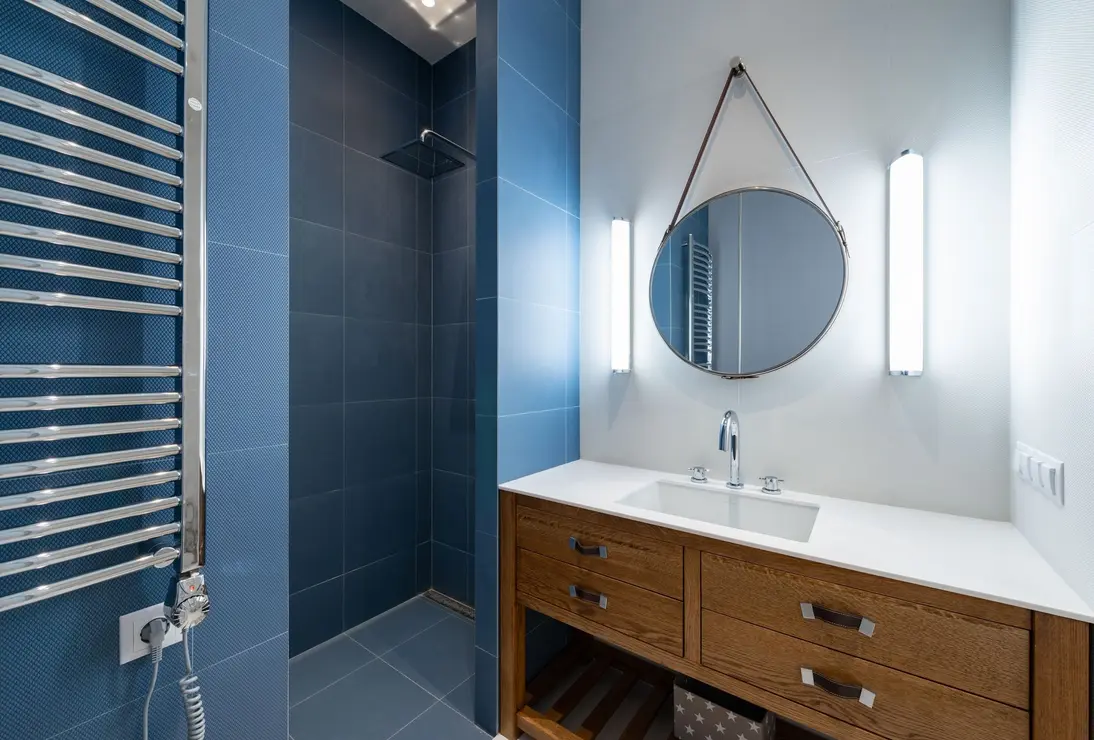
How to Clean a Heated Towel Rail Safely

Switch off a heated towel rail and let it cool completely before cleaning. For an electric model, unplug it if possible or switch off its dedicated circuit at the breaker. For a rail connected to central heating, turn off the appropriate valves if the manufacturer’s instructions allow it. Wipe the cool surface with a soft, damp, lint-free cloth and mild, neutral soapy water, then dry it thoroughly with a separate cloth.
The main rule is to keep moisture away from electrical connections and avoid abrasive or harsh cleaning products. Dust between the bars first, deal with ordinary residue gently, and treat rust as a separate finish problem rather than scrubbing it like everyday dirt.
Before you clean the rail
Check the manufacturer’s cleaning and isolation instructions if you have them. Heated towel rails differ: some are electric, some connect to the home’s heating system, and dual-fuel models use both. The location of the controls and connections also varies.
Use these precautions:
- Turn the rail off and wait until it is cool to the touch.
- For a plug-in electric rail, unplug it before cleaning.
- For a hardwired electric rail, switch off the relevant circuit at the breaker if you know which circuit controls it. Do not remove covers or open electrical connections.
- For a central-heating rail, follow the product instructions for turning off or isolating the valves, then allow the rail to cool.
- For a dual-fuel rail, isolate both the electrical supply and the heating side according to the manufacturer’s instructions.
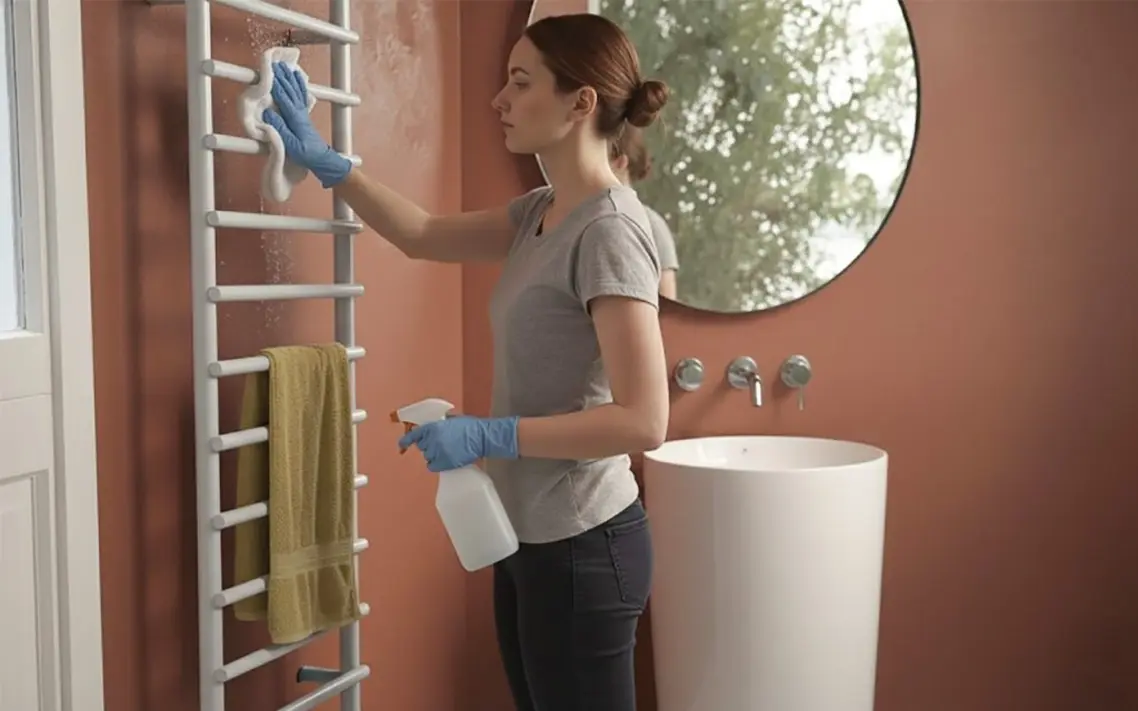
- Never spray cleaner directly onto the rail, controls, plug, cable, valves, or wall connections.
If you are unsure how a hardwired or dual-fuel rail is isolated, stop and check the installation manual or ask a qualified electrician or heating professional. Cleaning the visible surface is simple; working inside the electrical or heating connections is not part of routine maintenance.
Source: deltacalor
What you need
Gather a few simple items before starting:
- A soft microfiber or lint-free cloth
- A second dry cloth
- A soft-bristled brush, such as a clean detailing brush
- Warm water
- A small amount of mild, neutral soap or detergent
- A bowl or container for the cleaning solution
Avoid abrasive sponges, scouring pads, gritty powders, metal brushes, and strong bathroom chemicals. Chlorine-based cleaners, grout cleaners, and other corrosive products can discolor or weaken some finishes. If the rail’s care instructions specify a particular cleaner, follow those instructions instead.
How to clean a heated towel rail
1. Remove dust from the surface and gaps
Start with the rail completely cool and isolated from its heat source. Use a dry soft cloth or soft brush to lift loose dust from the front, underside, ends, and spaces between the bars.
A narrow soft brush is useful around tight gaps, mounting points, and the lower sections where dust can collect. Work from the top down so loosened dust does not settle on areas you have already cleaned.
Do not push dust or debris into a control housing, heating element, plug, or wall connection. The visible heating bars are the part intended for ordinary surface cleaning; internal components should not be opened or scrubbed.
2. Wipe away soap residue and light grime
Mix warm water with a small amount of mild, neutral soap. Dip the cloth into the solution and wring it out well. It should be damp, not dripping.
Wipe each bar, including the underside and ends. Pay attention to areas where wet towels touch the rail or where water and soap may run down from nearby fixtures. For narrow gaps, use the soft brush lightly rather than forcing a thick cloth between the bars.
If residue is stubborn, hold the damp cloth against the area briefly and wipe again with light pressure. Do not use a knife, scraper, abrasive pad, or rough sponge to lift the deposit. These can scratch chrome and other decorative surfaces.
3. Remove soap traces
Use a second cloth dampened with clean water to remove remaining soap. This is particularly useful on chrome and darker painted finishes, where dried soap can leave streaks or a dull film.
Keep the cloth controlled around switches, thermostatic controls, plugs, cables, valves, and wall plates. These areas should not be soaked. If water reaches an electrical connection, stop and follow the manufacturer’s instructions before restoring power.
4. Dry the rail completely
Buff the entire rail with a clean, dry, lint-free cloth. Dry between the bars, around the ends, and near the lower connections where water can remain unnoticed.
Thorough drying helps prevent water marks and reduces the chance that moisture will remain against the finish. Do not switch an electric rail back on while its plug, controls, or connections are wet. Restore power only when the rail and the areas you cleaned are dry and it is safe to do so according to the product instructions.
Cleaning different towel rail finishes
Chrome
Chrome can show fingerprints, soap film, and water spots easily. Use mild soapy water and a soft cloth, then buff dry. Avoid polishing compounds, abrasive cleaners, rough sponges, and acidic products unless the manufacturer specifically approves them for that finish.
Painted or powder-coated finishes
Use the same gentle damp-cloth method, but take extra care not to chip or scratch the coating. Do not use abrasive powders or scrub hard at a mark. If the surface is damaged, cleaning will not repair the coating, and aggressive rubbing may make the exposed area larger.
Stainless steel or other specialist finishes
Follow the manufacturer’s care instructions because brushed, polished, and coated surfaces can respond differently to cleaners. Wipe with the grain where applicable and avoid products that leave a gritty residue.
How to handle rust
Rust is not ordinary dirt. A small orange or brown mark may indicate corrosion, a damaged finish, or repeated exposure to moisture. First clean and dry the rail using the gentle method above so you can see whether the mark remains.
Do not immediately apply vinegar, lemon juice, rust remover, metal polish, or another acidic product. These may help on some uncoated metal surfaces but can damage chrome, paint, plating, or protective coatings. Check the manufacturer’s instructions and test any approved product on a discreet area first.
If rust is spreading, the finish is blistering or flaking, or corrosion appears around a valve, cable, plug, or mounting point, stop cleaning that area and seek advice from the manufacturer or a qualified professional. Do not sand or scrape corrosion from an energized or connected component.
Common mistakes to avoid
- Cleaning while the rail is hot
- Spraying liquid directly onto the rail
- Leaving water inside gaps or around connections
- Using bleach, chlorine cleaners, grout cleaner, or strong corrosive products
- Scrubbing chrome or painted surfaces with a rough pad
- Treating rust with an unapproved acidic cleaner
- Opening the heating element or electrical housing
- Restoring power before the rail and connections are dry
How often should you clean it?
Wipe away visible splashes and dust as part of normal bathroom cleaning, especially where damp towels rest against the bars. A more careful clean is useful when you notice soap film, water marks, or dust between the rails.
Regular gentle cleaning is safer for the finish than occasional aggressive scrubbing. Keeping towels from remaining wet on the rail for long periods can also reduce recurring moisture and residue, but do not overload the rail or use it in a way that conflicts with the manufacturer’s instructions.
A safe routine is simple: isolate the rail, let it cool, dust between the bars, wipe with mild damp cloth, rinse away soap traces with a clean damp cloth, and dry every surface thoroughly. If the problem is rust, damaged coating, or a connection issue rather than surface grime, treat it as maintenance or repair—not as a tougher cleaning job.
References
- How to Care for Heated Towel Rails | The Bathroom Showroom. (n.d.). https://bathrooms.com/blogs/articles/care-for-heated-towel-rails
- Heated Towel Rail Energy Savings: Smart Devices, Cleaning & Usage Tips. (n.d.). https://www.youtube.com/watch?v=RjoW8yPp8Eg
- How to clean a chrome heated towel rail after building works. (n.d.). https://www.facebook.com/groups/847800375645747/posts/1485386408553804
- HEATED TOWEL RAIL PRODUCT CLEANING & …. (n.d.). https://www.maybrays.co.uk/wp-content/uploads/2019/09/PRODUCT-CLEANING-AFTERCARE.pdf
- Foil and ketchup are the secret cleaners that remove rust from towel rails and take just 30 minutes. (n.d.). https://www.goodhousekeeping.com/uk/house-and-home/household-advice/a69273735/rusty-towel-rails
- How to remove rust from a chrome towel rail/radiator | Kartell UK. (n.d.). https://kartelluk.com/howtoremoverust
- How to use a heated towel rack: 7 steps for basic operation and care - Bathroom Butler United States. (n.d.). https://www.bathroombutler.com/us/blog/heated-towel-rack-use
- Cleaning a heated towel rail. (n.d.). https://www.mumsnet.com/talk/housekeeping/2969065-Cleaning-a-heated-towel-rail