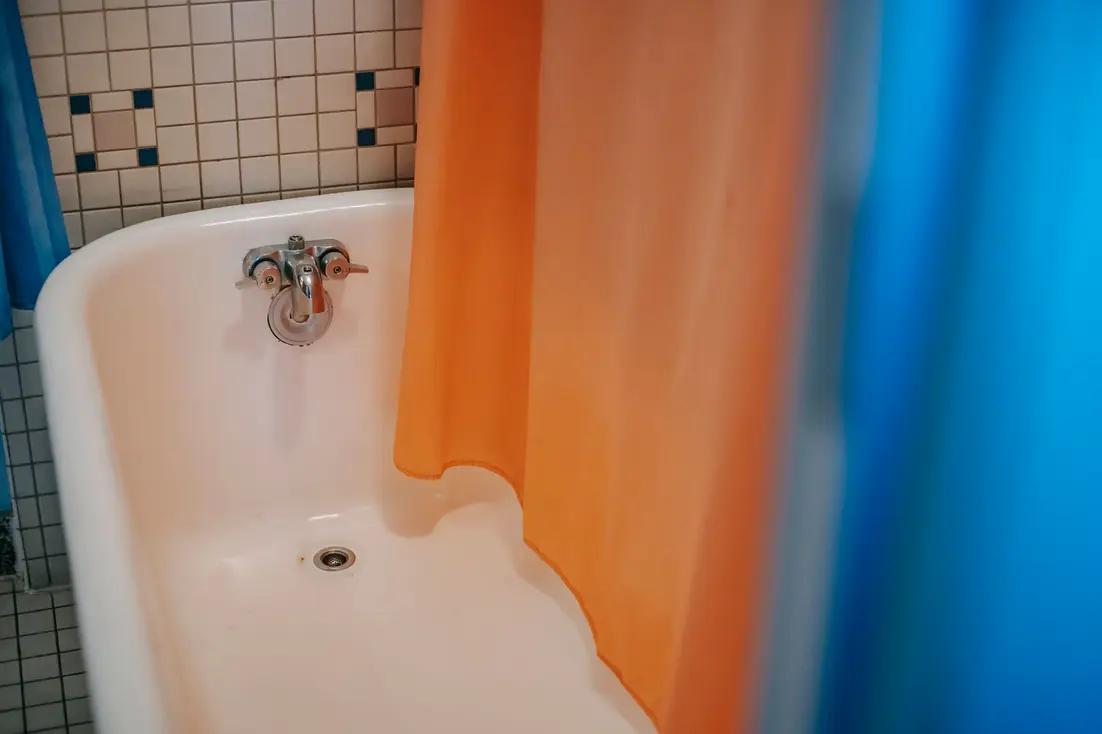
How to Clean a Shower Curtain Track

A shower curtain track is easiest to clean when you separate the job into three parts: the track itself, the gliders or rollers inside it, and the curtain hooks. Remove the curtain first, then wipe loose dust and soap residue from the channel before treating mildew or mineral buildup. Finish by rinsing or wiping away cleaner and drying the track completely.
You usually do not need to remove the entire track. Take it down only if the channel is inaccessible, the gliders are captive and cannot be cleaned in place, or buildup has made the system difficult to operate.
What you need
- A vacuum with a narrow attachment or a soft brush
- Microfiber cloths
- Warm water
- Mild dish soap or a gentle household cleaner
- An old toothbrush or small soft cleaning brush
- A bucket or bowl
- White vinegar diluted with water for compatible surfaces and mineral deposits
- Gloves, especially when cleaning visible mildew
- A dry towel
Check the track manufacturer’s care instructions if they are available. Identify whether the track is painted, anodized or bare aluminum, stainless steel, plastic, or another finish. Avoid abrasive powders, steel wool, and rough scouring pads, which can scratch the surface or damage its finish.
Before cleaning, remove the curtain and inspect the track
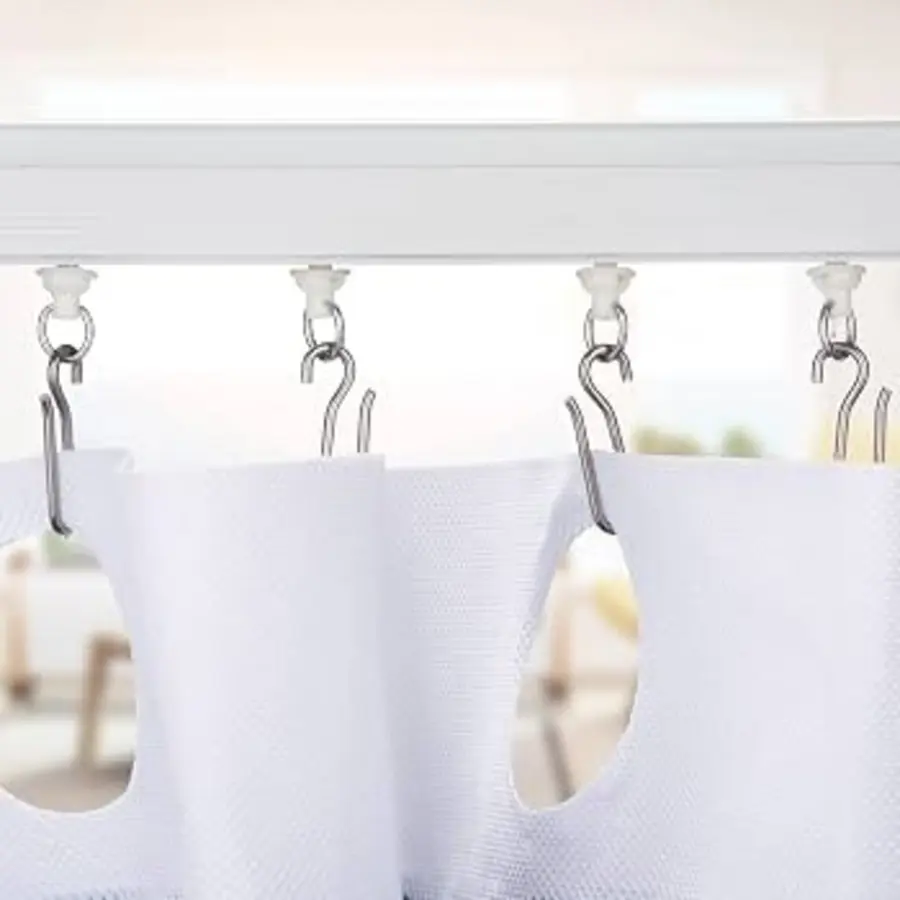
Open the curtain fully so you can see where the gliders travel. Remove the curtain and hooks or rollers according to the track design. Many hooks simply lift out at an opening, while some rollers are held in by end stops. If a glider does not come out easily, do not force it. Clean it in place instead.
For a ceiling-mounted track, work from a stable position that lets you reach the channel without leaning heavily against the curtain or track. A small step stool may help, but keep the cleaning area dry and avoid stretching to reach a distant section. Wall-mounted and curved tracks are generally easier to clean from one end, but curved sections often collect extra dust and soap residue because the gliders move more slowly there.
Look for:
- Loose dust, hair, and lint in the channel
- Soap residue around the gliders
- Black or greenish spotting that may be mildew
- White, chalky mineral deposits
- Rust-colored marks around metal parts
- Gliders that are cracked, flattened, or difficult to move
Source: m.media-amazon
How to clean a shower curtain track
1. Remove dry debris first
Use a vacuum crevice tool or a soft dry brush to loosen dust, hair, and lint from the channel. This step matters because wet debris can turn into a sticky paste that is harder to remove.
For a ceiling-mounted track, work along the channel in short sections. Hold a cloth beneath the area if loose debris is likely to fall onto the tub or floor. On a curved track, follow the curve rather than pulling the brush sharply across it.
2. Wash the track with mild soapy water
Mix warm water with a small amount of mild dish soap. Dampen a microfiber cloth rather than soaking it, then wipe the inside and outside of the track. Use an old toothbrush or soft brush for the narrow channel, around mounting points, and beside the gliders.
Do not flood the track. Excess water can remain inside the channel, around fasteners, or near ceiling and wall penetrations. Apply cleaner to the cloth or brush instead of spraying directly into the track whenever possible.
Move each glider back and forth as you clean, if it moves freely. This exposes more of the channel and helps lift residue from the places where the rollers travel. Do not force a stiff glider; clean around it first and check whether hair, soap, or a damaged part is blocking its movement.
3. Treat mildew carefully
If you see mildew spots, first remove surface grime with soapy water. Then use a cleaner suitable for the track’s material, following the product label. A diluted bleach-based cleaner may be appropriate for some nonporous surfaces, but test an inconspicuous area first and protect nearby fabrics and finishes.
Never mix bleach with vinegar, ammonia, or another cleaner. Use ventilation and wipe the surface with clean water afterward if the product instructions call for rinsing. Mildew that has penetrated a porous ceiling or wall surface is not the same as mildew sitting on a nonporous track; avoid soaking the surrounding area while trying to treat it.
4. Dissolve mineral deposits without scratching
White crusty buildup is usually mineral residue from water rather than ordinary dust. For a compatible nonporous track, apply a diluted vinegar-and-water solution to a cloth and hold it against the deposit briefly. Wipe gently, then rinse the area with a clean damp cloth and dry it.
Do not use vinegar automatically on every finish. Acidic cleaners can be unsuitable for some natural stone surrounds, certain coated surfaces, or manufacturer-specific finishes. When in doubt, use mild soapy water and check the care instructions first. Avoid scraping deposits with a knife or metal tool.
5. Clean the gliders and hooks separately
Wash removable plastic gliders, rollers, and curtain hooks in warm soapy water. Use a soft brush to clean around the wheels and openings. Rinse away soap and dry each piece before reinstalling it.
Inspect the parts while they are clean. Replace a glider that is cracked, has a seized wheel, or repeatedly catches in the same location. A damaged glider can make a clean track feel stiff and may place extra strain on the curtain or mounting points.
Avoid adding oil or lubricant unless the track manufacturer specifically recommends one. Some lubricants attract dust and soap residue, creating a thicker buildup inside the channel.
6. Rinse and dry the track completely
Wipe the entire track with a clean, damp cloth to remove soap or cleaner residue. Follow with a dry microfiber cloth, paying particular attention to the channel, end stops, corners, and areas around the gliders.
Leave the curtain off until the track is dry. If possible, ventilate the bathroom while the area dries. Rehang the curtain only after the gliders can move smoothly and no moisture is trapped in the channel.
Advice for different shower track types
Ceiling-mounted tracks
Ceiling-mounted tracks collect dust on their upper surfaces and can be awkward to reach. Clean in short sections with a lightly damp cloth, and avoid spraying upward. Keep water away from ceiling openings and mounting hardware. If the track flexes, pulls away from the ceiling, or shows loose fasteners, stop cleaning and address the mounting problem separately.
Wall-mounted tracks
Wall-mounted rails are usually easiest to clean from end to end. Check the end caps and wall brackets, where soap residue and dust can collect. Do not use the track as a handhold while cleaning.
Curved tracks
Curved tracks need attention along the inside of each bend. Move the gliders through the full curve while wiping, but do not pull hard if they bind. If the curtain consistently catches at one point, inspect that section for a bent rail, a displaced end stop, or a damaged glider rather than applying more cleaner.
When the track still feels stiff
If cleaning does not restore smooth movement, check these common causes:
- Hair or debris remains inside the channel.
- A glider is cracked, bent, or installed incorrectly.
- The curtain is too heavy for the gliders or track system.
- The rail is slightly bent or misaligned.
- A mounting bracket or end stop has shifted.
Replace or reposition a removable part only if the design allows it. Do not bend a metal track back into shape while it is mounted, and do not force a captive roller out of the channel. Persistent binding may require the track’s installation instructions or a replacement part.
How to prevent recurring buildup
Wipe visible water and soap residue from the lower parts of the track during routine bathroom cleaning. Keep the curtain spread out after a shower so air can reach both the curtain and the track. Wash the curtain and liner according to their care labels, and clean the hooks or gliders whenever you remove them.
A quick dry wipe every few weeks is often easier than waiting until the channel is packed with residue. Pay special attention to curved sections, end stops, and any place where the curtain repeatedly pauses. Keeping the track dry and the curtain moving freely helps prevent the mildew, mineral buildup, and stiff-running gliders that make this small bathroom feature frustrating to use.
References
- How To Clean A Shower Curtain. (n.d.). https://www.taskrabbit.com/blog/how-to-clean-a-shower-curtain
- How to Clean Your Shower Curtain | Reviews by Wirecutter. (n.d.). https://www.nytimes.com/wirecutter/guides/how-to-clean-your-shower-curtain
- Best Methods for Cleaning Your Shower Curtain | Croydex. (n.d.). https://www.croydex.com/blogs/best-methods-for-cleaning-your-shower-curtain
- How do y’all keep your shower curtains clean?. (n.d.). https://www.reddit.com/r/CleaningTips/comments/l78s69/how_do_yall_keep_your_shower_curtains_clean
- Remove Soap Scum/Mildew from Shower Curtain | MOLLY MAID. (n.d.). https://mollymaid.ca/cleaning-tips/save-your-shower-curtain-from-soap-scum-mildew
- How to Clean Shower Curtains | OxiClean™. (n.d.). https://www.oxiclean.com/en/stain-solutions/how-to-clean-shower-curtains
- Easy Does It: How to Clean a Shower Curtain Liner | HGTV. (n.d.). https://www.youtube.com/watch?v=46ziNMkf8to
- How To Clean a Shower Curtain by Mira Showers. (n.d.). https://www.mirashowers.co.uk/blog/how-to/how-to-clean-a-shower-curtain