How to Clean a Shower Door Bottom Seal
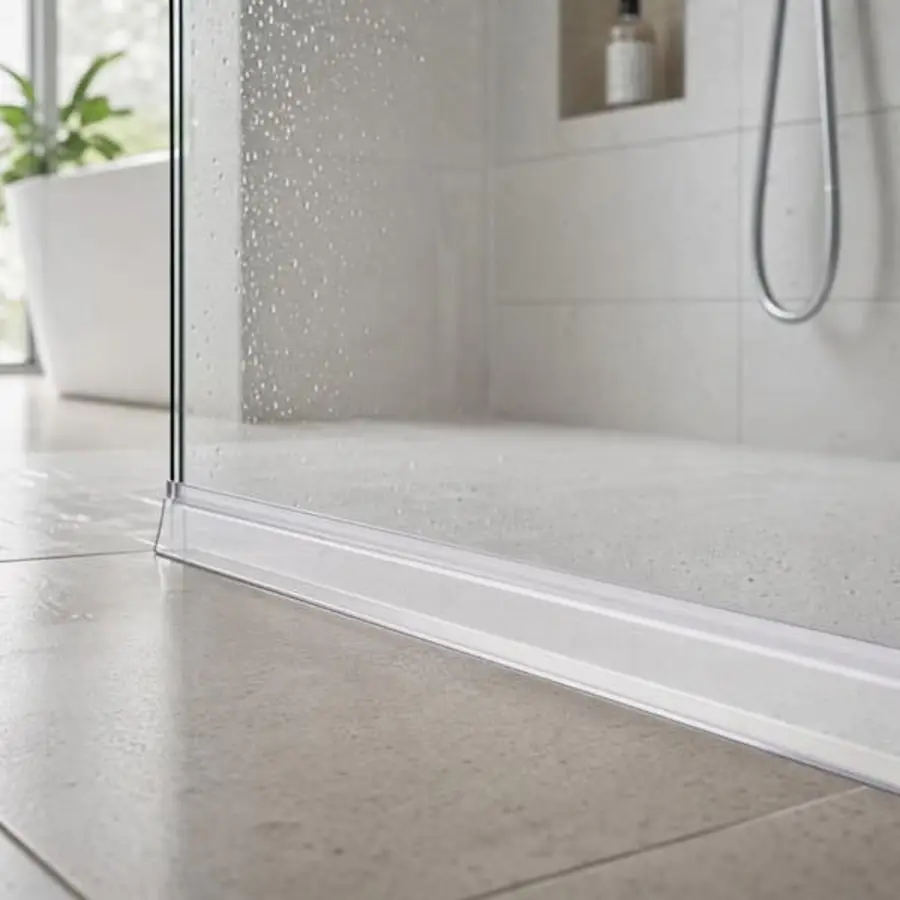
The simplest way to clean a shower door bottom seal is to rinse away loose debris, apply warm water and mild dish soap, scrub gently with a soft toothbrush or cloth, and rinse the seal thoroughly. Wipe the bottom edge and the channel dry when you finish. If mineral deposits remain, use diluted white vinegar on the compatible plastic or silicone surface, then rinse it away.
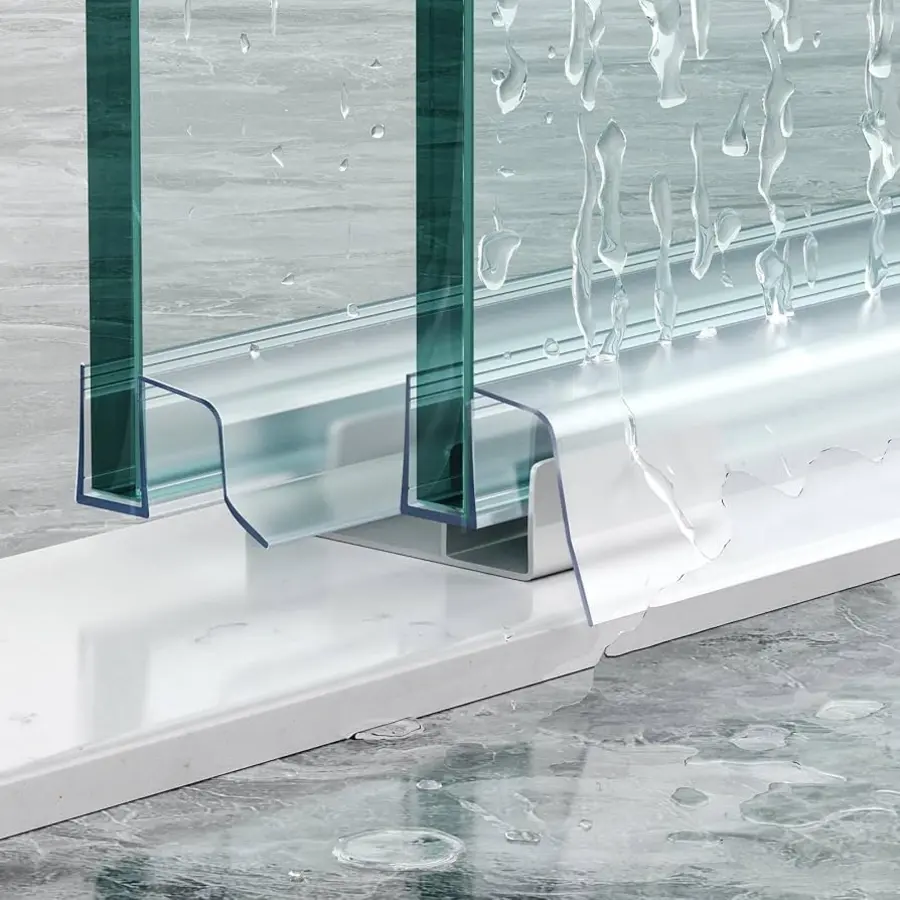
The clear strip is usually called a bottom sweep, door sweep, or bottom seal. It may be fitted over the lower edge of the glass, attached to a metal track, or set against a threshold. Hair, soap film, hard-water residue, and mildew often collect where the flexible seal meets the glass or floor.
What you need
- Warm water
- Mild dish soap or a gentle bathroom cleaner
- A soft cloth or non-abrasive sponge
- A soft toothbrush or small nylon brush
- A plastic scraper, if needed
- White vinegar for mineral deposits
- A dry towel
- Gloves, if you prefer to use them
Avoid metal blades, abrasive scouring pads, harsh solvents, and aggressive scrubbing. These can scratch nearby glass or damage a flexible vinyl, rubber, or silicone seal.
How to clean the seal in place
Cleaning the seal without removing it is usually the best first approach. It avoids stretching the strip and lets you check whether it is still attached properly.
1. Open the door and remove loose debris
Open the shower door so you can see the full lower edge. Pull out trapped hair and wipe away loose soap flakes with a dry paper towel or cloth. If debris is packed into the opening below the sweep, use a plastic scraper or the edge of a plastic card to loosen it carefully.
Do not poke into the seal with a knife, screwdriver, or other sharp object. A small puncture can become a split and may leave a gap where water escapes.
2. Rinse the bottom edge
Use warm water and a damp cloth to soften soap scum. Work along the entire length of the sweep, including the ends and any slot or channel where the seal meets the glass. A cup or handheld shower spray can help, but avoid forcing water into areas that are difficult to dry.
If the seal is badly soiled, wipe off the first layer of residue before applying cleaner. This prevents the brush from simply spreading loosened grime along the strip.
3. Apply a mild cleaner
Mix a small amount of dish soap with warm water, or use a gentle bathroom cleaner that is suitable for plastic and rubber surfaces. Apply it to the cloth or brush rather than flooding the channel. Let the cleaner sit briefly so it can soften the film.
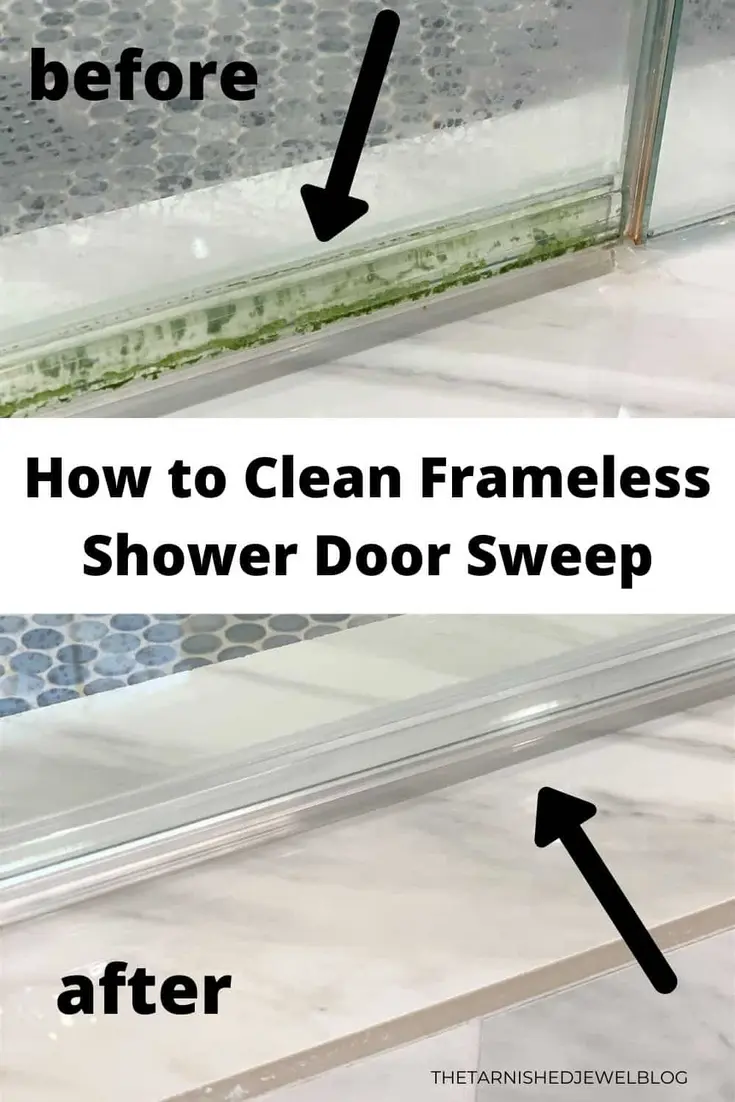
Gently scrub both sides of the bottom sweep. Pay particular attention to the seam between the seal and the glass, the corners, and the underside that touches the shower threshold. A soft toothbrush is useful because its bristles can reach the narrow channel without cutting into the material.
Source: thetarnishedjewelblog
4. Treat mineral deposits separately
White or chalky buildup is usually mineral residue rather than ordinary dirt. For a compatible plastic or silicone seal, apply a small amount of diluted white vinegar with a cloth and leave it for a few minutes. Then brush gently and rinse well.
Do not assume every seal, frame, or finish is compatible with vinegar. Keep the solution away from natural stone surfaces and check the door or cleaner manufacturer’s care instructions when available. Never combine vinegar with bleach or another cleaning product.
For stubborn deposits, repeat the mild treatment instead of scraping harder. A plastic scraper can help lift softened residue, but keep it nearly flat and use a light touch.
5. Rinse away all cleaner
Rinse the seal, glass edge, and nearby threshold with clean water. Soap or vinegar left in the channel can attract more residue and may continue affecting the surface. Wipe several times with a clean, damp cloth if you cannot rinse the area directly.
6. Dry and inspect the seal
Use a dry towel to wipe the bottom sweep, the lower glass edge, and the channel. Look along the full length for trapped water, gaps, cracks, or sections that have pulled away from the glass.
The sweep should sit evenly against the threshold when the door is closed. If it curls upward, has a loose section, or no longer directs water into the shower, cleaning alone will not solve the water-containment problem.
How to clean a removable shower door sweep
Some bottom seals slide or pull off the lower edge of the glass. Remove one only if it comes away easily and you can identify how it is fitted. Take a quick photo first so you know the original orientation.
Grip the end gently and slide the sweep along the glass rather than sharply bending or twisting it. If it resists, stop. It may be held by a clip, screw, adhesive, or a channel that should not be forced.
Once removed, place the sweep in warm soapy water and wipe it with a soft cloth or toothbrush. Rinse it thoroughly and dry it completely. Clean the exposed glass edge with mild soapy water and wipe away residue with a damp cloth. Avoid metal tools on the glass and do not stretch the sweep while putting it back.
A removable seal can be easier to clean, but removal is not automatically better. Older vinyl may become brittle, and a strip that is pulled too hard may not reseat tightly.
What to do about mold or mildew on the seal
Dark spotting along a shower door seal may be mildew, embedded dirt, or staining caused by material aging. Start with warm water and mild detergent, then rinse and dry the strip. If spotting remains, follow the care instructions for the seal material and use a compatible mold or mildew cleaner as directed on its label.
Do not mix bleach with vinegar, ammonia, or other cleaners. Rinse away one product before using another, and provide ventilation while cleaning. If the dark marks are inside the material, return after repeated cleaning, or appear with cracking and hardening, replacement is usually more practical than continued scrubbing.
When the bottom seal should be replaced
Cleaning cannot repair a seal that has deteriorated. Plan to replace it when you see:
- Cracks, splits, holes, or missing sections
- Yellowing or cloudiness that does not improve after cleaning
- A hardened or brittle strip that no longer flexes
- Edges that curl away from the glass
- A gap beneath the door when it is closed
- Water escaping despite a clean, correctly positioned sweep
- Persistent staining or mildew inside the material
Before buying a replacement, check how the old sweep attaches and measure the glass thickness and bottom gap if the product instructions call for them. Profiles vary, so a strip that looks similar may not fit or contain water correctly.
Shower door seal maintenance
A quick weekly wipe prevents most buildup from becoming difficult to remove. After showering, rinse the lower edge if it has visible soap film, wipe the sweep with a cloth, and leave the door positioned so the seal can dry. Use the bathroom fan during and after the shower to reduce lingering moisture.
A deeper cleaning once a month is a reasonable routine for a frequently used bathroom. Inspect the strip at the same time. Early cleaning can remove residue while it is still soft, while early inspection can reveal a small split before it becomes a water problem.
The key is gentle cleaning followed by complete drying. Keep sharp tools away from the flexible material, use stronger treatments only when appropriate for the surface, and replace the seal when it has lost its shape or ability to contain water.
References
- How To Clean Shower Door Seal Quickly And Easy?. (n.d.). https://glassseals.com/how-to-clean-shower-door-seal
- How do I clean a shower door’s plastic seal?. (n.d.). https://www.quora.com/How-do-I-clean-a-shower-door-s-plastic-seal
- How to Replace Shower Door Bottom Seal: 2025 DIY Guide. (n.d.). https://horow.com/blogs/guide/how-to-replace-shower-door-bottom-seal-2025-diy-guide
- How to Clean Shower Door Seals: A Step-by-Step Guide. (n.d.). https://www.framelessshowerdoors.com/how-to-clean-shower-door-seals
- How to Clean Shower Door Seals (Mildew, Mold & Film) — Shower Seal Fit. (n.d.). https://showersealfit.net/care/how-to-clean-shower-door-seals
- How to Clean Shower Door Seal Strip: 3 Methods [Trouble Free] – Clean Curious. (n.d.). https://cleancurious.com/how-to-clean-shower-door-seal-strip
- How to clean mineral deposits from frameless shower doors?. (n.d.). https://www.facebook.com/groups/752962781973516/posts/2091288211474293
- How To Clean The Plastic Strip At Bottom Of A Glass Shower Door. (n.d.). https://glassandoor.com/how-to-clean-the-plastic-strip-at-bottom-of-a-glass-shower-door