How to Clean a Shower Pouf Without Making It Musty
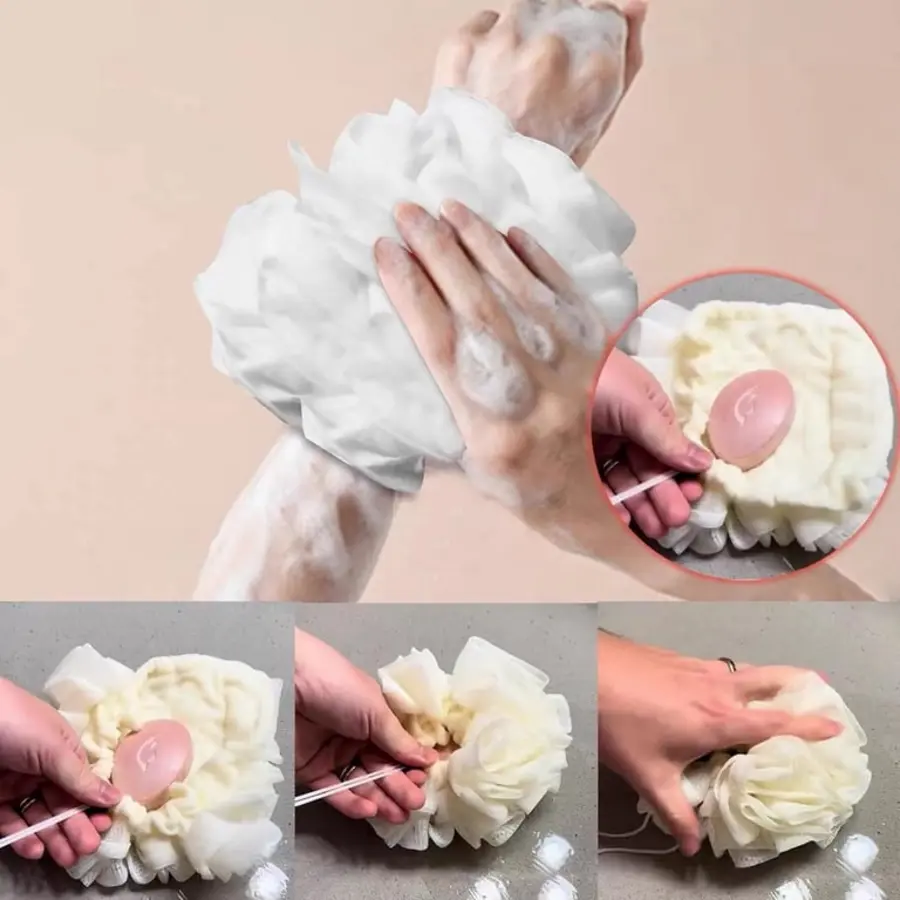
A shower pouf stays fresher when you rinse out all the body wash after every use and hang it where air can reach the inside. Once a week, give it a more thorough wash: flush the mesh or fibers with warm water, gently work out trapped residue, rinse again, and squeeze out excess water without twisting it hard.
If the pouf still smells musty, feels slimy, has dark discoloration, or is beginning to fall apart, replace it rather than trying to clean it indefinitely. A pouf that cannot dry fully is likely to stay unpleasant even after washing.
How to clean a shower pouf
Use this routine for a typical plastic or nylon mesh bath sponge. Check the care label first if the product has one, especially if it is made from natural fiber.
Rinse immediately after use. Hold the pouf under running water and open the folds with your fingers. Rinse until the water runs clear and the lather is gone. Soap and skin oils can remain in the center of a tightly gathered pouf if you only rinse the outside.
Wash the whole pouf once a week. Run warm water through the mesh while gently compressing and releasing it. This helps move residue out of the inner layers. You can use a small amount of mild liquid soap if the pouf has a noticeable buildup, but rinse especially well afterward so you do not leave another film behind.
Inspect the cord and folds. Look around the hanging loop, knots, and deepest folds. These areas may stay damp longer and can collect product residue. Gently separate the mesh rather than pulling aggressively on a loose or frayed cord.
Rinse again. Squeeze and release the pouf several times under clean running water. Continue until there is no visible foam and the water coming out looks clear.
Remove excess water. Press the pouf between your hands. Do not wring it sharply or twist it around the cord, since that can stretch the mesh and weaken the tie.
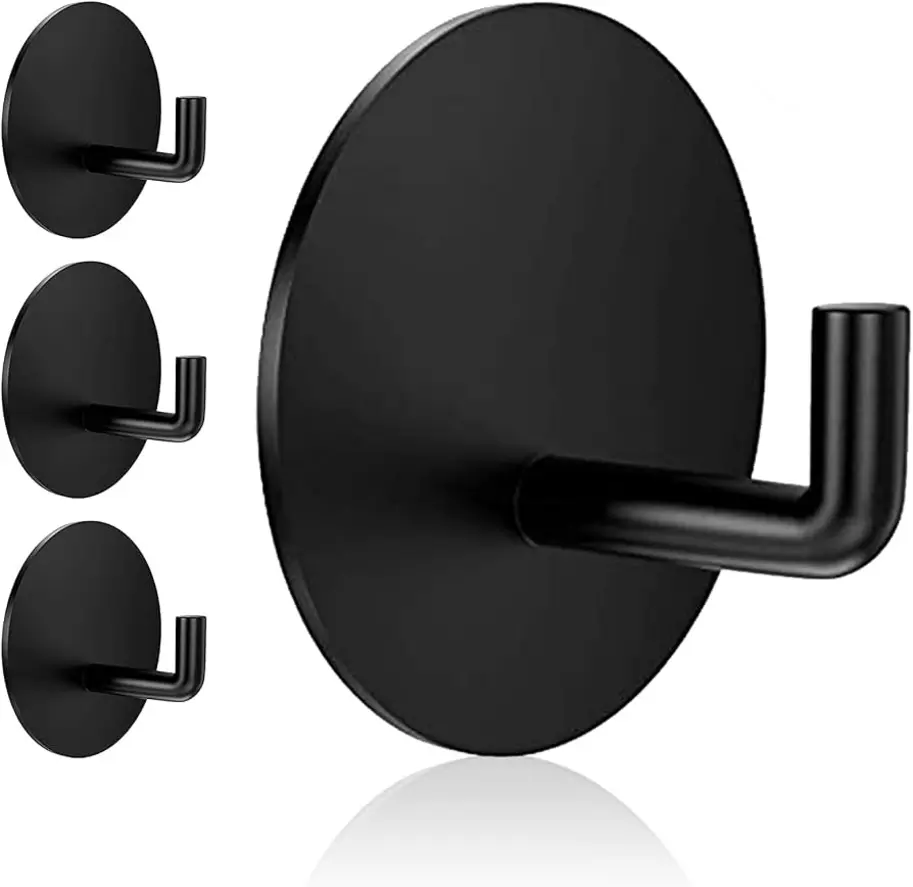
Hang it open to dry. Place it on a hook or other ventilated spot where it can drip freely. Keep it out of a corner, closed shower caddy, or puddle on the tub ledge. The goal is for air to reach the inside, not just the outer surface.
Source: m.media-amazon
How to dry a shower pouf without trapping odor
Drying is as important as washing. A mesh pouf is made from many layers of gathered material, so its center may remain wet after the surface feels dry. Before hanging it, fluff or spread it apart rather than leaving it compressed.
A good location is outside the direct spray of the shower but still in a ventilated part of the bathroom. If your bathroom stays humid, hang the pouf farther from the shower or near better airflow. Do not leave it on the floor, inside a closed container, or pressed against a wet bath mat.
If the pouf remains damp for long periods, the simplest improvement is usually a better drying location. A second pouf used in rotation can also give each one more time to dry, but it does not make an old, musty pouf worth keeping.
Cleaning different types of loofah and bath sponge
Not every product called a loofah is made from the same material. Use the cleaning method that matches the item.
Plastic or nylon mesh poufs
These are the familiar gathered bath puffs. Rinse them thoroughly after each shower, wash them weekly, and hang them where air can move through the folds. If the care instructions allow machine washing, follow the label rather than assuming all mesh poufs can go in the washer. Avoid high heat unless the manufacturer specifically permits it, since heat can deform synthetic mesh or damage the tie.
Natural loofahs
A natural loofah has a more fibrous, rough texture and may soften when wet. Rinse it carefully after use, press out excess water, and hang it in an open position. Follow the product’s washing instructions if it is labeled machine washable. Because natural fibers can retain moisture and break down, inspect them frequently and replace them sooner if they smell, discolor, or feel soft and degraded.
A short replacement cycle is sensible for a natural loofah; around three to four weeks is commonly advised, and sooner if it develops a musty smell or visible discoloration.
Ramie or other labeled natural-fiber poufs
Some natural-fiber poufs are designed to be machine washable, while others are not. The material name alone is not enough to determine the correct cycle. Check the care label, use the gentlest permitted method, and make sure the pouf dries completely afterward.
What not to do when washing a loofah
A few shortcuts can make the problem worse:
- Do not rinse only the outside. The inner folds hold most of the leftover soap and moisture.
- Do not store it wet in a closed shower caddy. Limited airflow encourages lingering dampness.
- Do not leave it sitting in bathwater or on a wet tub edge. It needs to drain freely.
- Do not use harsh cleaners casually. Bleach, strong disinfectants, boiling water, or high heat may damage the material and can leave residue against your skin. Use them only if the product instructions specifically call for them.
- Do not scrub your skin harder because the pouf smells. A musty tool should be cleaned, dried, or replaced—not used more aggressively.
- Do not use it on irritated, damaged, or broken skin. Stop using it if it causes irritation.
When to replace a shower pouf
Cleaning is worthwhile only while the pouf can still be rinsed and dried effectively. Replace it when you notice any of these signs:
- A musty or sour smell returns after a thorough wash and complete drying
- Dark spots, unusual discoloration, or a persistent slimy coating
- Mesh that is fraying, thinning, or separating
- A loose cord or broken hanging loop
- Fibers that are falling out or no longer rinse clean
- A texture that has become unpleasantly rough, soft, or misshapen
For a natural loofah, replacement is generally needed sooner than for a durable synthetic bath tool. The exact interval depends on the material, how often it is used, and how well it dries. A calendar reminder can help, but condition is the better guide.
A simple maintenance checklist
After every shower:
- Rinse through the center and outer folds.
- Press out excess water.
- Fluff it open.
- Hang it where it can drip and receive airflow.
About once a week:
- Wash the entire pouf with warm water.
- Work out soap residue from the inner folds.
- Rinse until no foam remains.
- Inspect the cord, mesh, and deepest layers.
Replace it when cleaning no longer removes the smell, residue, or visible deterioration. A fresh, fully dry pouf is more practical than trying to rescue one that has become permanently musty.
References
- Bubble Shower Mesh Pouf Sponge , Bear PE Body Sponge Scrubber - bathscrubber. (n.d.). https://www.everychina.com/p-z52ebb23-105200663-bubble-shower-mesh-pouf-sponge-bear-pe-body-sponge-scrubber.html
- Bubble Shower Mesh Pouf Bath Sponge , Baby Bath Mesh Shower Net Sponge for sale – Mesh Bath Sponge manufacturer from china (113339857).. (n.d.). https://bathscrubber.sell.everychina.com/p-113339857-bubble-shower-mesh-pouf-bath-sponge-baby-bath-mesh-shower-net-sponge.html
- Odor-proof Flower Mesh Bath Sponge for Bathroom Gift / Shower Puff Sponge - bathscrubber. (n.d.). https://www.everychina.com/p-z52ebb23-107760504-odor-proof-flower-mesh-bath-sponge-for-bathroom-gift-shower-puff-sponge.html
- How often to replace shower puff?. (n.d.). https://www.facebook.com/groups/BeebesBargainsOnABudget/posts/1495317224307832
- Mesh Bath Pouf. (n.d.). https://www.walmart.com/c/kp/mesh-bath-pouf
- How to Clean a Loofah (and When to Replace It). (n.d.). https://fawnlilybotanica.com/blogs/blog/how-to-clean-a-loofah
- Mesh Bath Pouf | Loofah & Bath Sponge Collection. (n.d.). https://www.target.com/s/mesh+bath+pouf
- Luxury Bath & Shower Natural Fiber Ramie Mesh Pouf – Sudsverse. (n.d.). https://sudsverse.com/products/luxury-bath-shower-natural-fiber-ramie-mesh-pouf