How to Clean a Toothbrush Holder
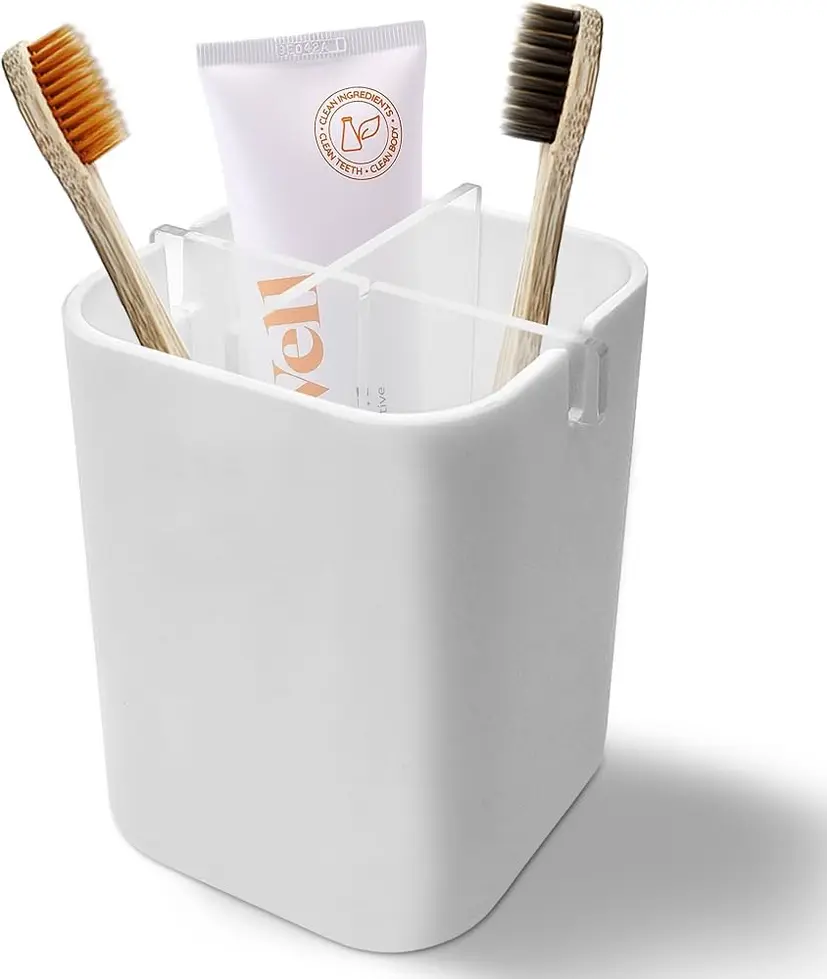
To clean a toothbrush holder, remove the toothbrushes, empty any standing water, rinse away loose residue, then scrub the holder with warm water and mild dish soap. Rinse it thoroughly and let it dry completely before returning the toothbrushes. This simple routine removes toothpaste, saliva droplets, and the damp film that can collect where brushes are stored.
If the holder has visible mold, a strong odor, cracks, or residue that will not come away after washing, clean it more cautiously—or replace it if the material cannot be cleaned reliably. Keep toothbrushes away from cleaning products, and never return them to a holder that still contains soap or disinfectant residue.
How to clean a toothbrush holder step by step
Set the toothbrushes aside in a clean, dry place before you begin. Do not lay them in the sink if the sink is dirty or wet. If a brush touches a cleaning product, rinse it thoroughly; replace it if you are concerned that product has soaked into the bristles or head.
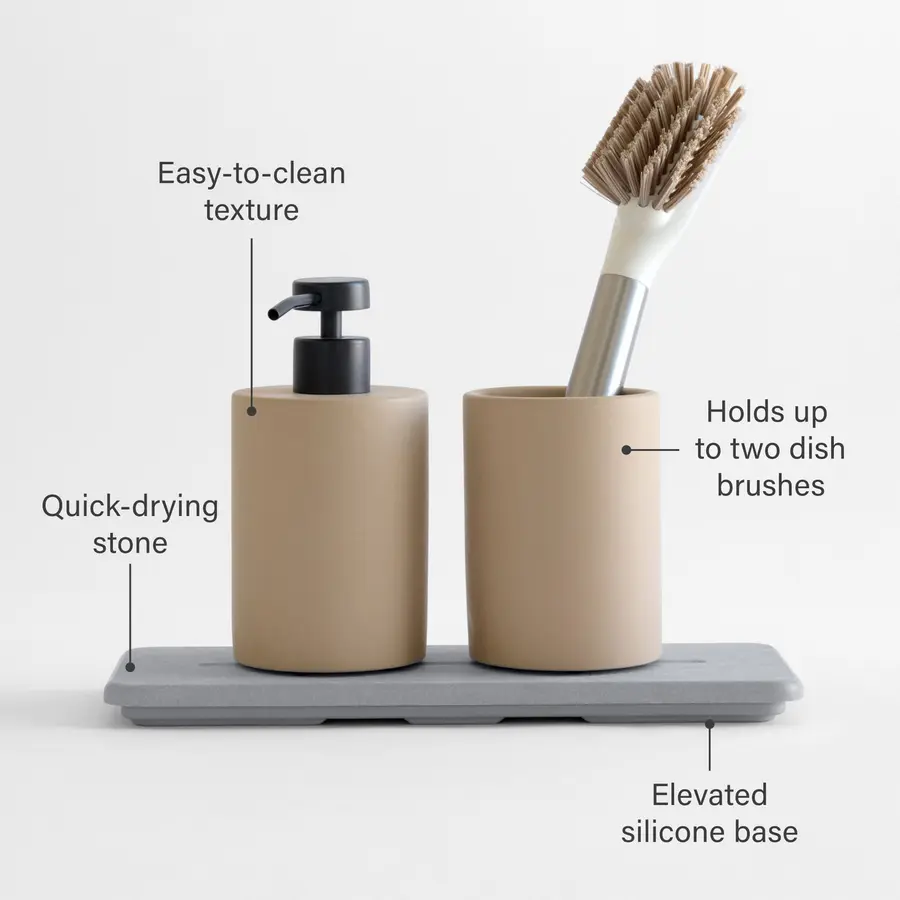
Source: doraihome
1. Empty and separate the holder
Remove every toothbrush, toothbrush head, cover, insert, and detachable cup. Shake out water and discard loose debris. If the holder has a removable tray or drainage insert, take it apart so toothpaste cannot remain hidden underneath.
Check the care instructions before putting any part in a dishwasher. Some holders are dishwasher-safe, but painted finishes, glued parts, wood, and certain plastics may be damaged by heat or moisture.
2. Rinse away loose toothpaste
Rinse the holder under warm running water. This softens toothpaste and carries away loose film before you start scrubbing. For a narrow opening, fill the holder with warm water, let it sit briefly, and empty it. Do not use boiling water unless the manufacturer specifically allows it, since heat can warp some plastics or damage finishes.
3. Wash with mild soap
Add a small amount of mild dish soap to a soft cloth, sponge, or small cleaning brush. Scrub the inside, rim, base, drainage holes, seams, and any removable parts. A small soft brush can reach corners that a cloth misses.
Pay special attention to the bottom. Toothpaste, rinse water, and bits of debris often settle there, creating the slimy layer people notice first. If the residue is dried on, let the soapy water loosen it rather than scraping aggressively with a metal tool.
4. Rinse thoroughly
Rinse every part until the water runs clear and the surface no longer feels slippery. Soap left inside the holder can transfer to a toothbrush or collect more residue.
If you use a disinfecting product, follow the product label and the holder manufacturer’s care instructions. The holder must be compatible with that product, and any required rinsing or ventilation directions should be followed. Never mix bleach with vinegar, ammonia, or another cleaner.
5. Dry the holder completely
Place the holder upside down or in a position that lets water drain. Dry it with a clean towel if needed, then leave it uncovered until the inside and drainage areas are dry. A closed, damp holder is more likely to develop odor, slime, or mold than one that can dry between uses.
Rinse toothbrushes with tap water, store them upright, and let them air-dry. If several toothbrushes share one holder, keep them separated so the bristles do not touch. Avoid putting a wet toothbrush into a closed cover or enclosed container.
Material-specific care
The safest cleaning method depends on the holder’s material and finish.
| Holder material | Practical cleaning method | Use extra care with |
|---|---|---|
| Ceramic | Wash with mild dish soap, a soft cloth, or a soft brush. Rinse and dry thoroughly. | Chipped glaze, painted details, and rough cracks that can hold residue |
| Plastic | Use warm water, mild soap, and a non-abrasive brush. Check whether removable parts are dishwasher-safe. | High heat, harsh abrasives, and cleaners that can cloud or discolor the plastic |
| Glass | Wash with mild soap and a soft sponge, then rinse and dry. | Chips, cracks, and sudden temperature changes |
| Stainless steel | Wipe or wash with mild soap, rinse, and dry with the grain when applicable. | Steel wool, abrasive powders, and cleaners that can damage the finish |
A porous, unsealed, cracked, or heavily scratched holder can be difficult to clean fully. If mold or odor returns quickly after careful washing, replacing the holder may be more practical than repeatedly applying stronger chemicals.
How to remove toothpaste from a toothbrush holder
Fresh toothpaste usually comes away with warm water and mild dish soap. For a stubborn spot, wet it first and allow the moisture to soften it. Then use a soft brush or cloth in small circular motions.
Avoid knives, razor blades, and rough scouring pads. They can scratch plastic, stainless steel, or glazed surfaces, leaving more places for residue to collect. If the holder has a removable silicone or plastic insert, wash that piece separately and inspect the underside before putting it back.
How to handle mold in a toothbrush holder
Small spots of surface mold should be treated as a cleaning and moisture problem. Remove the toothbrushes, ventilate the area, and wash the holder according to its material and care instructions. Use gloves if you normally wear them for household cleaning, and avoid splashing product near toothbrushes, toothpaste, towels, or other personal-care items.
Do not combine cleaning products. In particular, do not mix bleach with vinegar, ammonia, or other cleaners. If you choose a disinfectant, read the label for the correct surface, application method, contact requirements, and whether rinsing is needed. Product directions take priority over a general cleaning recipe.
Replace the holder if it is cracked, deeply scratched, porous, peeling, or still smells moldy after cleaning. Do not put toothbrushes back until the holder has been thoroughly rinsed and dried. If mold is widespread in the bathroom or keeps returning because of a larger dampness problem, address the room’s moisture and ventilation rather than repeatedly treating the holder.
How often should you clean a toothbrush holder?
Empty and dry the holder whenever you notice standing water or visible toothpaste. Wipe the rim and nearby countertop regularly, especially if toothpaste or saliva droplets collect there. Give the holder a full wash whenever it looks dirty, feels slimy, develops an odor, or has accumulated residue in the bottom.
A simple daily habit helps: rinse the toothbrush, shake off excess water, store it upright with space around the bristles, and empty any water from the holder. Regular drying reduces the damp conditions that allow residue and mold to build up.
Common mistakes to avoid
- Returning toothbrushes before the holder is rinsed and dry.
- Cleaning around the toothbrushes instead of removing them first.
- Storing multiple brushes so their bristles touch.
- Using abrasive tools that scratch the holder.
- Pouring an unverified disinfectant into the holder and leaving residue behind.
- Mixing bleach, vinegar, ammonia, or other cleaning products.
- Keeping the holder in a closed, consistently damp spot.
- Ignoring cracks, peeling finishes, or mold that keeps coming back.
The goal is not to make the toothbrush holder sterile. It is to keep the storage surface free of toothpaste buildup, standing water, and persistent grime while giving toothbrushes a clean, dry place to air-dry.
References
- How to Clean and Disinfect Your Toothbrush. (n.d.). https://www.webmd.com/oral-health/how-to-clean-toothbrush
- Toothbrush holders: How often to clean, instructions for …. (n.d.). https://www.nine.com.au/lifestyle/homes/toothbrush-holders-how-often-to-clean-tips-20260803-p60kx8.html
- How to clean your toothbrush holder (and how often) - radius. (n.d.). https://madebyradius.com/blogs/good-to-know/how-to-properly-clean-and-maintain-your-toothbrush-holder
- Safe Storage for Family Toothbrushes. (n.d.). https://www.colgate.com/en-us/oral-health/brushing-and-flossing/safe-storage-for-family-toothbrushes
- Your Toothbrush Holder is Dirtier Than You’d Think. (n.d.). https://www.chardonsmilecenter.com/blog?p=51
- How to Keep Your Toothbrush Clean - Consumer Reports. (n.d.). https://www.consumerreports.org/health/toothbrushes/smarter-how-to-keep-your-toothbrush-clean-a7975576744
- How to Store Your Toothbrush Properly Every Day | Pearl Zadeh DDS. (n.d.). https://pearlzadehdds.com/how-to-store-your-toothbrush-properly-every-day
- Keep toothbrushes separate to prevent germ spread. (n.d.). https://www.facebook.com/publichealthOC/posts/parents-keep-toothbrushes-apart-in-an-open-container-when-toothbrushes-touch-ger/408494771457524