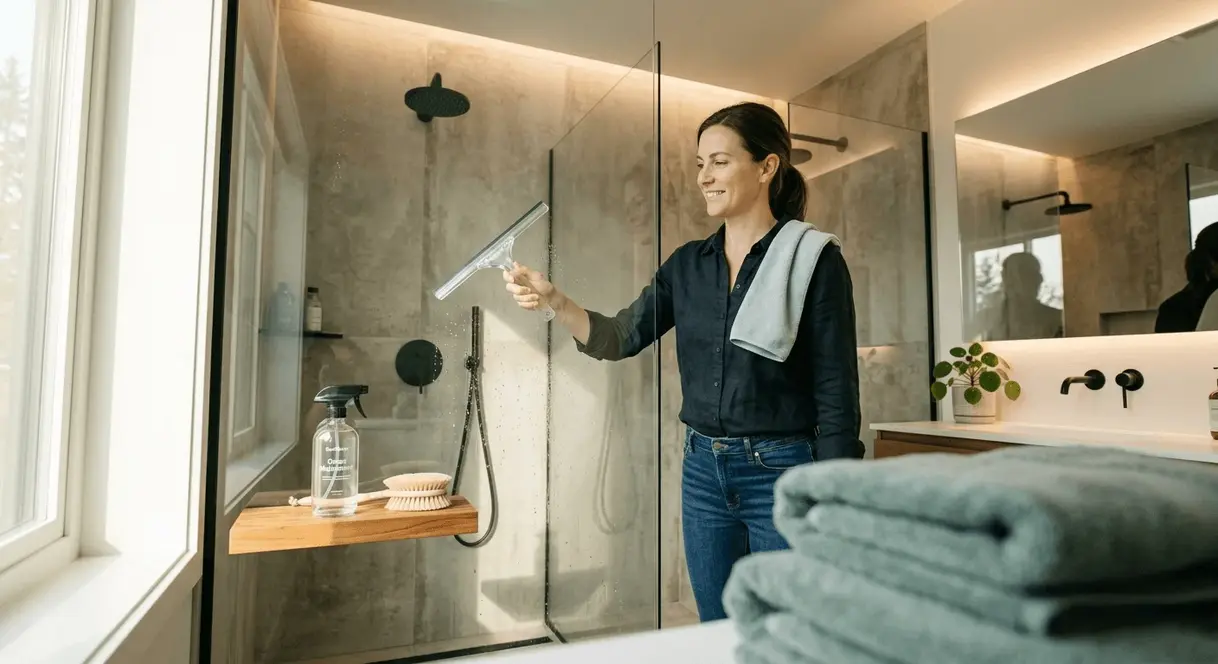
How to Clean Bathroom Wall Panels Without Damaging Them
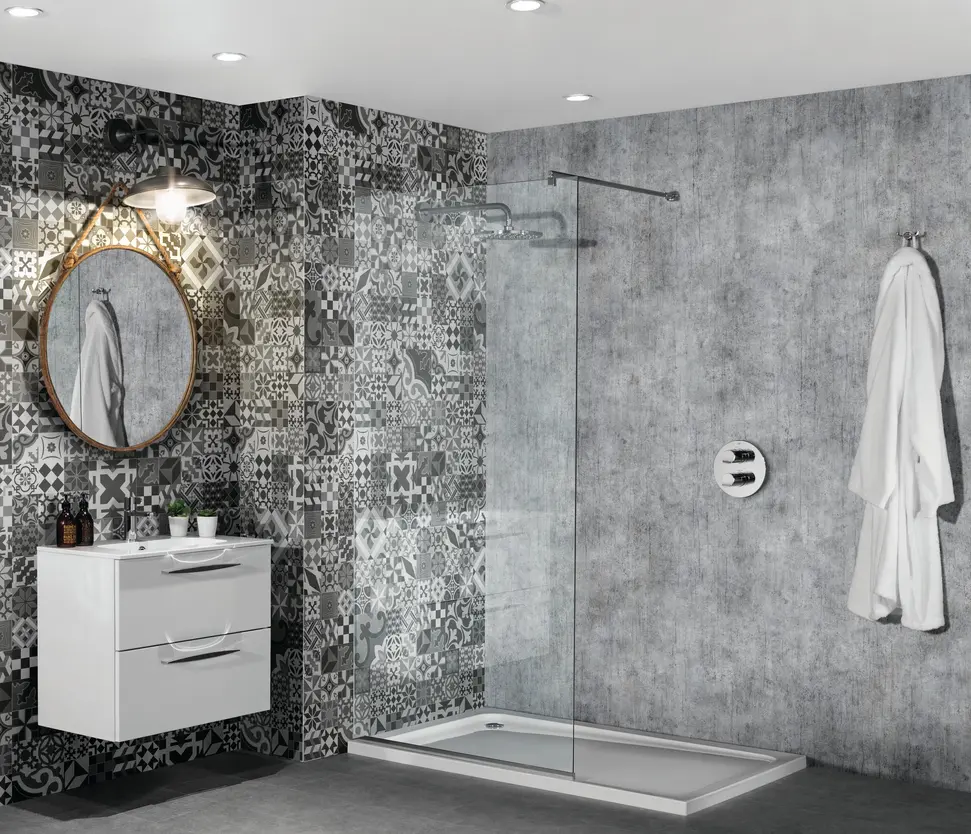
The safest way to clean most bathroom wall panels is to start with warm water, a soft microfiber cloth, and a small amount of mild dishwashing liquid. Wipe gently, rinse away the cleaner, and dry the surface so water does not remain around joints or edges. This routine works for everyday soap residue and water marks on many PVC, acrylic, laminate, and composite panels—but the panel manufacturer’s care instructions should take priority.
For heavier buildup, treat limescale and mildew marks separately. Use only a product approved for your specific panel material, test it in an inconspicuous area, and avoid abrasive pads, scouring powders, harsh solvents, and aggressive scrubbing.
Before you clean bathroom wall panels
Bathroom panels can look similar while having different surface finishes and care requirements. PVC, acrylic, laminate, and composite panels may not react the same way to acids, solvents, concentrated disinfectants, or abrasive tools. If you know the brand or product name, check its official cleaning instructions before using anything stronger than mild soap and water.
Also look closely at the condition of the panels:
- A cloudy film or greasy layer is usually soap residue.
- White, crusty marks are often limescale or mineral buildup.
- Dark marks may be surface mildew, dirt trapped at a joint, or discoloration in sealant.
- Swelling, lifting, cracked edges, or an open joint is a maintenance problem rather than a cleaning problem.
Do not use cleaning as a way to repair a failed seal or loose panel. Water can reach behind damaged joints, so stop and address the underlying condition instead.
What you need
For routine bathroom panel cleaning, gather:
- Warm water
- A small amount of mild dishwashing liquid or a panel-compatible mild cleaner
- A clean microfiber cloth
- A soft, non-abrasive sponge for stubborn residue
- A second cloth for rinsing and drying
- A small, soft brush for accessible grooves or edges, if the manufacturer permits it
Avoid steel wool, scouring pads, stiff brushes, powdered cleaners, and anything intended to polish or cut through a surface. These can leave fine scratches or alter the panel’s sheen, especially on glossy acrylic and plastic surfaces.
The routine method for clean shower wall panels
1. Remove loose residue
Rinse or wipe the panel with warm water to loosen loose dust, hair, and surface particles. Starting with a dry abrasive motion can drag grit across the finish.
If the wall is very wet, use a clean cloth to remove excess water before applying cleaner. This makes it easier to see where residue remains.
2. Apply a mild cleaning solution
Mix a small amount of mild dishwashing liquid into warm water, or use a mild cleaner that is specifically described as suitable for your panel material. Apply the solution to a soft cloth or sponge rather than soaking the wall or flooding the joints.
Work in small sections, using light pressure. Give the solution a short opportunity to loosen soap film, but do not let it dry on the surface.
3. Wipe without scrubbing aggressively
Move the cloth across the panel with overlapping strokes. Pay attention to the area below the showerhead, around fixtures, and near the bottom of the wall, where water and product residue often collect.
Use a soft sponge only when a cloth is not enough. If a mark does not lift with mild cleaning, do not compensate by pressing harder. Identify whether it is limescale, mildew, or possible surface damage and choose the next step accordingly.
4. Rinse thoroughly
Use a clean, damp cloth to remove cleaner from the panel. Cleaner left behind can create a dull film and may collect more residue around seams.
Avoid directing large amounts of water toward panel edges, trim, penetrations, or joints. These areas need controlled wiping rather than soaking.
5. Dry the surface and joints
Finish with a dry microfiber cloth. Wipe around seams, corners, trim, and the bottom edge as carefully as the main panel surface. Drying reduces water marks and makes it easier to notice changes in sealant or joints.
How to remove limescale from bathroom panels
Limescale appears as white or chalky mineral deposits, particularly where water droplets dry repeatedly. Start with the mild soap-and-water method. Fresh deposits may come away without an acidic cleaner.
If the manufacturer allows vinegar or another limescale product for the panel material, follow the product directions and dilute it exactly as instructed. Apply it briefly with a soft cloth, then rinse the area thoroughly and dry it. Test first in a hidden spot, because an acidic product that is acceptable for one panel finish may damage another or affect nearby sealants, trim, or metal fittings.
Do not scrape mineral deposits with a razor, knife, or hard edge. Do not use an acidic cleaner simply because the panel is described as waterproof. Waterproofing does not mean every surface finish, adhesive, seal, or accessory is compatible with every chemical.
For laminate, acrylic, composite, or specially finished panels, the manufacturer’s instructions are especially important before using vinegar or a dedicated descaler.
How to deal with mildew marks
Begin by wiping the affected area with warm water and mild cleaner. If a dark mark remains, check whether it is on the panel surface or within the sealant at a joint.
Use a mildew or disinfecting product only if it is approved for the panel and surrounding materials. Follow the label and panel-care directions, and never mix cleaning products. Keep the cleaner away from unapproved metal finishes, painted surfaces, and open joints where possible.
If discoloration is embedded in silicone or another sealant, repeated scrubbing may roughen the joint without restoring its appearance. If the sealant is cracked, lifting, or no longer continuous, cleaning alone will not solve the problem. The joint may need assessment and repair rather than stronger chemicals.
Material-specific cautions
PVC panels
PVC panels generally suit warm water, a soft cloth, and a mild cleaner. Avoid abrasive tools and strong solvents unless the product instructions specifically approve them. Solvents can affect plastic surfaces or printed finishes.
Acrylic panels
Acrylic can scratch more easily than it appears. Use a cleaner made for acrylic or mild soap and clean water with a soft cloth. Avoid powdered cleaners, abrasive sponges, rough paper products, and hard-edged tools.
Laminate panels
Use a damp soft cloth and mild detergent. Do not saturate edges, seams, or damaged areas. If the laminate is lifting or swelling, more cleaning solution will not correct the issue.
Composite and other panels
Composite panels vary widely in surface finish and construction. Follow the specific care instructions rather than assuming that a cleaner suitable for PVC or tile is also suitable for the composite surface.
Cleaning mistakes that can damage panels
Avoid these common shortcuts:
- Using a tile scouring product on a non-tile surface
- Scrubbing with a rough pad to remove limescale
- Applying solvent, acetone, or paint thinner without written approval
- Leaving a strong cleaner on the wall until it dries
- Flooding seams and edges while rinsing
- Mixing vinegar, bleach, disinfectants, or other cleaning products
- Assuming a product is safe because it is labeled as a bathroom cleaner
- Ignoring a cracked seal and trying to clean around it repeatedly
A cleaner’s label may describe the surfaces it is intended for, but the panel manufacturer’s instructions remain the better reference when the two differ.
A simple maintenance routine
Wipe visible water and soap residue regularly with a soft cloth. After showering, improve ventilation and allow the wall to dry rather than leaving moisture on the surface. Keep bottles, baskets, and other items from trapping wet residue against the panel.
When you clean the rest of the bathroom, use a separate clean cloth for the wall panels if the first cloth has picked up grit from the floor or other rough surfaces. Small particles can cause scratches even when the cloth itself feels soft.
If routine cleaning no longer removes a mark, stop increasing the pressure. Check the panel material, review its care instructions, and decide whether the problem is mineral buildup, mildew, sealant discoloration, or surface damage. That pause is usually safer than reaching for a stronger cleaner without knowing how the panel will react.
References
- Cleaning Bathroom Wall Panels. (n.d.). https://igloosurfaces.com/news/cleaning-bathroom-wall-panels
- How to Clean Bathroom Wall Panels | 1min Tutorial!. (n.d.). https://www.youtube.com/watch?v=DUw0YB6XvOQ
- How to Clean and Maintain PVC Bathroom Wall Panels. (n.d.). https://www.bathroompanelsdirect.co.uk/blogs/the-bathroom-wall-blog/the-best-cleaning-and-maintenance-tips-for-long-lasting-pvc-panels
- How to Clean Wet Wall Panels (Easy Maintenance Guide). (n.d.). https://wetwallpanelsaus.com.au/2026/07/02/how-to-clean-wet-wall-panels
- How to Clean Laminate Bathroom Wall Panels. (n.d.). https://www.plasticbuildingsupplies.com/blog/how-to-clean-laminate-bathroom-wall-panels-a-comprehensive-guide
- How to clean laminate bathroom wall panels. (n.d.). https://www.performboard.co.uk/blogs/how-to-clean-laminate-bathroom-wall-panels
- How to Clean Bathroom Wall Panels | Easy Care. (n.d.). https://www.plumbworld.co.uk/blog/advice-how-to-clean-bathroom-wall-panels
- Cleaning Hard Surfaces. (n.d.). https://www.cleaninginstitute.org/cleaning-tips/cleaning-hard-surfaces