How to Clean Brass Bathroom Fixtures Without Damaging the Finish
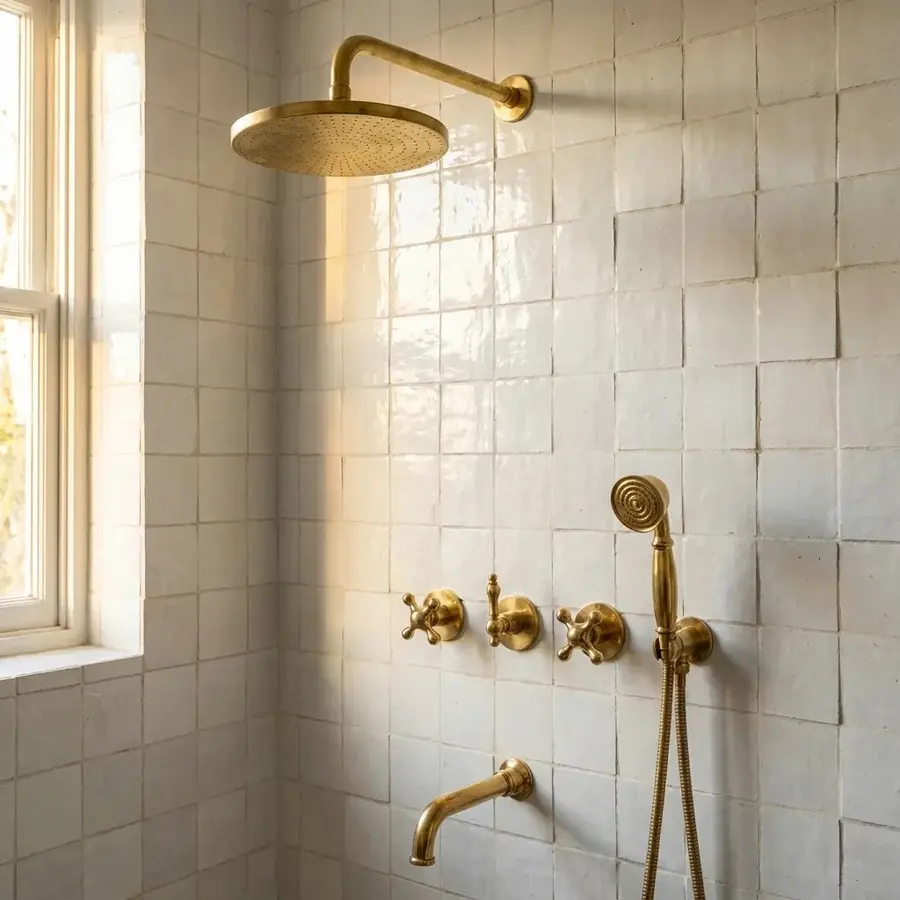
The safest way to clean brass bathroom fixtures is to start with warm water, a few drops of mild dish soap, and a soft microfiber cloth. Wipe away soap residue and fingerprints gently, rinse with a clean damp cloth, and dry the fixture completely. Before using any polish or stronger cleaner, identify whether the brass is lacquered, unlacquered, brushed, plated, or covered by another finish.
That distinction matters. A product that works on solid unlacquered brass can dull brushed brass, damage a lacquer coating, or wear through thin plating.
Identify the brass finish first
Look for the care instructions supplied with the faucet, shower fitting, cabinet hardware, or accessory. If they are unavailable, use the surface appearance and maintenance history as clues, but do not assume that every gold-colored fixture is solid brass.
Lacquered brass
Lacquered brass has a clear protective coating over the metal. It usually keeps a more even color and is less likely to develop natural tarnish. Clean it as a coated surface rather than trying to polish the brass underneath.
Harsh chemicals, abrasive pads, and repeated aggressive rubbing can scratch or strip the lacquer. Once the coating becomes damaged, cleaning may leave uneven patches because some areas are exposed brass while others remain coated.
Unlacquered brass
Unlacquered, or “living,” brass has no protective clear coat. It can darken, develop a patina, and show water marks or fingerprints more readily. This change is part of the material’s normal aging, not necessarily a sign that the fixture is dirty.
Mild soap and water are suitable for routine cleaning. If you want to remove tarnish and restore a brighter appearance, use a brass polish only after checking the manufacturer’s instructions and testing an inconspicuous area. Polishing removes or changes the surface patina, so the result may not match the original finish everywhere.
Brushed or plated brass
Brushed brass has a directional texture that can be marked by circular scrubbing or abrasive tools. Brass-plated fixtures also need extra care because the visible brass layer may be thin. A magnet may provide a clue about whether an item is plated, but it is not a complete finish-identification method.
For brushed or plated fixtures, stay with mild soapy water unless the manufacturer specifically approves another product.
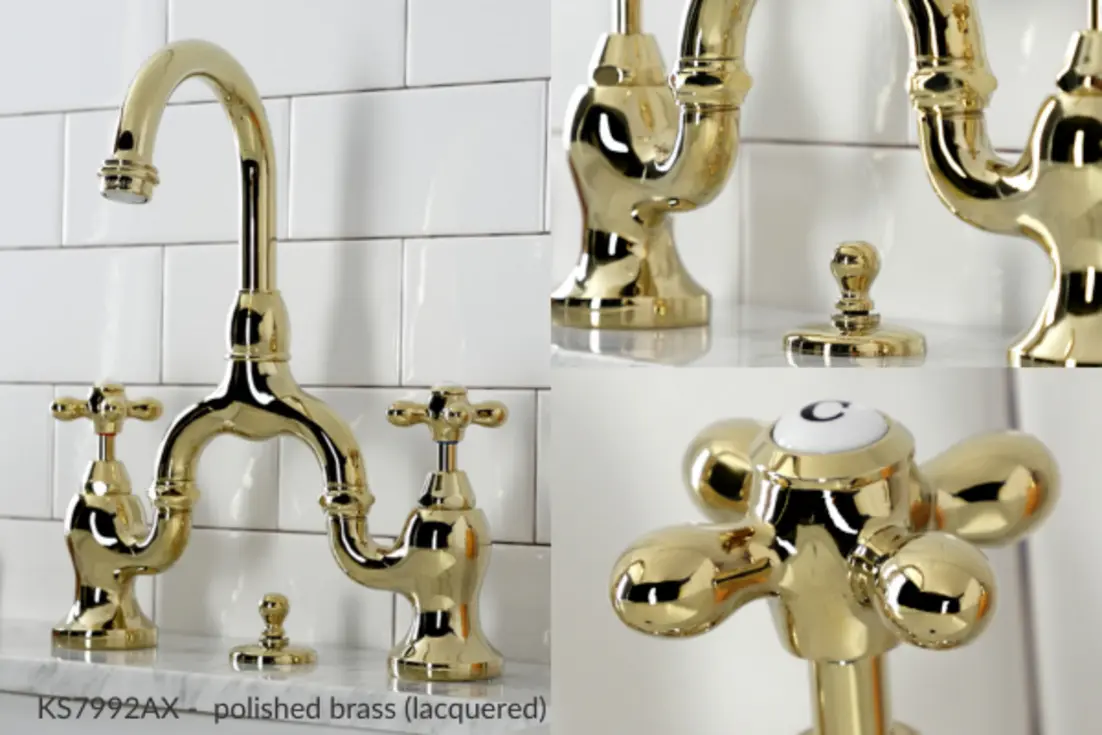
Source: cdn.shopify
How to clean brass bathroom fixtures safely
Follow this routine for taps, shower fittings, handles, and other brass bathroom hardware.
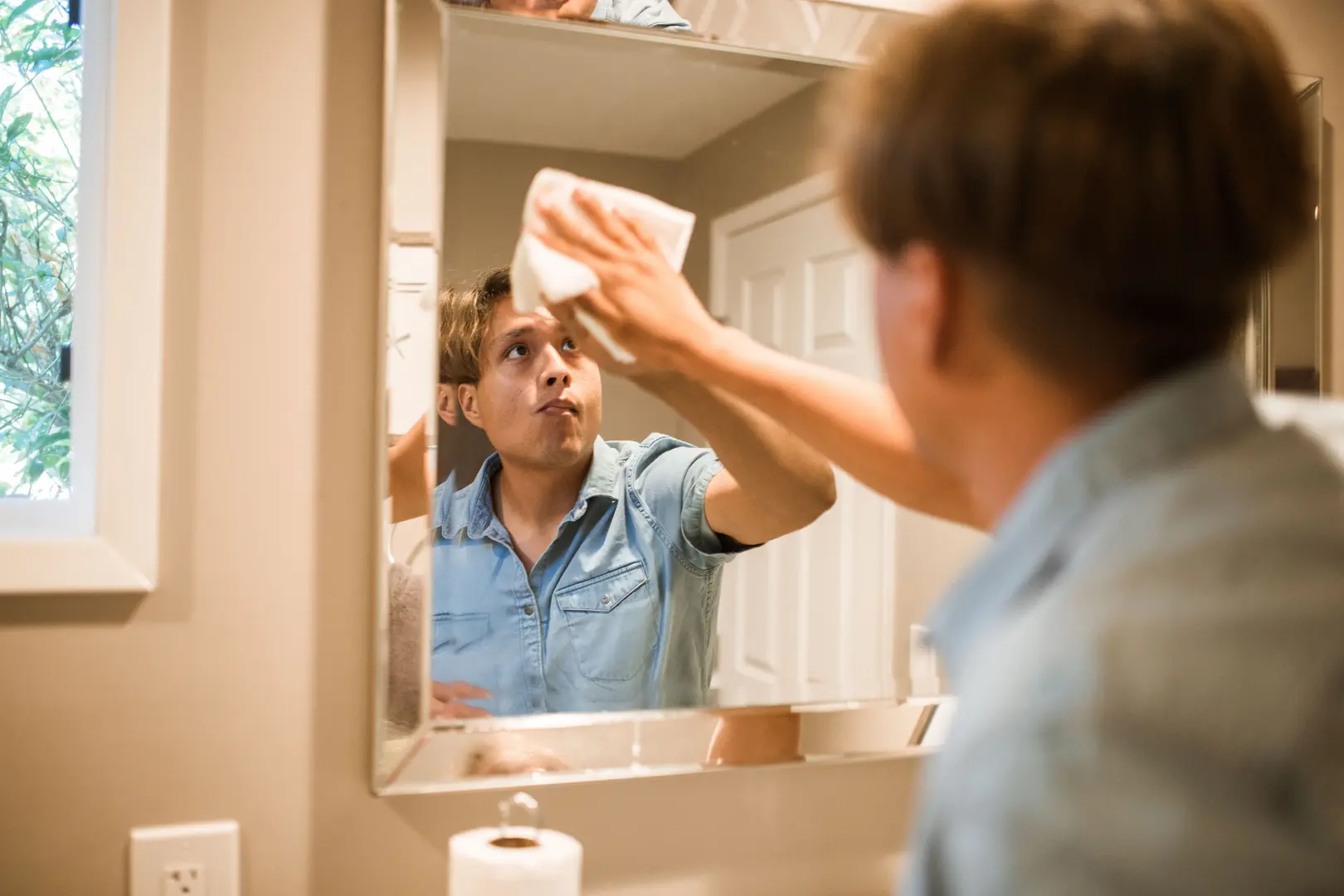
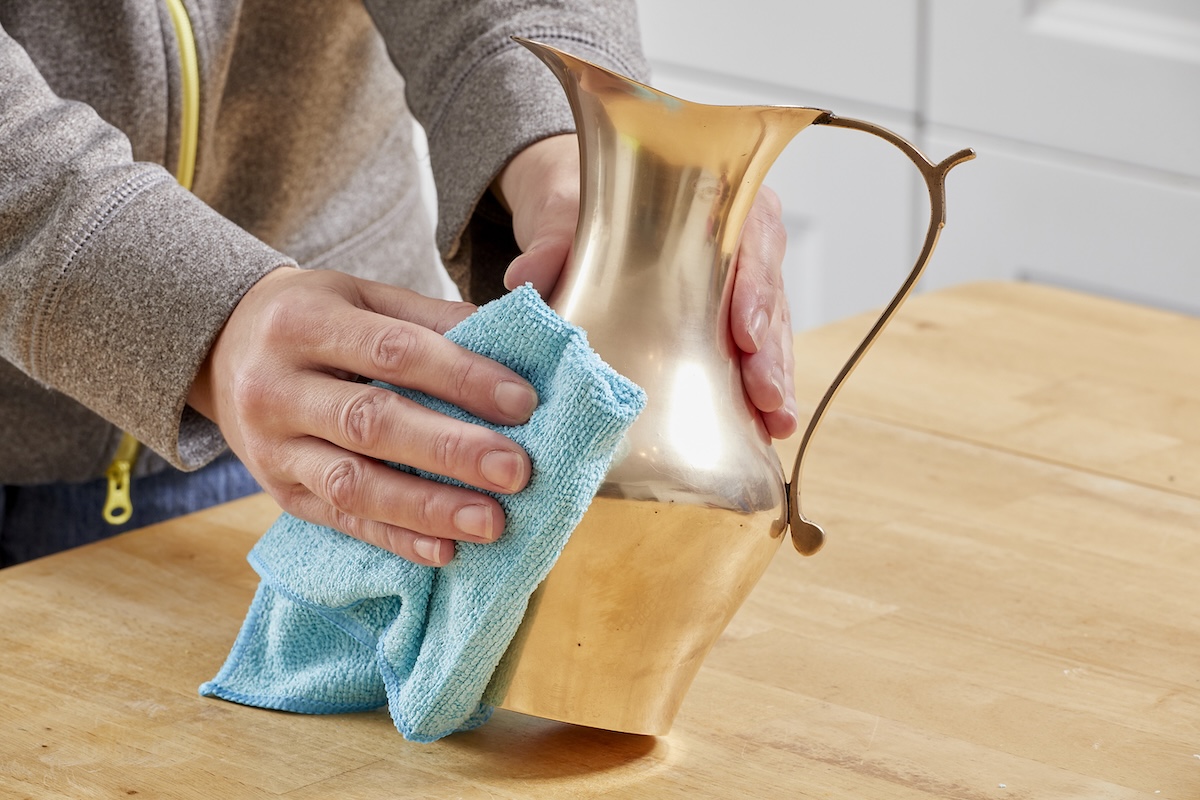
Remove loose dust and residue. Use a dry, soft microfiber cloth to lift dust and light fingerprints. Do not begin with a rough towel or dry abrasive pad.
Mix a mild cleaning solution. Add a few drops of mild dish soap to warm water. The water should be comfortably warm, not hot enough to create unnecessary steam or leave the surface wet for a long time.
Dampen the cloth, not the whole fixture. Wring out a soft cloth so it is damp rather than dripping. This is especially useful around joints, escutcheons, seams, and wall connections where standing moisture can collect.
Wipe gently. Clean the surface with light pressure. On brushed brass, follow the existing grain instead of rubbing in circles. Do not use a brush or pad to work at a spot.
Remove soap residue. Wipe again with a separate cloth dampened with clean water. Leftover soap can create a dull film.
Dry immediately. Use a clean, dry microfiber cloth to remove water from the fixture, edges, and crevices. Drying is one of the simplest ways to reduce water spots and slow tarnishing on unlacquered brass.
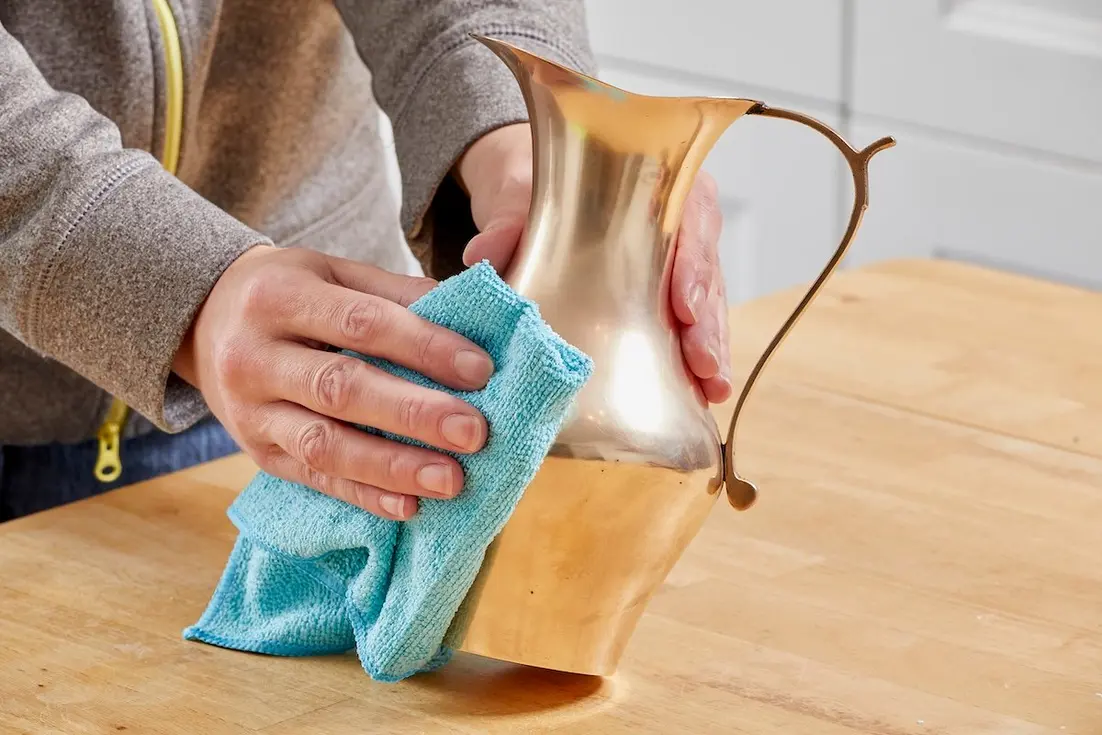
Source: bobvila
What to do about water spots and tarnish
For fresh water marks, repeat the mild soap-and-water routine rather than reaching immediately for vinegar or a metal cleaner. Mineral deposits can tempt you to scrub, but forceful rubbing can create a more noticeable patch than the original spot.
If the fixture is confirmed to be unlacquered solid brass and has widespread tarnish, choose a brass cleaner that is labeled for that type of surface. Apply it sparingly with a soft cloth, follow the product directions, and patch-test first in a hidden area. Rinse away residue if the instructions call for it, then dry thoroughly.
Avoid polishing a lacquered fixture to remove tarnish. The dark or uneven area may be a failing coating rather than tarnished brass. Stripping and refinishing lacquer is a separate restoration job, and aggressive DIY removal can make the surface less uniform.
Brass fixture cleaning mistakes to avoid
- Using vinegar, lemon juice, or other acidic cleaners without approval: These may affect special finishes and can leave uneven results.
- Using bleach or bathroom sprays: General bathroom cleaners may contain chemicals that are unsuitable for brass, lacquer, or plated surfaces.
- Scrubbing with steel wool or scouring pads: These can scratch brass and wear through plating.
- Using metal-bristled brushes: Bristles can leave permanent marks, especially on brushed finishes.
- Applying polish to lacquered brass: Polish is intended for exposed metal and may damage the protective coating.
- Leaving the fixture wet: Water and soap residue are more likely to create spots when they dry on the surface.
- Polishing only one visible section: On unlacquered brass, partial polishing can create an uneven appearance as the cleaned section becomes brighter than the surrounding metal.
- Ignoring the manufacturer’s care instructions: A specialty finish may require a narrower cleaning method than standard solid brass.
How to prevent brass bathroom fixtures from tarnishing
You cannot prevent all color change on unlacquered brass, but you can reduce the moisture and residue that speed up dulling.
- Wipe the fixture dry after showers or hand washing.
- Remove soap film before it builds up.
- Improve ventilation so humid air clears more quickly.
- Keep sprays, toothpaste, cosmetics, and cleaning products from drying on the metal.
- Use a soft cloth regularly instead of waiting until deposits require vigorous cleaning.
- Handle unlacquered brass less when possible, since fingerprints can leave oils on the surface.
Lacquered brass generally needs less maintenance, but it still benefits from gentle wiping and thorough drying. The goal is to protect the coating, not to make the surface shine through repeated polishing.
A simple maintenance schedule
For everyday care, wipe away visible water and soap residue with a dry soft cloth. When the fixture looks dull or feels coated, clean it with mild soapy water, rinse with a damp cloth, and dry it. Unlacquered brass may need occasional approved polishing if you prefer a brighter finish, while lacquered and plated brass should usually stay with the gentlest routine.
When you are unsure whether a fixture is lacquered, plated, or solid brass, avoid experimenting on the most visible area. Check the product information or contact the manufacturer, and use only a small hidden patch for any new cleaner.
References
- How to Clean Brass Shower Fixtures. (n.d.). https://metalworksmorocco.com/blogs/news/how-to-clean-brass-shower-fixtures
- Unlacquered Brass Faucets & Accessory Care and Cleaning. (n.d.). https://support.watermarkfixtures.com/support/solutions/articles/69000796744-unlacquered-brass-faucets-accessory-care-and-cleaning
- How to Clean Unlacquered Brass Faucet. (n.d.). https://www.metalworksmorocco.com/blogs/news/how-to-clean-your-unlacquered-brass-faucet-easy-natural-cleaning-tips
- How Often Should You Clean Unlacquered Brass Fixtures?. (n.d.). https://monbrass.com/how-often-should-you-clean-unlacquered-brass-fixtures
- How to Clean Brushed Brass | Drench. (n.d.). https://www.drench.co.uk/blog/how-to-guides/how-to-clean-brushed-brass
- How to Clean Brass Faucets | Simple Green. (n.d.). https://simplegreen.com/cleaning-tips/bathroom/faucets-and-fixtures-brass
- Uncovered: Why Marks Appear on Unlacquered Brass Taps. (n.d.). https://bespoketaps.com/blogs/news/uncovering-the-cause-of-marks-on-unlacquered-brass-fixtures
- How To Clean Lacquered Brass. (n.d.). https://www.tbks.co.uk/blog/ask-the-expert/how-to-clean-lacquered-brass