How to Design a Masculine Bathroom
A masculine bathroom does not need to rely on clichés or feel cold and severe. The strongest designs use bold lines, practical storage, substantial materials and a controlled colour palette to create a confident but comfortable room.
When considering how to design masculine bathroom interiors, begin with function. Decide how the room needs to work, then choose colours, fixtures, lighting and textures that support that purpose. Every feature should feel deliberate, from the vanity finish to the placement of a single piece of art.
How Should You Choose a Dark Bathroom Colour Scheme?
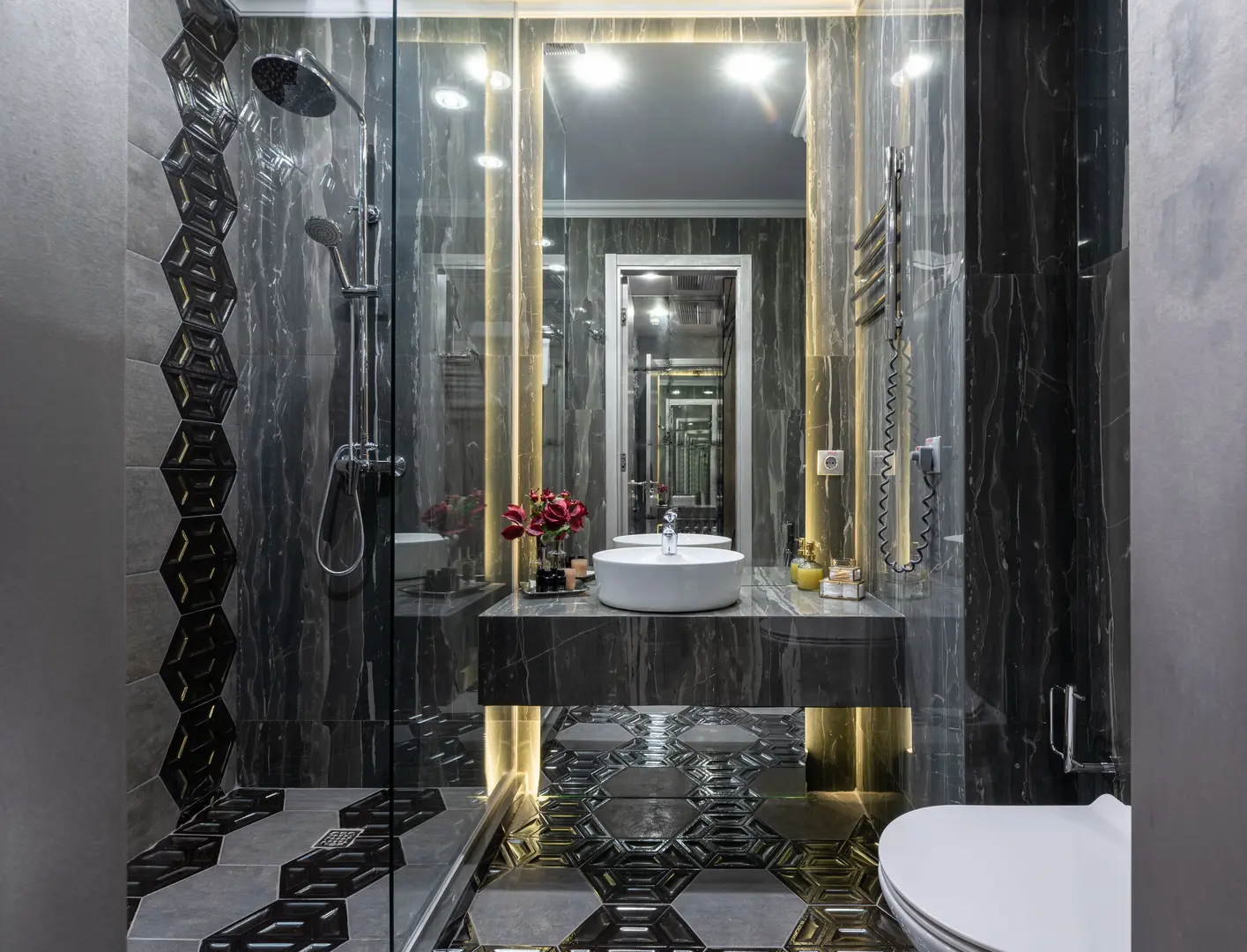
Dark colours are often associated with masculine bathroom design because they create depth and definition. Charcoal, deep grey, black, navy and dark brown can all work, but covering every surface in the same dark shade may make the room feel flat or enclosed.
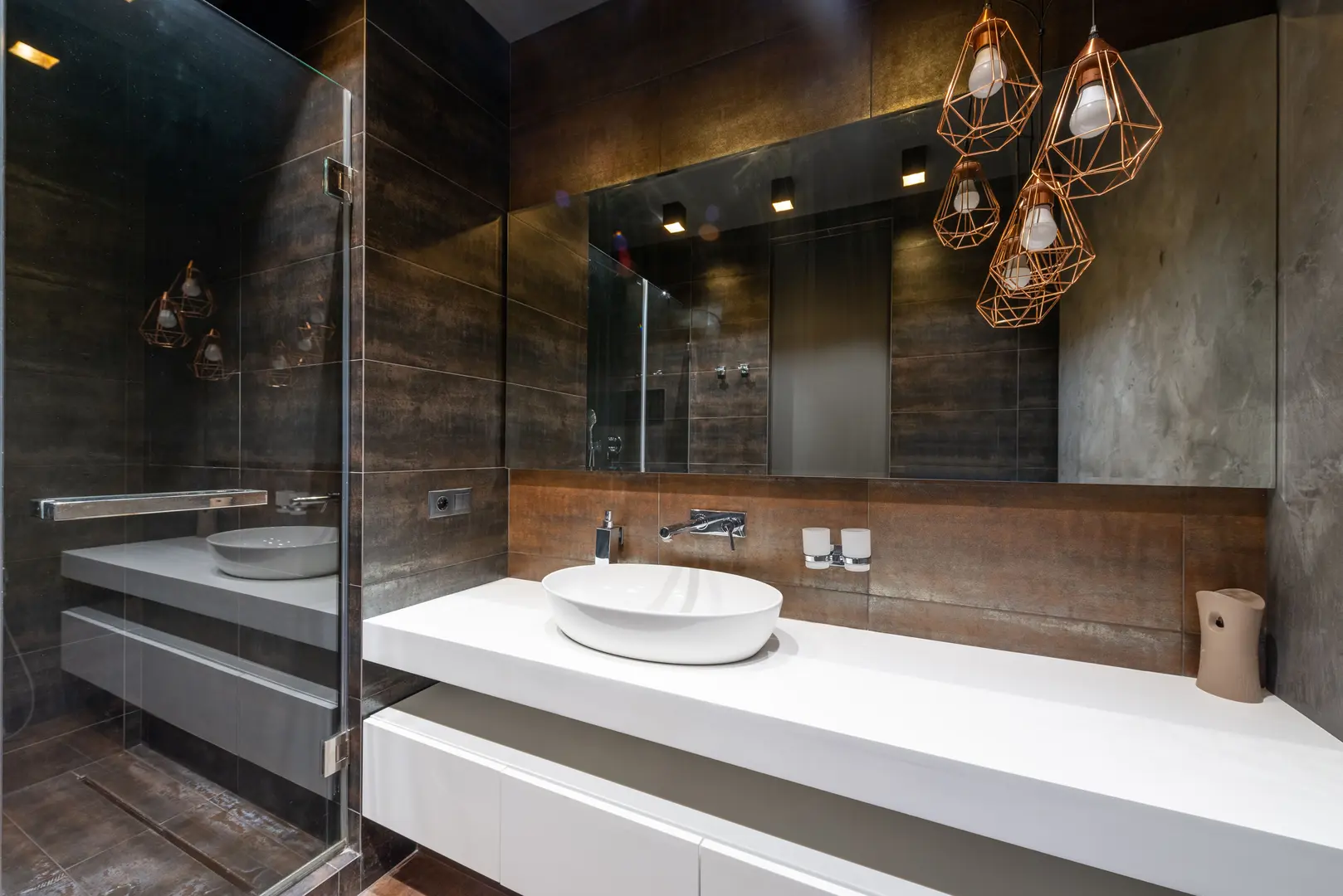
Balance deeper colours with lighter elements. For example, combine charcoal walls with a white basin, pale stone worktop or light timber vanity. A black tiled shower can be offset by a clear glass screen, while a dark vanity may look sharper against a warm neutral wall. The goal is not to dilute the bold palette but to give it enough contrast to remain visually clear.
Consider how much natural and artificial light the room receives. A bathroom with a large window may support dark walls and flooring, whereas a room with limited daylight may benefit from using the darkest shade on only one surface. Other areas can be finished in softer grey, off-white or light wood.
Use contrast to highlight the structure of the space:
- Pair matte black fittings with light wall tiles.
- Combine dark cabinetry with a pale countertop.
- Set glossy tiles against a flat-painted wall.
- Use white towels to break up charcoal or navy surfaces.
- Add warm timber to soften an otherwise monochrome palette.
Remember that “dark” does not have to mean black. Deep green, slate blue and earthy brown can provide the same sense of weight while introducing more warmth. Sample shades in the actual bathroom before committing, as a colour can change noticeably under different lighting conditions.
A limited palette usually creates a stronger result than several competing colours. Choose one dominant dark tone, one lighter supporting colour and one material accent. Repeating those choices throughout the bathroom will help the finished scheme feel cohesive rather than improvised.
Which Bathroom Fixtures and Fittings Suit a Masculine Design?
Fixtures with simple shapes and defined lines fit naturally into a masculine bathroom. Look for uncluttered taps, streamlined shower controls and basins without excessive decorative detail. These features are easier to coordinate and allow the materials and proportions of the room to take the lead.
Chrome and matte finishes produce different effects. Chrome reflects light, which can help brighten a dark bathroom and add a crisp, polished note. It also works well where the design needs a small amount of shine. Matte black, brushed finishes and other low-sheen surfaces have a quieter, more architectural appearance. They can reinforce a dark palette without creating visual clutter.
Neither option is automatically more masculine. Choose according to the wider scheme:
| Finish | Best suited to | Visual effect |
|---|---|---|
| Chrome | Dark rooms needing reflected light | Clean, bright and polished |
| Matte black | High-contrast or monochrome schemes | Bold and graphic |
| Brushed metal | Warm, natural or industrial-inspired rooms | Subtle and understated |
Try to keep visible finishes consistent. A deliberate mixture can work, but randomly combining several metals may weaken the design. If the tap is matte black, repeating that finish on the shower frame, handles or accessories can create continuity.
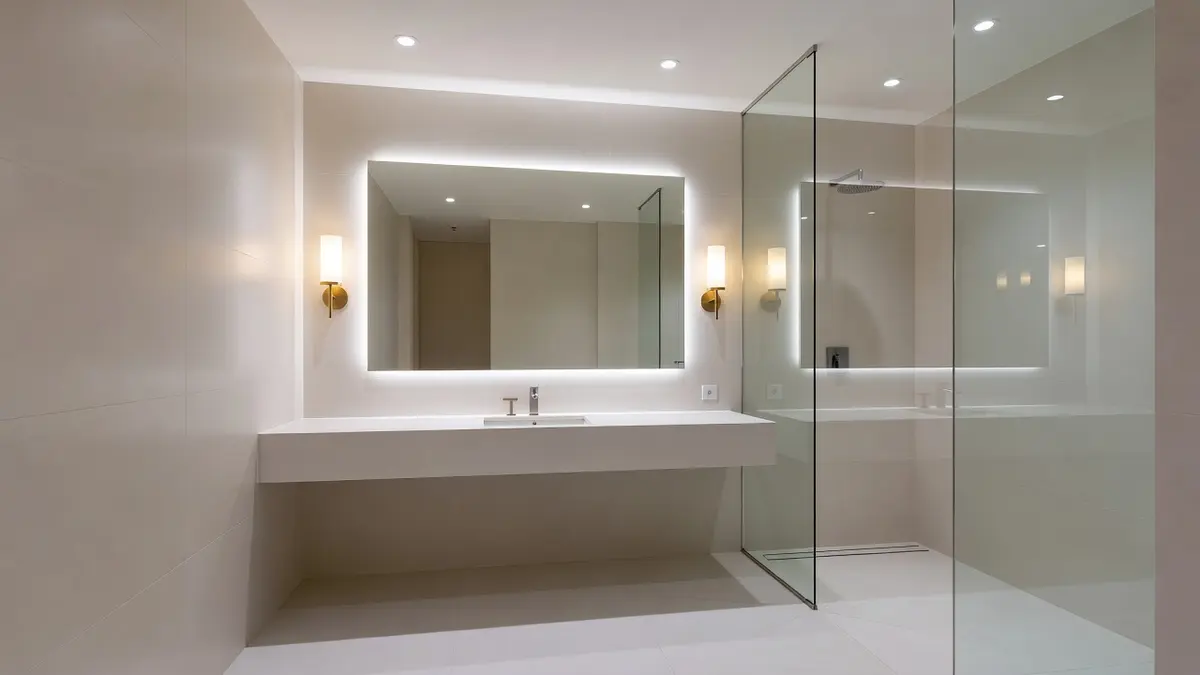
Storage should be treated as part of the architecture rather than an afterthought. A floating cabinet provides useful storage while keeping more of the floor visible. This can make the layout feel cleaner and reduce the number of freestanding items in the room. Choose a cabinet with plain fronts, integrated pulls or simple handles to maintain the minimalist effect.
Before replacing fixtures, confirm what can be changed without relocating the existing plumbing. Keeping the toilet, basin and shower close to their current positions can make an update more manageable. If a layout change is essential, electrical and plumbing work should be planned before ordering cabinets, tiling or finalising the lighting scheme.
Efficiently Removing Heavy Fixtures
Removing an old cast iron bath requires more planning than taking out a lightweight modern fixture. Its weight can make it difficult to lift, turn and carry through a narrow bathroom or doorway. Do not assume that several people can simply move it without a clear route and an appropriate removal method.
Begin by assessing the fixture and the room:
- Confirm the bath material. Make sure it is cast iron rather than a lighter metal or composite fixture.
- Check the access route. Consider doors, corners, stairs and finished surfaces between the bathroom and the exit.
- Disconnect services correctly. Plumbing should be isolated and disconnected before removal begins.
- Protect retained features. Floors, walls, cabinets and door frames may need protection during the work.
- Choose a removal approach. Depending on access, a professional may remove the bath intact or reduce it into more manageable sections.
- Arrange disposal in advance. Do not leave this decision until the old fixture is already out of position.
Because the work involves a very heavy object and connected plumbing, professional assistance is often the practical choice. If there is any uncertainty about the building, access or services, consult an experienced installer rather than improvising.
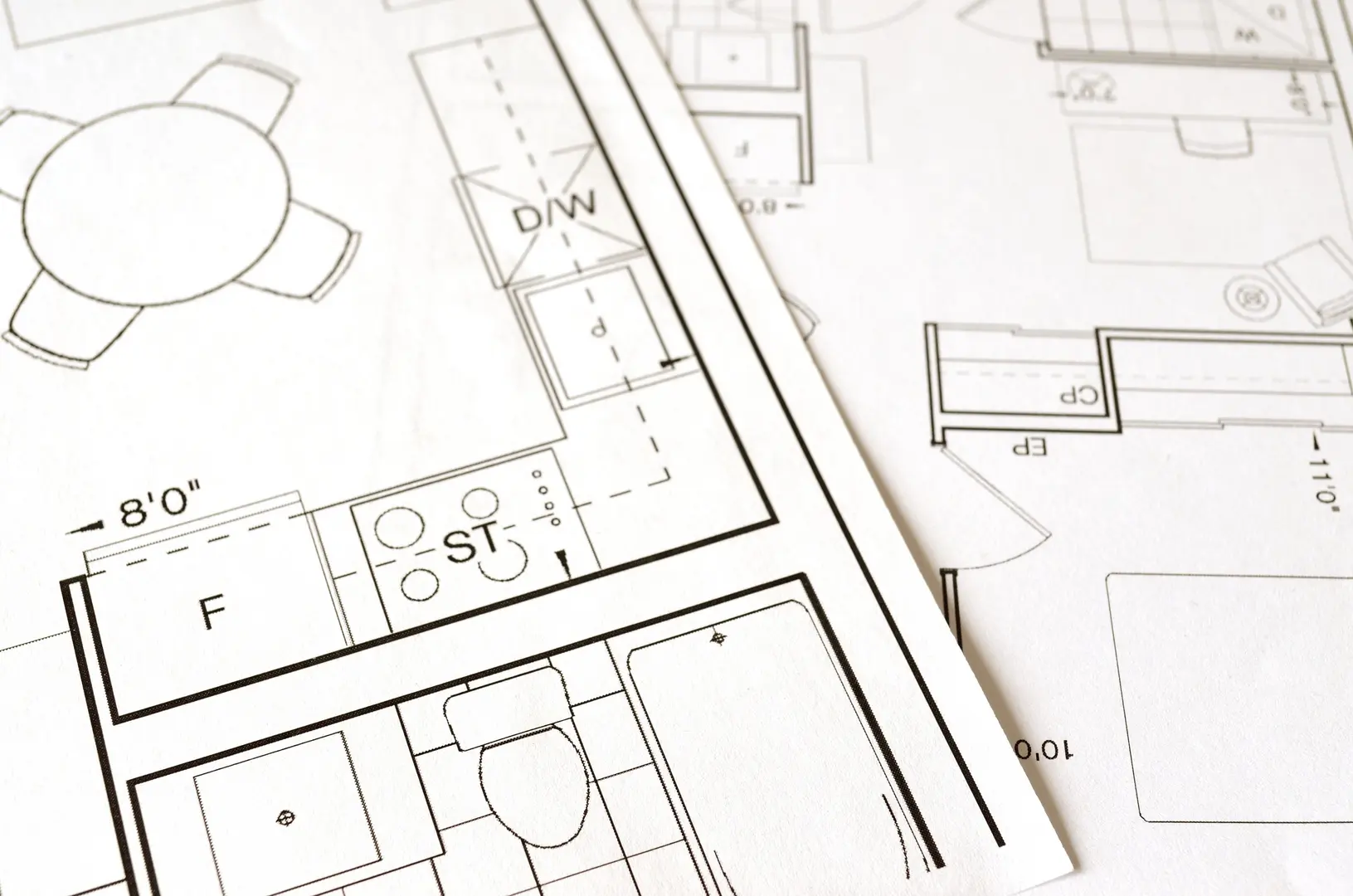
Layout changes also become more complicated when plumbing is set into or routed through a concrete foundation. Moving a toilet, bath or shower may be manageable with suitable expertise, but it is not a minor cosmetic task. Establish the feasibility and cost of the plumbing work before committing to a new floor plan.
For some compatible newer installations, a three-piece shower kit can simplify fitting a shower enclosure. Separate sections may be easier to bring into the room than a single large unit, avoiding the need to alter access simply to move the enclosure into place. However, these kits are not suitable for every bathroom, particularly where dimensions, waterproofing arrangements or existing construction are incompatible. Confirm suitability before purchase.
How Can Bathroom Lighting Change the Atmosphere?
Lighting determines whether a dark bathroom feels sophisticated or gloomy. Rather than depending on one central fitting, layer several light sources so that the room has both practical illumination and atmosphere.
A useful lighting plan may include:
- General ceiling lighting for overall visibility.
- Focused light around the mirror for grooming.
- Accent lighting to draw attention to textured tiles or a feature wall.
- Soft secondary lighting for evening use.
Each layer should have a purpose. Mirror lighting needs to illuminate the face clearly, while accent lighting can be quieter and more directional. Separating these functions also prevents one overly bright fitting from having to do everything.
Choose warm white light rather than a harsh, blue-toned effect. Warm light makes dark grey, timber, stone and earthy colours feel more inviting. It also helps prevent a minimalist bathroom from appearing clinical.
Dimmable lighting offers additional flexibility. Bright illumination may be useful in the morning or while cleaning, while a lower level creates a calmer atmosphere later in the day. Where possible, place different layers on separate controls so they can be adjusted independently.
Reflective surfaces can contribute to the plan. A mirror, chrome fitting or section of glossy tile can move light around the room, while matte surfaces absorb more of it. Balancing the two helps maintain depth without creating excessive glare.
Plan lighting early if electrical work is required. Waiting until after tiles, ceilings or cabinets have been installed can lead to disruption and additional expense. The positions of mirrors, doors and storage should all be confirmed before finalising switches and fittings.
Why Do Materials and Textures Matter in a Masculine Bathroom?
A restricted colour palette can still feel rich when it contains varied textures. Without that variation, a bathroom made entirely from dark grey or black materials may appear one-dimensional.
Mix smooth, rough, matte and reflective finishes. Large-format matte tiles can sit beside a glossy basin. A smooth stone or stone-look counter can contrast with timber cabinetry. Ribbed glass, textured wall tiles or woven towels can introduce detail without adding unnecessary colour.
Natural materials are especially useful for balancing hard bathroom surfaces. Timber brings warmth to black, grey and white schemes, while stone adds substance and an organic pattern. Even when natural materials are used sparingly, they can make the room feel more grounded.
A simple combination might include:
- Matte charcoal floor tiles
- Lightly textured wall tiles
- A timber floating vanity
- A polished or satin basin
- Clear or ribbed shower glass
- Soft cotton towels
Contrast should be controlled. If every surface has a pronounced pattern or texture, the room can become visually busy. Select one or two materials to provide character, then let quieter surfaces support them.
Practicality should guide the final choice. Materials must suit their intended position and the conditions of a bathroom. Confirm that chosen finishes are appropriate for wet areas and follow the relevant installation and care guidance. Masculine style is most convincing when robust appearance and everyday usefulness work together.
How Can a Minimal Bathroom Layout Strengthen the Style?
Minimalism reinforces masculine design by emphasising structure, proportion and function. This does not mean stripping the bathroom of comfort. It means removing items that do not contribute to how the space works or looks.
Start with the essentials: bathing or showering, grooming, storage and circulation. Each fixture should have enough visual and physical space around it to feel intentional. A floating vanity, frameless or simply framed shower screen and uncluttered countertop can make the layout appear more ordered.
Choose quality over quantity. One well-proportioned mirror is usually more effective than several small decorative pieces. A substantial vanity can provide more value than multiple storage units, while one carefully selected tile may create a stronger background than several competing finishes.
Keep everyday products out of sight where practical. Drawers, mirrored cabinets and vanity storage can reduce countertop clutter. Open shelving should be limited to items that contribute to the scheme, such as folded towels, a plant or a small group of well-designed containers.
A full remodel is not always necessary. Cost-effective updates can produce a noticeable change while retaining the existing layout. Consider:
- Repainting the walls in a deeper, more controlled colour.
- Replacing cabinet handles and coordinating visible hardware.
- Updating taps or shower fittings where compatible.
- Installing a simpler mirror.
- Changing cool lighting to warm white options.
- Replacing worn towels, mats and shower curtains.
- Repainting or refacing a sound vanity.
- Removing excess decorative objects and improving storage.
These smaller changes are especially useful when moving plumbing would be difficult or expensive. Preserve fixtures that remain functional, then focus the budget on finishes with the greatest visual impact.
Before beginning a larger remodel, decide whether each proposed alteration improves function. Relocating a toilet simply for appearance may not justify complex work, particularly over a concrete foundation. A thoughtful refresh can often achieve a cleaner masculine style without rebuilding the entire room.
Which Finishing Touches Complete the Look?
Finishing touches prevent a minimalist bathroom from feeling generic. They should reflect the person using the room while staying connected to the overall palette and material scheme.
Art can add personality without taking up storage or floor space. Choose one confident piece rather than filling every wall. Graphic prints, photography or abstract work can suit the clean lines of the room, but the colours should relate to the wider design.
Greenery introduces natural colour and softens hard edges. A single plant in a simple pot may be enough to balance dark tiles, metal fittings and angular cabinets. Select greenery according to the conditions in the room and avoid overcrowding surfaces.
Other personal details might include a neatly displayed fragrance, a favourite shaving set, a timber stool or a carefully chosen tray. These objects should look useful or meaningful rather than added merely to fill space.
Repeat colours and finishes to maintain cohesion. A black frame can echo matte black taps, while a timber accessory can relate to the vanity. Towels may pick up the lighter supporting colour from the walls or countertop. This repetition makes even small accessories feel intentional.
Edit the room once it is complete. If an item distracts from the focal point, conflicts with the palette or creates clutter, remove it. Empty space is part of the design and allows stronger elements to stand out.
Final Thoughts
A successful masculine bathroom combines confidence with restraint. Dark colours, strong materials and bold lines provide definition, but lighter surfaces, warm lighting and natural textures keep the room comfortable.
Prioritise function before decoration. Plan plumbing and electrical work carefully, especially when heavy fixtures or a concrete foundation are involved. Use minimalist fittings, purposeful storage and a limited number of personal details to maintain clarity.
Most importantly, make deliberate choices rather than relying on stereotypes. Whether the finished bathroom is dark and dramatic or warm and understated, it should feel cohesive, durable and suited to everyday use.