How to Fix a Torn Shower Curtain Liner

A small tear in a shower curtain liner can often be held temporarily with a flexible patch or a reinforced hanging hole. Remove the liner, clean and dry it completely, then patch both sides of a tear when possible. For a split grommet or pulled-out top edge, reinforce the area with a larger piece of compatible plastic before rehanging it.
These repairs are best treated as temporary water-containment measures. If the liner is brittle, badly cracked, or torn in several places, replacing it is more dependable than continuing to patch it.
First, identify what failed
The repair method depends on the location and material of the damage:
- Small tear in the lower or middle area: Use a flexible waterproof patch made for vinyl or plastic, provided the product label says it is compatible with the liner material.
- Split hanging hole or torn grommet area: Reinforce the top edge so the hook is supported by more material than the original damaged hole.
- Pulled-out top edge: Create a new supported hanging point beside the damaged area rather than forcing a hook through the tear.
- Fabric liner: A fabric liner may need stitching or a fabric repair patch instead of a plastic adhesive patch.
Most plastic liners are vinyl, PEVA, or another thin plastic. Do not assume that an adhesive suitable for vinyl will also bond safely to PEVA. Check the package for the exact material, and test the adhesive on an inconspicuous part of the liner if the label permits it.
How to repair a small tear in a vinyl or plastic liner
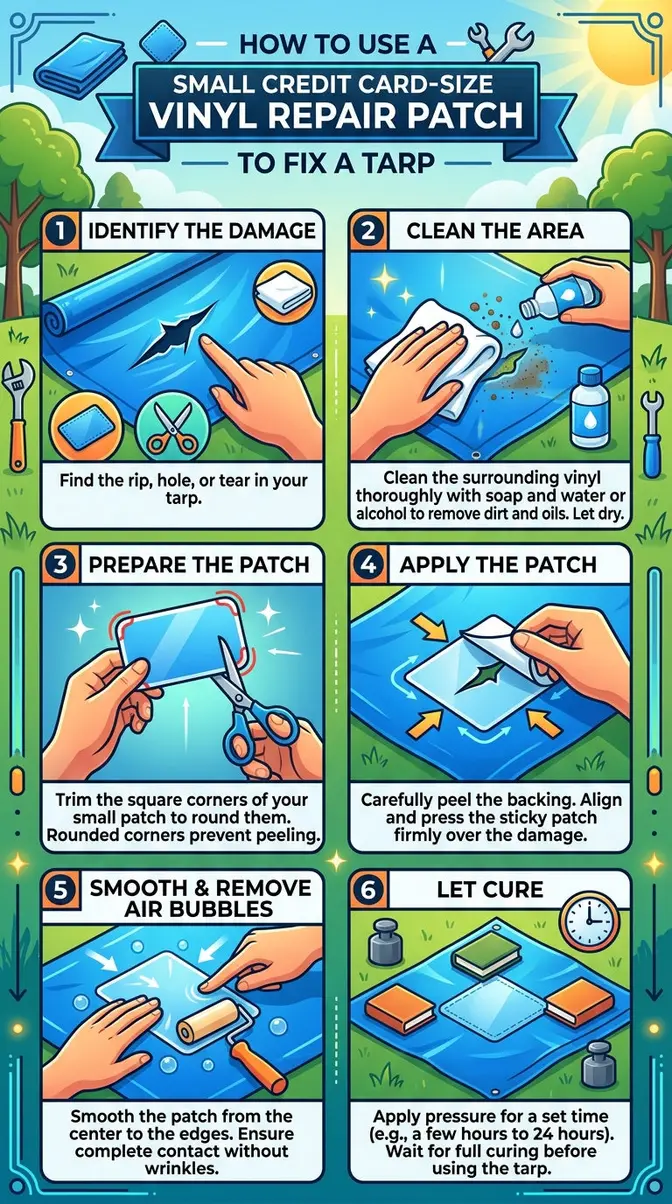
Source: cdn.shopify
What you need
- A compatible waterproof vinyl or plastic repair patch
- Mild detergent and water
- Clean cloths
- Scissors
- Painter’s tape or clips, if needed
- The adhesive specified for the patch, if the patch is not self-adhesive
A bicycle-tire or pool-style patch may work as a temporary option if its instructions allow use on the liner material. A piece of thin, flexible plastic can also serve as a reinforcement, but the adhesive must be compatible with both surfaces.
Steps
- Take the liner down. Do not try to repair it while it is hanging. The rod and hooks can pull against the wet, unsupported material and make the tear longer.
- Wash the area. Remove soap film, body oils, dust, and mildew residue with mild detergent and water.
- Rinse and dry it completely. Wipe away cleaner and allow the liner to air-dry fully. Adhesive will not bond reliably to a damp or dirty surface.
- Trim only loose, ragged edges. Do not enlarge the tear just to make it look neater. Remove dangling fragments that would prevent a patch from sitting flat.
- Cut a rounded patch. Make it larger than the damaged area on every side, and round the corners so they are less likely to lift.
- Apply the patch according to its instructions. Press from the center outward to remove trapped air. If using adhesive, use only the amount and curing method specified on the product label.
- Patch the opposite side when practical. A second patch can sandwich the torn area and reduce stress on the original plastic. Both patches must be clean, aligned, and firmly pressed down.
- Allow the repair to cure before rehanging. Keep the liner flat and do not expose it to shower water until the adhesive has reached the label’s stated cure time.
Avoid folding the liner sharply over the repair. A flexible patch should move with the plastic rather than creating a hard, heavy spot that pulls at the surrounding film.
How to repair a split grommet or pulled-out hanging hole
A torn hanging hole is under more strain than a small tear in the middle of the liner. Simply putting the hook back through the damaged opening usually allows the tear to spread.
For a short-term repair, use a broad reinforcement patch on both sides of the top edge. The patch should cover the torn area and extend well beyond it. Cut a fresh hanging hole through the reinforcement, not through the weakest part of the original tear. Keep the new hole far enough from the edge that the hook will not pull through it.
A rigid but thin plastic reinforcement can work around a damaged hanging point if it is shaped to fit over the top edge. One repair approach uses a small plastic clamp-like piece, adhesive, and clips to hold the parts together while the bond sets. The reinforcement needs to grip both sides of the liner and leave the hanging hole centered in supported material.
Do not use a hard, sharp-edged piece that can cut the liner as it moves. Smooth or round the edges first, and check that the repaired area does not scratch the rod or interfere with the curtain hooks.
If the top edge has pulled away completely
If there is enough intact material beside the damage, make a new hanging point next to the failed one using a reinforcement patch. You can also temporarily bypass the damaged hole with a small cable tie or similar fastener, but the fastener should support the liner without pinching it into a narrow, tear-producing point.
This type of bypass is only a stopgap. It may hold the liner up, but it does not seal the original tear or restore the strength of the top hem. Keep the liner positioned inside the tub or shower and inspect it after the first few uses.
Adhesives and patches: what to avoid
The adhesive is often the weakest part of a home repair. Use a patch system specifically labeled for the liner’s material whenever possible.
- Do not apply an unknown solvent or household glue directly to thin PEVA or vinyl. It may soften, wrinkle, or damage the plastic.
- Do not rely on ordinary clear tape for a lasting wet-area repair. It can lift at the edges as water, heat, and soap reach it.
- Do not use a patch that becomes stiff if the liner must fold or move around it.
- Do not rehang the liner while the adhesive is still tacky or uncured.
- Do not cover mildew, soap residue, or moisture with a patch. Clean and dry the surface first.
A small test on a hidden section can reveal discoloration or softening, but it does not guarantee long-term performance. The product instructions remain the best guide for material compatibility and curing.
When to replace the shower curtain liner
Repair is reasonable when the liner has one small, accessible tear and the surrounding plastic still feels flexible. Replacement is the better choice when:
- The liner has several tears or a long split
- The plastic feels brittle, cloudy, or dry around the damage
- Tears keep forming near repaired areas
- The top edge is failing in multiple places
- A patch will sit where it is constantly folded or pulled
- Water continues to escape after the repair cures
- The liner has extensive mildew or buildup that cannot be cleaned adequately
A repaired liner should contain water during normal showering, but it may not tolerate repeated pulling, children hanging on it, or a heavy curtain pressing against the damaged area. Keep toys, hooks, and accessories from attaching to the repaired section, and make sure the liner hangs freely rather than catching on the tub or shower fixtures.
A simple post-repair check
Before relying on the repair, rehang the liner and inspect the patch from both sides. Confirm that the edges are flat, the hooks are supported by intact material, and the bottom of the liner sits inside the tub or shower.
Run water briefly while watching the repaired area and the floor outside the tub. If the patch lifts, the liner stretches around it, or water passes through the tear, take it down and replace it rather than repeatedly adding adhesive. A temporary repair is useful only while it remains secure and keeps water where it belongs.
References
- Fixing ripped hanging holes in vinyl shower curtains. (n.d.). https://joneakes.com/jons-fixit-database/2195-fixing-ripped-hanging-holes-in-vinyl-shower-curtains
- How to fix a ripped RV shower curtain hanger?. (n.d.). https://www.facebook.com/groups/kamloopsareacamping/posts/3376584822571862
- Easy Does It: How to Clean a Shower Curtain Liner | HGTV. (n.d.). https://www.youtube.com/watch?v=46ziNMkf8to
- Quix Shower Curtain Fix : 9 Steps (with Pictures). (n.d.). https://www.instructables.com/Quix-Shower-Curtain-Fix
- Ripped Shower Curtain Repair. (n.d.). https://www.youtube.com/watch?v=OP7oTSbZMdQ
- Shower Curtain Repair with Cable Ties. (n.d.). https://www.cabletiesunlimited.com/blogs/learn/shower-curtain-repair-with-cable-ties
- How to clean your shower curtain liner, according to experts. (n.d.). https://www.nbcnews.com/select/shopping/how-to-clean-shower-curtain-liner-rcna150660
- How to prevent shower curtain liner from being sucked into …. (n.d.). https://www.facebook.com/groups/homedesign/posts/1623061845083329