How to Get Rid of Drain Flies in the Bathroom
Small flies around a bathroom sink, tub, or shower often come from organic buildup inside a drain rather than from the room’s visible surfaces. To get rid of drain flies in the bathroom, first identify the source, then remove buildup from the drain, stopper, trap-accessible areas, and sink overflow. Continue cleaning and monitoring for several weeks because adult flies may remain after the breeding material has been removed.
Killing the flies you can see may reduce the immediate nuisance, but it does not solve the problem if larvae are still developing in residue inside a drain. Surface cleaning alone is usually not enough.
Confirm that they are drain flies
Drain flies are very small, fuzzy-looking flies with broad, moth-like wings. They are weak fliers and commonly rest on bathroom walls, near a sink, or around a tub and shower. You may see only a few at a time, especially during the day.
Other bathroom flies can look similar, so pay attention to where they gather. Flies repeatedly appearing beside one drain are more suggestive of a drain-related source than insects scattered throughout the room. If the insects are fast-moving, smooth-bodied, or coming from trash, houseplants, or another area, they may not be drain flies.
Find the breeding drain before cleaning everything
Bathrooms may have several possible sources:
- Bathroom sink drain
- Sink overflow opening or channel
- Tub drain
- Shower drain
- Floor drain, if the room has one
- A rarely used drain with a dry trap
A simple overnight test can help narrow the source. Cover a suspected drain opening with clear tape, sticky-side down where possible, or place a clear cup over it. Check the covering the next morning for trapped flies. Repeat the test on other drains if the first one does not identify the source.
This test is most useful when each drain is checked separately. If you cover several openings at once, you may learn that flies are present but not which drain is producing them.
Clean the drain mechanically
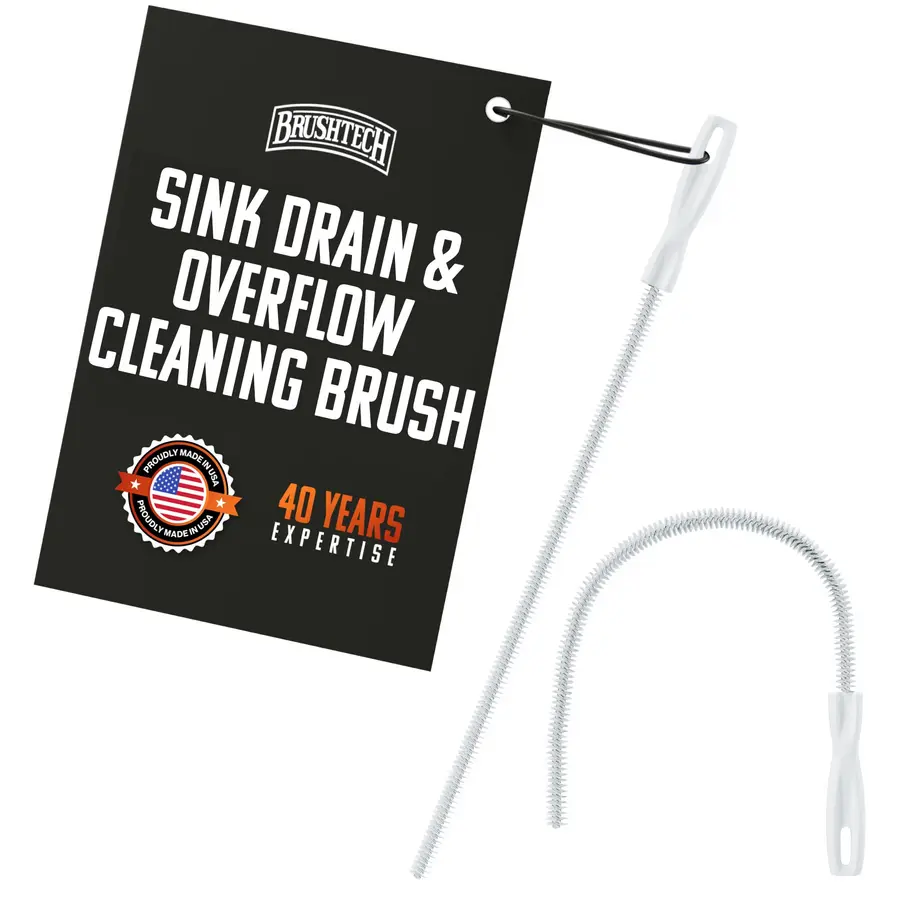
Once you have identified a likely source, remove the parts you can safely access. Take out the sink stopper or drain strainer, then remove hair, soap residue, and other visible debris. Use a narrow drain brush or another suitable stiff brush to scrub the inside of the drain body and the underside of the stopper.
The aim is to remove the slimy organic film where drain fly eggs and larvae can develop. Flushing water through the opening may move loose debris, but it does not necessarily remove the film attached to the drain walls.
For a bathroom sink, clean the overflow opening as well. The overflow is the small opening near the upper inside wall of the basin. It can hold damp residue above the normal water line, making it easy to overlook. Direct an appropriate brush into the opening if possible and clean around its edges.
A tub or shower drain also needs attention below the strainer. Remove the cover if it is designed to come off, clear hair and residue, and scrub accessible surfaces. Do not force a fixed cover or dismantle plumbing that you cannot confidently return to its original position.
Source: m.media-amazon
Flush after removing the buildup
After brushing and removing debris, flush the drain according to the cleaner or maintenance method you choose. A suitable drain-cleaning product may help break down remaining organic residue, but chemical treatment is not a substitute for removing buildup that can be reached with a brush.
Follow the product label, and do not mix drain cleaners, bleach, vinegar, or other chemicals. If you use a commercial product, make sure it is intended for the drain and bathroom surface involved. Boiling water or baking soda-and-vinegar mixtures may provide limited help with light residue near the opening, but they may not reach buildup farther down the line.
If the drain is slow, repeatedly backs up, or remains difficult to clean, the issue may be more than a small surface infestation. At that point, stop adding products and consider having the drain evaluated.
Check rarely used drains and dry traps
A drain that is rarely used can lose water from its trap. That can allow unpleasant odors and insects from the drain system to become more noticeable. Run water through an infrequently used bathroom sink, tub, shower, or floor drain for about 30 seconds, provided the fixture is operating normally.
This does not remove organic buildup by itself, but it restores water to the trap. If a drain repeatedly dries out, smells strongly, or appears to have a plumbing problem, it needs a plumbing inspection rather than repeated insect treatments.
Keep the bathroom less favorable to return visits
After cleaning the suspected source, reduce the moisture and residue that allow buildup to return:
- Wipe standing water from the sink and around the drain.
- Remove hair and soap residue from the shower and tub strainer regularly.
- Clean the sink overflow periodically, not only the visible basin.
- Repair or report leaks under the sink and around the toilet or tub.
- Keep rarely used fixtures in service by running water through them periodically.
- Improve ventilation after showers so damp surfaces dry more quickly.
A shower curtain or liner can also contribute to a damp bathroom if it stays bunched against the floor. Keep the curtain spread enough to dry, and wash or replace a liner when it has persistent residue or mildew-like buildup. This will not treat a drain infestation on its own, but it helps reduce the general moisture around the fixture.
Monitor for several weeks
Do not assume the problem is solved just because the visible adults disappear after one cleaning. Adult flies may still be present, and eggs or larvae may remain in inaccessible residue. Continue checking the suspected drain and repeat cleaning as needed for at least several weeks.
Use the clear-tape or cup test again if flies return. If they reappear at the same opening, the buildup may extend beyond the area you can reach, or another connected drain may be involved. Check the sink, shower, tub, and floor drain rather than treating only the fixture where you first noticed the insects.
When to look beyond the bathroom drain
If careful cleaning of every bathroom drain does not stop the flies, inspect nearby sources. Possible locations include a washing-machine drain area, a floor drain outside the bathroom, a condensate drain, or another seldom-used plumbing fixture. Flies can also enter from a neighboring space, so their location on the wall does not always identify the source.
Persistent flies accompanied by sewage odors, repeated backups, leaks, or a drain that will not hold water are reasons to contact a qualified plumber or pest professional. Those signs suggest a drainage or hidden-moisture problem that ordinary surface cleaning may not resolve.
The practical fix
The lasting approach is source control: identify the drain, scrub away the organic film, clean overlooked openings such as the sink overflow, restore water to unused traps, and keep monitoring. Spraying the adult flies or wiping the wall may make the bathroom look better temporarily, but removing the damp residue where they breed is what addresses the reason they keep coming back.
References
- Drain Flies: What They Are and How to Identify Them. (n.d.). https://www.webmd.com/a-to-z-guides/drain-flies-what-to-know
- How to Get Rid of Drain Flies for Good (Sink & Sewer Flies). (n.d.). https://southlandorganics.com/blog/how-to-get-rid-of-drain-flies
- How to Get Rid of Drain Flies FAST! DIY + Natural & …. (n.d.). https://www.youtube.com/watch?v=Ln0Uf4M3KYU
- Drain Flies - What are they? How do I get rid of them?. (n.d.). https://www.uaex.uada.edu/farm-ranch/pest-management/insect/drain-flies.aspx
- How to Permanently Stop Drain Flies | Green Drain. (n.d.). https://greendrains.com/articles/drain-flies-permanent-solution
- How to identify and get rid of tiny bathroom flies. (n.d.). https://www.facebook.com/groups/igrewupinnorthcarolina/posts/1447039566752705
- Drain Fly Prevention | Blog. (n.d.). https://homeparamount.com/blog/drain-fly-prevention
- The Facilities Manager’s Guide to How to Get Rid of Drain Flies - State Industrial Products. (n.d.). https://www.stateindustrial.com/article/how-to-get-rid-of-drain-flies