How to Hang a Bathroom Mirror on Tile
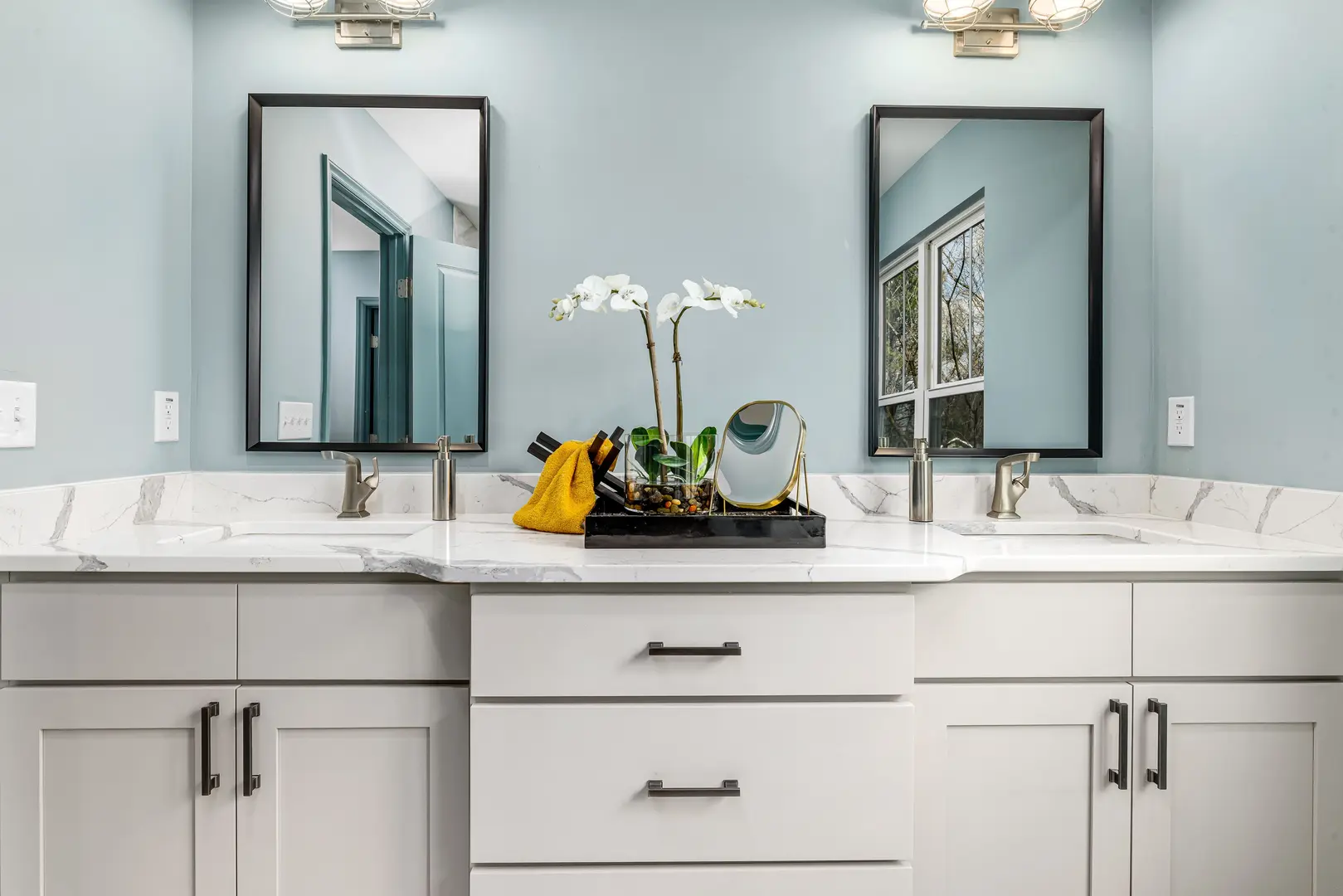
A bathroom mirror can be mounted securely on tile, but the tile is only one part of the installation. The fixing must suit the mirror’s weight and the wall behind the tile, while the drilling method must avoid impact and excessive pressure. For a light frameless mirror, mirror clips or a manufacturer-approved mirror adhesive system may work. A heavy framed, large, or illuminated mirror usually needs mechanical support, and some installations are better handled by a professional.
The safest general method is to plan the position, identify the wall structure, mark the holes, drill slowly through the tile with the correct bit, install anchors or screws suited to the substrate, and support the mirror while it is secured.
Choose the mounting method first
The mirror’s weight, shape, backing, and hanging hardware determine the best method. Do not choose fixings based on the tile alone.
| Mirror type | Common mounting approach | Important consideration |
|---|---|---|
| Small, light frameless mirror | Mirror clips or a suitable mirror adhesive system | Confirm the adhesive is made for mirrors and bathroom conditions |
| Frameless mirror with pre-drilled holes | Mirror clips or brackets | Clips should support the glass without stressing its edges |
| Framed mirror with hanging points | Screws, anchors, hooks, or a bracket | The anchor must match the wall behind the tile |
| Large or heavy framed mirror | Wall bracket, cleat, or multiple rated fixings | Spread the load and follow the mirror maker’s instructions |
| Illuminated or electrically connected mirror | Mechanical mounting plus appropriate electrical work | Follow the product instructions; hardwired work may require a qualified electrician |
A French cleat or Z-bar can be useful for some framed mirrors because it distributes the load along a horizontal rail. It is not automatically suitable for every mirror, however. Check that the mirror has compatible hardware and that the wall rail can be fixed securely.
Check the wall before drilling
Tile can conceal drywall, plaster, wood framing, masonry, or a different backing system. The right bathroom mirror wall fixings depend on that hidden material.
Before marking holes, check the mirror’s installation instructions for its weight and required hardware. Identify whether the proposed fixing points line up with studs or another solid support. If they do not, use anchors specifically rated for the wall type and the mirror’s load.
Also consider what may be behind the wall. Avoid drilling where plumbing or electrical wiring could run, particularly around sinks, outlets, switches, and pipework. If you cannot confidently identify the wall construction or possible services, stop and get appropriate advice before drilling.
Plan the position
Hold the mirror in its intended position and check it from normal standing and seated viewpoints. Above a vanity, leave enough room for the faucet, backsplash, lighting, and any cabinet doors or shelves.
Use a level to mark the mirror’s centerline and the position of its clips, bracket, or wall rail. Measure from fixed features rather than relying only on the tile pattern; tile lines can be slightly out of square.
If possible, have another person hold the mirror while you check the position. For a heavy mirror, make a temporary support or use a suitable prop so you are not trying to hold the full weight while marking holes.
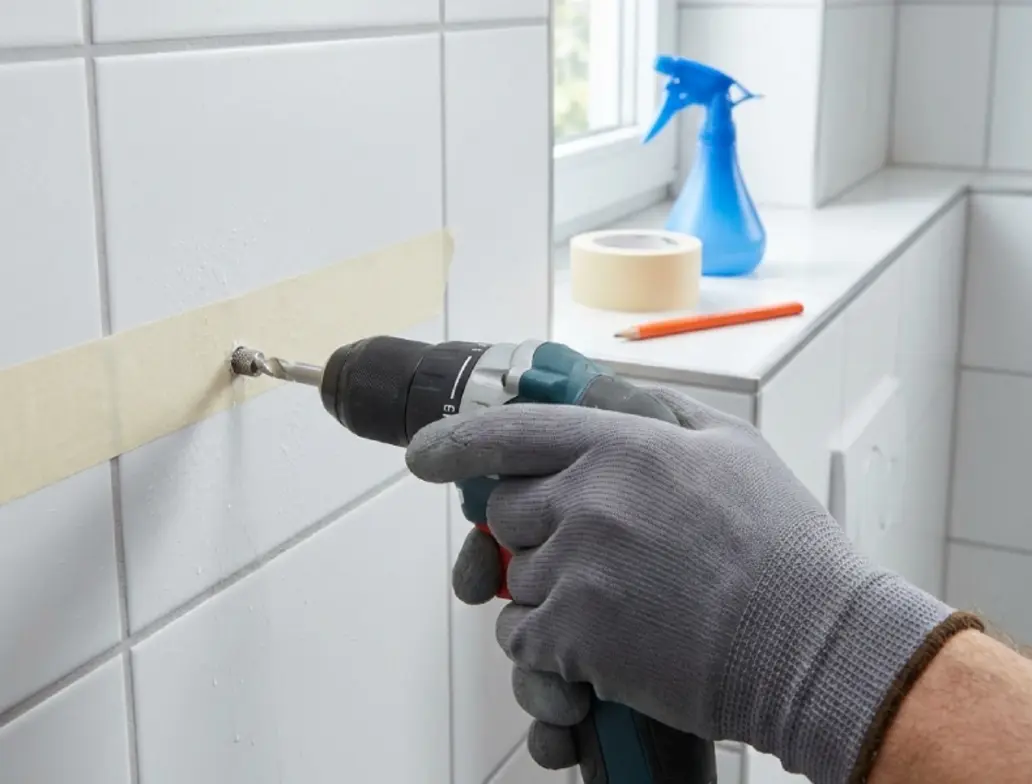
Source: royaltiles.com.au
How to drill through bathroom tile safely
Use a drill with variable speed and a bit designed for the tile surface. A suitable masonry bit may work for some ceramic tiles, while dense porcelain and other hard surfaces may require a diamond bit. Check the bit manufacturer’s guidance for the tile you have.
- Mark the hole. Place masking tape over the drilling point and mark the center on the tape. The tape can help the bit start without sliding across the glazed surface.
- Use the correct drill setting. Set the drill to a low speed and switch off hammer or impact mode. Hammer action can crack the tile.
- Start gently. Hold the drill square to the wall and apply light, steady pressure. Let the bit cut rather than forcing it.
- Control heat. Drill in short intervals and follow the bit maker’s instructions for cooling. If water is recommended, keep it away from electrical connections and the powered part of the drill; a suitable tile-drilling guide or other controlled method may be safer than spraying around the tool.
- Continue through the tile. Once the bit has passed through the tile, the resistance and material may change. Use the bit appropriate for the wall behind it, if required, and do not enlarge the hole by levering the drill.
- Clear the dust carefully. Remove the tape and clean the hole without chipping the tile edge.
Wear suitable eye protection while drilling. If the tile starts to crack, the bit overheats, or the wall does not match what you expected, stop rather than trying to force the installation.
Install the wall fixings
Insert an anchor only if it is the correct type and size for the substrate behind the tile. A plastic anchor intended for drywall is not a substitute for a masonry fixing, and a tile itself should not be treated as a load-bearing material.
Do not hammer an anchor forcefully into a tight hole. If it will not enter with light pressure, check the hole size and anchor instructions. Use screws supplied with the mirror or with the selected mounting system when possible, and confirm that the screw length does not damage hidden services or compress the tile.
For clips, install the lower supports first if the design uses them, then fit the mirror and secure the upper clips. Use any supplied washers or spacers so the clip contacts the mirror as intended rather than pressing directly on a vulnerable edge.
For a bracket or cleat, level the wall portion carefully before tightening the fixings. The mirror should rest on the intended support instead of hanging from one small screw or a single point.
When adhesive can be appropriate
Adhesive can simplify the installation of some light, frameless mirrors, but “adhesive” is not a single safe category. Use only a product or system specifically approved for mirrors and the relevant bathroom surfaces. Some general construction adhesives can damage mirror backing or fail to provide the support the manufacturer expects.
Prepare the tile exactly as directed. It should be clean, dry, and free from soap residue, dust, grease, and loose grout. Apply the adhesive in the pattern and amount specified by its manufacturer, rather than assuming more adhesive is always better.
Adhesive-only installation also requires temporary support while the product cures. Use tape, props, or another method that will not put pressure on the glass or pull it away from the wall. Do not remove the support until the stated curing instructions have been met.
Avoid adhesive-only mounting for a heavy framed mirror, a large mirror that could cause injury if it falls, or a mirror with built-in electrical components unless the manufacturer specifically provides that installation method. Adhesive mounting may also be unsuitable on uneven tile, loose tile, damp surfaces, or walls with poor backing.
Support the mirror during installation
Never rely on one person to hold a heavy mirror while another person tries to fit hardware. Use a temporary ledge, props, or a helper, while protecting the vanity and the mirror edges.
For a frameless mirror, install clips or other supports that prevent the glass from slipping. Leave any clearance required by the mounting system rather than pressing the mirror tightly against the tile. For a framed mirror, make sure the frame is not carrying the load in a way the manufacturer did not intend.
After mounting, check that the mirror is level, all clips or screws are secure, and the glass is not under visible pressure. Open nearby cabinet doors and check that the mirror does not interfere with them.
Common mistakes to avoid
- Using drywall anchors without checking the wall behind the tile.
- Drilling with hammer mode or pressing hard on the bit.
- Drilling directly on a tile edge or corner, where cracking is more likely.
- Choosing adhesive by its general strength claim instead of its mirror compatibility.
- Mounting a heavy mirror with a single small fixing.
- Skipping temporary support while adhesive cures.
- Tightening clips until they press hard against the glass.
- Drilling before checking for pipes, wiring, or waterproofing concerns.
- Assuming a tile that feels solid can support a screw without an anchor.
When to stop and get help
Use professional help when the mirror is unusually heavy or large, the wall backing is uncertain, the installation requires several structural fixings, or the mirror includes hardwired lighting. It is also sensible to stop if tiles are loose, cracked, unusually hard to drill, or part of a wall system you cannot safely identify.
The basic principle is simple: let the tile remain intact, transfer the mirror’s weight to suitable fixings and the wall behind it, and use adhesive only when the mirror and product instructions clearly support that method.
References
- How to Hang Mirrors on Tile: 3 Ways + a Bonus - The Palette Muse. (n.d.). https://thepalettemuse.com/how-to-hang-mirrors-on-tile-3-ways-a-bonus
- How To Hang A Bathroom Mirror Without The Hassle. (n.d.). https://www.perfectmakeupmirrors.com/blogs/news/how-to-hang-a-bathroom-mirror-without-the-hassle
- How to Hang a Mirror on Tile Wall Without Drilling – LED Mirror World UK. (n.d.). https://ledmirrorworld.co.uk/blogs/news/how-to-hang-a-mirror-on-tile-wall-without-drilling
- How to install a bathroom mirror on tiles without cracking them – MirrorZone. (n.d.). https://www.mirrorzone.ie/blogs/news/how-to-install-a-bathroom-mirror-on-tiles-without-cracking-them
- How to Hang on Tile Without Drilling | VELCRO® Brand Blog. (n.d.). https://www.velcro.com/news-and-blog/2025/09/how-to-hang-on-tile-without-drilling
- How To Hang A Mirror On A Tile Wall. (n.d.). https://remingtonavenue.com/how-to-hang-a-mirror-on-a-tile-wall.html
- How to Install a Bathroom Mirror: A Complete Step-by-Step Guide. (n.d.). https://www.givingtreehome.com/blogs/news/how-to-install-a-bathroom-mirror-a-complete-step-by-step-guide
- Instagram. (n.d.). https://www.instagram.com/reel/DSi3AE9kRBW?hl=en