How to Hide a Shower Curtain Liner

If you want to know how to hide a shower curtain liner, start by making it blend with the outer curtain and keeping it properly positioned inside the tub or shower. A liner that matches the curtain, sits slightly behind its side edges, and does not hang noticeably lower will be much less distracting without compromising water containment.
The best-looking arrangement is usually not to remove the liner, but to make it quieter visually. You can do that with color, length, placement, or a washable fabric liner. The important limitation is that appearance should not take priority over keeping water off the floor.
1. Choose a liner that blends in
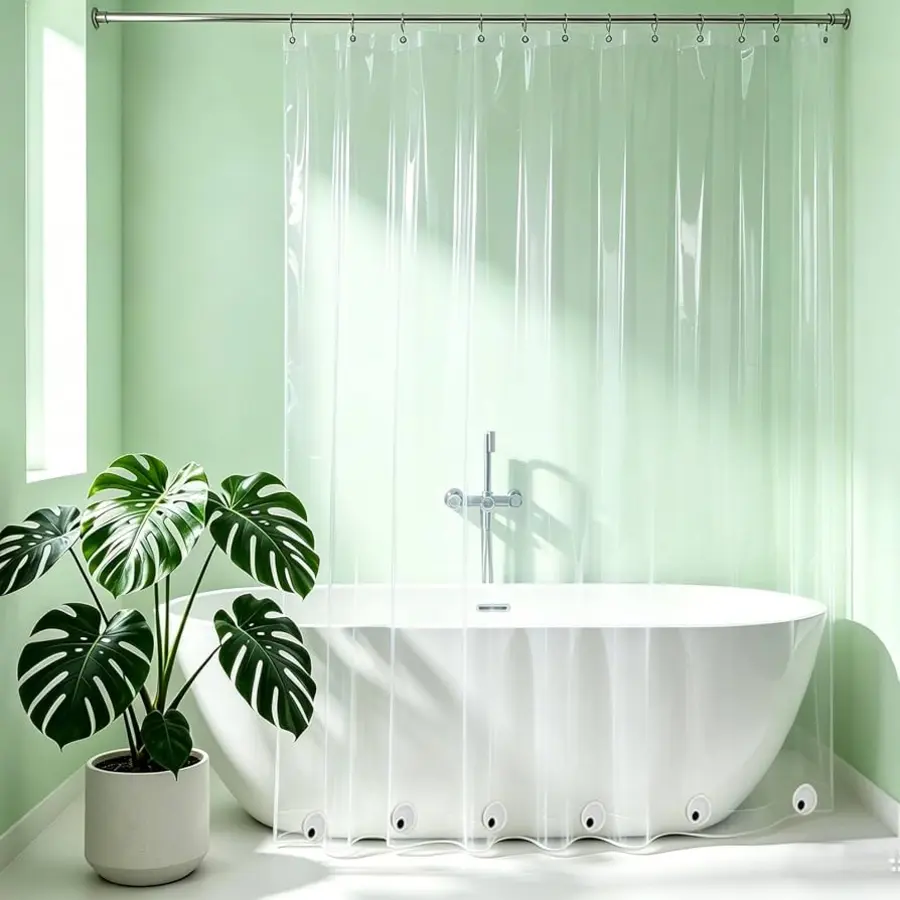
A clear liner is noticeable because it catches light and creates a visible plastic edge beneath the decorative curtain. A liner close in color to the outer curtain usually attracts less attention.
For example, a white liner will recede behind a white or pale curtain more easily than a clear liner with a contrasting edge. With a darker curtain, a gray, beige, or similarly toned liner may look less obvious than bright white, depending on the amount of light in the bathroom.
The goal is not necessarily to match the curtain perfectly. Look for a liner that is close in tone and does not create a strong vertical or horizontal contrast when the curtain is open or partly drawn.
A liner with a simple, quiet surface is also easier to overlook than one with a strong pattern, glossy finish, or prominent colored magnets. If the bottom corners are visible, choose a style whose weights or magnets are not visually distracting.
2. Let the outer curtain be slightly longer
A decorative curtain that ends well above the liner can make the liner look like a separate, unfinished layer. A slightly longer outer curtain can cover more of the liner from the room side and create a fuller appearance.
However, the outer curtain and liner have different jobs:
- The decorative curtain is mainly for appearance and privacy.
- The liner is the water barrier.
- The liner should remain inside the tub or shower area while the outer curtain stays on the room side.
Do not lengthen the outer curtain by allowing it to trail into the tub. A fabric curtain that repeatedly becomes wet may take longer to dry and can become difficult to keep clean. The useful adjustment is to reduce the visible gap between the two layers, not to let both layers occupy the same wet area.
Before replacing the curtain, check where the rod sits and how the existing curtain hangs. A longer outer curtain may conceal more of the liner, but it should still open and close easily without bunching at the floor or tub edge.
3. Position the liner behind the curtain
Sometimes the liner is not too visible because of its material; it is visible because it has been arranged incorrectly. When the curtain is closed, the liner should sit behind it from the bathroom entrance or other main viewing angle.
At the sides, keep the liner inside the tub or shower and let the decorative curtain cover its outer edges. The liner should not be pulled so far forward that it projects past the decorative curtain. At the same time, do not push it completely out of the wet area just to hide it. That can leave an opening for water to escape.
When the shower is in use, the liner needs to remain in its water-containment position. Afterward, spread it out enough to dry rather than leaving it tightly gathered behind the curtain. A liner that looks hidden while wet but stays folded against a damp wall is not a good long-term arrangement.
For a simple adjustment:
- Close both layers and stand at the bathroom entrance.
- Identify where the liner is visible.
- Move the liner slightly behind the outer curtain at the sides.
- Confirm that its bottom edge and corners still stay inside the tub or shower.
- Run the shower briefly and check for obvious gaps or escaping water.
This approach often improves the appearance without buying new hardware.
4. Use a fabric liner instead of a clear plastic one
A fabric liner can look more like a second curtain and less like a transparent plastic sheet. Polyester, nylon, microfiber, and other water-resistant fabrics are common options. Some are designed to be used as the primary shower curtain when their construction provides sufficient water resistance; others are intended to function behind a decorative curtain.
A fabric liner may be a good choice when you dislike the shine or transparency of plastic. Choose a neutral color or one that relates closely to the outer curtain so the two layers read as a coordinated set.
The tradeoff is maintenance. Fabric can be washable, but it still needs regular cleaning and enough airflow to dry fully between uses. Do not assume that a fabric liner is automatically easier to live with simply because it looks better. If it stays bunched or damp, it can develop mildew or an unpleasant odor.
After showering, leave the liner spread out rather than gathered in tight folds. Ventilation helps it dry, and washing it according to its care instructions keeps the material from becoming visibly dingy. A fabric liner is most useful when you are willing to treat it as a washable bathroom textile rather than a maintenance-free layer.
5. Replace the liner only when its appearance is the problem
A liner may become difficult to hide when it has yellowed, developed cloudy areas, curled at the bottom, or lost its shape. In that situation, changing the liner can make more difference than changing the decorative curtain.
For a low-visibility look, consider these features:
- A color that is close to the outer curtain
- A simple, nonreflective surface
- A length that ends near the appropriate tub or shower level
- Bottom weights or magnets that do not stand out
- A material that suits your cleaning routine
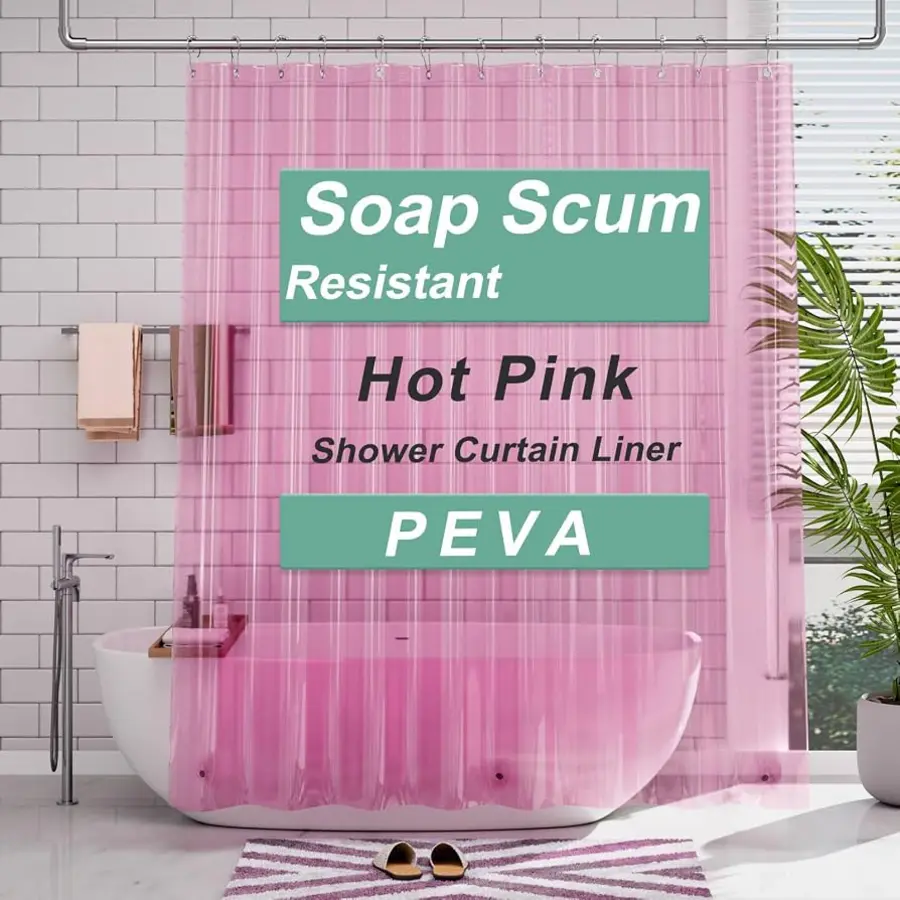
If you choose a plastic liner, a PVC-free option such as PEVA or EVA may be preferable to a conventional PVC liner for readers who want to avoid PVC. If you choose fabric, confirm that it is intended for use in a wet shower area and follow its washing and drying instructions.
The best material depends on what you value most. Plastic-style liners provide a familiar water barrier and are easy to wipe, while fabric liners can look softer and may be washable. Neither choice eliminates the need for correct placement and drying.
Arrangements to avoid
Several attempts to hide a liner can create more problems than they solve.
Do not place the liner outside the tub
Pulling the liner to the room side may make it disappear behind the decorative curtain, but it also puts the water barrier in the wrong position. During a shower, water can run onto the curtain, floor, or nearby bath mat.
Do not cut the liner just to remove a visible edge
Shortening or cutting a liner can create gaps at the sides or bottom. It can also leave a rough edge that looks less finished. If the liner is too visible because it is the wrong size, replacing it is usually a cleaner solution.
Do not seal it tightly against the tub
Adhesive, tape, or improvised attachments may hold a liner in place temporarily, but they can make cleaning and drying more difficult. A liner needs to be secure enough to contain water while still being removable and able to dry.
Do not leave either layer permanently bunched
Gathering the outer curtain in front of the liner may hide it from view, but tightly folded fabric and plastic can trap moisture. Open and spread the liner after use so the wet surface has a chance to dry.
A practical setup for a cleaner look
For most bathrooms, start with the existing rod and curtain. Choose a liner in a similar color, keep its bottom and side edges inside the tub or shower, and arrange the decorative curtain so it covers the liner from the room side. If the liner still stands out, replace it with a quieter-looking model or a washable fabric option.
Then check the arrangement from several positions: the bathroom doorway, the sink, and the shower entrance. The liner should be visually subdued but still clearly positioned to catch water. That balance—less visible, not less functional—is the most reliable way to improve shower curtain styling.
References
- How to prevent shower curtain liner from being sucked into …. (n.d.). https://www.facebook.com/groups/homedesign/posts/1623061845083329
- How to Keep Shower Curtain Liner From Clinging – ownkoti. (n.d.). https://www.ownkoti.com/blogs/news/how-to-keep-shower-curtain-liner-from-clinging
- How to hide an ugly shower AND make the small bathroom …. (n.d.). https://www.tiktok.com/@halezgarciaathome/video/7017828383484660997?lang=en
- 8 Non-Toxic Shower Curtain Liner Options For Your Bathroom - Going Zero Waste. (n.d.). https://www.goingzerowaste.com/blog/non-toxic-shower-curtain-liner
- SO many questions about lining the back of the curtain …. (n.d.). https://www.instagram.com/reel/DbDs9E1qXH-
- The genius new shower curtain porch hack everyone’s …. (n.d.). https://www.facebook.com/Hometalk/videos/the-genius-new-shower-curtain-porch-hack-everyones-copying-this-summer/2186270075501096
- Should I use a plastic shower liner behind a cloth …. (n.d.). https://www.facebook.com/groups/french.country.cottage.and.farmhouse/posts/2175971232859283
- DITCH Your Toxic Shower Curtain With These Natural Brands. (n.d.). https://thefiltery.com/organic-non-toxic-shower-curtain