How to Measure for a Shower Curtain Rod

To measure for a shower curtain rod, measure the straight distance from one wall to the other at the height where the rod will mount. This wall-to-wall span—not the length of the tub and not the width of the curtain—is the starting measurement for most straight, curved, tension, and fixed shower rods.
Then compare that measurement with the rod’s stated fit range or required installed width. Also check where the end brackets or tension caps will touch the walls, how high the curtain needs to hang, and whether the finished rod shape will affect curtain width or clearance around the tub.
Start With the Shower Opening, Not the Curtain
A shower curtain rod spans the opening where the curtain needs to block water. In a typical tub-and-shower combination, that is the distance between the two walls above the long sides of the tub.
Do not measure:
- The inside length of the bathtub unless it matches the wall-to-wall opening exactly.
- The curtain panel as the basis for choosing rod length.
- The rod from end cap to end cap before checking how its brackets or mounting plates install.
- The curved path of a curved rod.
Instead, use a tape measure to find the straight horizontal span between the two finished wall surfaces where the rod will sit. Finished surfaces may be tile, drywall, painted plaster, wall panels, or trim. Measure from the surface that the rod’s ends or brackets will actually contact.
The Basic Measuring Method
Use this method before shopping for a shower curtain rod or marking an installation location.
Choose the mounting line. Decide approximately how high the rod will hang. For a tub, this is usually above the tub rim and near the top of the shower surround or tiled area. For a walk-in shower, choose a height that allows the curtain and liner to stay inside the shower area without dragging.
Measure wall to wall. Hold the tape measure straight and level from one wall to the opposite wall. Record the distance at the proposed rod height.
Measure a second time if surfaces are uneven. Older walls, thick tile, decorative trim, or an out-of-square opening can make the span differ slightly at different heights. If the rod will mount on brackets, measure at the exact bracket height.
Check the rod’s usable range. For an adjustable rod, your opening should fall comfortably within its stated range. Avoid choosing a tension rod that must be extended to its absolute minimum or maximum whenever possible; a little adjustment room makes fitting easier.
Confirm clearance at both ends. Look for tile edges, narrow trim, recessed shelves, medicine cabinets, glass panels, or uneven wall features that could interfere with the rod ends or brackets.
Source: images.thdstatic
How Wide Should a Shower Curtain Rod Be?
The installed shower curtain rod should match the wall-to-wall opening it needs to span. A straight rod should not be selected by adding extra width to the opening. Its ends need a secure contact or mounting point on both walls, so the relevant number is the actual span.
The curtain itself is different: it should be wider than the rod span so it can close with some fullness and overlap the walls or shower edges. A curtain that is exactly as wide as the rod often looks stretched flat and may leave gaps near the ends. The liner also needs enough width to stay inside the tub or shower pan when closed.
When comparing curtain sizes, use the finished rod width as your reference. If you switch from a straight rod to a curved rod, the distance between walls remains the same, but the curtain travels farther across the front because the rod projects outward.
Measuring for a Straight Shower Curtain Rod
A straight rod is the simplest type to measure for. Measure straight across from wall to wall where the rod will be installed.
Tension rods
Tension rods press outward against opposing walls. Choose one whose listed adjustable range includes your wall-to-wall measurement. Check that both contact points are solid, reasonably flat, and clean. A tension rod may be less suitable when there is deep texture, fragile trim, uneven tile, or no reliable opposing wall surface.
Because the rod is held in place by pressure, confirm that it will not need to sit on a narrow tile edge or at an awkward junction between materials. The rod ends should bear evenly on the wall surfaces.
Fixed or bracket-mounted rods
For a fixed rod, measure the span between the walls and read the manufacturer’s mounting instructions before buying. Some rods have brackets that add depth, conceal part of the rod, or allow the rod to be cut down. The stated rod length may not always be the same as the final wall-to-wall span it is designed to fit.
Marking the exact bracket positions before drilling is important. A rod can fit the opening on paper but still be difficult to mount if a bracket lands on an unsupported area, a grout line, or a trim detail.
How to Measure for a Curved Shower Curtain Rod
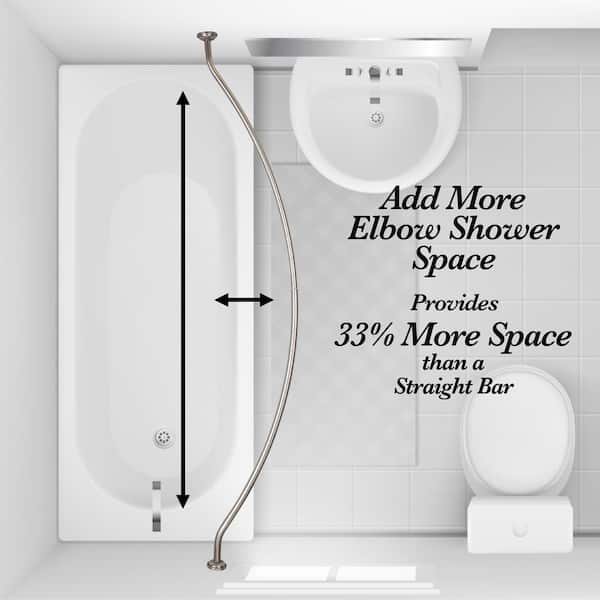
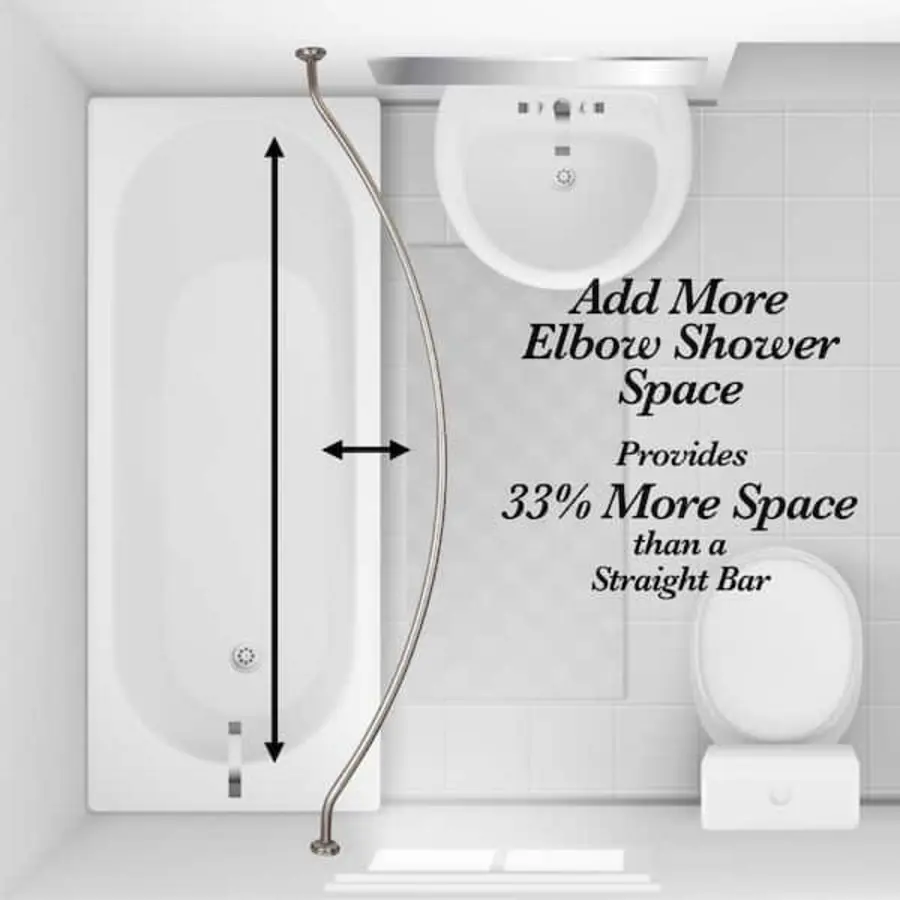
A curved rod creates extra elbow room by bowing outward over the tub or shower. Measure it straight across from wall to wall, just as you would measure a straight rod. Do not run the tape along the arc of the curve.
The curve is already part of the rod’s design. What matters for fit is the distance between the two wall mounting locations.
Before choosing a curved rod, also check the space in front of the tub. Since the center of the rod projects outward, the curtain will sit farther into the bathroom when closed. This can be helpful in a tight shower area, but it may interfere with a door, vanity, toilet, or narrow walkway in a small bathroom.
A curved rod can also change how much curtain width you need. The curtain follows the longer curved path, so a panel that just fits a straight rod may feel less full on a curved one.
Measuring for an L-Shaped or U-Shaped Rod
Corner showers, freestanding tubs, and open-sided shower areas may use an L-shaped or U-shaped rod rather than a single straight span. In these cases, measure the complete route the curtain needs to follow.
For an L-shaped rod:
- Measure the wall-to-wall span for each leg.
- Note which corner connects the two sections.
- Check whether the kit has a ceiling support and where that support would land.
For a U-shaped rod:
- Measure each straight section around the shower area.
- Identify all wall mounting points.
- Check whether the rod needs ceiling supports for stability.
Do not assume the tub’s outside dimensions provide the full answer. The rod may mount slightly inside or outside the tub footprint depending on the wall layout, shower base, and curtain placement.
Choose the Rod Height After Checking the Curtain
Width determines whether the rod fits between the walls, but height determines whether the curtain works well in daily use. Before mounting, consider the curtain length, liner length, hooks or rings, and the height of the tub rim or shower threshold.
Hang the rod high enough that the curtain does not drag on the floor or bunch heavily on the tub edge. At the same time, the liner should extend far enough into the tub or shower pan to help contain water. Rings, hooks, and grommets all affect the finished hanging length, so measure with those parts in mind rather than using the curtain’s package length alone.
For a rental-friendly tension rod, the available wall surfaces may limit the height. For a fixed rod, you have more flexibility, but avoid placing hardware where it conflicts with tile edges, glass, recessed storage, or existing fixtures.
Common Shower Curtain Rod Measuring Mistakes
Measuring the curtain instead of the opening
The curtain is selected after the rod location and installed width are known. A curtain can be wider than the opening; the rod should still fit the walls.
Measuring the tub instead of the walls
The tub length may be close to the rod span, but wall thickness, tile, trim, and mounting position can change the actual measurement. Always measure the place where the rod will contact or mount to the walls.
Measuring a curved rod along its curve
A curved rod is sized by the straight wall-to-wall distance between mounting points. Its outward bow is a feature of the rod, not extra span to measure.
Ignoring the rod’s end hardware
End caps, tension pads, brackets, and mounting plates need room. Review the product diagram and installation instructions before assuming that a listed length will work in a tight opening.
Forgetting bathroom clearance
A curved rod or outward-mounted bracket can bring the curtain farther into the room. Open the bathroom door, check the path to the vanity, and consider nearby fixtures before committing to the rod style.
Quick Measurement Checklist
Before buying, write down:
- Wall-to-wall opening width at the intended rod height
- Rod type: straight, curved, tension, fixed, L-shaped, or U-shaped
- Wall surface at each mounting point
- Any trim, tile edge, shelf, glass panel, or fixture near the rod ends
- Available front clearance if considering a curved rod
- Curtain and liner lengths, including the effect of rings or hooks
- The rod’s stated fit range or installation dimensions
The key is simple: measure the shower opening where the rod will actually install, then choose a rod designed to fit that span. Once the rod location is set, choose a curtain and liner wide enough to close comfortably and long enough to contain water without dragging.
References
- the right shower curtain rail or rod for your | DHgate. (n.d.). https://homegarden.dhgate.com/how-to-choose-the-right-shower-curtain-rail-or-rod-for-your-bathroom
- How to measure for a curved shower rod?. (n.d.). https://www.diychatroom.com/answers/how-to-measure-for-a-curved-shower-rod
- Curved Shower Rod Installation Guide - Facebook. (n.d.). https://www.facebook.com/fb-answers/curved-shower-rod-installation-guide?locale=af_ZA
- Shower Curtain Size Guide | Pepper Home. (n.d.). https://pepper-home.com/blogs/the-thread/shower-curtain-size-guide
- How to Install a Curved Shower Rod - Signature Hardware. (n.d.). https://www.signaturehardware.com/ideas-how-to-install-curved-shower-rod.html
- How to Hang a Shower Curtain Rod. (n.d.). https://www.homedepot.com/c/ah/how-to-hang-a-shower-curtain-rod/9ba683603be9fa5395fab90186c90480
- How High to Hang Your Shower Curtain. (n.d.). https://mariellascustomdrapery.com/how-high-to-hang-your-shower-curtain-rod
- The Proper Placement Of A Shower Rod - Hunker. (n.d.). https://www.hunker.com/12596558/the-proper-placement-of-a-shower-rod