How to Organize Under the Bathroom Sink
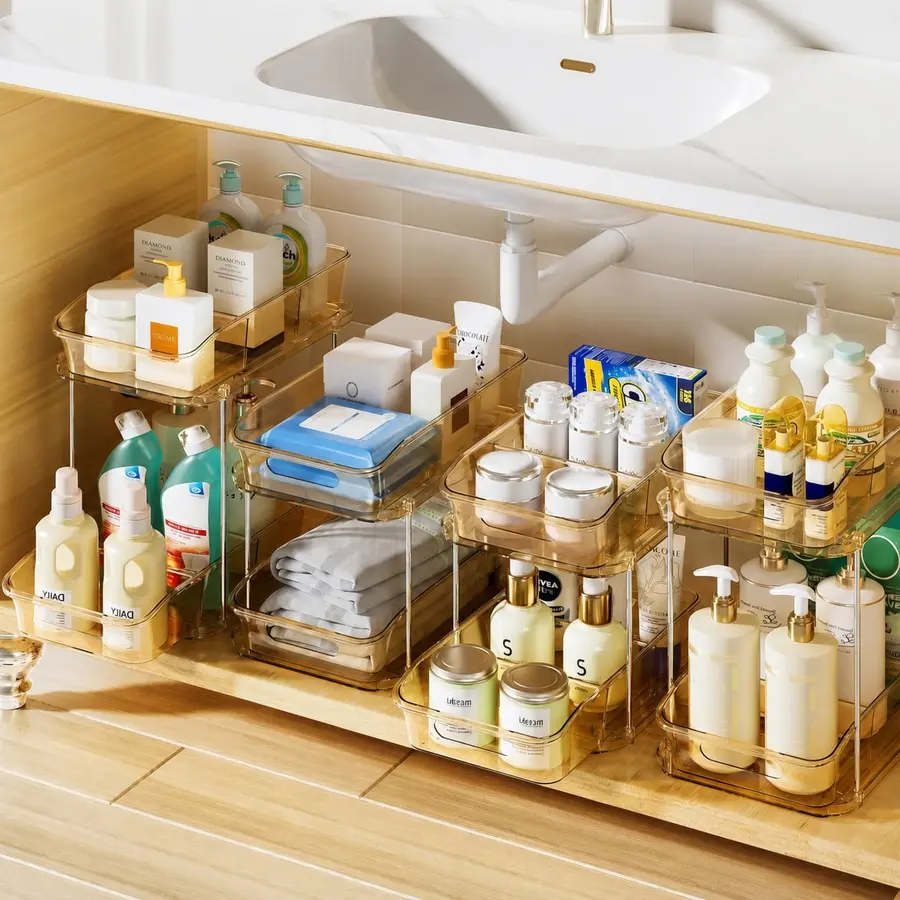
The easiest way to organize under the bathroom sink is to stop treating the cabinet as one large storage area. Divide it into a few accessible zones: keep everyday items toward the front, place backup supplies in the less convenient areas, and leave clear space around the trap, supply lines, and shutoff valves. Use only a small number of washable containers that fit the cabinet without hiding the plumbing.
Before buying organizers, empty the cabinet and inspect it. Remove empty containers, duplicates, and products that no longer belong there. If you see signs of an active leak, dampness, or cabinet damage, deal with that issue before adding storage. Containers can make a cabinet look orderly while making a plumbing problem harder to notice.
1. Empty the cabinet and map the usable space
Take everything out, including loose liners and old storage bins. Wipe the cabinet according to the care instructions for its surface, then allow it to dry before putting anything back.
Look closely at the shape of the space. The drain trap usually creates a central obstruction, while supply lines and shutoff valves may limit the back corners or sides. Also note the door opening, hinges, drawer runners, and any fixed shelf. These details determine which containers can actually be removed without moving everything else.
A simple cardboard mock-up can help. Place boxes or folded cardboard on the cabinet floor to represent possible bins, then check whether they can slide out around the pipes. This is often more useful than choosing containers based only on the cabinet’s outside measurements.
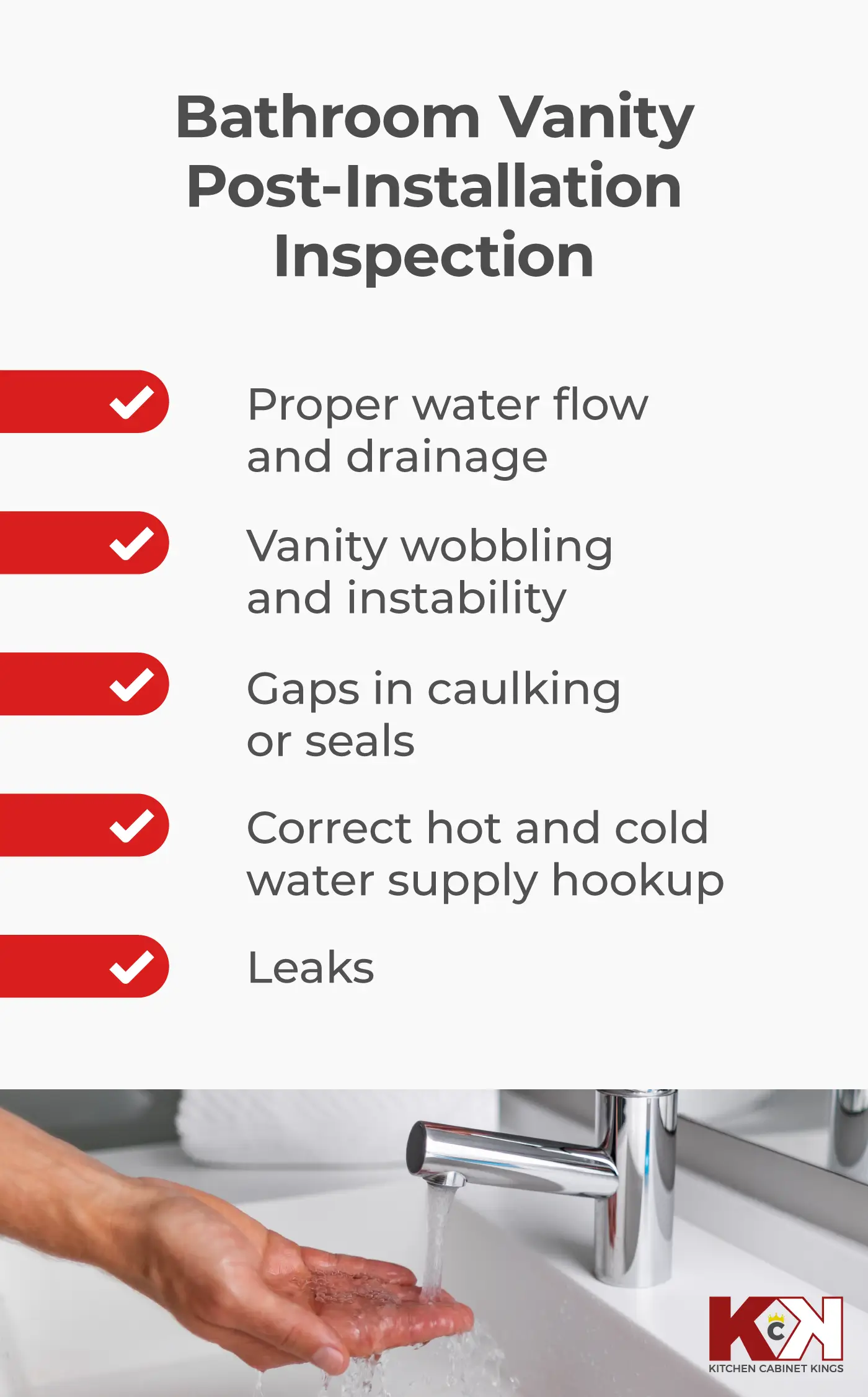
Source: cdn.kitchencabinetkings
2. Group products by how you use them
Organize bathroom sink cabinets by task rather than by packaging type. A practical system usually needs only a few groups:
- Daily personal-care items: products used at the sink or during a regular morning and evening routine.
- Hair and grooming items: brushes, styling products, hair accessories, or small tools that are safe to store there.
- Cleaning supplies: bathroom cleaner, cloths, sponges, and scrub brushes.
- Refills and backups: unopened toiletries, spare soap, replacement sponges, or other reserve supplies.
- Bulky items: items such as a small wastebasket liner roll or larger cleaning bottle that need their own position.
You do not need a separate basket for every product category. Too many small containers reduce usable space and make it harder to return items to their proper place. Two or three broad groups are often easier to maintain.
If multiple people use the bathroom, consider giving each person a defined basket or section. This prevents shared items from becoming mixed with personal products and makes the cabinet easier to reset.
3. Create zones around the plumbing
The plumbing does not have to be an obstacle you organize around randomly. Use it to define the cabinet’s zones.
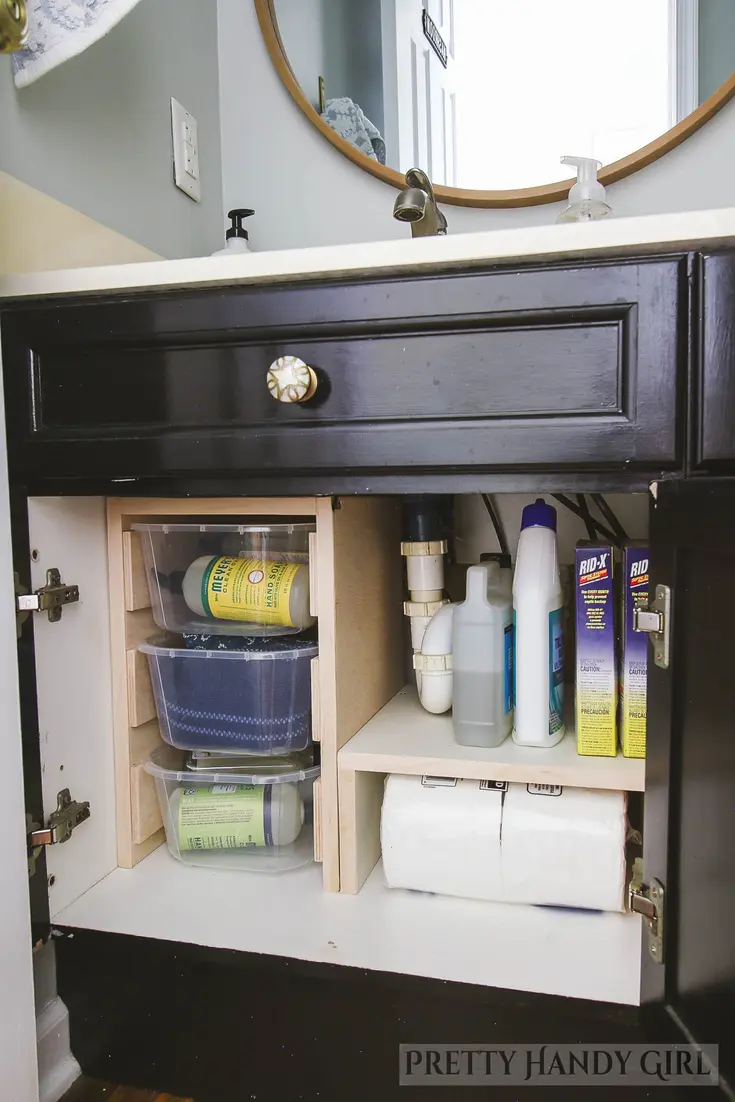
Keep the area directly around the trap and supply lines as open as possible. Place narrow containers or baskets to the left and right of the pipes, depending on your cabinet layout. Store flat or flexible items in spaces that would otherwise be difficult to use, and reserve the front edge for items that need to come out often.
A useful arrangement may look like this:
- Front: daily-use toiletries or the cleaning items used most often.
- Side section: a basket for hair or grooming supplies.
- Opposite side: cleaning cloths, sponges, and compatible cleaning products.
- Back or higher section: unopened refills and occasional-use items.
- Open central area: the trap, supply lines, and access to shutoff valves.
Do not force a container behind a pipe or press products against a valve. Plumbing access matters more than filling every empty corner.
4. Choose containers that suit a damp cabinet
Under-sink storage can encounter splashes, condensation, and small spills, so choose containers that are easy to wipe and remove. Plastic, coated metal, or another moisture-tolerant material may be more practical than an absorbent basket, depending on the cabinet and the items stored in it.
Open baskets are useful when you want to see what is inside. A handled bin or pull-out container can make the back of the cabinet easier to reach, but it should slide out without catching on the plumbing. Shallow containers are often preferable to deep boxes because they reduce the number of items hidden underneath one another.
A stackable organizer can use vertical space, but keep the arrangement low enough that you can reach the lower container. If retrieving one item requires removing several bins, the system is too crowded for everyday use.
A small turntable may help with bottles in an open area, especially when the cabinet is deep. It is less useful if it blocks the trap, occupies the only access path, or leaves bottles unstable when rotated.
Use a removable, washable tray or liner if you want extra protection for the cabinet floor. Keep enough of the floor visible to notice moisture, and do not treat a tray as a substitute for repairing a leak.
5. Put items where they are easiest to reach
The most-used products should be the easiest to remove and return. Place them at the front or in a pull-out basket. Backups can go behind them or in a higher container, as long as they do not block the items you use every day.
Avoid storing a tall bottle in front of several smaller products. It may technically fit, but it turns the cabinet into a row of obstacles. Arrange containers so each group can be lifted or pulled out independently.
For cleaning products, follow the product label for storage and handling. Keep containers closed and upright, and avoid placing incompatible products together in a way that could lead to spills or confusion. If children or pets can access the cabinet, use the child-resistant storage approach recommended for the products in your home and follow local guidance where applicable.
Do not store medicine, cosmetics, or personal-care products under the sink simply because there is room. Heat, moisture, leaks, and cleaning chemicals may make another location more suitable. Check the product label or manufacturer’s storage instructions when you are unsure.
6. Make the cabinet easy to reset
An organized cabinet should be simple to maintain. Label broad containers such as “cleaning,” “hair,” or “refills” if several people use the space or if similar products are easy to confuse. Avoid labels so specific that they become inaccurate as soon as you replace one item.
Leave some spare capacity in each container. A basket that is packed to the top will quickly become difficult to use, and loose items will eventually collect on the cabinet floor. When a container stays full, remove duplicates or reconsider whether that category belongs under the sink.
Once in a while, take everything out long enough to check for leaks, dampness, damaged packaging, and products that should be discarded. The timing can be part of your normal bathroom cleaning routine rather than a separate large project.
Source: prettyhandygirl
Common mistakes to avoid
Filling every gap
Empty space is useful when it allows you to see the cabinet floor, reach the plumbing, or remove a container without unloading the cabinet.
Using deep, opaque bins for small items
Deep containers hide products and encourage duplicates. Use shallow or open storage when visibility matters.
Blocking the shutoff valves
Keep valves and connections accessible. If you cannot reach them without moving several bins, rearrange the cabinet.
Storing items directly on a damp surface
Moisture can damage packaging and cabinet materials. Use a removable, washable tray when appropriate, but still investigate any recurring water.
Organizing before decluttering
No container can solve a cabinet filled with expired, empty, or duplicate products. Reduce the contents first, then choose storage for what remains.
A simple layout to start with
For a typical cabinet, begin with one handled basket for cleaning supplies, one open container for daily personal-care or grooming items, and a separate spot for refills. Keep the center and plumbing access clear. Place the daily-use basket near the front, put backups farther back, and leave bulky or occasional-use items in the remaining space only if they do not interfere with access.
This approach keeps under-sink storage practical rather than crowded. The goal is not to use every inch of the cabinet; it is to make the items you need easy to find while leaving the plumbing, cabinet floor, and possible leaks visible.
References
- 25 Under Sink Organization Ideas for More Storage. (n.d.). https://alfalahtrader.com/under-sink-organization-ideas
- 27 Ways to Organize Under the Bathroom Sink - The Cleaning Mommy. (n.d.). https://thecleaningmommy.com/organize-under-the-bathroom-sink
- Under-Sink Bathroom Organization Without Buying 20 Containers | SoulFeel. (n.d.). https://thesoulfeel.com/articles/under-sink-bathroom-organization
- Organize Under Bathroom Sink. (n.d.). https://www.pinterest.com/ideas/organize-under-bathroom-sink/955871411416
- The Best Under Bathroom Sink Storage Is a Bright Spot in the Darkness (2026) | Architectural Digest. (n.d.). https://www.architecturaldigest.com/story/best-under-bathroom-sink-storage
- Bathroom Storage - The Container Store. (n.d.). https://www.containerstore.com/s/bath/1
- The Best Under Bathroom Sink Storage Is a Bright Spot in the Darkness (2026) | Architectural Digest. (n.d.). http://archdigest.com/story/best-under-bathroom-sink-storage
- 15 Designer Bathroom Cabinet Storage Ideas. (n.d.). https://newbathtoday.com/blog/15-designer-approved-bathroom-cabinet-storage-and-organization-ideas