How to Remove a Shower Curtain Rod Without Damaging the Wall
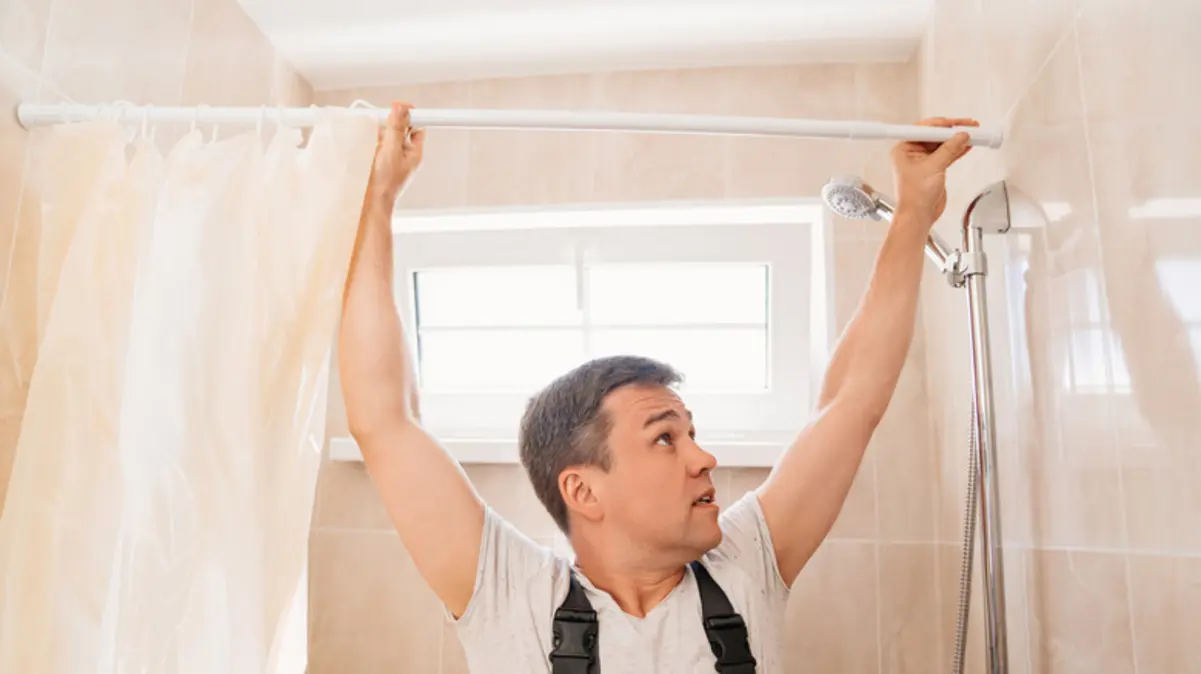
Removing a shower curtain rod is usually straightforward, but the method depends on how it is mounted. A tension rod comes down by releasing its pressure between the walls. A fixed rod requires the brackets, screws, or mounting plates to be removed first. Adhesive-mounted holders need a slower approach so you do not pull off paint, drywall paper, or tile surface.
Start by removing the curtain and hooks, then identify the rod type. Work with one hand supporting the rod while you release it, and avoid prying directly against tile or painted drywall.
Identify the type of shower curtain rod
Look at both ends of the rod before using a tool.
- Tension rod: The rod presses directly against the side walls and usually has rubber or plastic end caps. There may be a spring, threaded section, or locking collar.
- Spring-loaded rod: This is a type of tension rod. It may look like a simple telescoping tube and can be released by compressing or twisting it.
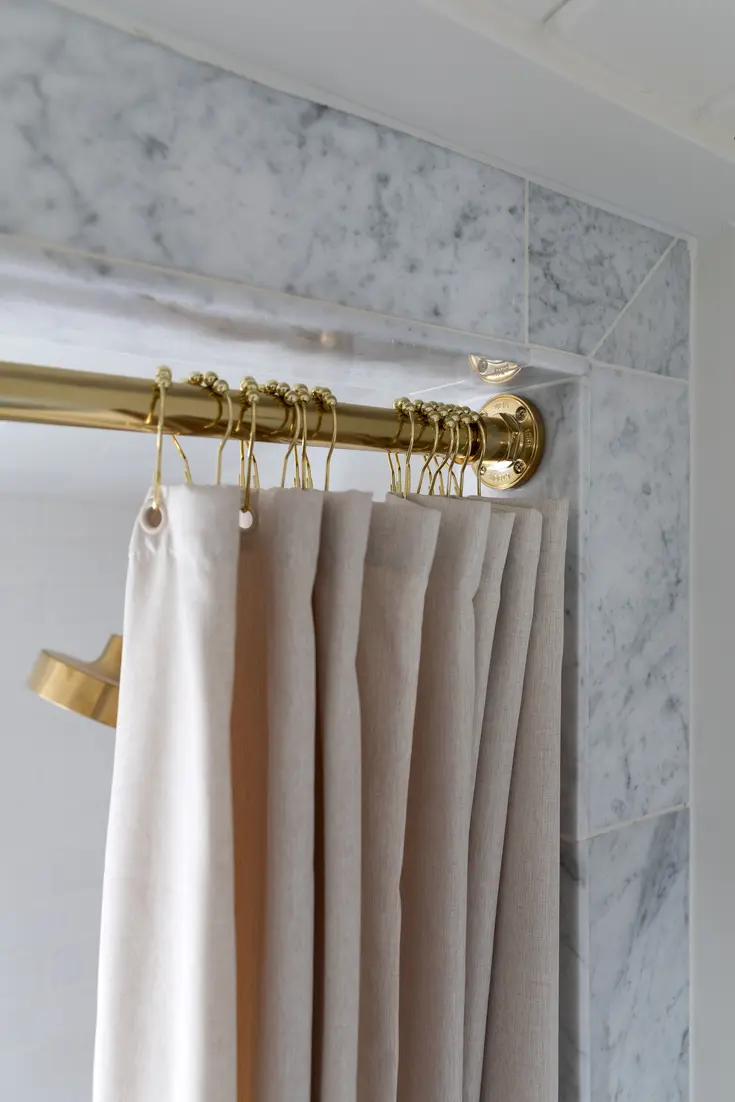
- Fixed rod: The ends sit in wall brackets or mounting plates. You will usually see decorative covers, screws, or small retaining hardware.
- Adhesive-mounted rod: The holders are attached with adhesive pads or strips rather than visible screws. Some rods combine adhesive holders with light tension.
Source: images.squarespace-cdn
If you cannot see the mounting hardware, do not immediately pull or twist the rod. Check underneath the end covers for a small opening, tab, set screw, or seam.
How to remove a tension shower curtain rod
A basic tension rod can often be taken down without tools.
- Remove the curtain and rings. This reduces the weight and gives you a clear view of the rod ends.
- Support the center of the rod. Place one hand under it so it cannot drop or swing into the wall.
- Release the tension. For a threaded rod, turn the rod or adjustment collar to make it shorter. For a spring-loaded rod, press or pull the rod toward one wall to compress it slightly.
- Lower one end at a time. Once the rod is shorter than the opening, angle one end away from the wall and lower the other end.
- Remove the end caps if they remain behind. Lift or twist them gently rather than scraping them off with a sharp tool.
Some tension rods have a locking mechanism instead of a simple twist. Look for a collar, button, or lever and follow its movement while keeping the rod supported. If the rod resists, do not force it against the wall; additional pressure can mark paint or loosen a tile.
If a tension rod is stuck
Paint, soap residue, or a wall that is slightly out of square can make a tension rod difficult to release. Hold the rod securely and try shortening it through the adjustment section. A second person can support the opposite end while you work the collar.
If adhesive holders were added to keep the rod from slipping, treat the holders separately. Do not pull the rod sharply, because the adhesive may lift paint when the tension suddenly releases.
How to remove a fixed shower curtain rod
A fixed rod is attached to brackets, so remove the rod and brackets in a controlled order.
- Take down the curtain and hooks. Set them aside before working on the hardware.
- Inspect the bracket covers. Decorative covers may slide, twist, snap off, or have a small notch along the edge.
- Remove the covers carefully. If a cover has a notch, use a thin flat screwdriver only at that opening. Protect the surrounding wall with a cloth and avoid levering against tile.
- Support the rod and loosen the fasteners. Have one hand under the rod while removing the screws, pins, or retaining hardware.
- Lower the rod. With the brackets loose or removed, take the rod down rather than letting it hang from one remaining fastener.
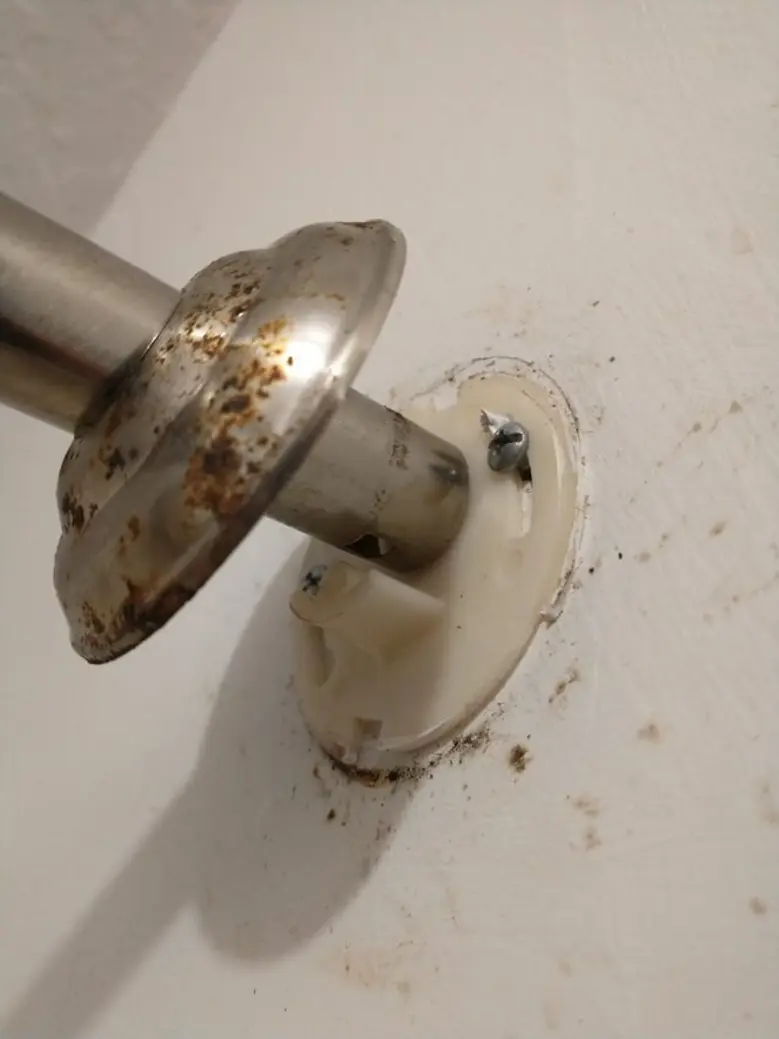
- Remove the mounting plates. Take out the remaining screws and keep the hardware together in case you need to identify the mounting arrangement later.
If a screw head is covered with paint or caulk, score around it lightly with a utility knife before turning the screw. Use the correct screwdriver bit and press firmly into the head to reduce the chance of stripping it.
Source: cimg4.ibsrv
For a screw that will not turn, apply steady pressure and work it back and forth rather than forcing a sudden twist. If the screw head starts to deform, stop and change tools or use a method intended for removing damaged screws. Prying the bracket away from the wall can enlarge the hole or chip nearby tile.
Removing adhesive-mounted holders
Adhesive holders require patience because the adhesive may be stronger than the paint or wall surface beneath it.
First, remove the rod and any tension from the holders. Then check whether the adhesive strip has a pull tab. If it does, pull the tab slowly in the direction recommended for that type of strip, keeping it close to the wall rather than pulling straight outward.
If there is no tab, warm, soften, or separate the adhesive only in a way that suits the holder and wall material. A thin piece of dental floss or similar line can sometimes help cut through adhesive behind a holder without prying against the wall. Work slowly and stop if the paint, drywall surface, or tile finish begins to lift.
Do not use a sharp blade as a wedge between an adhesive holder and tile. It can scratch the tile or damage the grout edge. On painted drywall, pulling the holder outward is more likely to remove paint and paper than to leave a clean surface.
Clean the wall after removal
The cleanup depends on what remains.
- Light dirt or soap residue: Wipe with a damp cloth and a mild household cleaner suitable for the surface. Dry the area afterward.
- Adhesive residue: Remove it gradually with a plastic scraper or cloth. Avoid aggressive scraping on painted walls and abrasive tools on tile.
- Screw holes in drywall: Remove loose debris, then fill small holes with an appropriate patching compound. Allow it to dry, sand lightly, and touch up the paint.
- Screw holes in tile: Do not fill or enlarge them casually. If the replacement rod uses different mounting points, select hardware and an installation method suited to the tile and the wall behind it.
- Old caulk: Cut the edges carefully and peel away the loose bead. Remove the remaining film without gouging the wall or tile.
If a screw spins without coming out, the wall anchor may be turning with it. Pulling harder can enlarge the hole. Keep the bracket supported and use controlled pressure; if the anchor is damaged, remove the bracket and repair the opening before installing the replacement.
Common mistakes to avoid
- Pulling down on a fixed rod before removing its brackets
- Forgetting that a tension rod may be spring-loaded
- Letting the rod drop after releasing the last fastener
- Prying decorative covers against tile or painted drywall
- Using a metal scraper on adhesive or grout
- Reusing a stripped screw or damaged wall anchor
- Covering holes before checking the location of the replacement rod
Before patching anything, hold the new rod or mounting plates near the wall and confirm the planned height and position. This prevents filling a hole that may still be useful.
The simplest removal method
To take down a shower curtain rod without damaging the wall, remove the curtain first, identify the mounting style, and release the rod rather than forcing it. Shorten tension rods before lowering them. For fixed rods, remove covers and screws while supporting the rod. For adhesive holders, separate the adhesive slowly and avoid prying.
Most wall damage happens when the rod is pulled before its attachment method is understood. A few minutes spent inspecting the ends and brackets can make replacement or relocation much easier.
References
- Shower curtain rod: tension or screwed in? | Houzz Forum. (n.d.). https://www.houzz.com/discussions/5568603/shower-curtain-rod-tension-or-screwed-in
- Tension Rod Hack - How to Fix a Tension Rod. (n.d.). https://food52.com/story/27098-tension-rod-hack
- How To Remove Rust From A Shower Curtain Rod | Storables. (n.d.). https://storables.com/furniture-and-design/bathroom-accessories/how-to-remove-rust-from-a-shower-curtain-rod
- shower - How to remove curtain rod holder. (n.d.). https://diy.stackexchange.com/questions/234861/how-to-remove-curtain-rod-holder
- How to: Uninstall your shower curtain rod.. (n.d.). https://www.youtube.com/watch?v=vEY1s3V4QEs
- How to Replace Shower Curtain Rods | DoItYourself.com. (n.d.). https://www.doityourself.com/stry/replacing-shower-curtain-rods
- Replacing a standard tub’s fixed shower curtain rod without …. (n.d.). https://www.facebook.com/groups/homedesign/posts/1750042105718635
- Shower curtain rod finial removal - DoItYourself.com. (n.d.). https://www.doityourself.com/forum/designing-kitchens-bathrooms/636506-shower-curtain-rod-finial-removal.html