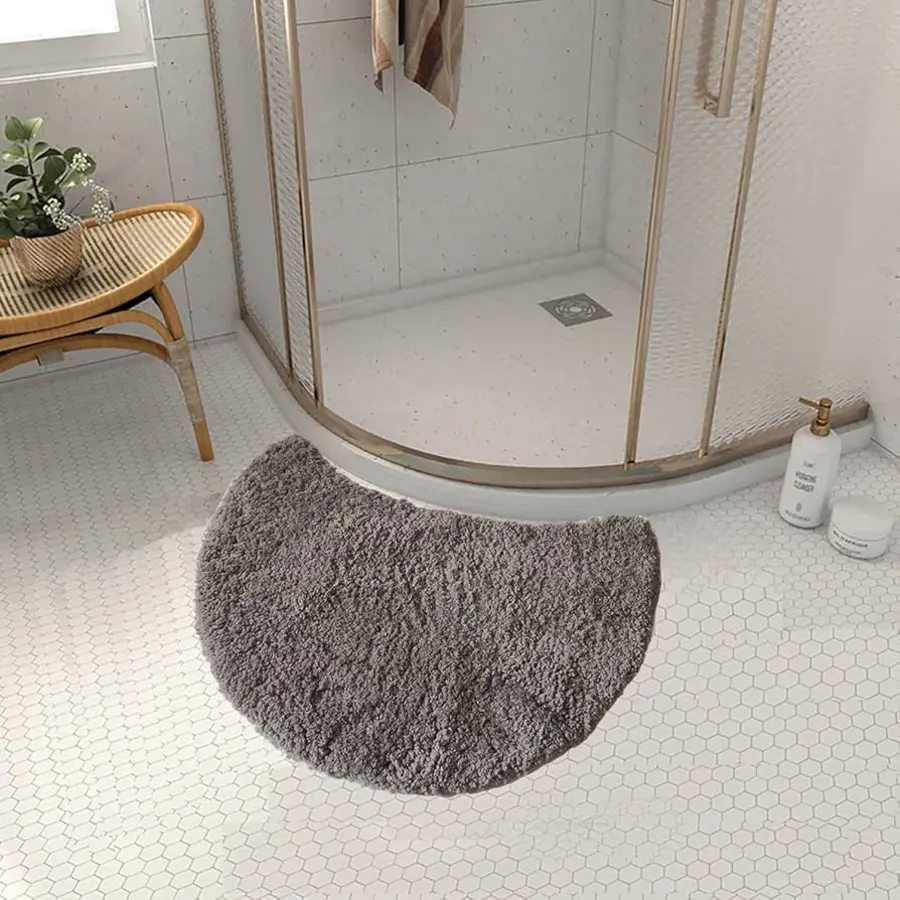
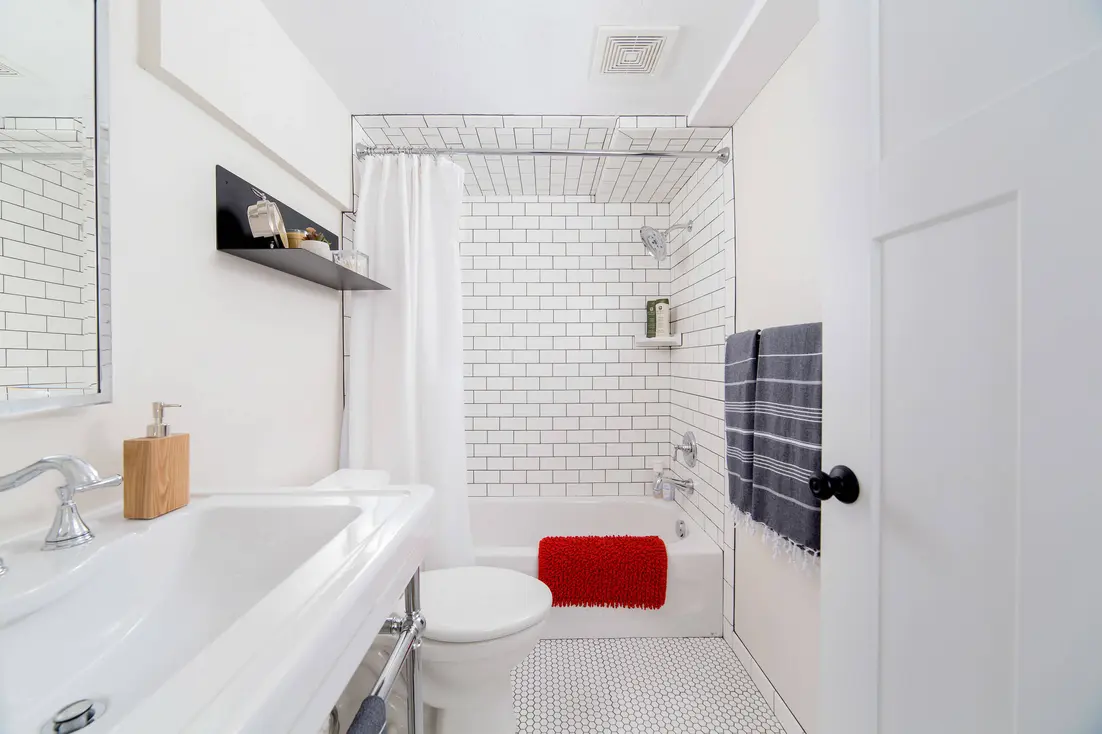
How to Stop a Bath Mat From Sliding on Tile
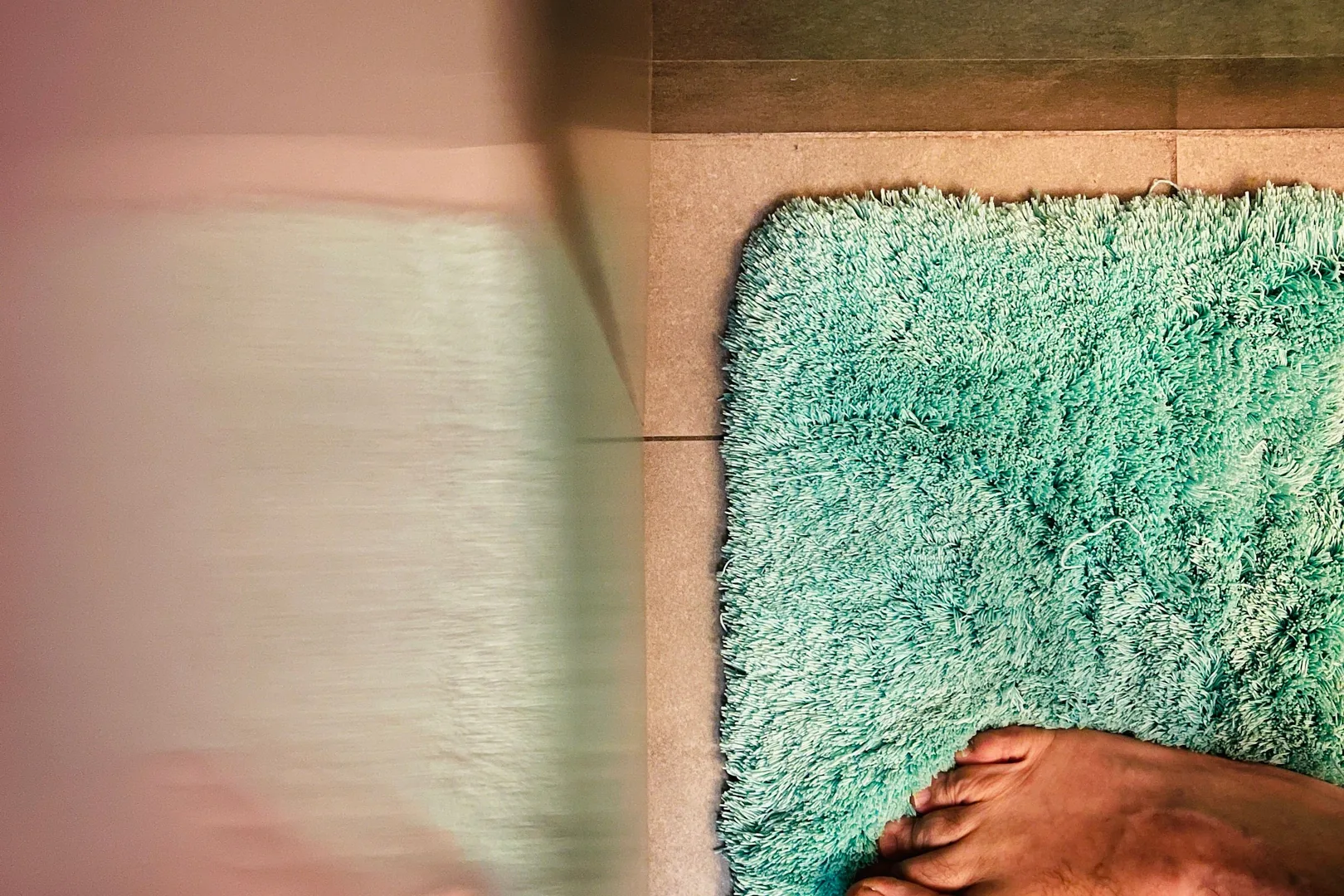
A bath mat usually slides because its underside, the tile, or both have a thin layer of moisture, dust, soap residue, or worn-out backing between them. To stop a bath mat from sliding on tile, start by washing and fully drying the mat and floor. Then check the backing for cracks, hard spots, peeling, or smooth worn areas. If the mat still moves, use a non-slip underlay that is labeled compatible with your flooring, or replace the mat with one that has fresh, stable grip backing.
Do not rely on a mat that shifts when you step on it. A loose mat can be frustrating to straighten, but it can also move unexpectedly as you exit the shower. The safest choice is a mat that lies flat, stays in place during normal use, and can still be lifted for drying and cleaning.
Why a bath mat keeps moving
Tile is smooth and nonporous, so a bath mat needs enough friction underneath to resist the sideways force of a footstep. Several ordinary bathroom conditions reduce that friction.
The underside is damp or dirty
Even a mat with bath mat grip backing can slide if the backing is wet, dusty, coated with lint, or covered in residue from detergent, fabric softener, lotion, or cleaning products. Moisture can also collect beneath a mat that is left on the floor after showers.
Lift the mat and feel the tile underneath. If it is damp, let both surfaces dry before putting the mat back. A mat should not be used to cover standing water; wipe up the water first.
The backing is worn out
Rubberized or latex-style coatings can become stiff, crack, peel, or wear smooth over time. Once the grippy surface has deteriorated, cleaning may help briefly but usually will not restore the original hold.
Turn the mat over and inspect it in good light. A backing that is patchy, flaking, sticky, brittle, or visibly smooth in the areas where people step is a sign that replacement is likely the better fix.
The tile has a residue layer
Tile can look clean while still carrying a film that affects traction. Soap scum, body-care products, floor polish, waxy cleaners, and improperly rinsed cleaning solution can all make the surface feel slicker.
Use a floor cleaner that is suitable for your tile and grout, following the flooring or cleaner manufacturer’s directions. Rinse or wipe away cleaner residue as directed, then dry the area thoroughly. Avoid using a product simply because it is labeled for general household cleaning if your floor manufacturer advises against it.
The mat is too small, too light, or poorly placed
A small, lightweight mat may travel across smooth tile even when its backing is intact. This is especially common when only part of the mat is being stepped on, such as when it is placed too far from the shower exit or tucked against a vanity.
Place the mat where both feet naturally land after stepping out. It should lie flat without a curled edge, overlap, or nearby obstacle that catches a foot. If the main traffic area extends beyond the mat, a larger mat may be more practical than repeatedly repositioning a small one.
Start with this simple cleaning and drying reset
Before buying anything, clean the contact surfaces. This solves many cases where a non slip bath mat on tile floor has gradually begun to move.
- Pick up the bath mat and remove loose hair, lint, and debris from its underside.
- Wash the mat according to its care label. Do not assume every rubber-backed mat can be machine washed or dried.
- Clean the tile beneath and around the mat with a product compatible with the floor finish.
- Remove all cleaner residue according to the product directions.
- Dry the floor completely, including grout lines and the area nearest the shower.
- Let the mat dry fully on both sides before returning it to the floor.
- Test it with a gentle sideways push from your hand, then step onto it carefully while holding a stable nearby surface if needed.
If the mat slides during this basic test, do not keep using it in that location until you change the setup.
Choose the right fix for the cause
The best solution depends on whether the problem is a dirty surface, failed backing, or a mat that does not suit the floor.
| What you notice | Practical fix |
|---|---|
| The mat used to stay put but recently began moving | Clean and dry the underside and tile; inspect for residue or damaged backing. |
| The backing is cracked, peeling, or hard | Replace the bath mat. Worn backing is not reliably repairable. |
| The mat has no grip backing | Add a separate non-slip underlay made for the flooring, or choose a mat with a suitable backing. |
| The mat moves only when wet | Improve drying habits, wipe up water before replacing the mat, and consider a quicker-drying mat. |
| The mat shifts because only one corner is stepped on | Reposition it or choose a larger, flatter mat that covers the landing area. |
| The floor finish has special care instructions | Follow those instructions and confirm any underlay or tape is compatible before use. |
Using a non-slip underlay safely
A separate underlay can help when the mat itself has no traction backing or when you want to use a washable cotton mat. Look for an underlay designed for use beneath rugs or bath mats on hard flooring. It should be large enough to support most of the mat without extending beyond the edges.
Trim only if the product instructions allow it. The underlay should remain hidden, lie flat, and not bunch up underneath. Lift both the mat and underlay regularly to clean and dry the floor below.
Compatibility matters. Some rubber, PVC, latex, or plasticized underlays may react with certain vinyl flooring, floor coatings, sealers, or finishes, particularly when left in place for long periods. A product package may identify suitable and unsuitable floor types. If it does not, check with the flooring manufacturer or the underlay manufacturer before using it.
This is particularly important for luxury vinyl, sheet vinyl, recently installed flooring, painted floors, natural stone, and surfaces with specialty sealers. Do not treat a generic “non-slip” label as proof that a product is safe for every floor.
Be cautious with adhesive strips and tape
Double-sided carpet tape, glue dots, and permanent adhesive strips can seem like an easy answer when a bath mat keeps moving. They are often less practical in a bathroom because mats need to be lifted for washing and the floor beneath needs regular drying.
Adhesives can also leave residue, pull at a floor finish, discolor some surfaces, or make the mat difficult to remove. Avoid them unless both the flooring manufacturer and the adhesive product specifically indicate that the product is appropriate for your floor type and intended bathroom use.
Never use an adhesive solution to compensate for a curled, damaged, or unstable mat. Replacement is safer than trying to force a failing mat to stay down.
When to replace the bath mat
Replace the mat when its backing has visibly failed, its edges curl, it stays damp for long periods, or it continues to slide after the floor and mat have been cleaned and dried. Also replace it if it has become difficult to launder according to its care instructions.
When shopping, focus on function rather than the wording on the label. A mat described as non-slip should still be checked at home on your actual floor. Its backing should lie flat, the mat should cover the area where you step out, and it should not create a raised edge that could catch a foot.
A low-profile mat is often easier to keep flat near a bathroom door or in a narrow path. For a household where someone is unsteady on their feet, minimize loose rugs and keep the route from shower to towel storage clear. A bath mat is only one part of a safer bathroom routine.
Keep the mat from sliding again
A few regular habits help preserve traction:
- Hang or drape the mat so its underside can dry after use when practical.
- Wipe up puddles rather than leaving the mat over wet tile.
- Wash the mat as its care label directs, especially if its backing collects lint or residue.
- Clean the tile beneath the mat regularly with a compatible product.
- Lift the mat periodically to inspect for trapped moisture, discoloration, damaged backing, or floor changes.
- Replace an underlay if it becomes flattened, brittle, sticky, stained, or difficult to clean.
The goal is not to make a bath mat permanently attached to the floor. It is to create a clean, dry, flat setup with enough grip for ordinary use and no hidden moisture or damaged materials underneath.
References
- Bath Mat Non Slip: How to Choose, Install, and Maintain Secure Bath Mats - Global Flamenco. (n.d.). https://globalflamenco.com/lifestyle/bath-mat-non-slip
- How a Non Slip Bath Mat Boosts Bathroom Safety. (n.d.). https://www.naturevahome.com/en-au/blogs/news/how-a-non-slip-bath-mat-boosts-bathroom-safety
- Bath Mat Non Slip: How to Choose, Install, and Maintain a Truly Safe Bath Mat - Resilient Scotland. (n.d.). https://www.resilientscotland.org.uk/lifestyle/bath-mat-non-slip
- Bath Mat Non Slip: How to Pick, Install, and Maintain the Safest Option for Your Bathroom - Empower All. (n.d.). https://www.4allofus.org.uk/lifestyle/bath-mat-non-slip
- Seeking Advice to Prevent Bathroom Slips for Elderly …. (n.d.). https://www.reddit.com/r/Amsterdam/comments/1edaojk/seeking_advice_to_prevent_bathroom_slips_for
- Non Slip Bathroom Flooring Guide for Safer Homes | bathroom flooring guide, bathroom safety, non slip bathroom flooring and more | DMEsuperstore News blog. (n.d.). https://dmesuperstore.com/blogs/news/non-slip-bathroom-flooring
- 7 Bathroom Safety Tips to Prevent Falls and Injuries. (n.d.). https://www.visitingangels.com/gresham/articles/7-bathroom-safety-tips-to-prevent-falls-and-injuries/106
- Secure Bath Mats: The Ultimate Non-Slip Solution. (n.d.). https://sorensonlaw.net/2024/05/29/secure-bath-mats