How to Stop a Bathroom Towel Hook From Falling Off the Wall
A bathroom towel hook usually falls because one of four things has failed: the hook or mounting plate is loose, the screw is no longer gripping, the wall anchor does not suit the wall, or the wall surface around the hole is damaged. Start by removing the hook and checking the mounting hardware rather than repeatedly tightening the same screw.
For a lasting repair, match the fastener to the wall material. Use a stud or suitable anchor in drywall, a tile-compatible anchor or a carefully placed fastener on tile, and a masonry screw or appropriate plug in solid masonry. If the hole is enlarged or crumbling, move the hook slightly or repair the mounting area before reinstalling it.
First, find out why the hook is falling
Remove the decorative cover or hook body so you can see the mounting plate. Many bathroom hooks use a small set screw on the underside or side of the base. If that screw is loose, the wall fastener may be fine; the hook is simply separating from its plate. Tighten the set screw with the correct driver after securing the plate.
Then inspect the wall and fastener:
- The screw turns but never tightens: the anchor may be spinning, stripped, or too small for the hole.
- The screw pulls straight out: the anchor may not be gripping the wall, or the hole may be damaged.
- The mounting plate rocks: the screw may be loose, the wall may be uneven, or one of several fasteners may have failed.
- The hook is tight but still bends or separates: the hook, base, or set screw may be damaged and need replacement.
- The wall surface is soft, cracked, or crumbling: a new anchor in the same hole is unlikely to hold well.
Do not keep tightening a screw that spins. That can enlarge the hole and make the eventual repair more difficult.
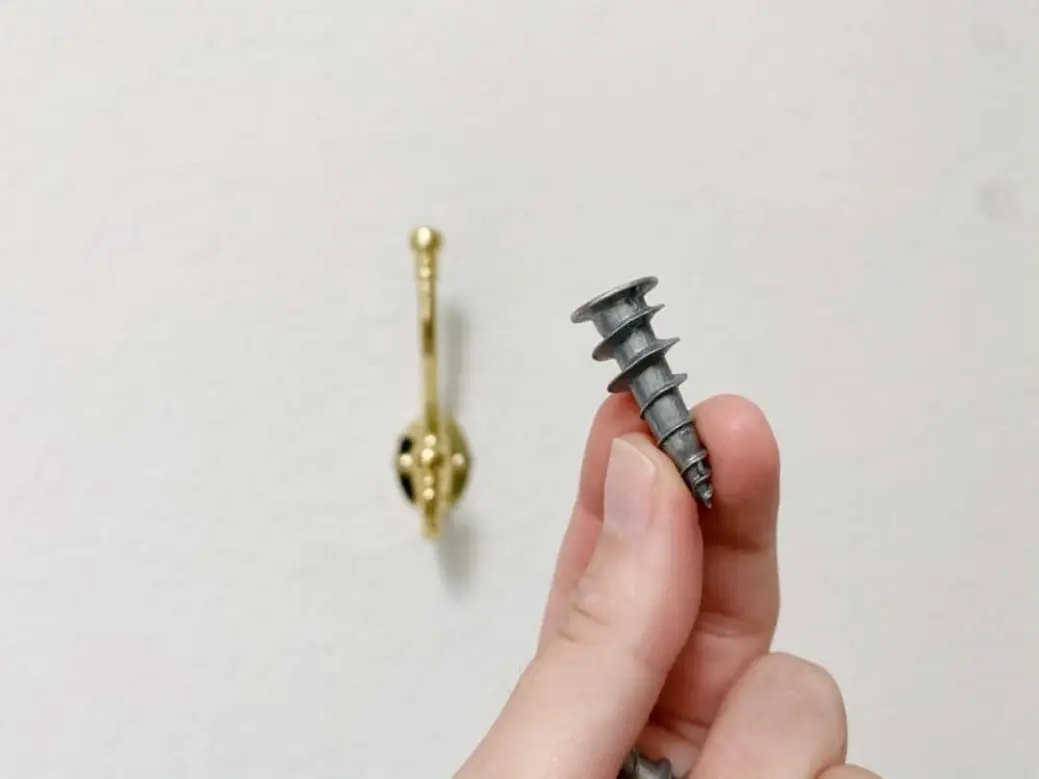
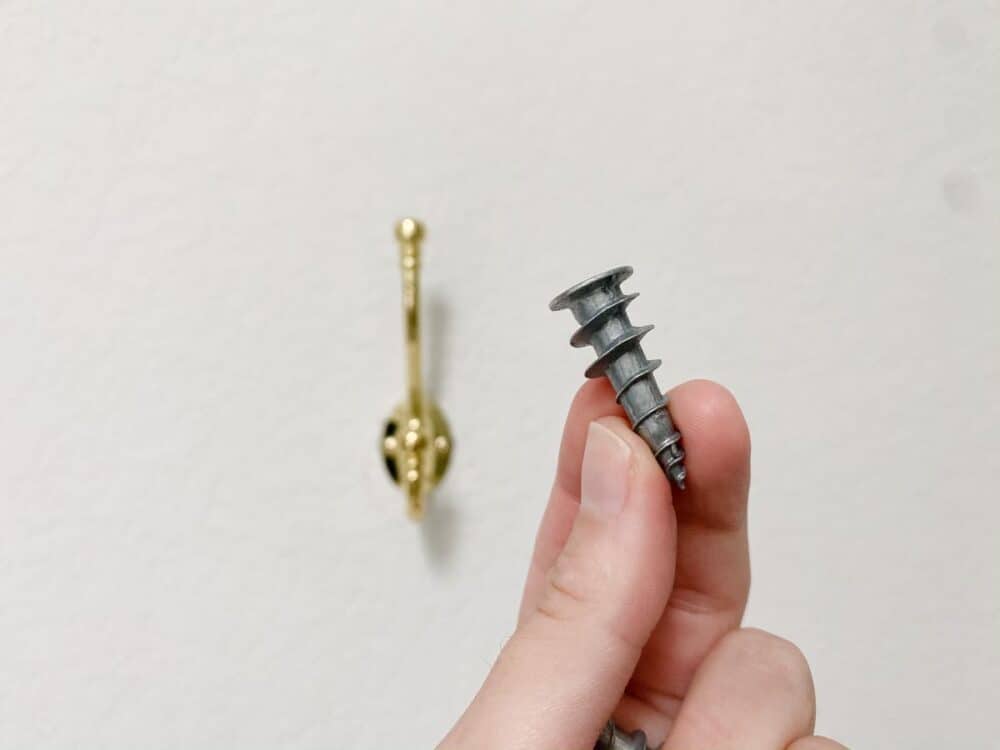
Source: loveandrenovations
How to repair a loose towel hook on drywall
Drywall can hold a towel hook when the anchor is designed for the load and installed correctly. A small plastic plug supplied with a hook kit may be adequate for light use, but a repeatedly used hook carrying a wet towel puts more strain on the mounting point. A stud, a stronger drywall anchor, or a toggle-style fastener may be a better choice, depending on the hook’s mounting plate and the available space behind the wall.
1. Check for a stud
Use a stud finder or another reliable method to check whether a wall stud is behind the intended mounting point. If the mounting holes line up with the stud, drive an appropriately sized screw into the stud. A stud provides a solid fixing point without relying on a hollow-wall anchor.
If only one mounting hole lines up with a stud, use that point and choose a suitable anchor for the other hole if the mounting plate allows it. Follow the hook manufacturer’s instructions for screw size and mounting-hole requirements.
2. Replace a failed drywall anchor
If there is no stud, remove the loose anchor and assess the hole. Do not force a larger anchor into a hole that has become ragged unless the new anchor is specifically intended for that type of repair and fits the mounting plate.
A replacement anchor should match the drywall thickness and the screw supplied or recommended for it. Some anchors expand behind the drywall, while others grip by threading into the board. Toggle-style anchors can provide strong support in hollow drywall, but they require enough open space behind the wall and may not fit through a small towel-hook mounting plate.
Install the anchor without crushing the drywall. Hold the mounting plate flat, insert the screw, and tighten it with a screwdriver until the plate is secure. Stop when the plate is firm; excessive force can strip the anchor or damage the wall.
3. Repair a damaged hole
If the drywall around the hole is broken or enlarged, the best fix may be to move the hook a small distance and create a fresh mounting point. This is often simpler than trying to make a failing hole hold again.
For a hook that must stay in exactly the same location, the damaged section may need to be opened and reinforced with wood blocking behind the drywall. Blocking creates a solid backing for the screws, but it is a more involved wall repair than replacing an anchor. It may require patching and repainting afterward.
How to repair a hook mounted on tile
Tile needs a different approach from drywall. Do not hammer a standard drywall anchor into tile, and do not begin drilling with a hammer setting. Confirm the hook location first, because moving a hole later can leave an unnecessary opening in the tile.
Use a drill bit intended for the tile type, keep the drill perpendicular to the surface, and drill carefully through the tile’s glazed face. Once through the tile, the fastener must still suit the material behind it. For example, a tile-covered drywall wall needs a hollow-wall solution, while tile over masonry needs a masonry-compatible plug or screw.
If an existing tile hole is chipped, oversized, or located too close to an edge, replacing the hook in the same spot may not be dependable. Relocating the hook or using a mounting system designed for the situation can be preferable to forcing a new fastener into damaged tile.
Adhesive-only hooks can work on clean, smooth, dry surfaces when the product is rated for the intended use. They are not a substitute for a mechanical fastener when the surface is dusty, textured, damp, loose, or repeatedly exposed to pulling force. If an adhesive hook has fallen once, clean away old adhesive and inspect the surface before trying again; simply adding more adhesive usually does not solve the underlying problem.
How to repair a hook on a solid wall
Brick, concrete, and other solid walls need a masonry bit and a fastener made for masonry. Drill the required hole to the specified depth, clear out loose dust, and install the correct plug or masonry screw. The mounting plate should sit flat against the wall before you tighten it.
A regular drywall anchor is not the right choice for solid masonry. Likewise, forcing a wood screw into a masonry hole will not provide the same grip as a properly matched masonry fastener.
Reinstall the hook correctly
Once the wall fixing is ready, use this sequence:
- Hold the mounting plate in position and mark the holes.
- Check that the plate is level and that the hook will not strike a door, cabinet, or shower enclosure.
- Drill or prepare the holes using the method required for the wall material.
- Install the anchors or screws without overtightening.
- Fit the hook body over the plate.
- Tighten the small set screw that locks the body to the plate.
- Pull the hook gently to check for movement before hanging a towel.
If the plate moves as soon as light pressure is applied, stop and correct the mounting before using the hook.
How much weight should a towel hook hold?
A towel hook is best treated as a light-duty bathroom fitting, not a grab bar or a place to hang a heavy wet bundle. A single towel places less strain on the hook than several wet towels, a robe, or a towel pulled sideways by someone moving past it. The wall anchor, mounting plate, and wall condition all affect the result, so do not assume the hook’s appearance tells you how much it can hold.
Keep the hook for ordinary towel use, distribute several towels among multiple properly installed hooks, and avoid using it to support body weight. If the hook repeatedly loosens even after a correct repair, the mounting location, hardware, or hook design may not suit the way it is being used.
When to replace or relocate the hook
Replace the hook if the metal is bent, the mounting plate is cracked, the set screw no longer engages, or the screw holes in the plate are damaged. Relocate it if the surrounding drywall is crumbling, the tile is badly chipped, or the original position cannot accept a suitable anchor.
The most reliable repair is the one that gives the fastener sound material to grip. A new hook on a weak surface will fall again, while a modest hook secured to a stud, suitable anchor, or solid backing should remain much more dependable during everyday bathroom use.
References
- How To Fix Towel Rack Coming Out Of Wall With Blocking - Making Manzanita. (n.d.). https://www.makingmanzanita.com/how-to-fix-towel-rack-coming-out-of-wall
- How To Fix A Bathroom Towel Holder That Keeps Falling Off The …. (n.d.). https://kitchprep.com/how-to-fix-a-bathroom-towel-holder-that-keeps-falling-off-the-wall
- Why Your Loose Towel Hook Keeps Falling Off (And How I Fixed It For Good). (n.d.). https://www.youtube.com/watch?v=WmiXbUilg9c
- How to Hang Bathroom Towel Hooks. (n.d.). https://www.loveandrenovations.com/towel-hooks
- How to Install a Towel Hook. (n.d.). https://www.lowes.com/n/how-to/how-to-install-towel-hook
- How to Fix a Loose Bathroom Towel Rack (Base vs Wall Mount). (n.d.). https://homeimprovementway.com/how-to-fix-a-towel-rack-that-is-loose
- Fix Towel Hanger: Easy DIY Repair Guide. (n.d.). https://topchooser.com/how-to-fix-towel-hanger
- Best way to install towel bars in drywall so they won’t rip out. (n.d.). https://www.youtube.com/watch?v=OBv6piLjqOc&xstg=CAMSBhUDze3xHw%3D%3D