How to Stop New Towels From Shedding Lint
New towels commonly shed because loose cotton fibers from manufacturing are still trapped in the terry loops. To stop new towels from shedding lint, wash them separately for their first few laundry cycles, use a modest amount of detergent, rinse thoroughly, and dry them without overcrowding the dryer. Most new-towel lint improves after several washes and dries.
If your towels are still leaving lint on your body, clothes, or bathroom floor after repeated proper laundering, the issue may be more than normal break-in shedding. Rough washing, excess detergent, fabric softener buildup, high dryer heat, or weak towel construction can keep the problem going.
Why New Towels Shed Lint
Bath towels are usually made from terry fabric: a woven base covered in thousands of small cotton loops. During manufacturing and finishing, some short or loose fibers remain caught among those loops. They can work free during washing, drying, and use.
This is why a brand-new towel may leave fuzz on damp skin after a shower or fill the dryer filter more than expected. Initial shedding does not automatically mean the towels are poor quality or defective. It is often part of the first few wash cycles.
However, lint should gradually lessen. Towels that keep producing heavy lint long after the initial wash period, develop bare areas, or show many pulled loops may be deteriorating rather than simply shedding loose new fibers.
The Best Wash-and-Dry Routine for New Towels
Use this routine before using new bath towels regularly. It removes loose fibers while avoiding some of the habits that can make towels stiff, coated, or prone to continued linting.
1. Wash new towels separately
For the first two or three washes, keep new towels out of mixed laundry loads. Do not wash them with dark shirts, fleece, socks, or delicate clothing that will collect cotton lint.
Washing towels alone also gives them room to move through the water. Better circulation helps rinse away loose fibers instead of trapping them among crowded items.
Separate towel colors as well, especially for the first wash. New darker towels may release dye, while white or light towels can pick up color from other textiles.
2. Use warm water when the care label allows it
Warm water is generally a practical choice for washing new cotton towels because it helps remove finishing residue, body oils from handling, and loose fibers. Check the towel’s care label first, particularly if it has decorative trim, a special weave, or blended fibers.
Very hot water is not necessary just to deal with lint. Repeated high-heat washing can be harder on cotton over time and may contribute to fading or roughness.
3. Use less detergent than you think you need
Too much detergent can leave residue in towel loops. That residue can make towels feel less absorbent and can hold loose lint rather than letting it rinse away.
Use the detergent amount suited to your machine, load size, and water conditions. For a small load of towels, avoid filling the dispenser simply because it is available. If the towels feel slippery, stiff, or unusually heavy after washing, they may not be rinsing cleanly.
Choose a regular laundry detergent appropriate for the towel care label. There is no need for a specialized product solely because the towels are new.
4. Skip fabric softener for the first washes
Fabric softener can coat towel fibers. While it may create a temporary soft feel, buildup can reduce absorbency and make it harder for water to move freely through the terry loops.
For new towels shedding lint, it is usually more useful to focus on a clean wash and complete rinse than to add softener. If you normally use softener, leave it out for at least the first few towel washes.
5. Consider an occasional vinegar rinse, not a vinegar-and-baking-soda mixture
A small amount of plain white vinegar in the rinse cycle is a common laundry option for helping remove lingering detergent residue and freshen towels. Follow your washer instructions and avoid using more than needed.
Do not add vinegar and baking soda together in the same wash or rinse step. They react with each other, which reduces the useful cleaning effect of each. If you choose to use either one, use it separately and only when appropriate for your machine and towel care label.
Vinegar is not required for every wash, and it cannot repair towels with damaged loops or poor construction.
6. Shake towels out before drying
Before putting washed towels in the dryer, shake each one out. This simple step separates folds and helps loosen fibers that would otherwise stay pressed against the fabric.
It also helps towels dry more evenly. Less time in the dryer means less unnecessary exposure to heat and tumbling.
7. Do not overload the dryer
Towels need space to tumble. An overfilled dryer prevents airflow, leaves items damp longer, and allows lint to cling to neighboring towels.
Dry towels in a moderate-sized load. If they come out twisted together or still damp in thick corners, the dryer load was likely too full.
Use low or medium heat when possible, following the care label. High heat can make cotton feel harsh and may contribute to fiber wear over time. Remove towels once dry rather than letting them continue tumbling through an extended cycle.
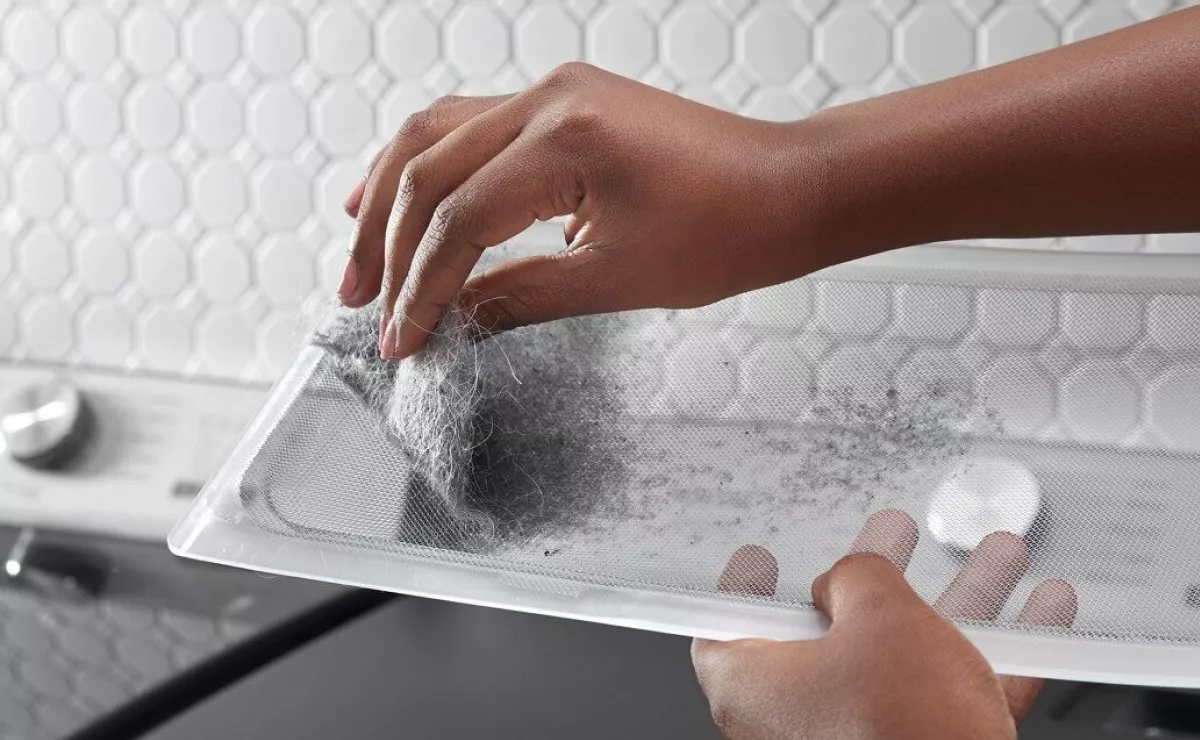
8. Clean the lint filter every time
Clean the dryer lint filter before or after every towel load. A clear filter improves airflow and gives loosened towel fibers somewhere to collect instead of circulating through the drum.
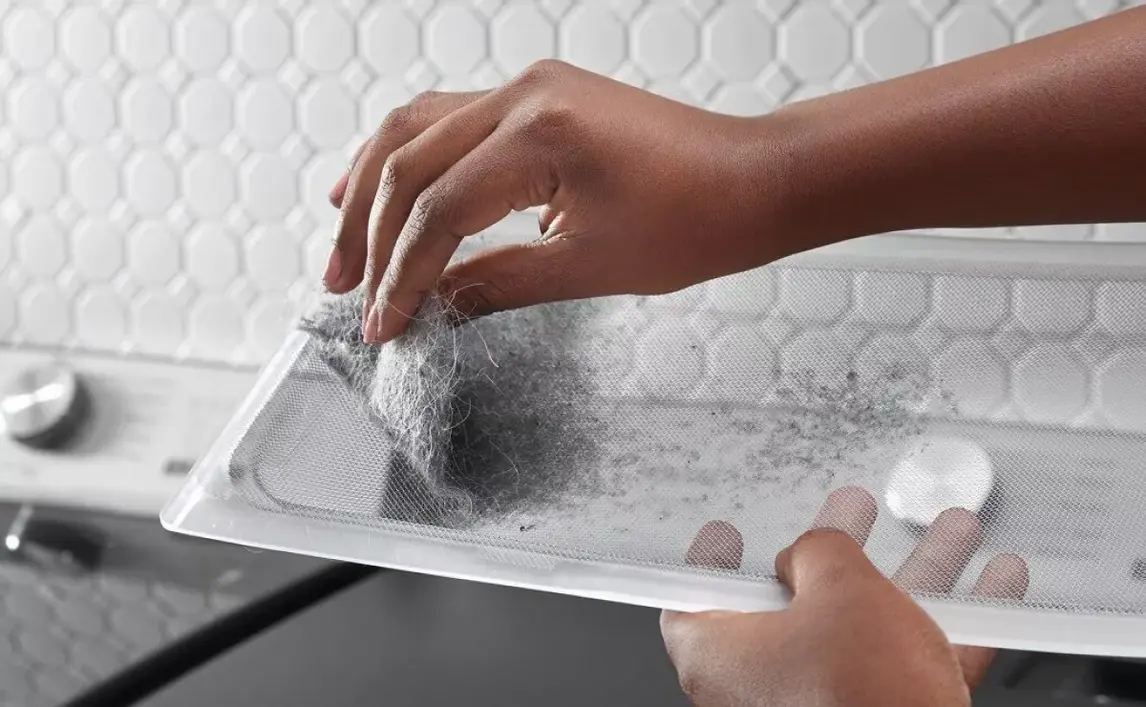
Source: kitchenaid-h.assetsadobe
If the filter appears coated with a waxy film, it may have buildup from dryer sheets or fabric softener. Follow your dryer manufacturer’s cleaning guidance so air can move through the screen properly.
Laundry Mistakes That Can Make Towel Lint Worse
A few common habits can turn normal new-towel shedding into a longer-running problem.
- Overloading the washer: Towels cannot rinse well when packed tightly together. Loose fibers and detergent may remain in the fabric.
- Washing towels with clothing: Zippers, buttons, rough denim, and synthetic fabrics can create friction or collect transferred lint.
- Using too much detergent: Excess soap can leave residue that makes towels feel coated and less absorbent.
- Using fabric softener routinely: Repeated softener use can coat cotton fibers and make towel care more difficult.
- Overdrying on high heat: Long, hot dryer cycles can be hard on cotton fibers and may create more wear-related lint.
- Skipping the lint filter: Restricted airflow makes drying less efficient and can leave more lint in circulation.
- Using towels before the first wash: New towels may contain manufacturing dust, finishing residue, and loose fibers that are best removed before use.
Why Are My Towels Leaving Lint on My Body?
If lint shows up mainly after bathing, the towel may still be in its early shedding period. Damp skin makes loose cotton fibers easy to notice, especially with dark towels or darker clothing worn afterward.
First, make sure the towel has been washed and dried a few times using a separate, uncrowded load. Then check whether the towel is leaving lint everywhere or only on skin. If it also leaves fuzz on the bathroom floor, vanity, and other laundry, the towel itself is likely still releasing fibers.
If only certain towels cause the problem, compare their condition. A towel with thinning patches, frequent snags, frayed edges, or many flattened loops may be wearing out. In that case, changing laundry habits may reduce residue, but it will not restore damaged fabric.
When Towel Shedding Is No Longer Normal
New towels should not necessarily become perfectly lint-free after one wash, but shedding should trend downward. Consider replacing or returning a towel if it continues producing substantial lint after several properly spaced wash-and-dry cycles and shows one or more of these signs:
- Thin spots or visible loss of terry loops
- Large numbers of pulled loops or unraveling edges
- Lint production that does not noticeably lessen
- Rough, brittle texture despite clean rinsing
- Poor absorbency along with continued fuzzing
Avoid pulling loose loops. Trim a single snag carefully with scissors if needed, but do not pull it, as that can damage more of the towel’s woven structure.
A Simple Ongoing Towel Care Routine
Once new towels settle down, keep lint and buildup under control with a simple routine: wash towels in reasonably sized loads, use enough detergent to clean them without overdoing it, skip routine softener, dry with room for airflow, and clean the lint filter every cycle.
Normal early shedding should fade as loose fibers are washed away. If it does not, look for detergent buildup, overloaded laundry, excessive heat, or visible towel damage before assuming that more products will solve the problem.
References
- Why New Towels Shed Lint (and Exactly How Long It Lasts). (n.d.). https://thirstytowels.com/blogs/news/why-new-towels-shed-lint-and-exactly-how-long-it-lasts
- How to Stop a Towel from Shedding & Remove Lint. (n.d.). https://www.copperclothing.com/blogs/post/how-to-stop-towels-from-shedding
- How to Stop Towels from Shedding: 5 Simple Tips & Tricks. (n.d.). https://www.christy.co.uk/blogs/lifestyle/how-to-stop-towels-from-shedding-5-simple-tips-tricks
- Stop Towel Shedding: 5 Pro Tips for Fluffy, Lint-Free Bliss - thereplyhub.blog. (n.d.). https://thereplyhub.blog/how-to-stop-towels-shedding
- Why Do New Towels Shed Lint? Causes & How to Stop It. (n.d.). https://americansoftlinen.com/pages/why-do-new-towels-shed-lint
- [LPT Request] How to make new towels to stop dropping …. (n.d.). https://www.reddit.com/r/LifeProTips/comments/31mesr/lpt_request_how_to_make_new_towels_to_stop
- Lint-Free Towels: Prevent Shedding & Keep Towels Soft. (n.d.). https://www.towelsupercenter.com/blog/the-secret-to-lint-free-towels-prevent-shedding-preserve-softness-beyond-the-first-wash
- How to Wash Towels: 7 Ways You Might Be Ruining Them. (n.d.). https://heritageparklaundry.com/blogs/the-laundry-lowdown/7-ways-you-are-ruining-your-luxury-towels