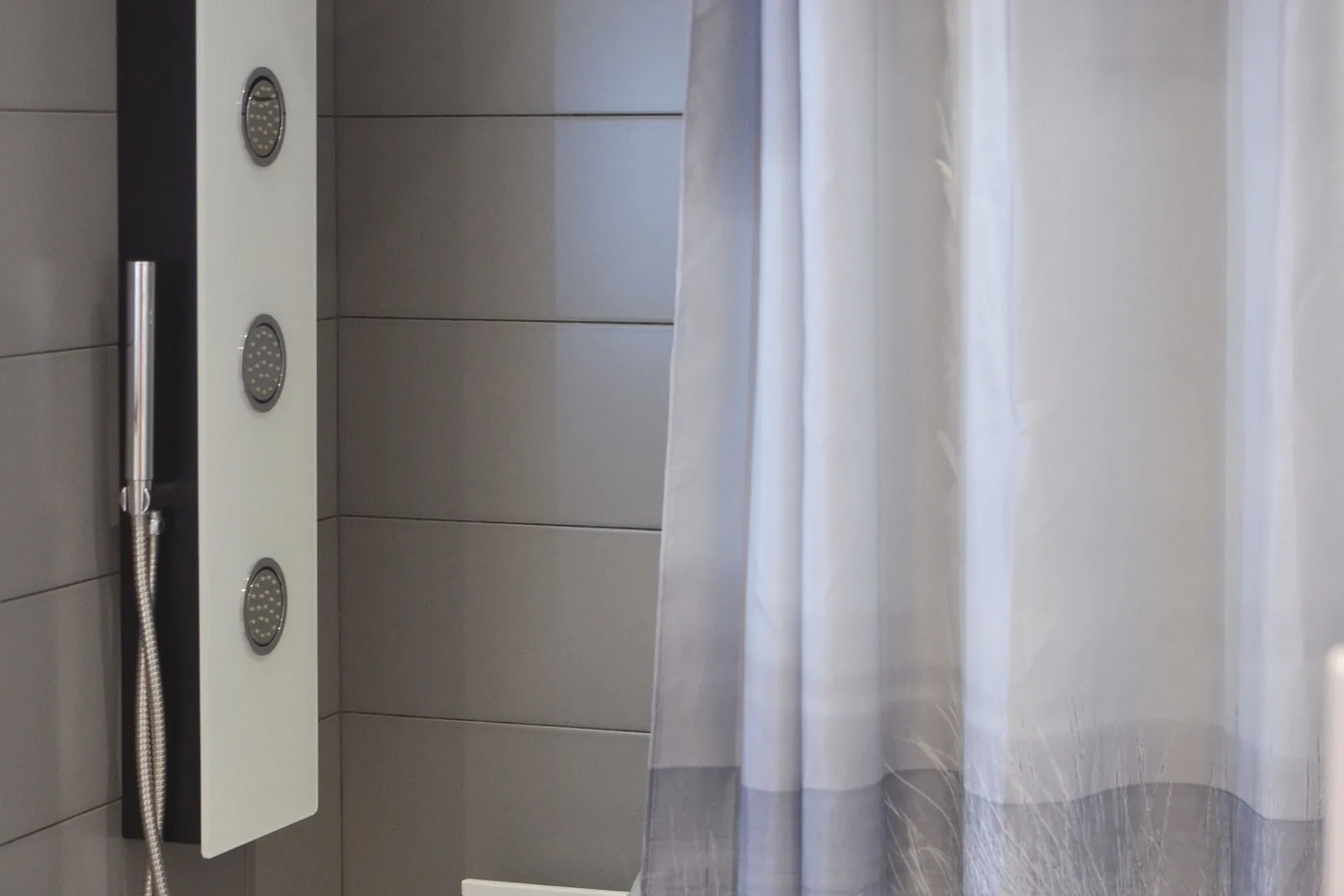
How to Stop a Shower Curtain From Blowing In

A shower curtain blows inward because moving shower water changes the airflow in the bathing area. A lightweight liner can be pushed toward the lower-pressure space inside the tub, where it billows, sticks to you, or leaves gaps for water to escape. The most reliable fix is usually a heavier liner with a weighted hem, combined with correct liner placement inside the tub.
If that does not solve it, check whether the liner is wide enough, whether its bottom corners can be secured to the tub wall, and whether the shower head is directing a strong stream toward the curtain. Magnets work well only on compatible metal tubs; fiberglass and acrylic tubs need suction cups or another nonmagnetic solution.
Start With the Simplest Fixes
Before buying new hardware, make these adjustments. They address the common reasons a shower curtain billows inward.
- Put the liner inside the tub. The decorative outer curtain stays outside the tub. The waterproof liner should hang on the tub side of the edge so water runs back into the bath rather than onto the floor.
- Pull the liner fully across before turning on the water. A partly open liner leaves a loose section that can catch moving air and drift inward.
- Make sure the bottom edge reaches into the tub. It should not hover above the rim or sit outside it.
- Aim the shower head away from the curtain. A stream that hits the liner directly can make it flap, pull it away from the wall, and force water toward the opening.
- Close the bathroom door only if it helps your particular setup. Air movement varies by bathroom. An exhaust fan, open door, window, or HVAC vent can contribute to drafts, but turning off ventilation is not a universal cure. Keep using ventilation as needed to manage moisture after bathing.
Why the Curtain Sticks to You
The water itself is not usually pulling the curtain toward you. A strong spray carries air with it and can create lower pressure within the shower space. Air from the room pushes toward that lower-pressure area, moving a thin liner inward.
Steam and temperature differences can add to the movement. Warm air rises, and replacement air may move around the bottom or sides of the curtain. A very light plastic liner responds quickly to those small air currents.
That is why a curtain can billow inward even when it is hanging correctly and not being hit by the spray. The goal is to make the liner less movable and reduce the open gaps where it can be pushed around.
Choose a Heavier or Weighted Shower Curtain Liner
A weighted shower curtain liner is often the most straightforward long-term answer. Look for a liner described as heavy-duty, thicker-gauge, weighted, or fitted with a weighted hem. The added material or bottom weight helps the edge hang straight rather than lifting toward the shower.
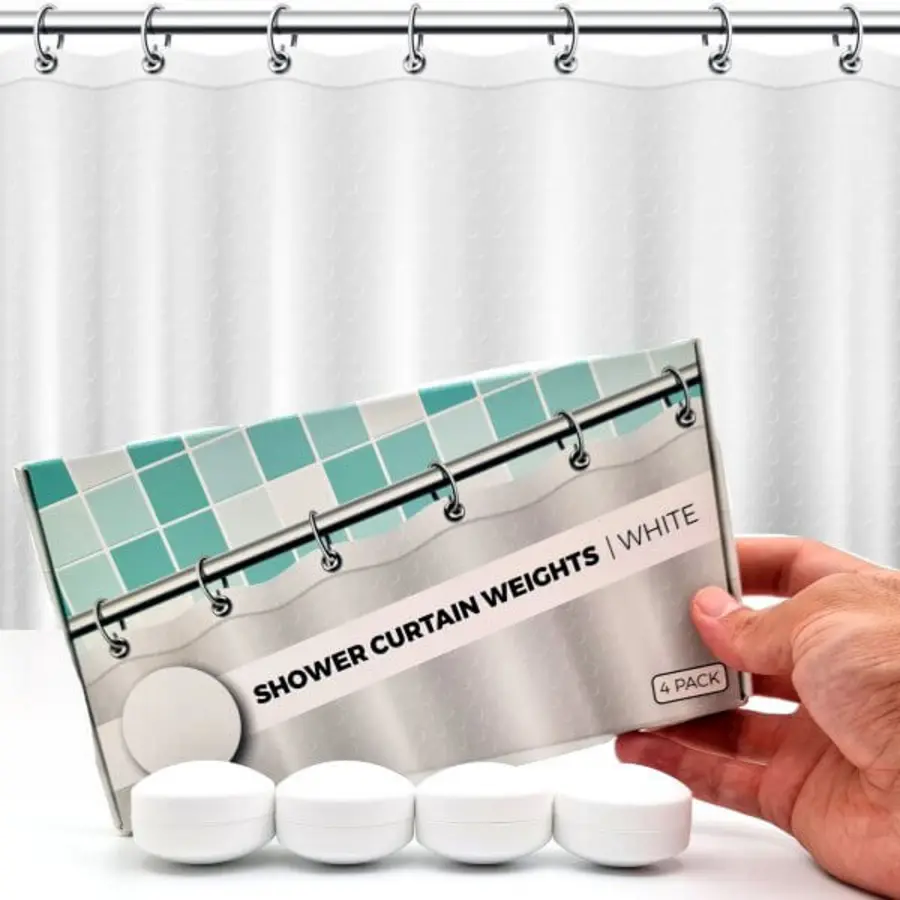
Source: hmmagnets
Built-in weights are preferable to improvised objects attached loosely to the liner. They distribute weight along the bottom edge and are less likely to create sharp edges, snag fabric, or interfere with cleaning.
A heavier liner also tends to make water containment easier because it is less likely to shift away from the tub wall. This does not mean the heaviest possible liner is always necessary. If your current liner is only mildly restless, a liner with a modest weighted hem may be enough.
When to replace a liner instead of adding weight
Replacing the liner is usually more practical when it is very thin, cracked, permanently wrinkled, mildewed, or no longer hangs evenly. Added clips or weights may not correct a liner that has become stiff, curled, or misshapen over time.
Use Magnets Only on a Magnetic Tub
Many liners have magnets in their bottom corners or along the hem. These can hold the liner against a steel or cast-iron tub, preventing it from drifting inward and helping keep shower water in the tub.
Test your tub before relying on this feature. Hold a small household magnet against the inside wall near the bottom of the tub. If it does not stick, magnets on the liner will not hold the curtain in place.
Why shower curtain magnets are not sticking
If the magnets do not work, one of these is usually the reason:
- The tub is fiberglass, acrylic, porcelain over a nonmagnetic material, or another nonmagnetic surface.
- The magnets are positioned above the tub wall, rather than against it.
- The liner is too short or too narrow for the magnets to reach the wall properly.
- Soap residue or the liner’s folds prevent the magnets from lying flat.
- The magnets are weak or have separated from an older liner.
Do not assume a white porcelain-looking tub is magnetic. The visible finish does not tell you what material is underneath.
Use Suction Cups for Fiberglass or Acrylic Tubs
For a fiberglass or acrylic tub, suction cups are the more suitable anchoring option. Some liners include suction cups at the lower sides; separate shower-curtain suction clips are also available.
Place them low on the liner, where they can hold each side close to the tub wall without stretching the material tightly. Clean and dry the attachment area first, then press each cup firmly into place. Suction cups generally hold best on smooth, clean, nontextured surfaces.
They may not stay attached to heavily textured surrounds, rough tile, uneven grout lines, or walls with soap film. If cups repeatedly release, a heavier liner and better shower-head direction may be more effective than continually reattaching them.
Check the Curtain Width and Rod Position
A liner that is too narrow cannot overlap the tub walls well enough. When pulled closed, it may look flat and tight rather than having a little workable fullness. This leaves side gaps where air and water can move through.
A properly sized liner should cover the opening while still allowing the ends to sit against or slightly past the side walls. It should not need to be pulled taut to reach both ends.
Also check the rod. If it is positioned too far into the tub, the liner has less room and may brush against you even without much billowing. Moving the rod slightly outward can improve clearance, as long as the liner still falls inside the tub.
A curved shower rod can create more elbow room by moving the upper part of the curtain outward. It can reduce the feeling that the liner is crowding you, but it is not a substitute for proper weighting or anchoring. The liner still needs to return inside the tub at the bottom.
Adjust the Shower Head Before Changing the Rod
A shower head aimed toward the curtain produces a more direct problem than ordinary airflow. Reposition it so the strongest part of the spray points toward the opposite wall or toward the center of the bathing area.
This is especially useful in small tubs, where the curtain sits close to the spray. If the shower head has adjustable settings, a less forceful setting may also reduce liner movement. The right setting is one that still rinses effectively without repeatedly blasting the curtain edge.
A Practical Fix Order
If you are not sure where to begin, work through the options in this order:
- Put the liner inside the tub and straighten it fully.
- Redirect the shower head away from the curtain.
- Clean the tub wall and test whether a magnet sticks to it.
- Use magnetic corners for a magnetic tub, or suction cups for a smooth nonmagnetic tub.
- Replace a thin or distorted liner with a heavier, weighted shower curtain liner.
- Check that the liner is wide enough and that the rod is not set unnecessarily far inward.
This order avoids solving a placement issue with extra hardware. It also helps identify whether the main problem is airflow, an overly light liner, poor side anchoring, or a curtain that simply does not fit the opening well.
Avoid These Common Mistakes
Do not put the waterproof liner outside the tub to match the decorative curtain. It may look neater while dry, but it directs water toward the bathroom floor.
Avoid hanging loose, makeshift objects from the curtain rod or fastening bulky items to the liner. They can interfere with opening and closing, pull on grommets, and make the curtain harder to wash.
Finally, do not expect magnets to solve shower curtain billowing inward on fiberglass or acrylic. If a test magnet does not attach to the tub wall, choose suction cups, clips made for smooth shower walls, or a weighted liner instead.
The Best Long-Term Setup
For most bathrooms, the most stable arrangement is a waterproof liner that is wide enough for the opening, hangs inside the tub, has a weighted hem, and is anchored at the lower corners when the tub surface allows it. Keep the shower spray pointed away from the curtain and replace liners that have become too thin, curled, or worn to hang properly.
That combination addresses both parts of the problem: the airflow that makes the curtain move and the gaps that allow water to escape.
References
- Shower Curtain Care Guide: Liners, Mildew & Rust | Varelix – VARELIX. (n.d.). https://varelix.com/blogs/home-stories/shower-curtain-care-liner-mildew-rust-guide
- The 8 Best Shower Curtain Liners - Business Insider. (n.d.). https://www.businessinsider.com/guides/home/best-shower-curtain-liner
- Why Your Shower Curtain Clings to You – AmazerBath. (n.d.). https://amazerbath.com/blogs/be-inspired/why-shower-curtains-move-towards-water
- How to Stop Your Shower Curtain from Sticking to You? + Our …. (n.d.). https://www.accessrehabequip.com.au/blog/107-how-to-stop-your-shower-curtain-from-sticking-to-you%3F-%2B-our-diy-tips
- How to Stop a Shower Curtain Blowing In When Showering. (n.d.). https://www.westsidebathrooms.co.uk/blog/how-to-stop-a-shower-curtain-blowing-in-when
- 3 Simple DIY Ways to Keep a Shower Curtain from Blowing In. (n.d.). https://www.wikihow.com/Keep-a-Shower-Curtain-from-Blowing-in
- How does one stop the plastic shower curtain liner from …. (n.d.). https://www.reddit.com/r/lifehacks/comments/11cyizc/how_does_one_stop_the_plastic_shower_curtain
- How to Keep Shower Curtain Liner From Clinging – ownkoti. (n.d.). https://www.ownkoti.com/blogs/news/how-to-keep-shower-curtain-liner-from-clinging