How to Stop Shower Curtain Hooks From Coming Off
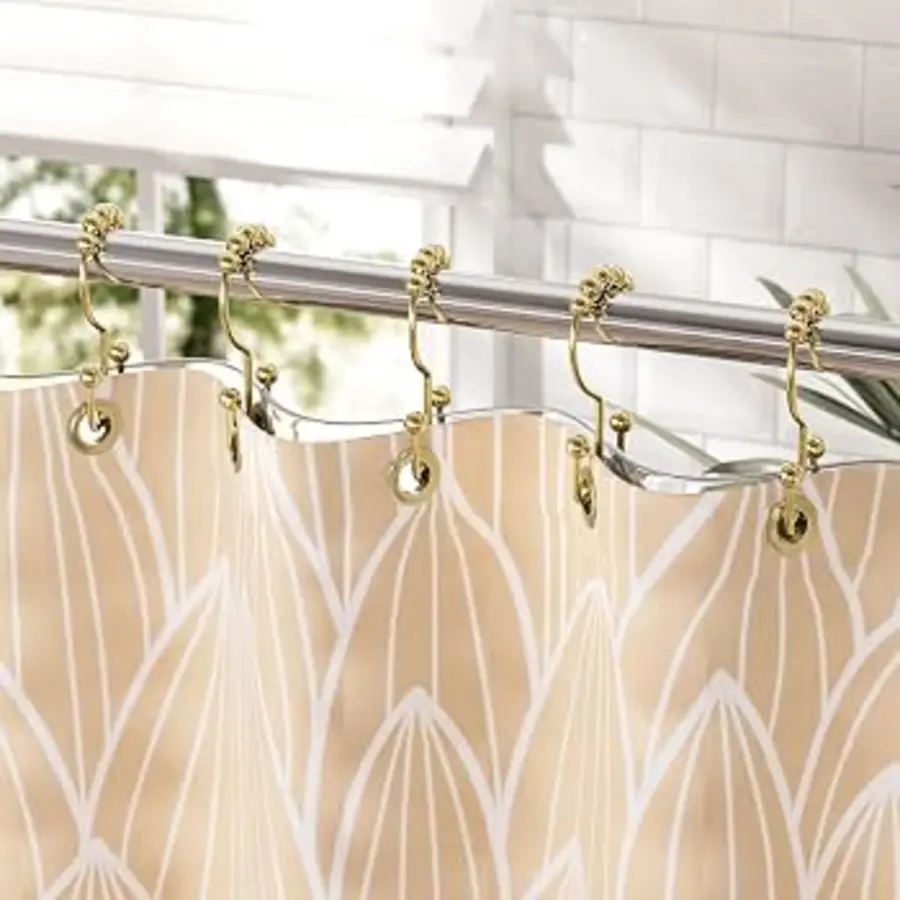
If your shower curtain hooks keep falling off, start by checking whether the hooks are actually opening or whether the curtain is pulling against a snag. The most reliable fix is usually to replace open C-shaped hooks with snap-shut rings or closed-loop hooks that cannot slide off the rod during normal use. Then check the curtain eyelets, liner weight, rod position, and any rough spot that makes the curtain catch.
A hook that comes off once may be a nuisance. Repeated detachment usually points to a mismatch between the hook design and the curtain, a worn eyelet, too much weight, or movement that forces the hook open.
First, identify what is coming off
There are two different problems that are easy to confuse:
- The hook leaves the rod: The curtain hook remains attached to the curtain but slips over the rod end or opens as the curtain moves.
- The hook leaves the curtain: The hook stays on the rod, but the curtain eyelet pulls free or tears around the hole.
- The rod moves or falls: The hooks remain attached, but the rod shifts, sags, or drops from the wall.
Watch the setup while opening and closing the curtain slowly. This shows whether the problem is at the hook, the eyelet, the rod, or a snag along the travel path.
Source: m.media-amazon
Replace open hooks with a more secure design
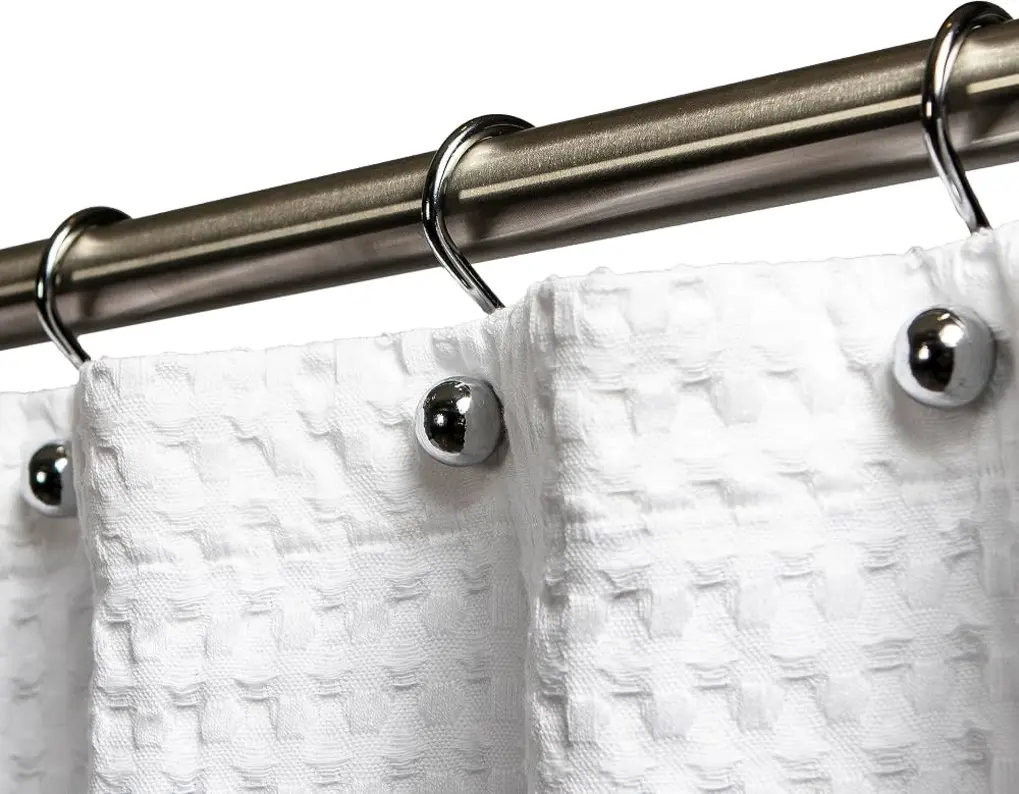
Basic open C-shaped hooks are easy to install, but the opening also gives the curtain a place to escape. A hard pull, a heavy liner, or a hook catching at the end of the rod can pull an open hook away.
For a curtain that repeatedly detaches, consider one of these options:
- Snap-shut hooks: The hook closes around the rod after installation. This creates a more secure connection while still allowing the curtain to slide.
- Closed-loop shower curtain rings: These form an unbroken circle around the rod. The rod must usually be removed to install them, but the rings are less likely to come off during everyday movement.
- Roller or glide rings with a closure: These can reduce resistance where a curtain is difficult to pull, provided the closure stays securely fastened.
- Double hooks: These can hold a liner and outer curtain separately, but check that the combined weight does not make the curtain harder to move.
A closed design is not automatically better for every bathroom. If you wash the curtain often or need to remove it quickly, snap-shut hooks may be more convenient than fully closed rings. Choose the most secure option that still lets you remove the curtain without excessive force.
Check the curtain eyelets and grommets
Sometimes the hook is fine, but the curtain hole is stretched, torn, or too large for the hook. Look closely at each eyelet, especially the positions that come off most often.
Replace the curtain or liner if an eyelet is tearing through the fabric. A temporary repair may hold briefly, but a weakened hole can continue to pull away under the weight of a wet liner. If the eyelet is intact but the hook sits loosely inside it, use a hook or ring with a shape that fits the hole more securely.
The hook should pass through the eyelet without forcing the fabric to bunch sharply around a narrow point. It should also support the curtain from the reinforced part of the opening rather than from a torn edge.
Match the hooks to the curtain weight
A thin plastic liner and a heavy fabric curtain do not place the same load on their hooks. Hanging both from small, flexible hooks can make the connection more likely to open or pull sideways.
Check the whole curtain assembly, including:
- The fabric curtain
- The liner
- Any decorative or weighted hem
- A valance or attached top section
- Water held by a liner that has not drained or dried
If the setup feels heavy when you pull it, use sturdy rings designed for shower curtains and distribute the load across all available eyelets. Do not leave several eyelets unused unless the curtain design specifically allows it. Fewer attachment points concentrate more weight and can make the curtain sag or tug at individual hooks.
If a heavy outer curtain is difficult to move, separate the curtain and liner with double hooks or separate hanging rows when the rod setup permits it. The goal is to reduce sideways force, not just to use stronger hooks.
Find snags along the rod
A hook may come off because it catches while the curtain is moving. Common snag points include:
- The joint on a telescoping rod
- A bent section of rod
- A rough finish or chipped coating
- A wall bracket or rod end
- A gap near a finial
- A hook that is twisted sideways
Pull the curtain slowly from one end to the other and notice where resistance increases. The curtain should travel smoothly without needing a sharp tug.
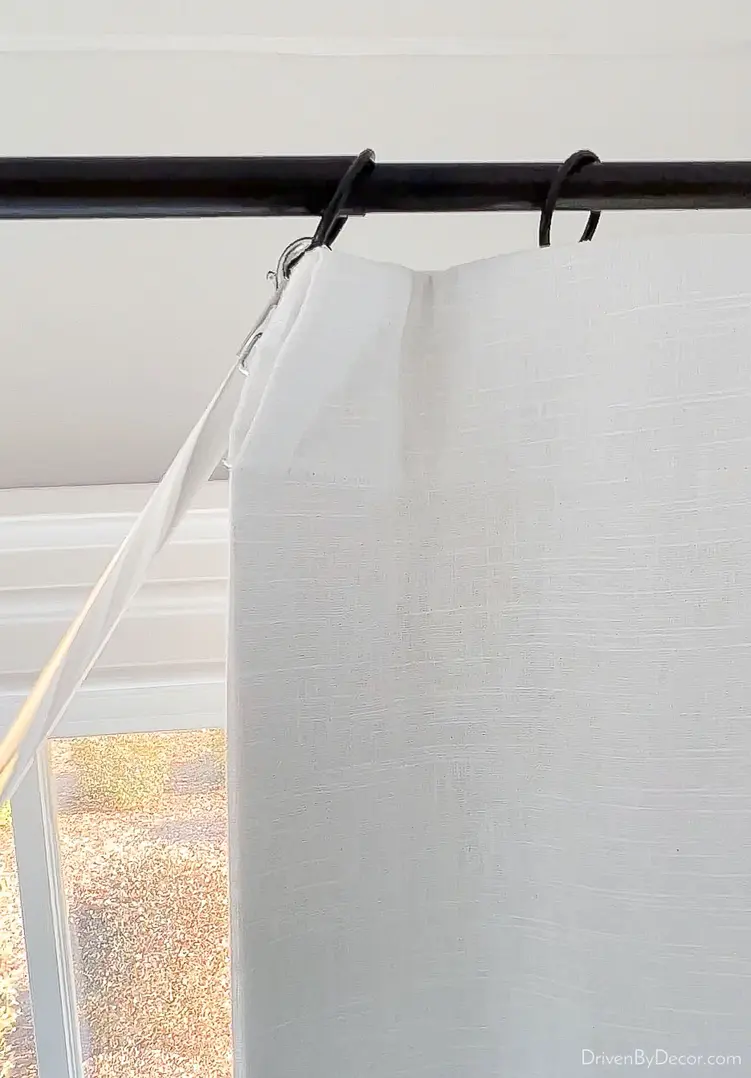
Source: drivenbydecor
If the rod has a telescoping joint, arrange the hooks so they do not repeatedly strike the joint, if the rod design and curtain position allow it. A glide or ring that catches at one location may also need replacement. Avoid adding a thick layer of tape, bulky material, or a makeshift obstruction around the rod; it can create a larger snag and make the curtain harder to open.
Refit the hooks correctly
When replacing shower curtain hooks, remove the rod if necessary rather than forcing open a closed ring. Then:
- Lay the curtain and liner flat enough to see every eyelet.
- Inspect the eyelets for stretching, tears, or missing reinforcement.
- Attach one hook or ring to each usable eyelet unless the product instructions specify another arrangement.
- Make sure each closure has snapped or fastened completely.
- Slide the hooks onto the rod before reinstalling it.
- Check that the curtain hangs evenly and that no hook is twisted around another.
- Pull the curtain slowly in both directions to test for snags.
Do not rely on a closure that only appears to be shut. Run a finger over the connection or inspect it closely so the hook is fully engaged. Replace bent, cracked, or permanently stretched hooks rather than trying to reshape them repeatedly.
Check whether the rod itself is the problem
If the entire curtain shifts, or the rod drops with the hooks still attached, replacing the hooks will not solve the underlying issue. A tension rod may be slipping against the walls, or a fixed rod may have a loose bracket or sagging support.
Look for movement at the rod ends and for a telescoping section that changes position. Refit or secure the rod according to its design before adding a heavier curtain. A rod that is not stable can create sudden pulls that make hooks, eyelets, or both fail.
Also check the rod height and position. If the curtain is pulled at an awkward angle against the tub or floor, it may drag instead of gliding. Adjusting the curtain or rod can reduce the force placed on the hooks.
Fixes that usually make the problem worse
Avoid these shortcuts:
- Taping an open hook shut: Tape can leave residue, catch on the rod, and make removal difficult. It also may not hold the hook in the correct position.
- Using random household rings: A ring that is too small can bind on the rod; one that is too large can sit loosely in the eyelet.
- Forcing damaged eyelets back into service: Once the fabric is tearing, a stronger hook may simply pull the damage farther.
- Adding weight to stop movement: Extra weights can increase the load on every hook and make detachment more likely.
- Lubricating without fixing the snag: Smoother movement may help, but it will not repair a bent rod, open hook, or stretched eyelet. Avoid products that can transfer onto the curtain or make the rod difficult to handle.
The simplest long-term setup
For most recurring hook problems, use secure snap-shut hooks or closed-loop rings, attach them through intact eyelets, and make sure the curtain moves smoothly across a stable rod. Replace worn hooks and damaged liners instead of trying to compensate with extra weight or improvised closures.
If only one hook keeps coming off, inspect that eyelet and the section of rod directly beside it. If several hooks detach together, look first for a rod joint, bracket, or end that is catching the curtain. This small distinction usually tells you whether you need new hooks, a new liner, or a rod adjustment.
References
- How to Stop Shower Curtain Hooks From Coming Off the Rod | ehow. (n.d.). https://www.ehow.com/how_7591789_stop-hooks-coming-off-rod.html
- My brilliant solution for metal shower curtain hooks that get …. (n.d.). https://boards.straightdope.com/t/my-brilliant-solution-for-metal-shower-curtain-hooks-that-get-stuck-on-the-bar/632372
- I got tired of my stupid shower curtain hangers coming off …. (n.d.). https://www.reddit.com/r/functionalprint/comments/4iiolf/i_got_tired_of_my_stupid_shower_curtain_hangers
- The Ultimate Guide to Double Shower Curtain Hooks: Why the “Mountain Shape” is a Game-Changer for Your Bathroom - Foshan YiWang Hardware Products Co., LTD. (n.d.). https://www.ewanghardware.com/news/the-ultimate-guide-to-double-shower-curtain-hooks-why-the-mountain-shape-is-a-game-changer-for-your-bathroom
- Garrett’s Ingenious trick for Keeping a Tension Shower Curtain Rod From Falling Down — The Grit and Polish. (n.d.). https://www.thegritandpolish.com/blog/how-to-keep-a-tension-shower-curtain-rod-from-falling-down
- Curtains That Get Stuck on a Telescoping Rod: A Simple Fix!. (n.d.). https://www.drivenbydecor.com/curtains-stuck-telescoping-rod
- Shower curtain struggles solved! Using one rod makes all …. (n.d.). https://www.instagram.com/reel/DUqbjLdDSap?hl=en
- How to Install a Shower Curtain Rod: Height & Setup Guide. (n.d.). https://www.buyrailings.com/blog/buy-railings-1/how-to-install-a-shower-curtain-rod-the-definitive-height-installation-guide-73